Gothenburg and Leipzig Remain Top Tourism Sources for Brno Despite Major Visitor Declines During the First Eight Months of 2026

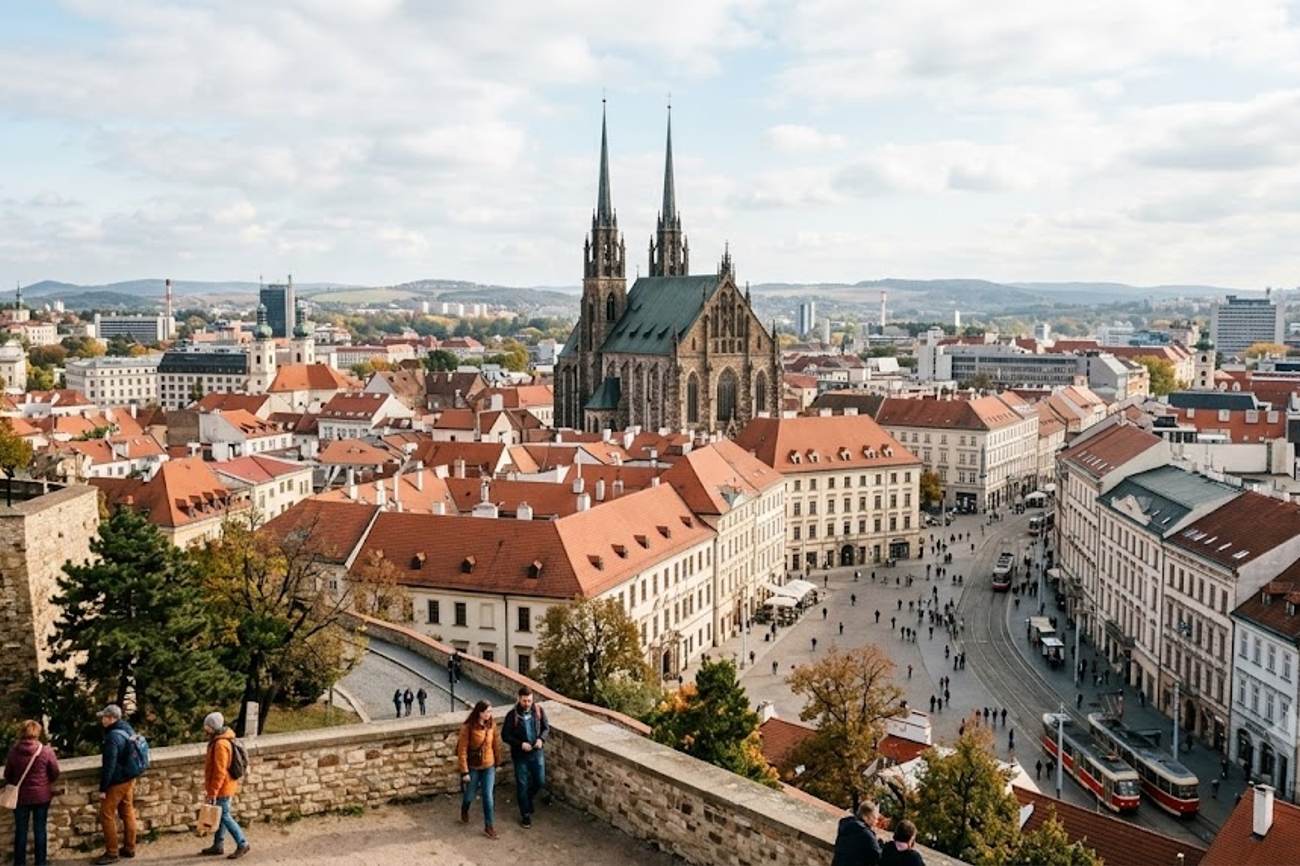
Image generated by AI
[Brno, August 2026] — International tourism to Brno has entered a period of stagnation for the first time since 2021, according to new data from the Czech Statistical Office. While the city continues to attract high-value visitors from specific European hubs, the broader trend indicates a cooling of foreign demand across the South Moravian capital.
The findings, released on August 7, 2026, reveal a shifting landscape where domestic travel is now the primary driver of growth. While Brno has successfully rebranded itself as a sophisticated alternative to the overtourism seen in Prague—even ranking fifth among Europe’s top destinations via 1000thingsmagazine.com—the macroeconomic pressures of inflation and shifting Western European travel habits are now impacting arrival numbers.
Macroeconomic Shifts Triggering Stagnation
The current downturn is not isolated to Brno but reflects a national trend within the Czech Republic. Data from the Czech Statistical Office (CZSO) indicates that during the second quarter of 2026, the nation saw 6.4 million guests in collective accommodation establishments, totaling 15.1 million overnight stays. While the total arrival count rose by a marginal 0.5%, this growth was almost entirely fueled by a 0.9% increase in domestic residents.
Foreign demand has effectively flatlined. Markéta Borovičková of the CZSO’s Tourism and Environmental Statistics Unit reports that this stagnation marks a critical turning point for medium-term forecasting. The decline is attributed to persistent inflation across Western Europe and a general economic uncertainty that has curtailed discretionary spending on international leisure travel.
Regional Impact and Market Distribution
The South Moravian Region (Jihomoravský kraj) remains a powerhouse of Czech tourism, though it is not immune to these headwinds. During the reported period, the region hosted nearly 625,000 guests. The breakdown of these visitors reveals a heavy reliance on the local population:
- Domestic Tourists (Residents): 413,100 visitors
- International Tourists (Non-residents): 211,700 visitors
- Total Regional Footfall: Approximately 625,000 guests
- International Market Share: Exactly 33.3% (one-third) of total visitors
Despite these challenges, South Moravia has fared better than other regions; for instance, the Karlovy Vary Region suffered a much steeper decline of 4.3% in arrivals. The South Moravian region continues to record over 1 million overnight stays, maintaining its position as a top-tier destination alongside Prague and South Bohemia.
The Resilience of the Leipzig and Gothenburg Corridors
While general international numbers are stagnant, specific "high-value" corridors have proven remarkably resilient. Brno has pivoted away from mass tourism toward a model that prioritizes business negotiations, academic exchange, and refined leisure. This is most evident in the city's relationship with its partner cities, specifically Leipzig and Gothenburg.
The Leipzig-Brno connection is rooted in a sister-city alliance established in 1973. Following the 50th-anniversary celebrations in 2023, there was a concerted effort to revitalize municipal, educational, and commercial ties. This strategic alignment has created a buffer against the broader downturn. Even as total German arrivals to the Czech Republic fell by 0.6% in Q2 2026 (to 650,000 visitors), the specific corridor between Saxony and South Moravia remained active.
This resilience is driven by three primary factors:
- Automotive Industry: Frequent conventions and corporate requirements for in-person attendance.
- Academic Ties: Deep-rooted university partnerships that ensure a steady flow of researchers and students.
- Institutional Exchange: Continuous municipal cooperation that encourages official delegations and cultural visits.
Despite a general downturn in visitor numbers during the first eight months of 2026, Gothenburg and Leipzig continue to serve as primary tourism sources for the city. Travelers frequently utilize the regional infrastructure managed by Brno-Tuřany Airport to facilitate these international connections.
Similarly, the connection with Gothenburg continues to provide a reliable stream of Nordic travelers. These visitors typically exhibit higher spending patterns and a preference for Brno’s walkable historic center and authentic Moravian identity over the commercialized experience of larger capitals.
Practical Traveler Advisory and Strategic Insights
For those planning a trip to Brno or the South Moravian region, the current stagnation in international arrivals presents several practical advantages:
Reduced Crowding: Unlike Prague, which continues to struggle with overtourism, Brno offers a high-end cultural experience without the suffocating crowds. Travelers can expect easier access to museums, galleries, and historic sites.
Gastronomic Access: With the recent introduction of the Michelin Guide Czechia, Brno's food scene has gained international recognition. While the city did not receive any Michelin stars this year, the presence of Bib Gourmand mentions and recommended listings means that high-quality dining is more accessible now than during peak tourism surges.
Value for Money: As the city shifts toward "high-value" travel, there is a growing emphasis on quality over quantity. Travelers focusing on sustainable, slow-travel itineraries will find the city's compact, walkable layout particularly advantageous.
The Path Forward: High-Value Strategy
Brno is doubling down on its transition from an industrial hub to an innovation-driven metropolis. The city's strategy involves leveraging its modernist architecture and burgeoning gastronomy scene to attract a specific demographic of "discerning" travelers.
By focusing on the "meetings industry" and professional conventions, Brno aims to decouple its economic success from the volatility of the general leisure market. The goal is to maintain a steady baseline of visitors through corporate and academic channels while selectively attracting leisure tourists who prioritize authenticity and sustainability.
The city's ability to maintain its rank as a top-five European destination will depend on whether it can continue to foster these strategic partnerships with Nordic and German cities to offset the broader stagnation in Western European travel.
FAQ: Brno Travel 2026
Is Brno currently overcrowded compared to Prague? No. Brno has positioned itself as a sophisticated alternative to Prague. It avoids the severe overtourism seen in the capital, offering a more authentic, walkable, and less commercialized experience for visitors.
What are the best ways to experience Brno's food scene? Look for establishments listed in the Michelin Guide Czechia. While no stars were awarded in Brno this year, the Bib Gourmand mentions highlight the city's status as a premier destination for high-quality, affordable gastronomy.
Why are visitors from Leipzig and Gothenburg still frequenting Brno? These cities share deep institutional, academic, and industrial ties with Brno. Strong sister-city alliances and a shared interest in the automotive sector ensure a steady flow of business and official travel.
How has the tourism market in South Moravia changed in 2026? International arrivals have stagnated for the first time since 2021. Growth is now primarily driven by domestic Czech tourists, who make up two-thirds of the region's total visitor count.
Brno is betting that quality will eventually outweigh quantity in the race for European tourism dominance.
Related Travel Guides
- California Consolidates With Michigan, Wisconsin and More US States Trying to Bringing Back Tourists from Canada with New Promotional and Marketing Campaigns as American Tourism Hitting Hard to Economy, Now Brand USA Travel Week in Toronto and Montreal Focuses Holiday Trips, Daycation and Weekend Vacations: Everything You Need To Know
- China Forces Trip.com Group into Sweeping Rectification After RMB5.18 Billion Antitrust Ruling Exposes Exclusive Hotel Agreements and Pricing Controls
- Cinnamon Maldives Resorts Break Into Tripadvisor’s Global Top Ten Percent as Guest Reviews Propel Three Island Escapes Into the Spotlight
This article is for informational purposes. Flight routes, passenger regulations, visa rules, and transit advisories are subject to change by airlines and aviation authorities. Readers are advised to verify schedules and travel documentation with relevant carriers and border agencies before departure.
Related Stories

United States Boosts Solo Travel Appeal With Scenic Escapes, Cultural Cities And Coastal Adventures

Hidden Lakes Offer Tahoe Inspired Adventures Without Crowds