
Golden Eagle Luxury Trains Revives 22-Day Silk Road Rail Odyssey from Beijing to Tashkent in 2026
Experience a 22-day luxury rail journey from Beijing to Tashkent, crossing six countries via the historic Silk Road with Golden Eagle Luxury Trains starting September 21, 2026.

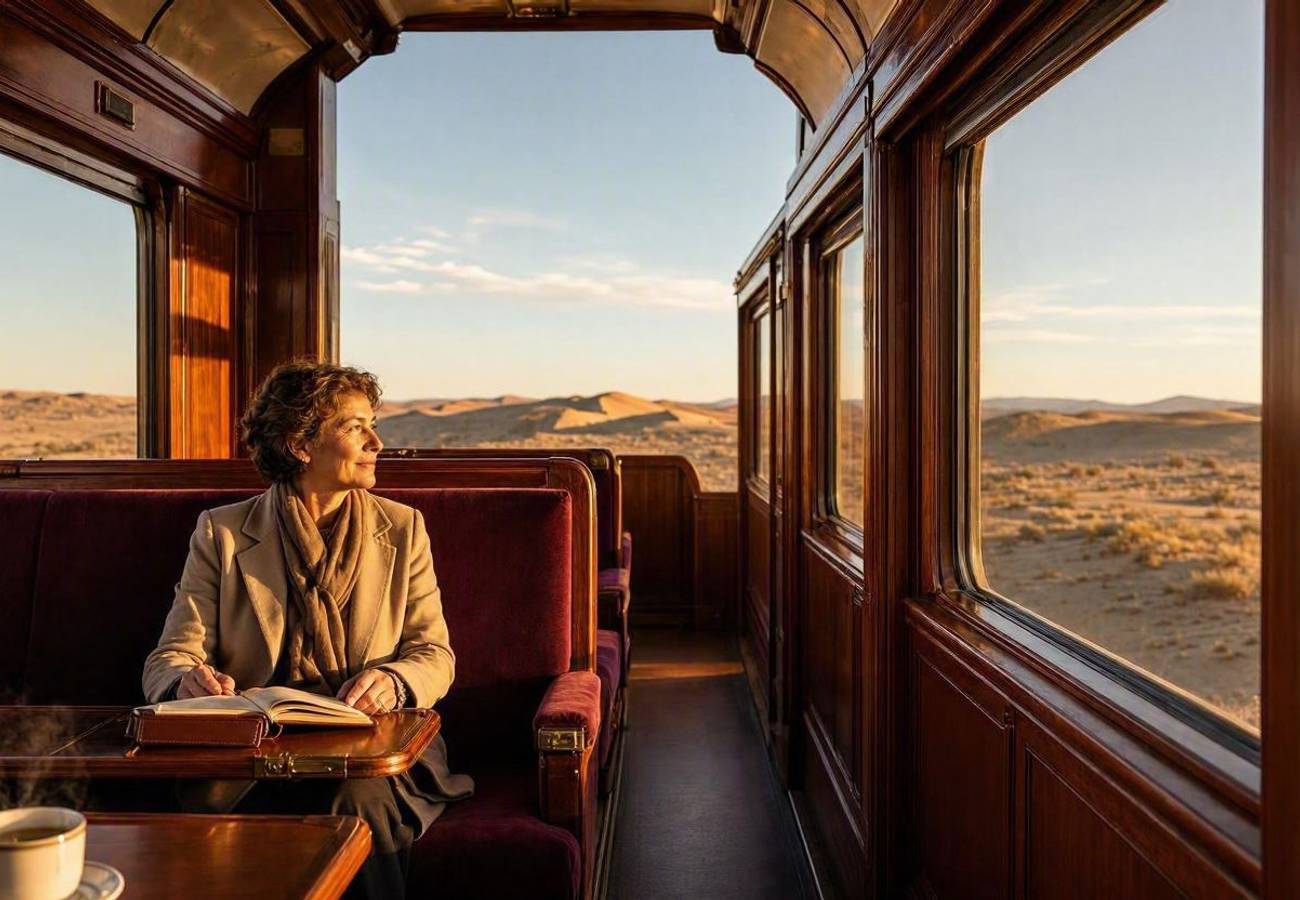
Image generated by AI
Most travelers view the Silk Road as a series of disconnected flights between sterile airport terminals, but a revived rail odyssey allows you to cross six nations without ever packing a suitcase twice. Starting September 21, 2026, Golden Eagle Luxury Trains is relaunching a massive 22-day expedition that transforms the transit between Beijing, China, and Tashkent, Uzbekistan, into the primary attraction.
The Return of the Great Overland Trade Route
The modern luxury traveler is shifting away from "point-to-point" tourism toward "slow travel" experiences that prioritize the journey over the destination. This 22-day itinerary is a response to that demand, offering a seamless transition through China, Kazakhstan, Kyrgyzstan, Tajikistan, Turkmenistan, and Uzbekistan. Rather than fragmented tours, this journey reconstructs the ancient trade link between East Asia and the Middle East, utilizing the train as a mobile five-star hotel.
The expedition begins in Beijing, where the focus is on the city's imperial weight. Before the wheels turn west, passengers engage with the Forbidden City and the Temple of Heaven. The transition from the dense urbanity of the Chinese capital to the silence of the western frontiers is a psychological shift that only rail travel can provide. By avoiding the clinical nature of air travel, passengers witness the gradual erosion of the city skyline into the raw, undulating terrain of the interior.
What Makes the Silk Road Rail Experience Different
Unlike standard rail tours, this journey is designed around the geographical extremes of Central Asia. One of the most striking segments is the transit through the Gobi Desert. Spanning parts of China and Mongolia, the Gobi is a region of rocky plateaus and dramatic atmospheric shifts. Seeing this expanse from a private en-suite cabin provides a sense of scale that is impossible to grasp from a tour bus or a plane window.
As the train pushes further west, the environment evolves from arid deserts to the jagged peaks of Tajikistan and the alpine serenity of Kyrgyzstan. A standout highlight is Lake Issyk-Kul, a high-altitude sapphire set against a backdrop of snow-capped mountains. This contrast—moving from the dust of the Gobi to the crisp air of the Tian Shan mountains—defines the experiential uniqueness of the route.
The journey culminates in Uzbekistan, the heart of Islamic architecture. The route visits the legendary trading hubs of Samarkand, Bukhara, and Khiva. These cities are not just stops; they are living museums of cultural exchange. The trip concludes in Tashkent, where the ancient depth of the Silk Road meets the contemporary pulse of a modern Central Asian capital. For more information on the region's protected sites, the UNESCO World Heritage Centre provides extensive documentation on the architectural marvels found in Uzbekistan.
Visitor Insider Tips
Navigating a 22-day overland journey requires a different mindset than a standard vacation. To make the most of this expedition, consider these local and practical insights:
- Timing the Transition: The shift from the Gobi Desert to the mountains of Kyrgyzstan involves significant temperature swings. Even in late September, you will experience scorching desert heat and near-freezing alpine nights. Pack high-performance layers rather than heavy coats.
- Etiquette in Central Asia: When visiting traditional settlements in Tajikistan and Kyrgyzstan, modesty is key. Shoulders and knees should be covered, especially when entering mosques or rural homes. A small gift from your home country is often highly appreciated when hosted by local families.
- Onboard Rhythm: Since the train serves as your hotel, embrace the "slow" pace. Use the long stretches between borders to engage with fellow travelers in the lounge cars; the social bond formed during these long hauls is often the most memorable part of the trip.
- Currency and Connectivity: While the train handles the bulk of the logistics, carry small denominations of local currencies for the markets in Samarkand and Bukhara. While luxury trains provide connectivity, signal strength in the Gobi and Tajik mountains is sporadic; download offline maps via Google Maps before departure.
- Regional Specialties: Do not leave Uzbekistan without trying Plov (the national rice dish). Every city—Samarkand, Bukhara, and Tashkent—claims to have the best version; tasting the regional variations is a culinary mission in itself.
Cultural and Environmental Context
The revival of luxury rail in Central Asia is more than a business venture; it is a shift in how these nations present themselves to the world. For decades, countries like Turkmenistan and Tajikistan were difficult to access for Western tourists. By integrating these stops into a high-end, structured itinerary, there is a renewed focus on heritage preservation. The association with UNESCO sites ensures that tourism revenue is tied to the conservation of ancient mud-brick cities and turquoise-domed mosques.
However, the environmental impact of long-distance rail is significantly lower than the cumulative carbon footprint of the multiple short-haul flights typically required to visit these six countries. This move toward rail aligns with a broader global trend where luxury is being redefined as "conscious exploration." By keeping travelers in one controlled environment (the train), the impact on fragile rural ecosystems in Kyrgyzstan and Tajikistan is minimized compared to large-scale bus caravans.
FAQ: Visiting the Silk Road via Rail 2026
What is the best time to visit the Silk Road? The late September start date for this journey is ideal. It avoids the oppressive summer heat of the Uzbek deserts and the impassable winter snows of the Tajik mountains, offering a mild climate for exploring outdoor heritage sites.
Do I need a visa for this journey? Yes, visas are required for most nationalities for China, Kazakhstan, Kyrgyzstan, Tajikistan, Turkmenistan, and Uzbekistan. However, luxury operators like Golden Eagle typically handle the complex visa procurement process as part of the package.
How do I get to the starting point? The journey begins in Beijing. Most international travelers fly into Beijing Capital International Airport (PEK) or Beijing Daxing International Airport (PKX). It is recommended to arrive at least three days early to acclimate to the time zone.
Is this journey safe for solo travelers? Absolutely. The structured nature of the luxury train provides a secure environment with constant staff support, making it an excellent option for solo travelers who want to explore Central Asia without the stress of independent navigation.
The Silk Road was never about the destination, but the exchange of ideas that happened along the way.
Related Travel Guides
Disclaimer
This article is for informational and educational purposes only. It does not constitute legal, financial, or professional advice. While we strive to provide accurate and up-to-date information, travel policies, regulations, and conditions change rapidly. Always verify information with official sources before making travel decisions. Nomad Lawyer makes no representations about the accuracy, reliability, completeness, or suitability of the information provided. Readers should consult qualified professionals for advice specific to their circumstances. The views expressed in this article are those of the author and do not necessarily reflect the views of Nomad Lawyer.
Naina Thakur
Contributor & Travel Specialist
Travel enthusiast and legal writer covering visa regulations, responsible tourism, and cultural journeys across global destinations.
Learn more about our team →