
China Expands High-Speed Suburban Rail Networks in Shanghai, Beijing, and Guangzhou for 2026
China is deploying a new generation of suburban rail networks across five major hubs to bridge the gap between urban metros and high-speed rail, transforming airport and regional connectivity.

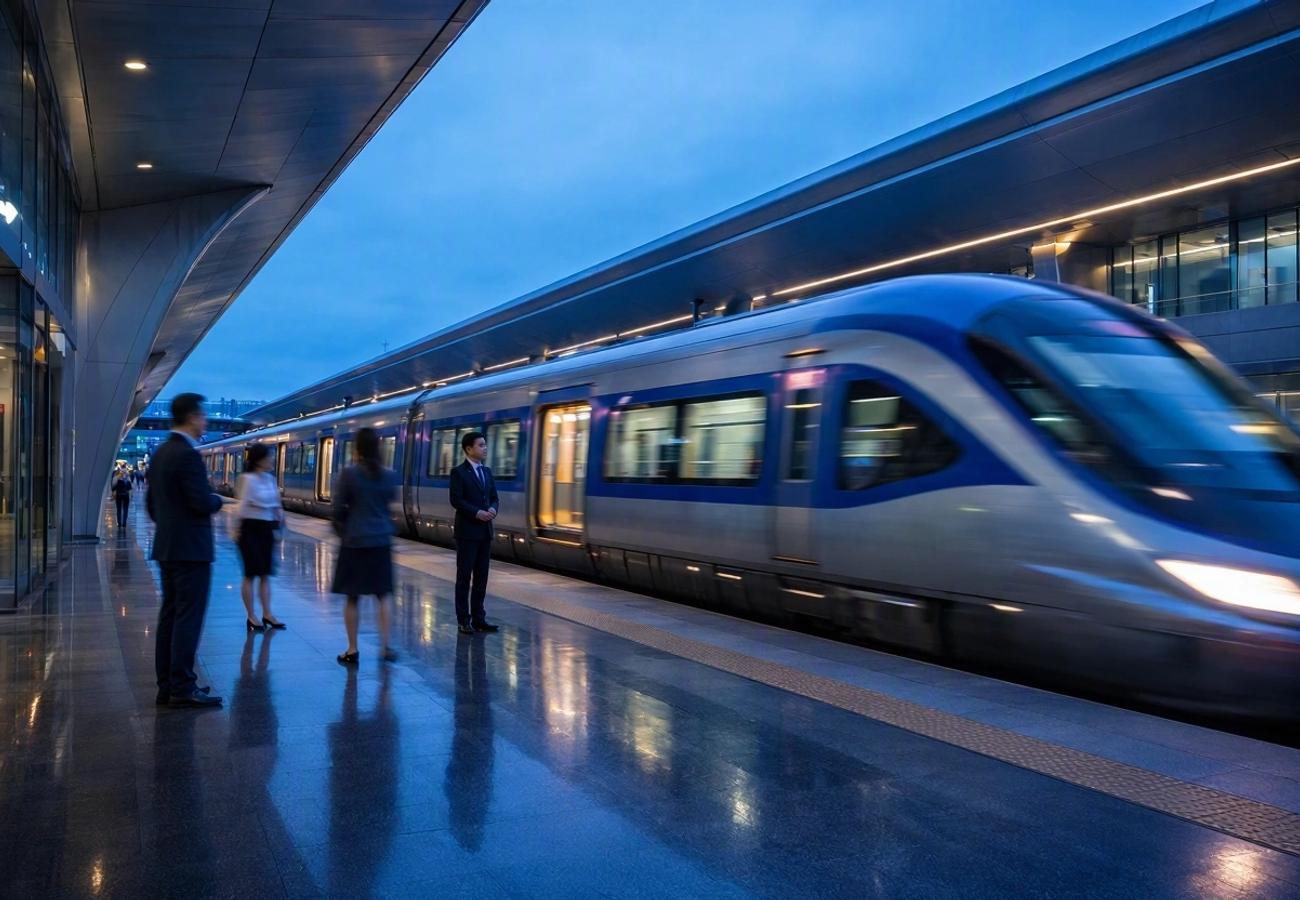
Image generated by AI
A business traveler landing at Beijing Daxing International Airport no longer faces the grueling slog of city traffic; instead, they transition seamlessly to the Daxing Airport Express, shaving hours off the commute to the city center. This shift is part of a massive structural overhaul of Chinese regional transit, where the traditional divide between slow city metros and long-distance high-speed rail is disappearing.
The Rise of the "Middle-Tier" Rail Network
In 2026, China is aggressively deploying suburban railway networks across its most populous metropolitan regions. These are not standard subways, nor are they traditional intercity trains. Instead, they are hybrid systems designed to bridge the gap between densely packed urban centers and sprawling satellite communities.
While standard metro systems prioritize frequent stops and lower speeds (typically 80–100 km/h), these new suburban corridors are engineered for speeds between 120 km/h and 200 km/h. By utilizing wider station spacing and dedicated infrastructure, these lines allow passengers to traverse regional boundaries—such as the link between Jiangsu and Anhui provinces—without the friction of multiple transfers or road congestion.
For the international traveler, this means that airport-to-city connectivity is becoming a standardized high-speed experience. Major gateways in Shanghai, Beijing, and Guangzhou are now integrated into these networks, reducing reliance on taxis and private shuttles.
Regional Rail Infrastructure Progress 2026
The expansion is concentrated in the Yangtze River Delta, the Pearl River Delta, and the Beijing-Tianjin corridor. The following table details the specific status of these critical links as of October 2026.
| City/Region | Railway Project | Length | Status (Oct 2026) |
|---|---|---|---|
| Nanjing | Line S2 | 54.2 km | Opened April 2026 |
| Nanjing | Line S5 | 57.9 km | Under Construction |
| Nanjing | Line S4 | 46.2 km | Operational |
| Ningbo | Line 12 | 61.4 km | Trials began Sept 2026 |
| Ningbo | Line 10 | 63.6 km | Target end of 2026 |
| Binhai | Line Z4 (Initial) | 23.7 km | Opened January 2026 |
| Binhai | Line Z2 (Phase 1) | 39.3 km | Under Construction |
| Guangzhou | Zhuliao–Xintang | 48.2 km | Opened August 2026 |
| Beijing | Daxing Airport Express | 41.4 km | Operational |
| Beijing | Beijing Xi–Liangxiang | 31.5 km | Services began July 2026 |
| Shanghai | Airport Link Line | 58.5 km | Operational |
| Shanghai | Airport Link Ext. | 10.2 km | Under Construction |
| Shenzhen | Pingshan–Dapeng | 39.4 km | Target late 2026 |
Your Rights as a Rail Passenger in China
Navigating a rapidly expanding rail network requires an understanding of passenger protections. While China does not have a direct equivalent to the EU's EU261/2004 for rail, the China Railway (CR) and local municipal transit authorities operate under strict service guidelines.
Ticketing and Refunds Passengers are generally entitled to full refunds for unused tickets, though administrative fees may apply depending on the timing of the cancellation. For suburban lines integrated with metro systems (like those in Nanjing), the refund process is typically handled via the digital payment app used for the purchase (Alipay or WeChat Pay).
Service Disruptions In the event of significant delays or cancellations on suburban lines, operators are expected to provide alternative routing. However, unlike European rail laws, there is no statutory "fixed-sum" compensation for delays. Passengers should document the disruption via the official station management or the 12306 official ticketing platform.
Accessibility and Safety Newer lines, such as Ningbo's Line 12 and 10, utilize CRRC-supplied electric multiple units (EMUs) that meet modern international safety and accessibility standards, including designated areas for passengers with reduced mobility.
Rebooking Strategy and Regional Alternatives
If you encounter a disruption on these new suburban lines, your strategy depends on the city:
- Nanjing: If Line S2 or S4 is delayed, check for overlapping Metro Line 7 or Line 4 connections. Because the S-series lines are integrated, the "last mile" can often be covered by the standard metro network.
- Ningbo: For those using Line 12 or 10 during trial periods, be aware that schedules can be fluid. Always have a secondary ride-hailing app (like Didi) ready, as these lines serve more remote suburban districts where alternative public transit is sparse.
- Binhai/Tianjin: Since Line Z2's airport connection is still under construction, do not rely on it for time-sensitive flights. Use the Z4 line for regional movement but maintain a taxi or shuttle backup for the final airport leg.
- Beijing/Shanghai: These cities have the highest redundancy. If the Airport Express lines face issues, the standard metro lines (though slower) remain the most reliable alternative. You can track real-time transit status via FlightRadar24 to coordinate your rail arrival with your flight departure.
FAQ: China Suburban Rail 2026
Are these suburban trains free to use? Generally, no. However, during "passenger-carrying trials"—such as those seen on Ningbo's Line 12 in September 2026—operators may offer free travel for a limited window to test system capacity.
How do these differ from the standard metro? Suburban rails have higher top speeds (up to 200 km/h vs 100 km/h), fewer stations, and cover longer distances, often crossing city or provincial borders.
Can I use my standard metro card on these lines? In most cities like Nanjing and Shanghai, the suburban lines are integrated into the city's transit payment ecosystem, meaning your digital transit QR code or smart card will work.
Is the Binhai Airport link operational? The Line Z2 first phase is under construction. While some sections of the Binhai network are open, the direct airport connection is not yet available for commercial use.
The line between the city and the suburb is blurring, turning regional commutes into high-speed sprints.
Related Travel Guides
Disclaimer
This article is for informational and educational purposes only. It does not constitute legal, financial, or professional advice. While we strive to provide accurate and up-to-date information, travel policies, regulations, and conditions change rapidly. Always verify information with official sources before making travel decisions. Nomad Lawyer makes no representations about the accuracy, reliability, completeness, or suitability of the information provided. Readers should consult qualified professionals for advice specific to their circumstances. The views expressed in this article are those of the author and do not necessarily reflect the views of Nomad Lawyer.
Naina Thakur
Contributor & Travel Specialist
Travel enthusiast and legal writer covering visa regulations, responsible tourism, and cultural journeys across global destinations.
Learn more about our team →