
Lighting Future Rail: How Platform Illumination Transforms Modern Transit
Rail platforms are reimagining lighting infrastructure in 2026 to serve multiple functions beyond basic illumination. Modern suppliers are integrating safety, digital connectivity, and decarbonisation into platform lighting systems.

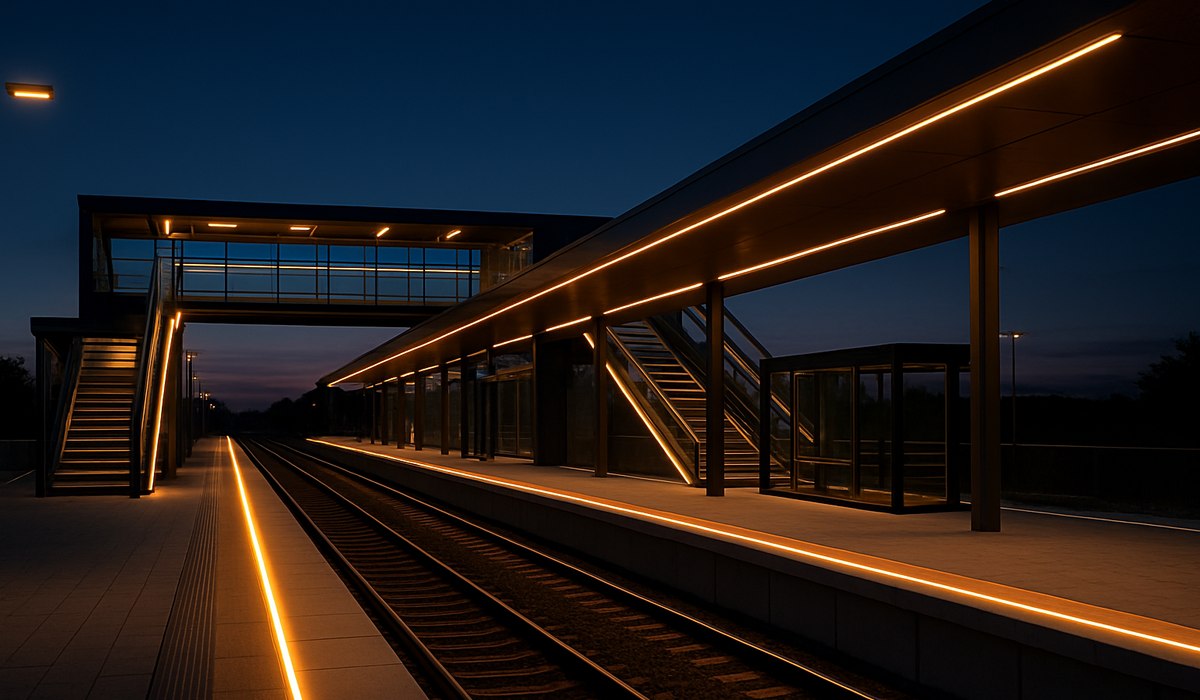
Image generated by AI
The Evolution of Rail Platform Lighting Standards
Platform illumination has undergone a dramatic transformation, shifting from a purely functional utility to a multifaceted infrastructure component. Historically, rail operators specified lighting systems primarily to meet minimum brightness thresholds established by safety codes. Today's expectations encompass far more ambitious goals: passenger safety enhancements, integrated digital connectivity, environmental sustainability, and extended asset lifecycles.
This shift reflects broader changes in how transport authorities conceptualize platform infrastructure. Modern manufacturers and transport operators now recognize that lighting future rail requires balancing competing demands. Platform footbridges, waiting areas, and passenger routes demand solutions that address contemporary travel expectations while maintaining budget discipline.
The European Union's rail modernization initiatives and UK infrastructure spending have accelerated these changes across the continent. Passengers expect well-lit stations that feel secure and modern. Operators need systems reducing energy consumption and operational costs simultaneously.
From Utility to Critical Infrastructure
Platform lighting has transcended its traditional role as basic environmental infrastructure. Contemporary systems function as integrated safety ecosystems, emergency wayfinding networks, and digital communication hubs simultaneously.
Safety remains the primary driver. Well-designed platform lighting reduces accident risks, deters crime, and supports CCTV surveillance effectiveness. Modern installations employ advanced LED technology providing consistent, flicker-free illumination across platform lengths. Suppliers now design systems accounting for color rendering index (CRI) values exceeding 80, ensuring facial recognition systems work effectively and passengers can navigate safely during emergencies.
Digital connectivity integration represents the next frontier. Smart lighting platforms enable real-time passenger information systems, emergency communication nodes, and integrated navigation systems. Some suppliers embed passenger counting sensors within luminaires, providing operators with crowd management data. Others integrate cellular boosters within lighting structures, addressing connectivity gaps endemic to underground and rural stations.
Environmental performance has become equally critical. Decarbonisation targets embedded in transport authority contracts mandate 50-70% energy reductions versus legacy systems. LED technology achieves these targets while extending replacement cycles from 8-10 years to 15-20 years, reducing lifecycle costs and manufacturing waste.
Explore railway infrastructure modernization strategies for comprehensive passenger guides to upgraded stations.
Safety and Digital Connectivity on Platforms
Modern platform environments demand multifunctional lighting addressing layered passenger requirements. Safety lighting systems now incorporate predictive maintenance sensors detecting luminaire degradation before failures occur. This proactive approach prevents the darkness-related incidents that historically plagued older infrastructure.
Digital connectivity integration enhances passenger experience dramatically. Lighting installations now house WiFi access points, emergency call boxes, and real-time information displays. Passengers using Nomad Lawyer's travel guides increasingly expect stations offering these integrated services. Some suppliers manufacture modular systems allowing operators to retrofit existing platforms without complete reconstruction.
Accessibility considerations have driven innovation in platform lighting design. Higher color contrast ratios help visually impaired passengers navigate safely. Consistent illumination patterns reduce confusion and fall risks. Specialized emergency lighting systems activate during power disruptions, automatically guiding passengers toward exits.
Platform safety statistics demonstrate the impact of modern lighting systems. Properly illuminated platforms show 40-60% reductions in passenger-related incidents. Fire safety codes increasingly mandate dedicated emergency lighting with 90-minute backup power capacity. Suppliers specializing in lighting future rail have developed systems meeting these standards while reducing weight and installation complexity.
Integration with digital wayfinding systems represents the frontier. Some manufacturers now offer lighting platforms compatible with smartphone navigation applications, enabling passengers to locate their reserved seats or platform exits through augmented reality interfaces.
Decarbonisation and Long-Term Asset Performance
Environmental performance requirements have fundamentally reshaped platform lighting procurement strategies. Transport authorities across Europe have committed to net-zero carbon transitions by 2050, driving immediate changes in infrastructure specifications.
LED technology achieves energy reductions of 65-75% compared to high-intensity discharge (HID) legacy systems. These savings translate to significant carbon footprint reductions across network-wide implementations. A medium-sized regional rail operator managing 50 stations could eliminate 200+ metric tons of annual carbon emissions through platform lighting upgrades alone.
Lifecycle assessments now guide supplier selection. Modern specifications require manufacturers to document embodied carbon in luminaires, electrical components, and installation materials. Some suppliers have achieved product certifications demonstrating 90% recyclability at end-of-life. This focus on infrastructure sustainability ensures platform lighting contributes positively to organizational environmental goals.
Long-term asset performance requires different thinking about platform lighting. Legacy systems required replacement every 8-10 years due to lamp degradation and ballast failures. Contemporary LED systems maintain 90% light output over 20,000+ operating hours, extending replacement intervals significantly. This extended performance reduces disruption to passenger services and maintenance crew scheduling.
Thermal management in modern systems enables operation in challenging environments. Underground platforms with limited ventilation present extreme conditions for legacy systems. Modern LED luminaires operate effectively across -10°C to +50°C ranges, supporting deployment across diverse geographical locations and seasonal variations.
Manufacturing Technology Innovation
Suppliers developing solutions for lighting future rail platforms employ sophisticated manufacturing processes balancing performance, durability, and cost efficiency. Contemporary luminaire design incorporates fiber-reinforced polymer housings, stainless steel components, and sealed optical systems withstanding vibration and corrosive environments endemic to rail platforms.
Modular design approaches allow manufacturers to serve diverse operational requirements without complete redesigns. A single platform light base can accommodate different optical elements, control modules, and sensor packages depending on station-specific needs. This flexibility reduces manufacturing complexity while enabling rapid deployment across heterogeneous infrastructure.
Advanced control systems represent another critical innovation area. Platform safety lighting now incorporates adaptive illumination responding to ambient conditions and passenger density. Some systems reduce output during low-traffic periods, minimizing energy consumption while maintaining minimum safety standards. Emergency override systems automatically boost illumination during security incidents or operational disruptions.
Manufacturing quality standards have increased substantially. Contemporary suppliers employ 100% optical testing, thermal cycling validation, and salt-fog corrosion testing before shipment. This rigor ensures platform lighting systems deliver consistent performance across installation locations and climatic conditions.
Explore Trainline's station information database for detailed platform descriptions across UK and European networks.
Platform Lighting Implementation Across European Networks
Implementation timelines for modernized platform lighting vary significantly across European networks. Major metropolitan areas including London, Paris, and Berlin have completed upgrades on 70-85% of primary stations. Regional networks in Central Europe remain in earlier implementation phases, with 30-50% of platforms modernized.
Funding mechanisms differ substantially by country and operator. Some authorities have secured EU infrastructure grants covering 50-60% of modernization costs. Others have implemented public-private partnerships enabling suppliers to recoup investments through operational efficiency gains. Network Rail in the UK has prioritized high-traffic commuter routes, scheduled to complete upgrades on 85% of mainline platforms by 2028.
| Aspect | Legacy Systems | Modern LED Platforms | Improvement |
|---|---|---|---|
| Annual Energy Consumption (1,000 lumens) | 850-1,200 watts | 280-350 watts | 65-75% reduction |
| Replacement Interval | 8-10 years | 15-20+ years | 100% extended lifespan |
| Color Rendering Index | 65-75 | 85-95 | Enhanced facial recognition |
| Emergency Duration | 30-45 minutes | 90+ minutes | 150% improved backup capacity |
| Installation Time (per platform) | 80-120 hours | 30-45 hours | 60% faster deployment |
| Lifecycle Carbon Footprint | 4.2 tons CO2 | 1.1 tons CO2 | 74% lower emissions |
What This Means for Travelers
Modern platform lighting upgrades directly enhance your travel experience across European rail networks. Understanding these improvements helps you appreciate the infrastructure investments supporting passenger safety and service quality.
- **Enhanced
Disclaimer
This article is for informational and educational purposes only. It does not constitute legal, financial, or professional advice. While we strive to provide accurate and up-to-date information, travel policies, regulations, and conditions change rapidly. Always verify information with official sources before making travel decisions. Nomad Lawyer makes no representations about the accuracy, reliability, completeness, or suitability of the information provided. Readers should consult qualified professionals for advice specific to their circumstances. The views expressed in this article are those of the author and do not necessarily reflect the views of Nomad Lawyer.
Kunal K Choudhary
Co-Founder & Contributor
A passionate traveller and tech enthusiast. Kunal contributes to the vision and growth of Nomad Lawyer, bringing fresh perspectives and driving the community forward.
Learn more about our team →