
Paleontological Tourism: US, Mongolia & Argentina Dinosaur Digs
Global paleontological tourism grows as travelers unearth dinosaur fossils alongside academic researchers in the US, Mongolia, Canada, and Argentina.

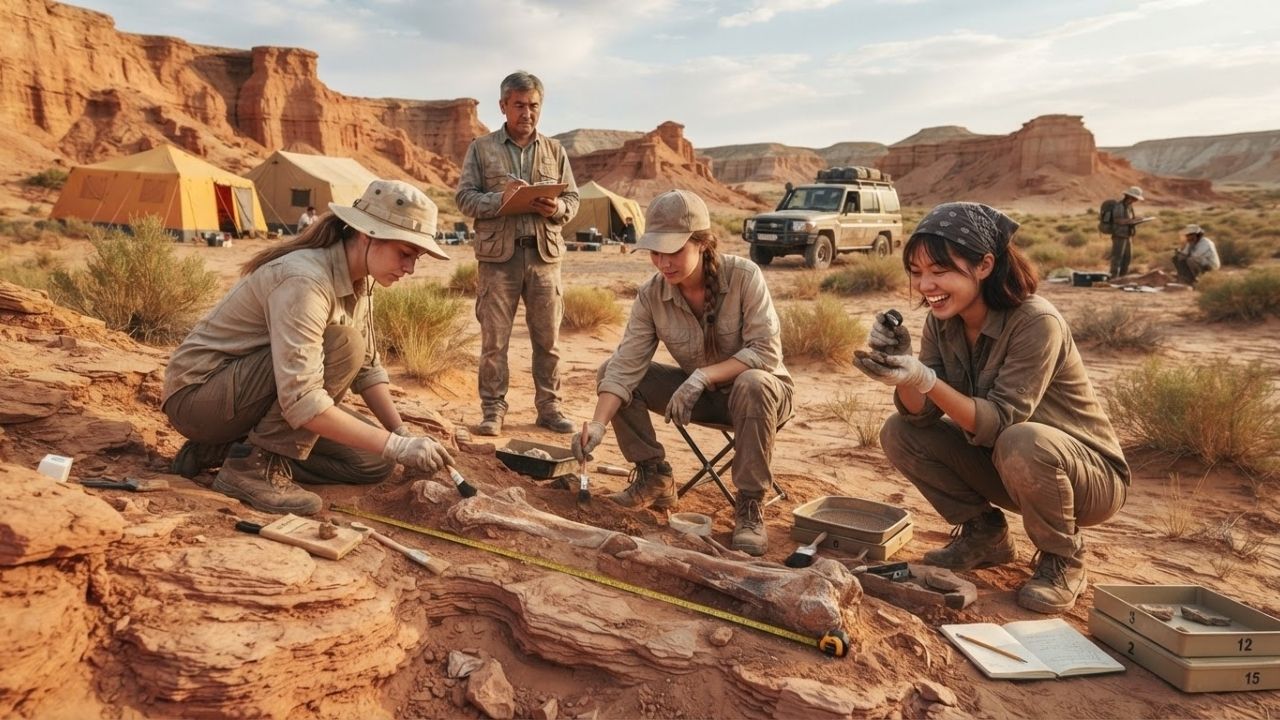
Image generated by AI
Paleontological dig-tourism is transforming adventure travel by allowing everyday explorers to work alongside professional researchers on active dinosaur excavation sites. From the Morrison Formation in the United States to the Gobi Desert in Mongolia, citizen scientists are helping recover fragile prehistoric remains.
The Rise of Citizen Science in Paleontology
Paleontological dig-tourism has rapidly transformed mainstream travel by bridging the gap between passive museum viewing and rigorous scientific fieldwork. Eager volunteers now routinely book expeditions to unearth prehistoric remains in remote settings rather than simply viewing mounted skeletons behind protective glass.
This public participation has reshaped how academic institutions execute large-scale field research across difficult terrains. Enthusiastic volunteers provide essential manual labor and financial sponsorship that help universities uncover fragile specimens before natural erosion destroys them. Under expert supervision, these travelers map stratigraphic layers, sieve sediment, and carefully chip away stubborn rock matrices.
Top Global Destinations for Dinosaur Fossil Digs
Different geological environments offer contrasting experiences for travelers seeking deep immersion into ancient ecosystems.
| Country | Primary Region / Hotspot | Geological Era | Key Dinosaur Genera | Typical Field Experience |
|---|---|---|---|---|
| Mongolia | Gobi Desert / Flaming Cliffs | Cretaceous | Velociraptor, Protoceratops | Remote tent camping, prospecting escarpments |
| Canada | Alberta Badlands / Dinosaur Provincial Park | Cretaceous | Hadrosaurs, Ceratopsians | Public bonebed digs, sediment screening |
| Argentina | Patagonia Basins | Cretaceous | Patagotitan (Titanosaurs) | Large-scale plaster-jacket extraction |
| United States | Morrison Formation (WY, UT, MT) | Jurassic | Allosaurus, Stegosaurus, Diplodocus | Week-long dig courses, academic lectures |
Mongolia: Prospecting the Gobi Desert
The wind-swept Gobi Desert features legendary locations like the Flaming Cliffs and the Nemegt Basin, where teams regularly unearth rare tyrannosaur skeletons and dinosaur eggs. Explorers in this region participate in remote tent camping and prospect desert escarpments for weathered fossils.
Canada: Structuring the Alberta Badlands
Dinosaur Provincial Park in Alberta hosts structured public bonebed programs within rugged badlands renowned for rich biodiversity. Participants engage in sediment sieving and work alongside experts from the Royal Tyrrell Museum of Palaeontology to document Cretaceous-era ceratopsian remains.
Argentina: Recovering Colossal Giants
Patagonia's sedimentary basins yield bones of massive Jurassic sauropods and Cretaceous titanosaurs, such as Patagotitan.Eager visitors assist in large-scale plaster jacketing methods, which test physical endurance while recovering bones that can exceed the size of a modern utility vehicle.
United States: Excavating the Morrison Formation
The American West's Morrison Formation, stretching across Wyoming, Utah, and Montana, is a primary hub for Jurassic-era predators like Allosaurus. Local operators and museums offer structured courses that balance physical excavation work with evening academic lectures, providing a comprehensive caving-to-quarry educational experience.
Regulatory Compliance and Site Preservation
As the popularity of dig-tourism grows, international governments are introducing strict preservation guidelines to protect fossil-rich areas. For instance, travelers on U.S. public lands must verify regulations on the U.S. Bureau of Land Management Paleontology Portal to ensure all field activities comply with federal preservation laws.
These protocols mandate that amateur diggers work under permitted researchers, follow designated quarry paths, and document every discovery. These caving-to-excavation protocols ensure that fossil records are recovered with their geological context intact, protecting their scientific value.
Local Insider Secrets for Savvy Holiday Travelers
To participate in paleontological digs safely and legally, follow these insider tips:
- Verify Permits First: In the United States, collecting vertebrate fossils on public lands (BLM, National Parks) is illegal without a permit. Always book through accredited museum quarries or university programs.
- Gobi Desert Protection: Gobi dust storms can arise quickly. Pack high-filtration dust masks and protective goggles. Never attempt to export fossils from Mongolia, as border checks are exceptionally strict.
- Badlands Wardrobe: Alberta's badlands reach temperatures above 35°C (95°F) in summer. Wear thick, breathable pants to protect against cacti, and always wear steel-toed boots in active quarries.
- Local Culinary Rewards: After a hot day in a Wyoming quarry, visit local diners to sample regional bison burgers or fresh huckleberry pie.
- Tool Etiquette: Never use metal chisels directly on fossilized bone. Always clear surrounding rock (the matrix) and leave a buffer zone of stone for laboratory preparation.
Community Development and Sustainable Tourism
Fossil-hunting expeditions provide economic benefits to remote communities in Wyoming, Utah, Patagonia, and the Gobi Desert. Eager travelers spend on local accommodations, dine in neighborhood restaurants, and hire regional guides, bringing vital capital to rural economies.
By choosing tours that support regional universities and municipal museums, travelers help preserve these ancient remains while funding local conservation programs. This cooperative framework ensures that the global travel boom benefits both the scientific community and the local hosts who live alongside these ancient terrains.
Related Travel Guides
Rockford Travel: Illinois' Forest City Midwest Getaway Guide
Vietnam Caving: Son Doong and the Deep-Earth Tourism Boom
The 10 Best Dinosaur Digs in the United States, According to Reddit
Disclaimer
This article is for informational and educational purposes only. It does not constitute legal, financial, or professional advice. While we strive to provide accurate and up-to-date information, travel policies, regulations, and conditions change rapidly. Always verify information with official sources before making travel decisions. Nomad Lawyer makes no representations about the accuracy, reliability, completeness, or suitability of the information provided. Readers should consult qualified professionals for advice specific to their circumstances. The views expressed in this article are those of the author and do not necessarily reflect the views of Nomad Lawyer.
Raushan Kumar
Founder & Lead Developer
Full-stack developer with 11+ years of experience and a passionate traveller. Raushan built Nomad Lawyer from the ground up with a vision to create the best travel and law experience on the web.
Learn more about our team →