
Germany’s Munich Rail Expansion Creates New Future for Urban Travel With S-Bahn, Metro and Tram Growth
Germany’s Munich Rail Expansion Creates New Future for Urban Travel With S-Bahn, Metro and Tram Growth

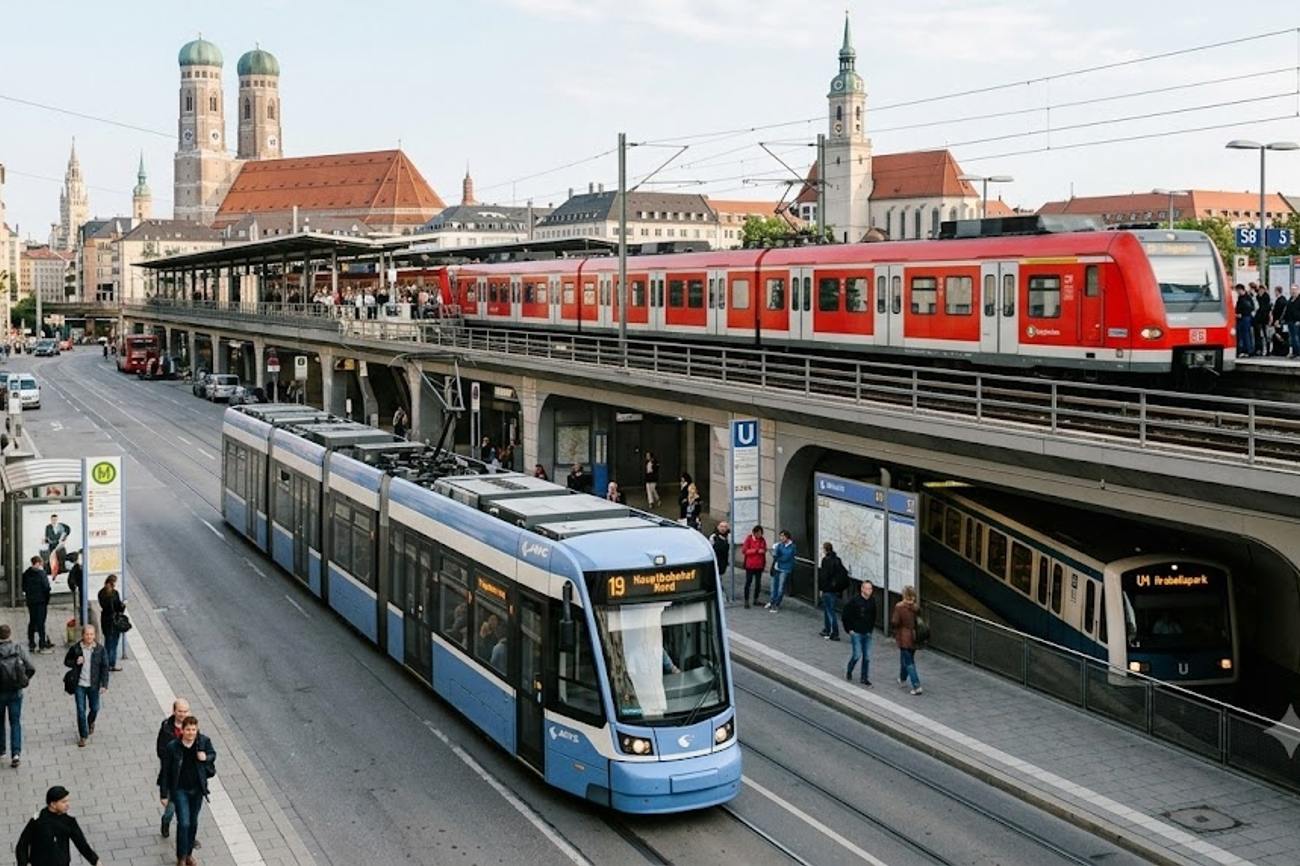
Image generated by AI
[Munich, May 2024] — Munich is launching a massive overhaul of its public transit infrastructure, headlined by the construction of a second S-Bahn core tunnel to resolve chronic congestion in one of Germany's most strained rail corridors. The city is executing a multi-pronged strategy involving the S-Bahn, U-Bahn, and tram networks to modernize transit for a growing population of residents and international tourists.
The expansion is a response to a critical capacity deficit. The original S-Bahn city tunnel, commissioned for the 1972 Olympics, was engineered to handle roughly 250,000 passengers daily. Current data shows the corridor now supports more than 800,000 passengers on a standard workday, far exceeding its original design parameters. To mitigate this, the city is deploying a combination of deep-bore tunneling and surface rail extensions to shift commuters and visitors away from private vehicles and toward sustainable transit.
The S-Bahn Core Tunnel Crisis
The centerpiece of the expansion is the second S-Bahn core route, a project designed to provide operational redundancy and increase throughput across the city center. This new underground artery will run roughly parallel to the existing tunnel, stretching from Laim in the west to Leuchtenbergring in the east.
Construction involves an 11 km stretch of new railway infrastructure reaching depths of up to 40 meters. The project includes the creation of two new underground stations at Marienhof and the Hauptbahnhof, while existing hubs at Laim and Ostbahnhof will undergo significant upgrades. The city expects the tunnel to be fully operational between 2035 and 2037.
To achieve this, engineers are utilizing four massive tunnel boring machines (TBMs). The first machine, named Donna Maria via a public vote, measures 178 meters in length, weighs 700 tonnes, and features a cutter head with a 5-meter diameter. This scale of engineering is required to navigate the dense urban subsurface without disrupting the existing Deutsche Bahn network.
Metro and Tram Network Extensions
Beyond the S-Bahn tunnel, Munich is aggressively expanding its U-Bahn and tram footprints to decentralize traffic and improve connectivity in the city's outskirts.
U-Bahn Line U5 Extension The city is extending the U5 metro line by 3.8 km. This project connects the current terminus at Laimer Platz to Pasing, a critical transport hub. Construction began in 2022, with three new stations planned for an opening in the early 2030s. This extension is designed to streamline the transition between the metro and suburban rail services in western Munich.
The Westtangente Tram Project To reduce the reliance on the city center for north-south travel, Munich is building the Westtangente. This 8.3 km tram route, costing approximately €490 million, will feature 17 stops and connect six S-Bahn routes with three U-Bahn lines. The project is slated for completion by the end of 2028, with the first segment already operational as Route 14.
Northern Munich Expansion Simultaneously, the city is developing the Münchner Norden tram project. This involves 5.7 km of new infrastructure and 12 new stops to service the rapidly growing northern districts, specifically enhancing the reach of Tram 23.
Who Is Affected
The following groups and routes will see the most significant changes during and after construction:
| Project | Primary Impact Area | Key Hubs Affected | Expected Completion |
|---|---|---|---|
| Second S-Bahn Tunnel | Central Corridor | Laim, Hauptbahnhof, Marienhof, Ostbahnhof, Leuchtenbergring | 2035–2037 |
| U5 Extension | Western Munich | Laimer Platz, Pasing | Early 2030s |
| Westtangente Tram | West Munich | North-South cross-city connectors | End of 2028 |
| Northern Tram | North Munich | Tram 23 corridor | Ongoing |
What This Means for Travelers
For the international traveler and digital nomad, these developments translate to a fundamental shift in how Munich is navigated. Currently, the central S-Bahn corridor is a bottleneck; any single disruption often leads to city-wide delays. The second tunnel will create a "fail-safe," allowing trains to be rerouted and reducing the likelihood of total system gridlock during peak tourist seasons.
Visitors arriving via Munich Airport (MUC) will eventually find a more seamless transition from airport express trains to the city center and suburban districts. The expansion of the U5 to Pasing and the Westtangente tram means tourists can bypass the crowded Marienplatz and Hauptbahnhof hubs when traveling between western districts and northern sights.
In the short term, travelers should expect localized construction disruptions, particularly around Laim and Pasing. However, the long-term result is a "rail-first" city where car rentals become unnecessary for urban exploration.
Future Transit Timeline
The roadmap for Munich's mobility is staggered over the next decade. The immediate priority is the completion of the Westtangente tram by 2028 to provide immediate relief to the western corridors. This will be followed by the U5 metro extension in the early 2030s. The final and most complex phase—the opening of the second S-Bahn core tunnel—will conclude between 2035 and 2037, marking the completion of the city's most ambitious transit upgrade in half a century.
The city's strategy is coordinated through the MVV (Münchner Verkehrs- und Tarifverbund), ensuring that ticketing and transfers remain integrated across the new and old infrastructure.
FAQ: Munich Rail Expansion 2024
Will the S-Bahn construction cause delays for airport travelers? While the second tunnel is deep underground, surface upgrades at hubs like Ostbahnhof may cause minor delays. Most airport-to-city connections remain stable, but travelers should check real-time schedules via the MVV app.
When will the U5 extension to Pasing be usable? Construction is currently underway with a target opening date in the early 2030s. Until then, travelers should continue using existing S-Bahn services to reach the Pasing hub.
Does the Westtangente tram help tourists avoid the city center? Yes. By connecting three U-Bahn lines and six S-Bahn routes in the west, the Westtangente allows travelers to move north-to-south without passing through the congested central core.
Is the new S-Bahn tunnel replacing the old one? No. The new tunnel will operate alongside the original 1972 corridor, effectively doubling the capacity and providing an alternative route if the first tunnel experiences a technical failure.
Munich is betting billions on deep-bore engineering to ensure its transit system doesn't collapse under its own growth.
#MunichSBahn2037 #MVVExpansion #MunichTransit #U5Pasing #Westtangente2028 #MunichInfrastructure
Related Travel Guides
- JR East E6 Shinkansen Special Train Creates Exclusive Morioka to Niigata Autumn Journey for Japan Travellers
- Indian Railways Strengthens Rail Network With Electric Traction Upgrade and New Four-Lane Road Over Bridge
- Calgary Echoes Toronto and More as Film Festival Destinations of Canada Set the Stage for Unforgettable Cinema Travel
Disclaimer
This article is for informational and educational purposes only. It does not constitute legal, financial, or professional advice. While we strive to provide accurate and up-to-date information, travel policies, regulations, and conditions change rapidly. Always verify information with official sources before making travel decisions. Nomad Lawyer makes no representations about the accuracy, reliability, completeness, or suitability of the information provided. Readers should consult qualified professionals for advice specific to their circumstances. The views expressed in this article are those of the author and do not necessarily reflect the views of Nomad Lawyer.
Preeti Gunjan
Contributor & Community Manager
A passionate traveller and community builder. Preeti helps grow the Nomad Lawyer community, fostering engagement and bringing the reader experience to life.
Learn more about our team →