
Germany Teams Up With UK and More in Propelling Türkiye Tourism Rise as Eight Year Revenue Growth Reaches $65 Billion

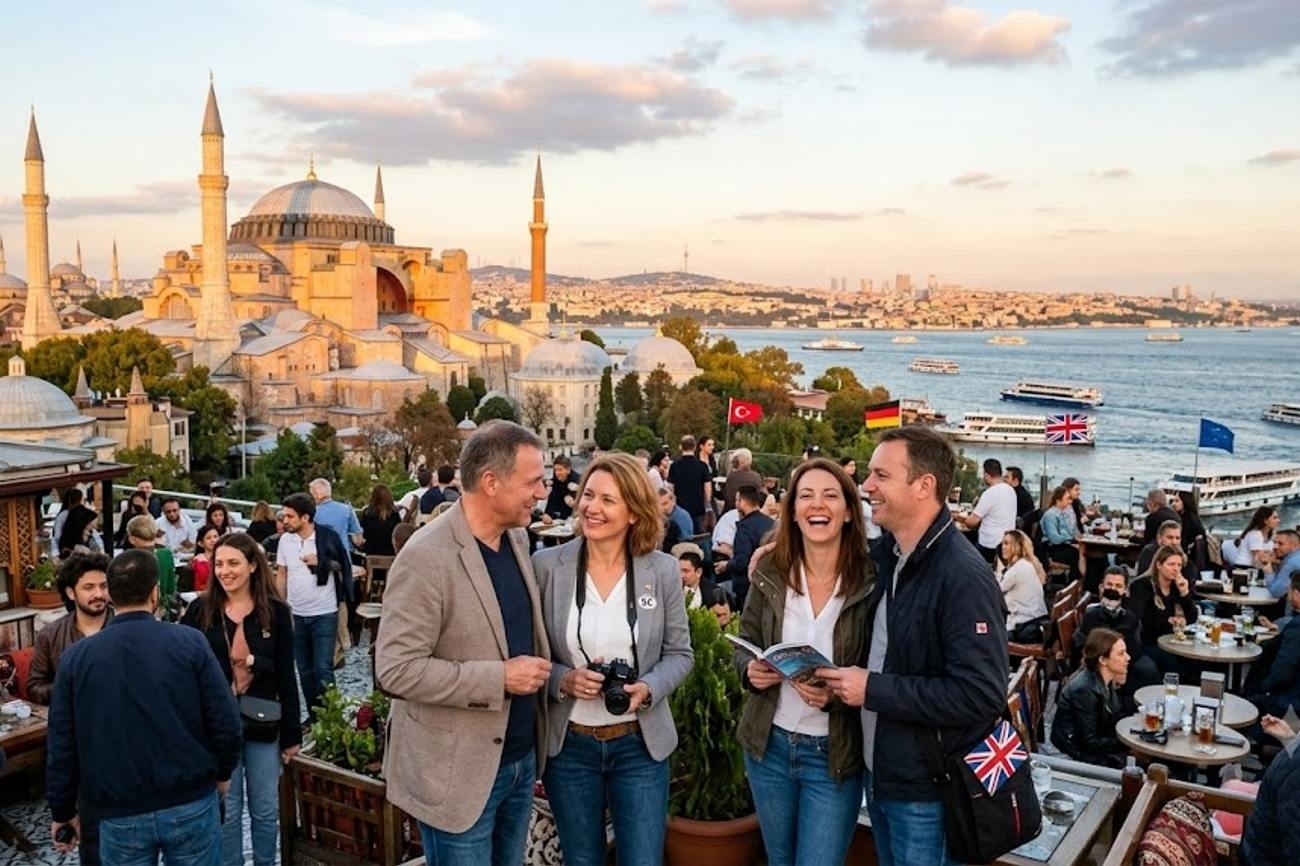
Image generated by AI
$65.2 billion in tourism revenue generated in 2025 marks a staggering leap from the $30 billion recorded just eight years prior. This 117% increase in capital inflow underscores a calculated pivot by the Turkish state to transform its travel sector from a seasonal coastal attraction into a diversified, year-round economic engine. By leveraging deep-rooted ties with Germany and the United Kingdom while maintaining a dominant grip on the Russian leisure market, Türkiye is aggressively scaling its hospitality infrastructure to absorb a higher volume of high-spending international arrivals.
The Geopolitics of Turkish Market Expansion
The current surge in revenue is not a byproduct of organic growth alone but the result of a strategic alignment with specific high-yield source markets. Germany remains the bedrock of this expansion, utilizing long-standing cultural connections and a robust network of direct flights to maintain a steady flow of family and cultural travelers. Simultaneously, the United Kingdom has emerged as a high-growth corridor, with British travelers increasingly prioritizing "experience-based" luxury and heritage tourism over traditional all-inclusive packages.
Russia continues to serve as the primary driver for the Mediterranean corridor, specifically fueling the resorts of Antalya. However, the Turkish Ministry of Culture and Tourism is consciously attempting to dilute its reliance on any single nationality. This is evident in the targeted expansion into Poland and the Iranian market, where the focus has shifted toward shopping and health tourism. By diversifying the origin of its visitors, Türkiye is insulating its economy against regional geopolitical shocks that could otherwise cripple a more monolithic tourism model.
Quantifying the Diversification Shift
The transition from a "Sun and Sea" model to a comprehensive 12-month strategy is now being implemented across all 81 provinces. This is a logistical undertaking of massive proportions, aiming to redistribute the passenger load from the saturated Mediterranean coast to the interior and eastern highlands.
The following data outlines the current strategic focus areas designed to sustain the $65 billion revenue floor:
| Tourism Segment | Primary Development Focus | Strategic Objective |
|---|---|---|
| Cultural | Museums, archaeological sites, heritage routes | Increase average length of stay |
| Nature | Forests, mountains, outdoor activity hubs | Attract eco-conscious demographics |
| Wellness | Medical facilities, thermal spas, clinics | Capture high-margin health spending |
| Winter | Ski resorts, alpine destinations | Eliminate the "off-season" revenue dip |
| Rural | Village experiences, local gastronomy | Distribute wealth to non-urban provinces |
| Business | MICE (Meetings, Incentives, Conferences, Exhibitions) | Drive weekday occupancy in urban centers |
This infrastructure is supported by the massive scale of Istanbul Airport, which functions as the primary valve for the International Air Transport Association (IATA) standards of global connectivity, linking the Mediterranean basin with Asia and the Middle East.
Expert Analysis: The "81 Province" Economic Gamble
For the seasoned traveler and the industry analyst, the push to activate tourism in all 81 provinces is the most critical development. For decades, Türkiye suffered from "over-tourism" in Antalya and Istanbul while the interior remained economically stagnant. The direct consequence of this new mandate is a shift in how the Türkiye Tourism Board markets the country: they are no longer selling a destination, but a diversified portfolio of experiences.
The pricing pressure this creates is twofold. First, by promoting "off-season" travel (winter and autumn), the government is attempting to stabilize hotel occupancy rates year-round. For the traveler, this means a potential decrease in peak-summer pricing as demand is redistributed. Second, the expansion into health and thermal tourism is a move toward "high-value" tourism. Medical tourism, in particular, attracts visitors who stay longer and spend significantly more per capita than the average leisure tourist.
However, the success of this 12-month model depends entirely on air connectivity. While Istanbul is a global hub, the secondary airports in the 81 provinces must see a corresponding increase in charter and regional flights to make these interior destinations viable. If the infrastructure does not keep pace with the marketing, the "81 province" goal will remain a political ambition rather than a logistical reality. For those booking trips, the emergence of new "heritage routes" and "nature hubs" will likely lead to more competitive pricing in the interior as new hotels vie for market share.
Germany, the UK, and other countries are contributing to the significant rise in Türkiye's tourism industry, with the country's revenue growth reaching $65 billion over the past eight years. According to the Turkish Ministry of Culture and Tourism, the number of international visitors has been increasing steadily, with popular destinations such as Istanbul and Antalya being major draws. This growth is expected to continue, with the ministry implementing various initiatives to attract even more tourists.
Key Takeaways
- Revenue Surge: Tourism income climbed from $30 billion to $65 billion over an eight-year window, with 2025 specifically generating $65.2 billion from nearly 64 million visitors.
- Market Pivot: While Germany and Russia remain dominant, the UK is seeing rapid growth in premium and experience-based travel.
- Seasonal Eradication: A new national strategy aims to eliminate the "off-season" by promoting winter sports, health tourism, and cultural sites across all 81 provinces.
- Infrastructure Backbone: The expansion is underpinned by the capacity of Istanbul Airport and a diversified accommodation network designed to handle millions of arrivals.
- Economic Diversification: The shift toward medical and congress tourism is designed to increase the average spend per visitor and reduce reliance on budget leisure travel.
FAQ: Türkiye Tourism 2025
Is it cheaper to visit Türkiye outside of the summer months? Yes. The government's 12-month tourism strategy encourages visiting all 81 provinces year-round. Traveling during the shoulder or winter seasons typically results in lower accommodation costs and fewer crowds in hotspots like Istanbul and Cappadocia.
Which cities are best for health and wellness tourism? While Istanbul is the hub for medical procedures, the interior provinces are being developed for thermal tourism. Travelers seeking wellness should look toward regions with natural thermal springs and specialized spa resorts.
How has air connectivity improved for regional travel? The expansion of Istanbul Airport has made it easier to enter the country, but the state is now focusing on improving regional airport links to support tourism in the 81 provinces beyond the coast.
What are the best markets for luxury travel in Türkiye? The UK market is currently driving a surge in "premium travel experiences." This includes high-end boutique hotels in Cappadocia and luxury heritage tours in Istanbul.
The transition from a seasonal resort to a year-round global powerhouse is no longer a goal—it is a multi-billion dollar reality.
Tags: Türkiye Tourism Board, Istanbul Airport, Antalya Tourism, Turkish Ministry of Culture and Tourism, 2025 Travel Trends, Mediterranean Leisure Market
Related Travel Guides
- Colombia’s Villa de Leyva Faces Fierce Wildfire Emergency As Flames Force Hotel Evacuations And Tourism Suspension
- Romania’s Transylvania Follows Malta And More As Europe Unveils The Ultimate Autumn Travel Experiences Events And Heritage Stays For 2026
- Afghanistan Travellers Boost Panjshir Tourism as 450,000 Domestic and 500 Foreign Visitors Explore Scenic Attractions
This article is for informational purposes. Flight routes, passenger regulations, visa rules, and transit advisories are subject to change by airlines and aviation authorities. Readers are advised to verify schedules and travel documentation with relevant carriers and border agencies before departure.
Related Stories

Nox Mobility Launches Flight-Style Night Trains from Hamburg to Munich in 2027

European Mass Protests Disrupt Travel Across France, Italy, Belgium, and Turkey in 2026
