
Germany and 50 European Nations Drive Sustainable Tourism via European Heritage Days 2026
Germany and 50 signatory states are leveraging European Heritage Days to decentralize tourism, opening 70,000 historic sites to stimulate regional economic growth and sustainable travel.

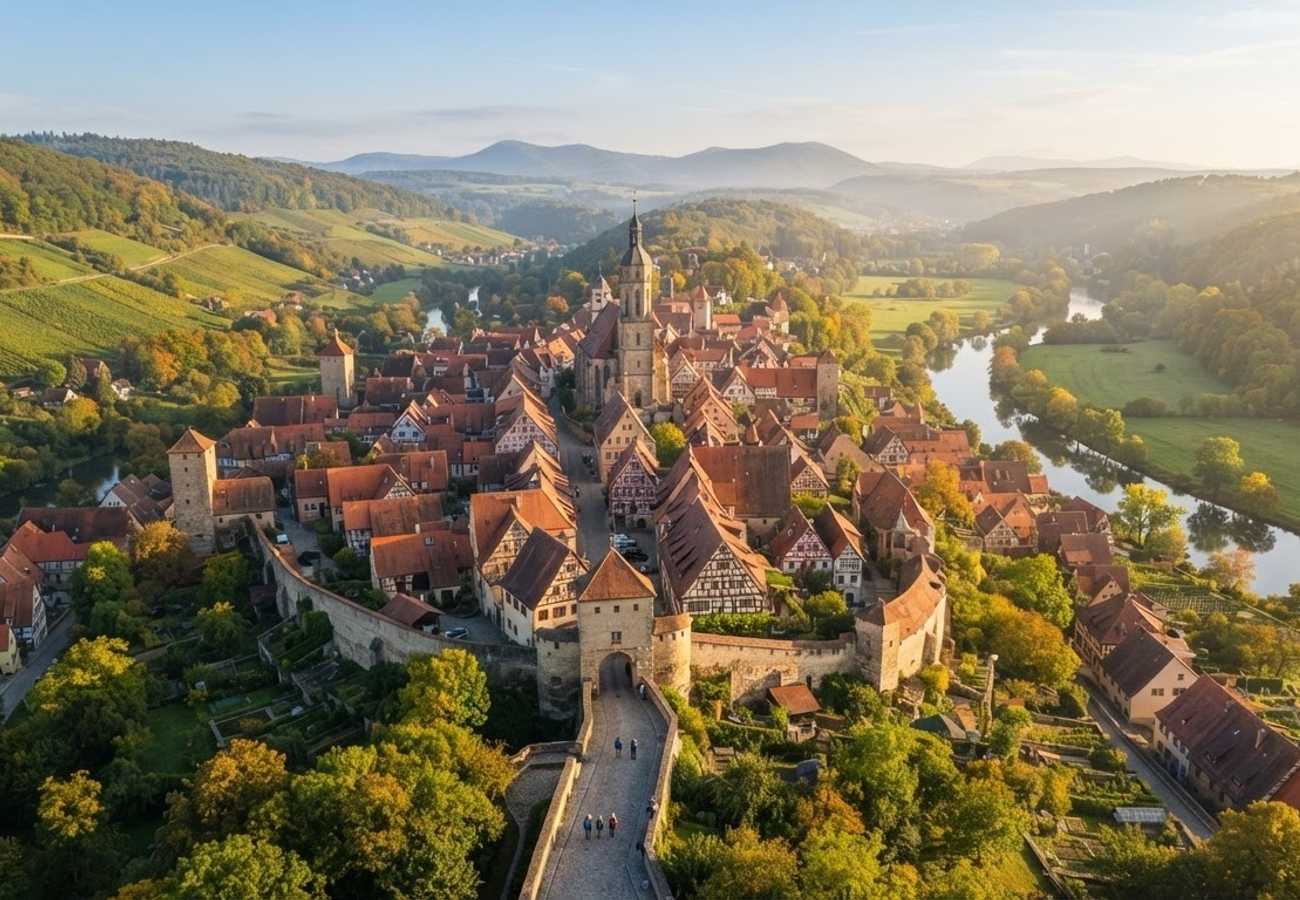
Image generated by AI
Germany and 50 other European nations are utilizing the 2026 European Heritage Days (EHD) to pivot toward a sustainable tourism model that prioritizes regional economic development over urban saturation. By granting public access to thousands of typically restricted architectural landmarks, the initiative is transforming traditional sightseeing into a community-driven engine for cross-border eco-tourism and cultural preservation.
The movement represents a strategic shift in how European states manage their cultural assets. Rather than relying on a few "honey-pot" destinations, the 2026 indicators suggest that integrating heritage preservation with public accessibility ensures the long-term viability of the continent's travel infrastructure.
The Evolution of a Pan-European Cultural Phenomenon
The framework for opening historic monuments to the public began in France in 1984 through the Journées Portes ouvertes monuments historiques. Recognizing the potential to strengthen civic identity and European unity, the Council of Europe formalized the European Heritage Days (EHD) program in 1991. The European Union subsequently joined as a co-sponsor, with the initiative now managed through a partnership between the European Commission and the Council of Europe’s Directorate General of Democracy and Human Dignity.
Currently, 50 signatory states of the European Cultural Convention participate in this annual event. What started as a niche weekend for architecture enthusiasts has scaled into the most significant participatory cultural event in Europe, drawing tens of millions of international tourists and local citizens every September.
European Heritage Days: Operational Overview
| Metric | Detail |
|---|---|
| Launch Year (Council of Europe) | 1991 (Originated in France, 1984) |
| Co-Organising Institutions | European Commission & Council of Europe |
| Participating Nations | 50 Signatory States |
| Annual Participating Sites | Over 70,000 Historic Landmarks |
| Total Annual European Visitors | Exceeding 20 Million Attendees |
| Core Objective | Sustainable Heritage, Accessibility, Growth |
Coordinating Access Across 70,000 Restricted Sites
The operational scale of the EHD network is immense, requiring a high degree of synchronization between local governments, conservation experts, heritage boards, and private landowners. Annually, more than 70,000 sites are opened to the public. These locations range from medieval castles and private manor houses to industrial complexes, government palaces, subterranean vaults, and restored transport depots that remain closed to the public for the remainder of the year.
This collaboration is governed by the European Commission's cultural policy framework, ensuring that the event is not merely a tourism marketing exercise. Instead, it functions as a tool for structural development and the reinforcement of a shared European identity through cross-border cooperation.
Integrating Green Transition and Sustainable Tourism
The 2026 iteration of European Heritage Days aligns closely with the European Green Deal and the UN Tourism Sustainable Tourism Framework. EU policy now emphasizes a "green transition" within the travel sector, pushing for low-carbon mobility and the support of regional food systems.
By encouraging travelers to visit "off-the-beaten-path" locations, the EHD reduces the environmental strain on major cities. Heritage authorities are using the event as a testing ground for sustainable visitor management, employing timed ticketing systems, capacity-tracking applications, and integrated multi-modal transit options to prevent the structural degradation of fragile monuments.
Germany’s National Strategy via Tag des offenen Denkmals
In Germany, the event is known as Tag des offenen Denkmals (Open Monument Day). This national effort is coordinated by the Deutsche Stiftung Denkmalschutz (German Foundation for Monument Protection) in tandem with municipal authorities and federal state agencies.
Because of Germany's federal structure, the 16 Bundesländer (federal states) can highlight their specific regional identities:
- Northern Germany: Focuses on Maritime and Hanseatic Brick Gothic architecture.
- Central Germany: Highlights Industrial Heritage and traditional Timber Framing.
- Southern Germany: Showcases Baroque Abbeys and Alpine Fortresses.
Visitor Engagement and Economic Benchmarks in Germany
Data from the German National Tourist Board (GNTB) and the Federal Statistical Office of Germany (Destatis) highlight the massive scale of the event's impact:
- Site Participation: More than 7,500 historic sites across 2,000+ municipalities participate.
- Visitor Volume: Between 3.5 million and 5 million visits are recorded over a single weekend.
- Human Capital: Over 50,000 volunteers and conservationists manage the tours and workshops.
- Financial Impact: The event generates tens of millions of euros for regional retail and hospitality sectors.
While domestic travelers seeking "micro-vacations" form the bulk of the attendance, there is significant international draw from Poland, Denmark, Switzerland, Austria, and the Netherlands.
Decentralizing Tourism to Stimulate Rural Growth
A critical challenge for European travel is the over-concentration of tourists in hubs like Frankfurt, Hamburg, Munich, and Berlin. The Tag des offenen Denkmals serves as a strategic counterweight by redistributing visitor flow to rural districts and small Fachwerkstädte (timber-framed towns).
This model shifts spending away from metropolitan centers and into the hands of rural guesthouse owners and local transit operators. Regions such as the Black Forest, the Saxon Sandstone Mountains, the Upper Middle Rhine Valley, and the Harz Mountains see a marked increase in overnight stays and day-trip activity.
Visitor Flow Shift: Urban vs. Regional
| Travel Pattern | Metropolitan Flow | Regional & Rural Flow | Primary Beneficiaries |
|---|---|---|---|
| Standard Travel | 70% | 30% | City Hotels, Major Attractions |
| European Heritage Days | 35% | 65% | Rural Guesthouses, Local Retail |
Public Infrastructure and Federal Partnerships
The success of these events relies on integrated public-private partnerships. The German Federal Ministry for Housing, Urban Development and Building (BMWSB), working with the Federal Cultural Commissioner, provides targeted funding for preservation ahead of the event.
Logistical support is further bolstered by Deutsche Bahn (DB) and various Verkehrsverbünde (regional transport networks), which coordinate specialized timetables to ensure that remote monuments remain accessible to the public without requiring heavy reliance on private vehicles.
Why This Matters
For the modern traveler, this shift toward decentralized heritage tourism means a move away from crowded "tourist traps" and toward authentic, community-led experiences. From a logistical standpoint, the integration of capacity-management apps and rail collaborations reduces the friction of visiting rural Europe. For the local resident in a small village, this creates a direct economic pipeline that funds the preservation of their own local history, ensuring that cultural heritage becomes a source of income rather than a financial burden.
A strategic pivot from city centers to rural monuments is redefining the European travel economy.
Related Travel Guides
Disclaimer
This article is for informational and educational purposes only. It does not constitute legal, financial, or professional advice. While we strive to provide accurate and up-to-date information, travel policies, regulations, and conditions change rapidly. Always verify information with official sources before making travel decisions. Nomad Lawyer makes no representations about the accuracy, reliability, completeness, or suitability of the information provided. Readers should consult qualified professionals for advice specific to their circumstances. The views expressed in this article are those of the author and do not necessarily reflect the views of Nomad Lawyer.
Preeti Gunjan
Contributor & Community Manager
A passionate traveller and community builder. Preeti helps grow the Nomad Lawyer community, fostering engagement and bringing the reader experience to life.
Learn more about our team →