
Germany And More Drive Europe’s EV Road Trip Revolution as Digital Borders and Smart Highways Reshape Tourism
Germany And More Drive Europe’s EV Road Trip Revolution as Digital Borders and Smart Highways Reshape Tourism

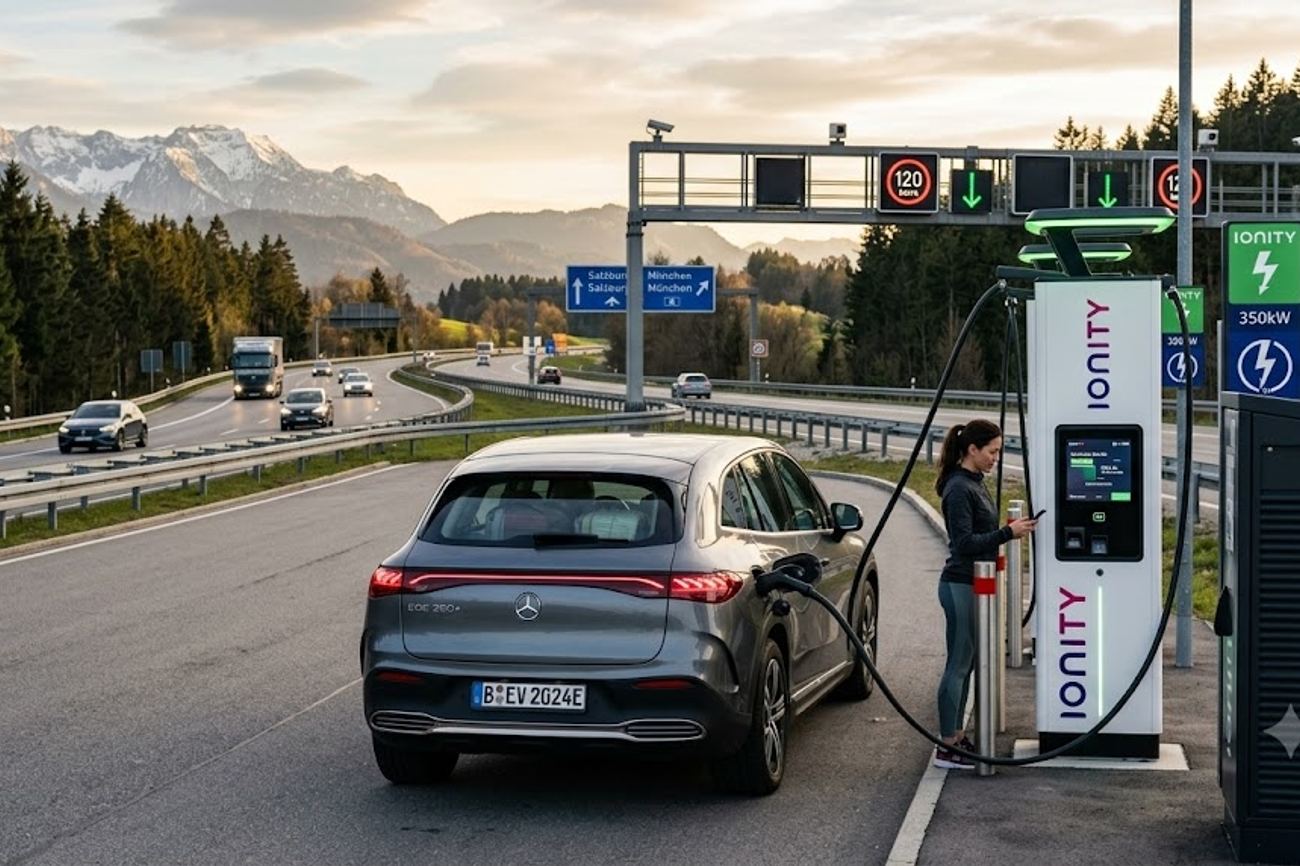
Image generated by AI
[Brussels, September 2026] — The European Union has fundamentally restructured international overland travel through the simultaneous deployment of biometric border controls and a legally mandated electric vehicle charging grid. This dual-track modernization effort, spanning Germany, France, Italy, Croatia, Slovenia, and Spain, replaces traditional passport stamping with digital dossiers and eliminates "range anxiety" via a standardized network of high-power charging hubs.
The transition is driven by two primary legislative pillars: the Entry/Exit System (EES) under Regulation EU 2025/1534 and the Alternative Fuels Infrastructure Regulation (AFIR) under Regulation EU 2023/1804. While the EES digitizes the movement of non-EU nationals across 29 nations, AFIR mandates a physical infrastructure overhaul of the Trans-European Transport Network (TEN-T), ensuring that electric mobility is no longer restricted by national borders or fragmented payment systems.
The Digital Border Pivot
The administrative shift from ink to data reached full statutory maturity on 10 April 2026. Managed by eu-LISA, the Entry/Exit System (EES) now serves as the primary mechanism for monitoring third-country nationals entering the Schengen Area. The system officially began its progressive rollout on 12 October 2025, covering 25 EU Member States and four associated countries.
Operational data released by the European Commission Directorate-General for Migration and Home Affairs (DG HOME) indicates the scale of this transition. Between October 2025 and late July 2026, the EES database recorded over 145 million individual border crossings. The system's security utility is evident in the numbers: officials have intercepted over 700 individuals flagged on international security alerts and issued more than 27,000 refusals of entry based on fraudulent documentation or expired validity.
The process requires non-EU travelers to provide high-resolution facial images and four-finger biometric scans. These data points are mapped to encrypted digital dossiers, allowing the EU to monitor visa overstays and combat identity fraud without requiring physical stamps in passports.
The Electrification of Trans-European Arteries
Parallel to border digitization, the EU is enforcing the Alternative Fuels Infrastructure Regulation (AFIR) to sustain mass electric vehicle (EV) adoption. This regulation transforms the TEN-T core road corridors into "electrified travel corridors" by imposing strict hardware requirements on member states.
Under AFIR, the EU now mandates the installation of public DC charging units with a minimum capacity of 150 kW every 60 kilometers along core highways. To ensure these stations are usable by all travelers regardless of their home country or service provider, the regulation requires open DATEX II APIs and standardized ad-hoc payment methods. This removes the previous requirement for travelers to maintain dozens of different charging app subscriptions to cross multiple borders.
Complementing the charging grid is the Multi-Lane Free-Flow (MLFF) electronic tolling system. By utilizing Automated License Plate Recognition (ALPR) and Dedicated Short-Range Communications (DSRC) gantries, the EU is removing physical toll booths. Vehicles can now maintain cruising speeds of up to 130 km/h while tolls are logged electronically, significantly reducing deceleration emissions and eliminating the notorious holiday queues at border toll plazas.
Who Is Affected
The impact of these changes varies based on citizenship and mode of transport. The following breakdown details the primary affected groups:
| Traveler Profile | Primary Impact | Key Requirement/Change |
|---|---|---|
| Non-EU Nationals | Border Processing | Mandatory biometric enrollment (facial/fingerprint) at external frontiers. |
| EV Drivers | Long-Distance Transit | Guaranteed 150 kW charging every 60km on TEN-T core networks. |
| EU Citizens | Transit Speed | Faster border crossings via MLFF tolling and removed internal checks. |
| Freight Operators | Logistics Fluidity | Reduced bottlenecks via DG MOVE's TEN-T modernization and real-time traffic management. |
What This Means for Travelers
For the average traveler, these corporate and legislative mandates translate into specific operational changes on the road.
For Non-EU Tourists: The "frictionless" promise of the Schengen Area now has a biometric entry price. First-time enrollments are not instantaneous. While repeat checks average 70 seconds, initial registration during peak windows can cause significant delays. Travelers entering via land or sea—particularly at the Port of Dover or the Eurotunnel terminal in Folkestone—must now disembark their vehicles to use biometric kiosks. This adds a mandatory time buffer to any journey from the UK to the continent.
For Electric Vehicle Users: The "range anxiety" associated with crossing from, for example, Spain into France or Italy is effectively neutralized. The legal guarantee of high-power charging every 60km means drivers can plan routes based on speed rather than charger availability. Furthermore, the mandate for ad-hoc payment means a credit card or standard digital payment is now sufficient, removing the need for proprietary charging networks.
For All Road Users: The removal of physical toll barriers means a smoother, faster driving experience. The transition to MLFF means that the "stop-and-go" nature of European motorways is disappearing, leading to shorter overall travel times between major hubs like Paris, Berlin, and Rome.
Infrastructure Investment and Bottlenecks
Despite the overarching strategy, the rollout has not been without friction. The European Commission initially implemented a 150-day flexibility mechanism to allow border forces to suspend biometric captures during extreme traffic spikes. While this grace period officially ended on 6 September 2026, nine member states—including the Netherlands, Belgium, Italy, Germany, and France—continue to use informal flexibilities at high-volume hubs to prevent total gridlock.
The UK has had to invest heavily to accommodate these EU-mandated changes at its borders. The UK government allocated £10.5 million to improve terminal layouts at Eurostar, Eurotunnel, and Dover. An additional £20 million was spent on secondary processing lanes and vehicle-holding infrastructure at Dover’s Western Docks to manage the surge of vehicles waiting for biometric clearance.
Looking ahead, the DG MOVE Master Plan aims for a total multimodal integration of these systems. The goal is to leverage the Connecting Europe Facility (CEF) to widen roads and implement intelligent traffic management, with a long-term target of reducing passenger transit emissions by 90% by the year 2050.
FAQ: European Overland Travel 2026
Do I still need my physical passport for the EES? Yes. While the EES replaces ink stamps with digital records, you must still present a valid physical passport to be scanned and linked to your biometric data.
How do I pay for charging under the new AFIR rules? AFIR mandates "ad-hoc" payment options. This means charging stations on core TEN-T corridors must accept standard payment methods (like credit cards) without requiring a specific membership or app.
Will the EES slow down my trip from the UK to France? Yes, especially for first-time enrollments. Because passengers must disembark to use kiosks at Dover and Folkestone, you should budget extra time for border processing.
Are there still toll booths on European highways? Many are being replaced by Multi-Lane Free-Flow (MLFF) gantries. You no longer stop at a booth; instead, your vehicle is logged at cruising speed, and the toll is billed electronically.
The era of the passport stamp is over; the era of the biometric corridor has arrived.
#EES2026 #AFIR_EU #SchengenDigitalBorder #TENT_Network #EuropeanEVInfrastructure #DoverFolkestoneTransit
Related Travel Guides
- Austria Stands Alongside Germany and Europe’s Major Tourism Hubs as Rail Versus Air Travel Expands
- Vietnam and China Boost Border Tourism as Lang Son and Guangxi Create New Cross Border Travel Experiences
- Puerto Rico Steps Up With Barbados And Caribbean Nations To Protect Island Tourism As Beach Crowds, Cruises And Housing Pressures Rise
Disclaimer
This article is for informational and educational purposes only. It does not constitute legal, financial, or professional advice. While we strive to provide accurate and up-to-date information, travel policies, regulations, and conditions change rapidly. Always verify information with official sources before making travel decisions. Nomad Lawyer makes no representations about the accuracy, reliability, completeness, or suitability of the information provided. Readers should consult qualified professionals for advice specific to their circumstances. The views expressed in this article are those of the author and do not necessarily reflect the views of Nomad Lawyer.
Kunal K Choudhary
Co-Founder & Contributor
A passionate traveller and tech enthusiast. Kunal contributes to the vision and growth of Nomad Lawyer, bringing fresh perspectives and driving the community forward.
Learn more about our team →