UAE Tourism Strategy 2031: How Abu Dhabi, Dubai, and Sister Emirates Drive a 40-Million-Guest Hospitality Boom

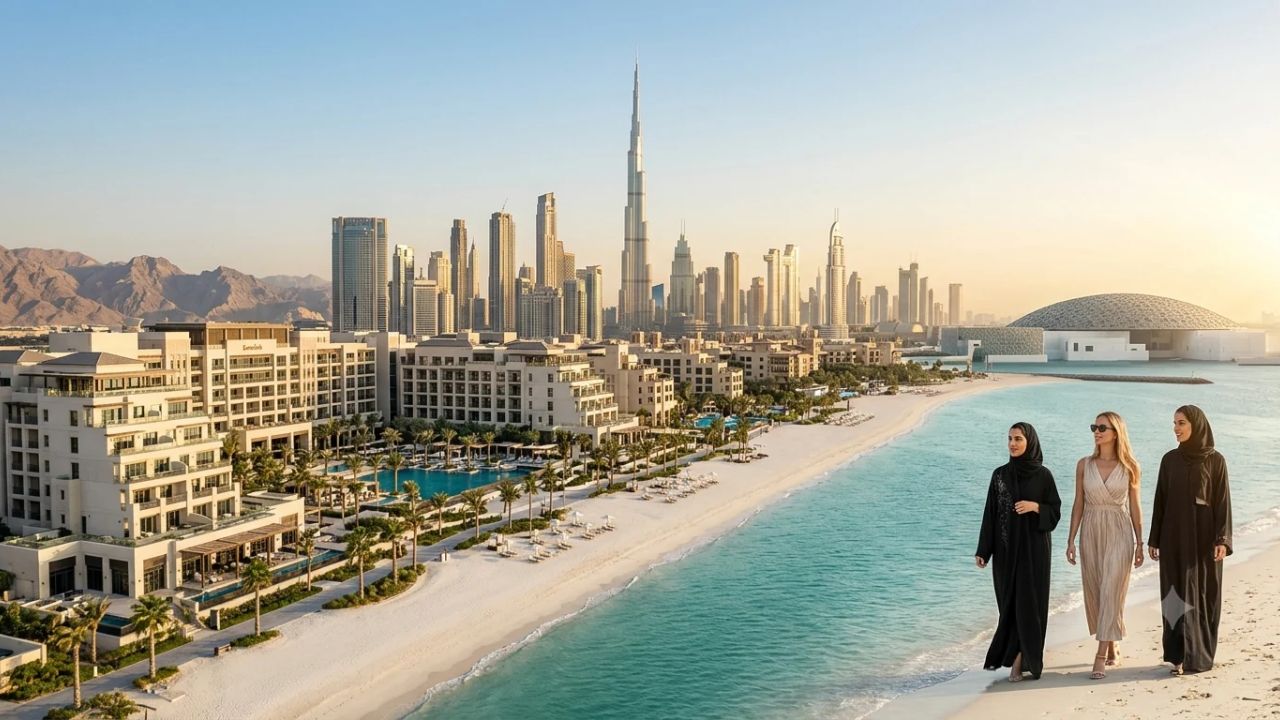
The UAE accelerates its 2031 national tourism vision as Abu Dhabi, Dubai, and the northern emirates coordinate luxury, cultural, and adventure offerings
[ABU DHABI, Oct 30, 2026] — In one of the most coordinated multi-destination hospitality mobilizations in modern tourism history, the seven emirates of the United Arab Emirates have coalesced under the federal UAE Tourism Strategy 2031, transforming historical inter-emirate competition into a unified economic powerhouse that has already reached 84% of its ambitious target of welcoming 40 million annual hotel guests.
[!NOTE] National Tourism Strategy 2031 Milestones: Championed by UAE Minister of Economy and Tourism Abdulla bin Touq Al Marri under the federal "Projects of the 50" initiative, the national hospitality blueprint integrates tourism assets across all seven emirates. Official benchmark data confirms the country has already welcomed 33.9 million hotel guests—achieving 84% of its 40-million-guest target ahead of the 2031 deadline. The strategy is engineered to elevate the direct contribution of tourism to the national gross domestic product (GDP) to AED 450 billion, while attracting AED 100 billion in targeted foreign and domestic tourism investments. Key enablers include the deployment of the Unified GCC Tourist Visa, dual-hub international aviation connectivity through Emirates and Etihad Airways, and coordinated inter-emirate destination specialization.
UAE TOURISM STRATEGY 2031 FEDERATION ECOSYSTEM
| Column 1 |
|---|
| [ NATIONAL STRATEGIC TARGETS (BY 2031) ] |
| - Direct GDP Contribution: AED 450 Billion |
| - Tourism Sector Inward Investment: AED 100 Billion |
| - Policy Framework: Federal "Projects of the 50" & Unified GCC Tourist Visa |
| +----------------------------+-----------------------------+ |
| v v |
| [ EMIRATE DESTINATION SPECIALIZATION ] [ STRATEGIC GROWTH ENABLERS ] |
| - Abu Dhabi: Cultural prestige (Saadiyat) & Yas theme parks- Dual-Hub Aviation (DXB, AUH, DWC) |
| - Dubai: Ultra-luxury waterfronts, MICE, & iconic skylines - Unified GCC Tourist Mobility |
| - Ras Al Khaimah: Adventure peaks (Jebel Jais) & Al Marjan - Seasonality mitigation via indoors |
| - Sharjah: Arab heritage, contemporary art, & eco-lodges - High-yield RevPAR & MICE extensions |
| - Fujairah: Indian Ocean coral diving & coastal retreats - Multi-emirate bundled itineraries |
The Federal Masterplan: Unpacking the "Projects of the 50"
For decades following the foundation of the federation in 1971, tourism across the United Arab Emirates operated largely along localized, municipal lines. Dubai emerged as a global commercial aviation hub and beachfront playground, while Abu Dhabi invested heavily in monumental sovereign infrastructure, institutional governance, and energy. The northern emirates—Sharjah, Ras Al Khaimah, Fujairah, Ajman, and Umm Al Quwain—pursued distinct, fragmented development paths that occasionally competed for the same regional travelers.
The formal adoption of the UAE Tourism Strategy 2031 represents a decisive break from this fragmented past. Formulated under the umbrella of the "Projects of the 50"—a series of national developmental initiatives marking the nation's golden jubilee—the strategy establishes an integrated federal tourism ecosystem. Spearheaded by Minister of Economy and Tourism Abdulla bin Touq Al Marri, this initiative treats the seven emirates not as independent competitors, but as complementary components of a comprehensive national vacation offering.
The economic imperatives guiding this transformation are immense. The federal government has tasked the hospitality and visitor economy with generating AED 450 billion in direct GDP contribution by 2031, transforming tourism into one of the country's most vital non-oil economic pillars. To support this growth, the state is mobilizing AED 100 billion in targeted domestic capital and foreign direct investment (FDI), funneling resources into luxury resort development, sustainable aviation infrastructure, green energy hospitality retrofits, and state-of-the-art entertainment venues.
With official performance reports documenting 33.9 million hotel guests already accommodated annually—surpassing 84% of the 40-million-guest milestone years ahead of schedule—the UAE is validating its multi-destination model. By encouraging international travelers to combine a weekend in Dubai with cultural exploration in Abu Dhabi, mountain climbing in Ras Al Khaimah, and diving in Fujairah, the federation is dramatically increasing average trip duration, boosting guest spending, and cementing national economic resilience.
NATIONAL TOURISM BENCHMARKS: TARGET VS. REALIZATION
| Strategic Metric 2031 National Target Current Realized Standing |
|---|
| -------------------------------------------------------------------------------------------- |
| Annual Hotel Guests 40.0 Million Guests 33.9 Million (84% Achieved) |
| Direct GDP Contribution AED 450.0 Billion Accelerated multi-billion baseline |
| Tourism Sector Investment AED 100.0 Billion Robust global & domestic capital flow |
| Regional Mobility Framework Integrated GCC Travel Unified GCC Tourist Visa Deployment |
| Aviation Network Strategy Integrated Multi-Carrier Feed Emirates, Etihad, flydubai, Air Arabia |
Abu Dhabi: The Epicenter of Cultural Prestige and Mega-Entertainment
As the federal capital and wealthiest emirate, Abu Dhabi has constructed a tourism identity defined by architectural prestige, monumental cultural institutions, and world-class theme parks. Rather than attempting to replicate Dubai’s high-density skyline, Abu Dhabi has methodically developed distinct thematic districts across its natural barrier islands.
Saadiyat Island: The Global Beacon of Cultural Tourism
Saadiyat Island represents one of the most ambitious cultural masterplans ever executed. Anchored by the Louvre Abu Dhabi—designed by Pritzker Prize-winning architect Jean Nouvel with its iconic floating dome of 7,850 aluminum stars—the Saadiyat Cultural District is entering its final stage of realization.
The forthcoming opening of the Zayed National Museum, dedicated to the legacy of the nation's founding father Sheikh Zayed bin Sultan Al Nahyan, alongside the monumental Guggenheim Abu Dhabi designed by Frank Gehry, will create the highest concentration of premier cultural institutions in the Middle East. This district attracts an affluent global demographic of art collectors, cultural academics, and heritage travelers who stay longer and spend considerably more per night than conventional mass-market tourists.
Importantly, Saadiyat Island pairs cultural prestige with rigorous environmental stewardship. Its white sand coastlines feature protected dune reserves that serve as vital nesting grounds for critically endangered hawksbill sea turtles (Eretmochelys imbricata). Luxury resorts operating along Saadiyat Beach—including properties managed by St. Regis, Jumeirah, and Rixos—adhere to strict nighttime lighting regulations and setback limits, allowing guests to experience five-star barefoot luxury alongside thriving marine ecosystems.
Yas Island: High-Octane Family Entertainment
Positioned just fifteen minutes from Zayed International Airport, Yas Island serves as the nation's premier family entertainment capital. The island houses an extraordinary collection of world-class theme parks operating within a compact perimeter.
At Ferrari World Abu Dhabi, adrenaline seekers ride Formula Rossa, the world’s fastest roller coaster, alongside immersive racing simulators and Italian automotive heritage exhibitions. Adjacent to it, Warner Bros. World Abu Dhabi stands as the world's largest fully air-conditioned indoor theme park, providing climate-controlled year-round entertainment across lands celebrating iconic characters from Gotham City, Metropolis, and Looney Tunes.
Marine wildlife and aquatic adventure are anchored by Yas Waterworld, celebrating Emirati pearl-diving folklore across dozens of rides, and the state-of-the-art SeaWorld Abu Dhabi, home to the world's largest multi-species marine aquarium and wildlife rescue facility. The island also hosts the annual Formula 1 Etihad Airways Abu Dhabi Grand Prix at Yas Marina Circuit, drawing international motorsport executives, celebrities, and yacht charters every winter. By introducing unified multi-park passes bundled directly with luxury on-island resort stays, Miral and Abu Dhabi's tourism authorities have eliminated day-trip attrition, turning Yas Island into a self-contained multi-night destination.
Al Ain: The Living UNESCO Heritage Sanctuary
Located ninety minutes inland toward the Omani border, the oasis city of Al Ain provides an authentic historical counterpoint to the coastal capital. Inscribed as a UNESCO World Heritage site in 2011, Al Ain preserves ancient human settlements dating back to the Bronze Age.
Travelers explore tranquil shaded pathways through the Al Ain Oasis, where over 147,000 date palms are sustained by the ancient falaj gravity-fed irrigation system. Surrounded by sand-brick fortifications like Al Jahili Fort and shadowed by the soaring limestone ridge of Jebel Hafeet, Al Ain has emerged as a premier retreat for heritage enthusiasts, eco-travelers, and domestic staycationers seeking mountain road-trips and traditional desert hospitality.
ABU DHABI THEMATIC TOURISM DISTRICT ARCHITECTURE
| Column 1 |
|---|
| District / Hub Primary Positioning Key Attractions & Assets |
| -------------------------------------------------------------------------------------------- |
| Saadiyat Cultural District High-yield fine art & heritage Louvre Abu Dhabi, Guggenheim, Zayed |
| Yas Entertainment Island High-octane family adventure Ferrari World, Warner Bros, SeaWorld |
| Al Ain Heritage Oasis UNESCO archaeological history Al Jahili Fort, Falaj, Jebel Hafeet |
| Al Dhafra Western Region Desert wilderness & coastline Liwa Desert dunes, Sir Bani Yas Island |
Dubai: Waterfront Icons, Global Commerce, and Future Transit
If Abu Dhabi serves as the nation's cultural and intellectual anchor, Dubai remains its hyper-connected commercial powerhouse and global lifestyle trendsetter. Consistently recognized in international traveler rankings as one of the world's top vacation destinations, Dubai pairs beachfront glamour with unrivaled global trade infrastructure.
Palm Jumeirah and the Acceleration of Palm Jebel Ali
The iconic palm-shaped archipelago of Palm Jumeirah remains a gold standard for international waterfront hospitality. Dominated by ultra-luxury landmarks such as Atlantis, The Palm and the ultra-exclusive Atlantis The Royal—hailed for its cantilevered infinity sky pools and Michelin-starred dining clusters—Palm Jumeirah commands some of the highest Average Daily Rates (ADR) and Revenue Per Available Room (RevPAR) figures in the international hotel sector.
To meet surging global demand for beachfront real estate and private island getaways, Dubai has accelerated development on Palm Jebel Ali. Spanning twice the land area of Palm Jumeirah, Palm Jebel Ali will add over 110 kilometers of new coastline to the emirate, providing space for dozens of luxury resorts, private yacht marinas, and wellness enclaves designed to absorb the next generation of international luxury vacationers.
Downtown Dubai and Business Bay: Crossroads of Global Commerce
Clustered around the Burj Khalifa—the world's tallest building—and The Dubai Mall, Downtown Dubai and adjacent Business Bay form the beating heart of the city's Meetings, Incentives, Conferences, and Exhibitions (MICE) industry.
The Dubai World Trade Centre (DWTC) and surrounding convention hotels host thousands of international exhibitions and commercial summits annually, including global gatherings like GITEX Global and Arab Health. These events generate millions of business-class room nights, with corporate travelers regularly extending their stays over weekends to enjoy the city's Michelin-starred culinary scene, beach clubs, and desert safari adventures.
Dubai South and Expo City: The Future Aviation Mega-Hub
Looking toward the next half-century of global transport, Dubai's focus is shifting southward toward Dubai South and Expo City Dubai. Centered around Al Maktoum International Airport (DWC), this district is designed to evolve into the largest passenger terminal airport in the world.
With plans approved for a multi-billion-dollar passenger terminal capable of handling up to 260 million passengers annually, Dubai South is developing into a sustainable hospitality corridor. The district will cater to aviation executives, logistics leaders, corporate relocations, and eco-conscious travelers staying in green-certified hotels designed around smart city principles.
DUBAI HOSPITALITY & COMMERCIAL POWERHOUSES
| Column 1 |
|---|
| Hospitality Corridor Core Commercial Focus Key Infrastructure Icons |
| -------------------------------------------------------------------------------------------- |
| Palm Jumeirah & Jebel Ali Ultra-luxury beachfront living Atlantis The Royal, private marinas |
| Downtown & Business Bay Corporate MICE & shopping Burj Khalifa, Dubai Mall, DWTC |
| Dubai Marina & JBR High-density resort & leisure Ain Dubai, beachfront dining promenades |
| Dubai South & Expo City Aviation mega-transit & tech Al Maktoum Airport (DWC), Expo City |
Ras Al Khaimah: The Adventure Capital and Frontier Island Escapes
Located in the northern reaches of the federation, Ras Al Khaimah (RAK) has carved out a unique market position as the UAE’s outdoor adventure capital and integrated resort frontier. Blessed with dramatic topography where rugged mountain cliffs drop directly into turquoise Gulf waters, the emirate offers an exhilarating alternative to urban skylines.
Al Marjan Island: The Northern Investment Magnet
Comprising four interconnected coral-shaped reclamation islands, Al Marjan Island has emerged as one of the most dynamic real estate and hospitality investment districts in the Middle East.
The island is attracting billions of dollars in international capital, anchored by the development of multi-billion-dollar integrated gaming and entertainment resorts. This project marks a historic diversification in Gulf hospitality, adding thousands of luxury hotel keys operated by global brands like Wynn Resorts, Nobu, and Le Méridien. Al Marjan Island is tailored to capture European, British, and Scandinavian holidaymakers seeking world-class beachfront leisure in a relaxed, open setting.
Jebel Jais: High-Altitude Thrill Tourism
Rising 1,934 meters above sea level in the rugged Hajar Mountains, Jebel Jais is the highest peak in the United Arab Emirates. Ras Al Khaimah has transformed this mountain into a world-renowned adventure destination.
Thrill-seekers flock to Jais Flight, certified by Guinness World Records as the world's longest zipline, which propels riders across deep mountain ravines at speeds exceeding 120 kilometers per hour. For families and alpine enthusiasts, the Jais Sledder provides a mountain toboggan ride winding down canyon curves with panoramic vistas, while the Bear Grylls Explorers Camp delivers outdoor wilderness survival training in desert mountain environments.
Significantly, the altitude provides an important climatic advantage: throughout the summer months, temperatures on Jebel Jais remain 10°C to 12°C cooler than coastal urban centers. This cooler microclimate allows the mountain to maintain steady domestic and international tourism footfall when low-lying coastal areas experience seasonal summer heat.
RAS AL KHAIMAH ADVENTURE & ISLAND HUBS
| Column 1 |
|---|
| Destination Hub Primary Travel Experience Signature Operational Feature |
| -------------------------------------------------------------------------------------------- |
| Al Marjan Island Integrated luxury resorts Multi-billion-dollar foreign FDI keys |
| Jebel Jais Peak (1,934m) Extreme alpine adventure World's longest zipline, cooler temps |
| Wadi Shawka & Desert Hiking, trail running, camping Wilderness mountain glamping enclaves |
| Al Hamra Heritage Village Traditional coastal history Restored historic fishing architecture |
Sharjah: Custodian of Arab Heritage, Art, and Eco-Sanctuaries
Recognized by UNESCO as the Cultural Capital of the Arab World, Sharjah provides the intellectual, artistic, and literary foundation of the UAE’s tourism identity. The emirate has steadfastly maintained a commitment to cultural authenticity, conservative family hospitality, and sensitive environmental conservation.
Heart of Sharjah and Al Noor Island
The Heart of Sharjah represents the largest historical preservation project in the region. Restoring coral-stone merchant dwellings, traditional wind-tower architecture (barjeel), and historic trading suqs like Souq Al Arsah, the district offers an intimate glimpse into pre-oil Emirati life.
Adjacent to this historic core, Al Noor Island combines contemporary architectural pavilions, illuminated art sculptures, and a tropical butterfly house overlooking Khalid Lagoon. Sharjah's international reputation is further elevated by the renowned Sharjah Biennial and the annual Sharjah International Book Fair, which draw literary figures, artists, and curators from every continent.
Kalba and Khorfakkan: Eastern Coastal Eco-Retreats
Sharjah’s territory extends across to the eastern Gulf of Oman coastline, where the enclaves of Kalba and Khorfakkan offer mountain-to-sea eco-tourism:
- Kalba Mangrove Reserves: The Khor Kalba Conservation Reserve safeguards ancient mangrove forests home to rare bird species like the white-collared kingfisher. Luxury eco-resorts such as Kingfisher Retreat offer tented luxury accessible only by private boat, prioritizing zero-impact environmental sustainability.
- Khorfakkan Amphitheatre and Waterfall: Framed by mountain ridges, Khorfakkan features a grand Roman-inspired outdoor amphitheater, an engineered mountain waterfall, and a deep-water ocean port welcoming regional cruise liners.
SHARJAH CULTURAL & ECOLOGICAL DESTINATION PROFILE
| Column 1 |
|---|
| Sanctuary / Enclave Heritage & Environmental Focus Signature Traveler Inflow |
| -------------------------------------------------------------------------------------------- |
| Heart of Sharjah 18th-century coral-stone suqs Cultural historians, museum visitors |
| Al Noor Island Art installations & butterfliesFamilies & design enthusiasts |
| Kalba Mangrove Sanctuary Rare avian species & eco-tents Birdwatchers & sustainable travelers |
| Khorfakkan Ocean Bay Maritime port & amphitheater Cruise passengers & coastal hikers |
Fujairah: Coastal Escapes and Undersea Adventures
As the only emirate situated entirely along the Gulf of Oman overlooking the open waters of the Indian Ocean, Fujairah offers a tranquil contrast to the Arabian Gulf coastline. Shielded from desert winds by the majestic Hajar Mountain range, Fujairah is the nation's premier marine sanctuary.
Al Aqah Beach and Dibba: The Diving Capital
The warm, nutrient-rich currents of the Gulf of Oman support vibrant marine biodiversity, making Fujairah the diving and watersports capital of the UAE.
- Coral Reef Sanctuaries: Sites like Snoopy Island at Al Aqah Beach and Shark Island off Khorfakkan feature accessible shallow reefs populated by blacktip reef sharks, green sea turtles, rays, and schools of clownfish.
- Deep-Sea Wreck Diving: Advanced scuba divers explore historical shipwrecks and deep-water drop-offs off Dibba Rock, encountering pelagic species such as barracuda, trevally, and seasonal migratory whale sharks (Rhincodon typus).
Uninterrupted Solitude and Restorative Retreats
Luxury beachfront resorts lining Al Aqah Beach—including properties managed by InterContinental, Le Méridien, and Fairmont—provide expansive oceanfront settings with immediate mountain backdrops. For international travelers exhausted by hectic city itineraries, Fujairah offers unhurried coastal relaxation, private fishing charters, and peaceful spa retreats.
FUJAIRAH MARINE & MOUNTAIN RECREATION PROFILE
| Column 1 |
|---|
| Marine Location Recreational Attraction Marine Ecosystem Highlights |
| -------------------------------------------------------------------------------------------- |
| Al Aqah Beach & Snoopy Rock Snorkeling & beach luxury Sea turtles, reef sharks, clownfish |
| Dibba Rock Deep-Sea Sites Advanced scuba & wreck diving Whale sharks, barracuda, corals |
| Al Bidyah Historical Mosque Archaeological exploration Oldest surviving mosque in the UAE |
| Hajar Mountain Canyons Freshwater wadi hiking Wadi Wurayah protected biosphere |
Comparative Matrix: How the Emirates Harmonize Under Strategy 2031
The strength of the UAE Tourism Strategy 2031 lies in its complementary architecture. The following comprehensive matrix illustrates how each emirate specializes in distinct offerings to create a cohesive national destination:
UAE TOURISM STRATEGY 2031 MULTI-EMIRATE SPECIALIZATION
| Column 1 |
|---|
| Emirate Primary Tourism Focus Key Geographic Asset Signature Consumer Experience |
| -------------------------------------------------------------------------------------------- |
| Abu Dhabi Culture & Mega-Parks Saadiyat & Yas Islands Louvre Abu Dhabi & Formula 1 |
| Dubai Ultra-Luxury & MICE Palm Jumeirah & DowntownAtlantis The Royal & Burj Khalifa |
| Ras Al Khaimah Adventure & Islands Jebel Jais & Al Marjan World's Longest Zipline & Gaming |
| Sharjah Heritage & Eco-Tourism Heart of Sharjah & KalbaHistoric Suqs & Mangrove Lodges |
| Fujairah Marine & Coastal Diving Al Aqah Beach & Dibba Coral Scuba Diving & Whale Sharks |
| Ajman Coastal Culture & Dhows Ajman Creek & Mangroves Traditional dhow boatbuilding |
| Umm Al Quwain Mangrove Eco-Sanctuaries Siniyah Island Reserves Historical archaeological ruins |
| -------------------------------------------------------------------------------------------- |
| Synthesis: A multi-destination ecosystem turning geographic diversity into economic resilience |
Strategic Growth Enablers: Aviation Synergy and the Unified GCC Visa
The operational engine powering this multi-emirate expansion consists of two breakthrough mobility developments: world-class aviation integration and streamlined regional border policies.
The Unified GCC Tourist Visa: The Gulf's Schengen Moment
Historically, international visitors wishing to explore multiple nations within the Gulf Cooperation Council (GCC)—or even combine an extended stay across regional borders—faced separate national visa applications, divergent entry fees, and administrative delays.
The rollout of the Unified GCC Tourist Visa, frequently referred to in travel industry circles as the "GCC Schengen," represents a landmark breakthrough for regional tourism. Under this unified framework, international tourists can enter the UAE and travel seamlessly across participating GCC member states—including Saudi Arabia, Oman, Qatar, Bahrain, and Kuwait—on a single digital multi-entry visa. Cross-emirate overland travel operates with zero internal border friction. An international visitor landing in Dubai or Abu Dhabi can hire a rental car, explore the Louvre Abu Dhabi, ascend Jebel Jais in Ras Al Khaimah, dive in Fujairah, and drive across the border into Oman's Musandam Peninsula or Muscat using one standardized travel authorization.
Dual-Hub Aviation Arteries
The UAE possesses one of the dense and technologically advanced commercial aviation networks in the world. Operating from dual mega-hubs at Dubai International (DXB) and Zayed International Airport (AUH) in Abu Dhabi, national carriers Emirates and Etihad Airways connect the country to more than 150 global destinations across six continents.
Complementing these premium long-haul flag carriers, regional operators flydubai and Air Arabia (based at Sharjah and Ras Al Khaimah) provide high-frequency low-cost connectivity across Eastern Europe, Central Asia, South Asia, and the Middle East. This coordinated aviation network funnels millions of connecting passengers directly into the federation, where innovative stopover programs convert transiting air travelers into multi-day hotel guests.
REGIONAL MOBILITY & AVIATION SYNERGY ARCHITECTURE
| Column 1 |
|---|
| Connectivity Element Operational Mechanism Visitor Mobility Benefit |
| -------------------------------------------------------------------------------------------- |
| Unified GCC Tourist Visa Single digital multi-entry visaSeamless cross-border Gulf itineraries |
| Emirates & Etihad Long-Haul Dual mega-hub interline flightsDirect arrivals from all continents |
| flydubai & Air Arabia Regional point-to-point routes Low-cost feeder links to all emirates |
| Etihad Rail Passenger Line High-speed domestic passenger Rapid inter-city connections between |
| rail network across emirates Abu Dhabi, Dubai, and the north |
Mitigating Seasonality: Climate-Controlled Venues and High-Altitude Cool
A common critique leveled against desert tourism is summer seasonality. During the extreme heat of July and August, coastal temperatures across the Gulf can exceed 42°C (108°F), historically driving sharp declines in leisure occupancy.
Under Strategy 2031, the UAE has implemented structural infrastructure solutions to maintain steady year-round hotel demand. Massive climate-controlled venues—including Warner Bros. World on Yas Island, CLYMB Abu Dhabi, Dubai’s air-conditioned shopping malls, and indoor rainforest biospheres like The Green Planet—provide expansive indoor entertainment environments where families vacation in total comfort regardless of outdoor temperatures.
Simultaneously, high-altitude microclimates provide outdoor relief. On Jebel Jais in Ras Al Khaimah, elevations approaching 2,000 meters produce temperatures consistently 10°C to 12°C cooler than sea level, enabling mountain hiking, ziplining, and open-air dining throughout the summer months. In urban centers, initiatives such as Dubai Summer Surprises and Abu Dhabi Summer Season offer substantial hotel discounts, shopping incentives, and international theater performances, sustaining high domestic staycation traffic and attracting budget-conscious regional travelers.
SEASONALITY RESILIENCE & MITIGATION MECHANISMS
| Column 1 |
|---|
| Seasonality Challenge Engineered Solution Operational Result |
| -------------------------------------------------------------------------------------------- |
| Mid-Summer Coastal Heat Climate-controlled theme parks Sustains high family hotel occupancy |
| Daytime Desert Sun Jebel Jais mountain altitude Cool-climate adventure alternative |
| Shoulder Season Revenue Summer shopping promotions High regional staycation room nights |
| MICE Calendar Dips Indoor exhibition mega-halls Maintains mid-year corporate travel |
Actionable Itinerary Architecture for Travel Advisors
To maximize client satisfaction and capitalize on the UAE’s interconnected tourism offerings, professional travel advisors should structure comprehensive, multi-emirate itineraries rather than confining travelers to a single city.
The 8-Day Classic Federation Circuit
During Days 1 through 3, travelers experience the glamour and waterfront lifestyle of Dubai. Guests check into an upscale resort on Palm Jumeirah or Downtown Dubai, visiting the Burj Khalifa observation decks, enjoying dining in Business Bay, and exploring the historic Al Fahidi heritage neighborhood along Dubai Creek.
On Days 4 and 5, travelers transfer ninety minutes south to Abu Dhabi for cultural and entertainment immersion. Visitors spend a morning touring the Louvre Abu Dhabi and walking the pristine sands of Saadiyat Beach, followed by a dedicated day of family entertainment on Yas Island exploring Ferrari World and Warner Bros. World.
Day 6 shifts focus to adventure in Ras Al Khaimah. Driving north through the desert dunes, guests check into a coastal resort on Al Marjan Island, followed by an afternoon ascending Jebel Jais to ride the world's longest zipline and alpine mountain sledder.
Finally, Days 7 and 8 provide undersea relaxation in Fujairah. Travelers take a scenic drive through the Hajar Mountain canyons to the Gulf of Oman, checking into a luxury beachfront resort along Al Aqah Beach. Guests embark on guided scuba diving or snorkeling boat charters out to Snoopy Rock and Dibba Rock before transferring back to Dubai International or Zayed International Airport for their journey home.
RECOMMENDED 8-DAY MULTI-EMIRATE ITINERARY
| Column 1 |
|---|
| Itinerary Phase Target Emirate & District Core Vacation Activity |
| -------------------------------------------------------------------------------------------- |
| Days 1 to 3 Dubai (Downtown & Palm) Modern icons, luxury dining, MICE |
| Days 4 to 5 Abu Dhabi (Saadiyat & Yas) Louvre Abu Dhabi & Yas theme parks |
| Day 6 Ras Al Khaimah (Jebel Jais) Zipline, toboggan, mountain scenery |
| Days 7 to 8 Fujairah (Al Aqah Beach) Coral reef diving & ocean relaxation |
Strategic Outlook: The World's Most Versatile Tourism Powerhouse
The United Arab Emirates is demonstrating that coordinated national planning, targeted infrastructure investment, and inter-state specialization can transform a regional hospitality sector into a global powerhouse.
By uniting the cultural gravitas of Abu Dhabi, the unstoppable glamour of Dubai, the rugged outdoor thrills of Ras Al Khaimah, the artistic soul of Sharjah, and the marine serenity of Fujairah, the federation has eliminated the limitations of single-city tourism.
As the country advances toward its 2031 milestones—welcoming 40 million annual hotel guests and contributing AED 450 billion to the national economy—the UAE is not merely expanding hotel room capacity. It is setting a global benchmark for multi-destination tourism, proving that collective unity creates enduring economic resilience and an unforgettable journey for travelers from every corner of the earth.
Frequently Asked Questions (PAA)
What is the UAE Tourism Strategy 2031, and what are its main targets?
The UAE Tourism Strategy 2031 is a comprehensive national development roadmap launched under the federal "Projects of the 50" initiative. Championed by Minister of Economy Abdulla bin Touq Al Marri, the strategy aims to welcome 40 million annual hotel guests by 2031, raise tourism's direct GDP contribution to AED 450 billion, and attract AED 100 billion in tourism sector investments. Official figures indicate the UAE has already achieved 84% of its visitor target, recording 33.9 million hotel guests.
How do Abu Dhabi and Dubai divide their tourism offerings under the national strategy?
Rather than directly competing, Abu Dhabi and Dubai focus on complementary strengths. Abu Dhabi specializes in high-yield cultural tourism (the Saadiyat Cultural District featuring Louvre Abu Dhabi, Zayed National Museum, and Guggenheim Abu Dhabi) alongside massive family theme parks on Yas Island and UNESCO heritage oases in Al Ain. Dubai leads in ultra-luxury beachfront escapes (Palm Jumeirah and Palm Jebel Ali), global commercial MICE exhibitions in Downtown Dubai, and future aviation transit centered around Al Maktoum International Airport (DWC).
What makes Ras Al Khaimah the adventure capital of the UAE?
Ras Al Khaimah is distinguished by its dramatic mountainous terrain, home to Jebel Jais, the UAE's highest peak at 1,934 meters. The mountain hosts world-record adventure attractions including Jais Flight (the world's longest zipline), the Jais Sledder mountain toboggan, and the Bear Grylls Explorers Camp. In addition, its high elevation maintains temperatures 10°C to 12°C cooler than sea level, providing year-round outdoor recreation. The emirate is also developing Al Marjan Island into a multi-billion-dollar luxury resort and entertainment destination.
What is the Unified GCC Tourist Visa, and how does it benefit travelers?
The Unified GCC Tourist Visa is a regional multi-entry travel authorization that allows international tourists to visit all six member states of the Gulf Cooperation Council (UAE, Saudi Arabia, Oman, Qatar, Bahrain, and Kuwait) on a single digital visa, similar to Europe's Schengen system. It enables travelers to land in Dubai or Abu Dhabi, tour multiple emirates, and cross regional borders into neighboring Gulf destinations without applying for separate national visas.
Why is Fujairah considered the premier diving destination in the UAE?
Unlike the other six emirates, which border the Arabian Gulf, Fujairah lies entirely along the Gulf of Oman overlooking the Indian Ocean. Its deep waters, rich marine currents, and sheltered coastal reefs around Snoopy Island and Dibba Rock harbor diverse marine ecosystems, including sea turtles, reef sharks, rays, and seasonal whale sharks, making it the premier destination for scuba diving, snorkeling, and deep-sea wreck exploration in the country.
Related Travel Guides
This article is for informational purposes. Flight routes, passenger regulations, visa rules, and transit advisories are subject to change by airlines and aviation authorities. Readers are advised to verify schedules and travel documentation with relevant carriers and border agencies before departure.
Related Stories
Ireland and Sweden Lead Global Push for High-Yield US Tourism: Luxury B2B Summits, Off-Peak Travel, and Regional Dispersal in 2026
Resorts World Sentosa Unveils SGD 6.8 Billion RWS 2.0 Mega-Expansion: Debt Strategy, New Luxury Hotels, and Singapore Oceanarium by 2030