France’s Rhône Valley Outshines Bordeaux And Provence As The Ultimate Autumn Wine Travel Experience

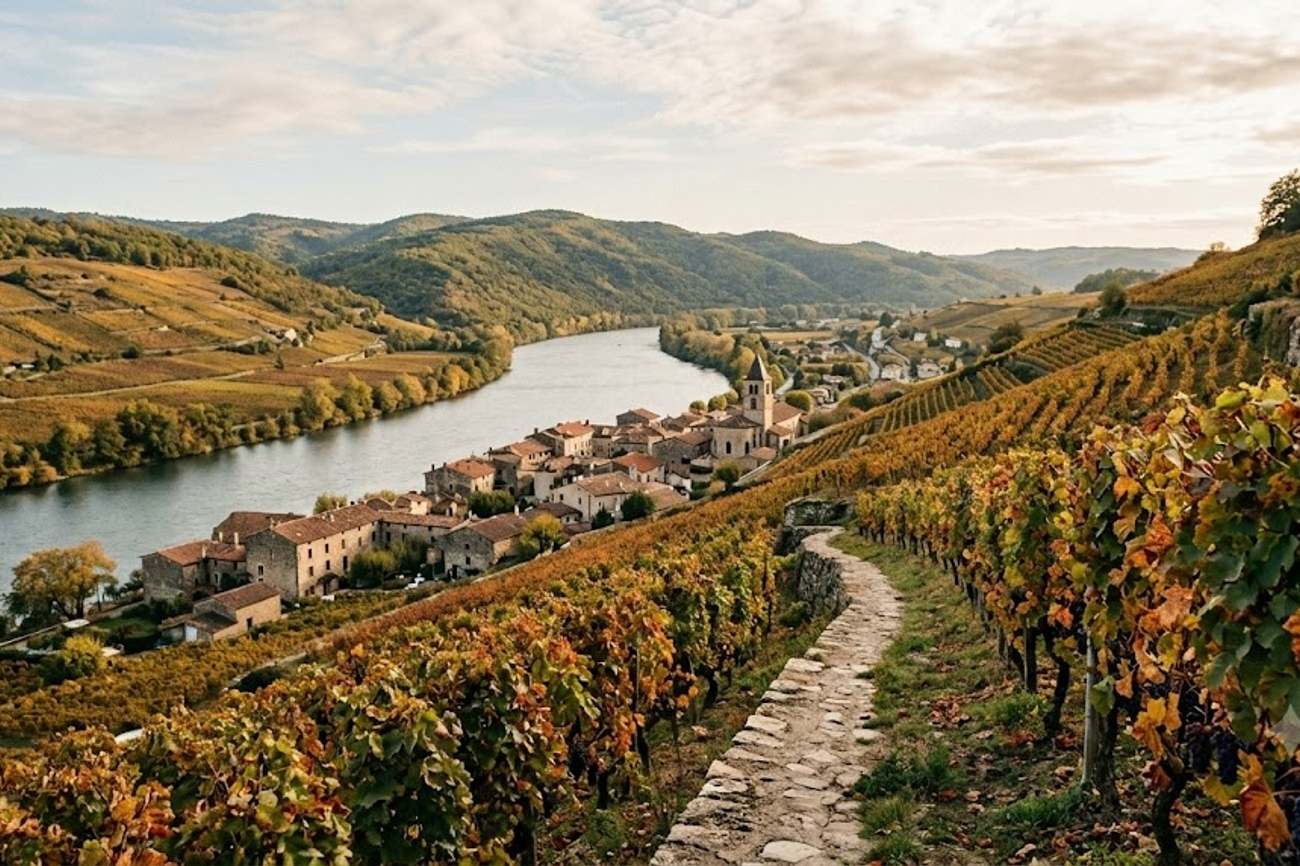
Image generated by AI
The Rhône Valley has surged from being the least visited wine region in France to the top-ranked destination for autumn photography, achieving a perfect Photo Index Score of 100. This represents a total reversal of historical visitor patterns, signaling a pivot in how high-value travelers engage with French viticulture—shifting from traditional tasting-room tourism to experiential, visually-driven exploration.
The Visual Economy of the Rhône Valley: Data Breakdown
The current data indicates a massive shift in the "share of eye" within the French wine sector. The Rhône Valley's perfect score of 100 suggests that the region has successfully productized its landscape, moving beyond the bottle to market the environment itself. This growth is not accidental; it is the direct result of strategic infrastructure investments, specifically the promotion of the ViaRhôna cycling path. By integrating active transport with scenic vistas, the region has captured a demographic of "slow travelers" who prioritize photography and wellness over traditional luxury tours.
The region's success is rooted in its dual-landscape architecture. The Northern Rhône offers high-contrast, vertical geometry with its steep granite terraces, while the Southern Rhône provides the horizontal, Mediterranean warmth of wide plains. This diversity ensures a higher volume of unique imagery per square kilometer than its competitors, which is a primary driver for the modern "Instagrammable" travel economy. According to data from the World Tourism Organization (UNWTO), the rise of experiential travel is increasingly driven by the desire for "authentic" and visually distinct environments, a trend the Rhône Valley has leveraged more effectively than any other French wine region.
Comparative Regional Performance: The Autumn Index
When placing the Rhône Valley against the historical heavyweights of Bordeaux and Provence, a clear hierarchy of visual appeal emerges. While Bordeaux remains a powerhouse of cultural prestige, its appeal is split between urban architecture and rural vineyards. Provence, traditionally a summer-peak destination known for lavender, is seeing a seasonal extension as travelers seek the "golden hour" light of autumn.
The following table illustrates the disparity in visual attraction across France's primary wine and scenic regions during the autumn window:
| Region | Photo Index Score | Primary Visual Driver | Market Position |
|---|---|---|---|
| Rhône Valley | 100 | Terraced Vineyards / ViaRhôna | Market Leader |
| Bordeaux | 73 | Urban Architecture / Garonne River | Heritage Hub |
| Provence | 71 | Mediterranean Light / Ancient Villages | Seasonal Pivot |
| Languedoc-Roussillon | 55 | Medieval Fortifications / Canal du Midi | Emerging Gem |
| Corsica | 29 | Rugged Mountains / Coastal Views | Niche Nature |
| Burgundy | 26 | Classic Vineyards | Traditionalist |
| Loire Valley | 23 | Châteaux / Riverfronts | Underperforming |
| Beaujolais | 17 | Rolling Hills | Low Visibility |
| Southwestern Regions | 16 | Rural Landscapes | Low Visibility |
| Alsace | 12 | Half-timbered Architecture | Low Visibility |
| Champagne | 7 | Sparkling Wine Estates | Seasonal Laggard |
The data reveals a stark divide. The top four regions (Rhône, Bordeaux, Provence, and Languedoc-Roussillon) are all located in the south of France. This indicates a regional clustering of autumn tourism, likely driven by more favorable weather patterns and a longer window of foliage color change compared to the north. The International Air Transport Association (IATA) often notes that seasonal weather shifts are primary drivers for short-haul European flight patterns; the concentration of high scores in the south suggests a migration of autumn travel spend toward the Mediterranean basin.
Practical Traveler Advisory and Strategic Insights
For the individual traveler or digital nomad, this data suggests that the "peak" window for French wine tourism has shifted. If you are planning a trip to the Rhône Valley in October or November, you are entering a high-demand period for photography and cycling.
- Booking Lead Times: Because the Rhône Valley has transitioned from the "least visited" to the "most photographed," hotel capacity in small vineyard villages is likely to tighten. Booking 12-16 weeks in advance for autumn dates is now recommended to avoid the price surges associated with this newfound popularity.
- Route Planning: The success of the ViaRhôna indicates that the region is now optimized for cycling. Travelers should prioritize bike rentals over car rentals to access the most photogenic vineyard terraces that are often inaccessible by vehicle.
- Diversification Strategy: For those seeking a "Bordeaux experience" without the crowds, the data suggests Languedoc-Roussillon (Score: 55) is the optimal alternative. It offers a significant amount of visual appeal (medieval cities like Carcassonne) but lacks the extreme congestion of the Rhône Valley.
- Timing the Champagne Visit: With a score of only 7, Champagne is currently a "low-visual" destination in autumn, partly due to harvest-season restrictions on tours. If your goal is vineyard access and photography, avoid Champagne in the peak harvest window and pivot toward the Rhône Valley.
Forward Projection: The "Visualization" of Tourism
The trajectory of the Rhône Valley suggests that "Photo Indexing" is becoming a leading indicator of tourism growth. We are seeing a shift where the aesthetic value of a destination—its ability to be captured and shared digitally—outpaces its traditional cultural or culinary prestige.
As the Rhône Valley continues to dominate, we can expect a "halo effect" to impact neighboring regions. Languedoc-Roussillon is already showing signs of this, positioning itself as a less-crowded alternative. We will likely see an increase in "Photography Tours" as a formal product offering in these regions, moving away from the standard wine-tasting itinerary.
Furthermore, the low scores in the North (Alsace, Champagne, Loire) suggest an opportunity for these regions to reinvent their autumn marketing. If they can develop "scenic corridors" similar to the ViaRhôna, they may be able to recapture a share of the autumn market. For now, the data points to a continued dominance of the South, where the combination of Mediterranean climate and diverse topography creates a superior visual product. This trend is mirrored in broader European data found via Statista, which shows an increasing preference for "nature-centric" and "active" travel over static city tours.
FAQ: France Autumn Travel 2025
Will hotel prices in the Rhône Valley increase this autumn? Yes. The shift from the least visited to the most photographed region creates a supply-demand imbalance. Expect higher ADR (Average Daily Rate) in vineyard-adjacent boutique hotels during October and November.
Is it better to visit Bordeaux or the Rhône Valley for photography? It depends on the subject. For architectural and urban elegance, Bordeaux (Score: 73) is superior. For natural landscapes, colorful vineyards, and rural diversity, the Rhône Valley (Score: 100) is the clear leader.
Which regions are currently underrated for autumn trips? Languedoc-Roussillon (Score: 55) offers a high visual reward with significantly fewer crowds than the top three regions, making it an ideal choice for those avoiding peak tourism.
Why is Champagne ranked so low for autumn photography? The low score (7) is attributed to seasonal access limitations. During the harvest, many estates limit public tours and vineyard access, reducing the opportunities for photographers to capture the region's beauty.
The map of French tourism is being redrawn not by the palate, but by the lens.
Related Travel Guides
This article is for informational purposes. Flight routes, passenger regulations, visa rules, and transit advisories are subject to change by airlines and aviation authorities. Readers are advised to verify schedules and travel documentation with relevant carriers and border agencies before departure.
Related Stories

European Mass Protests Disrupt Travel Across France, Italy, Belgium, and Turkey in 2026

Spain and France Lead Global Winter Tourism Rankings 2026 as Seasonal Travel Shifts