Nepal’s Mustang Tourism Takes A Hit As Bhotekoshi Floods Trigger Sharp Drop In Tourist Arrivals Across The Region

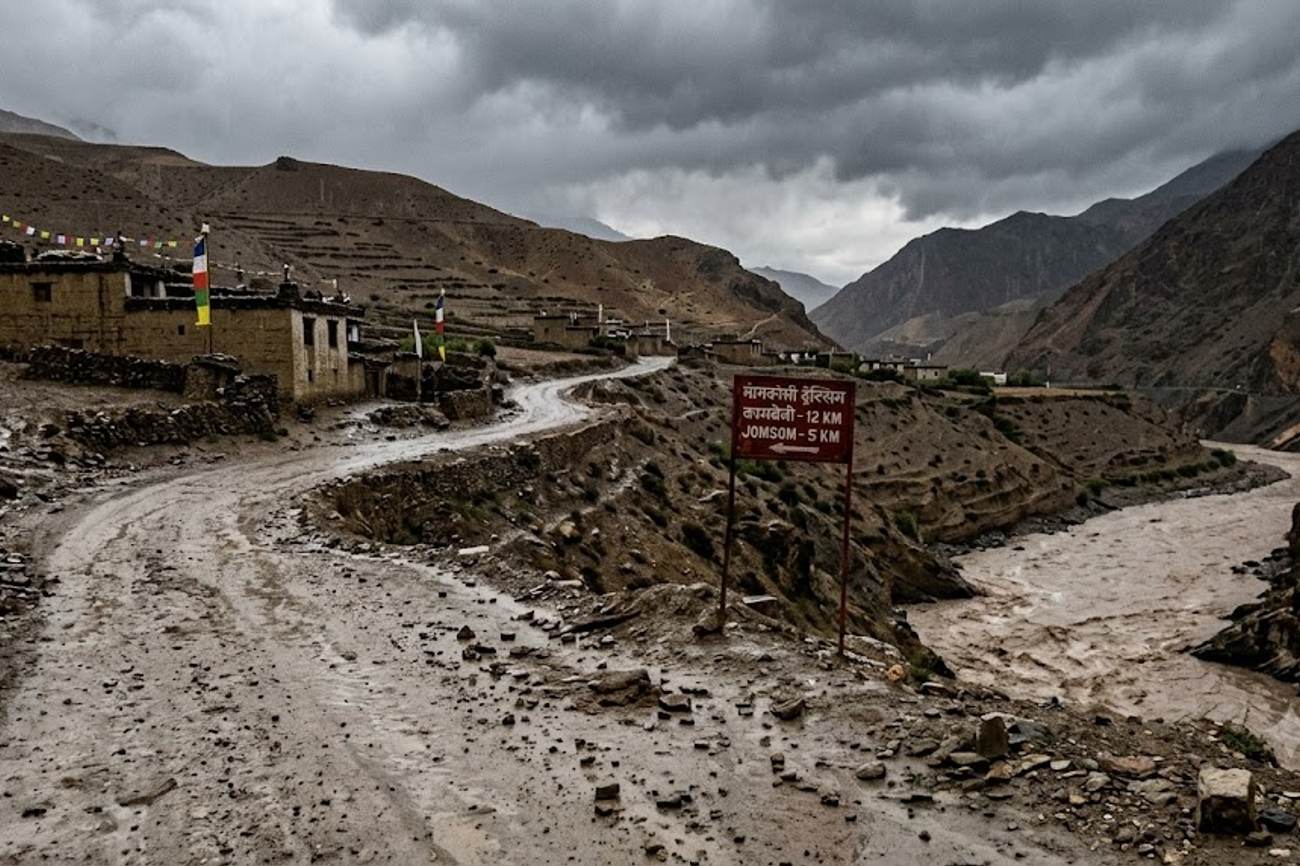
Image generated by AI
A 29,274-visitor deficit in the Mustang district during the Bhadrapada period exposes the fragile intersection of Himalayan tourism and climate-driven infrastructure failure. This precipitous drop in arrivals, triggered by the August 26 floods in the Bhotekoshi-Trishuli River region, underscores a systemic vulnerability in Nepal's mountain economy: the total reliance on a few precarious road arteries. When the Bhotekoshi-Trishuli system failed, the ripple effect didn't just stop at the riverbanks; it paralyzed the flow of travelers to one of the nation's most prized high-altitude destinations.
The Bhotekoshi Catalyst and Connectivity Collapse
The crisis began on August 26, when catastrophic flooding struck the Bhotekoshi-Trishuli River region. While the flooding occurred in a specific river system, the logistical fallout extended deep into the mountains. Mustang, a region defined by its rugged Himalayan terrain and cultural heritage, depends almost entirely on the stability of the Kaligandaki Corridor. This corridor serves as the primary umbilical cord for the district, transporting everything from luxury trekkers to domestic pilgrims.
The floods caused severe river erosion and structural damage to road networks, transforming a standard travel route into a series of impassable bottlenecks. In the geography of the Himalayas, there are rarely "alternative routes" of equal efficiency. When a primary corridor like the Kaligandaki is compromised, the destination is effectively severed from the rest of the country. This is not merely a matter of convenience; it is a matter of viability. For the hotels, guides, and transport operators in Upper Mustang, Soms, and Muktinath, the road is the only product that matters. Without it, the most stunning landscapes in the world become inaccessible.
Quantifying the Decline: A Data Breakdown
The impact of the August 26 floods is most evident when comparing the Bhadrapada period (August 17 to September 16) against both the preceding month (Sauna) and the same window from the previous year. The numbers reveal a collapse in regional and domestic confidence.
| Visitor Category | Sauna Arrivals | Bhadrapada Arrivals | Percentage Change (MoM) |
|---|---|---|---|
| Domestic Visitors | 30,655 | 16,503 | -46.16% |
| SAARC Region Visitors | 31,575 | 15,138 | -52.05% |
| Other International | 193 | 348 | +80.31% |
| Total Arrivals | 61,263 | 31,989 | -47.78% |
The data highlights a stark divergence in traveler behavior. While the total visitor count plummeted by 47.78% compared to Sauna, the loss was driven almost entirely by those who rely on road-based transit. Domestic tourists dropped by 46.16%, and visitors from SAARC (South Asian Association for Regional Cooperation) countries saw an even steeper decline of 52.05%.
Conversely, "Other International" visitors—those typically arriving via flights or high-budget, pre-planned itineraries—actually increased from 193 to 348. This suggests that while the "drive-in" market evaporated instantly, the high-end international market remained resilient, likely due to different logistical arrangements or a lack of real-time awareness of the road conditions.
Expert Analysis: The "Last-Mile" Fragility of Mountain Tourism
For travelers and investors in the Himalayan sector, this data reveals a critical pattern: the "Last-Mile" fragility. Mustang is not suffering from a lack of demand—as evidenced by the 93,252 total visitors recorded so far this year—but from a failure of delivery.
The direct consequence of the Bhotekoshi-Trishuli flooding is the exposure of a dangerous dependency on single-point-of-failure infrastructure. When the Kaligandaki Corridor erodes, the entire economic ecosystem of Mustang—from the teahouses in the Upper Mustang region to the religious sites of Muktinath—stops functioning. The 52.05% drop in SAARC arrivals is particularly telling; these travelers typically utilize regional road networks and are the first to cancel when reports of landslides or washouts surface.
The pricing pressure created by this volatility is significant. Local operators cannot maintain steady pricing when their occupancy can drop by nearly 50% in a single month due to a weather event. This creates a cycle of financial instability for small businesses, making them less likely to invest in the very disaster-resilience measures—such as reinforced embankments or better drainage—that would prevent these crashes.
From a regulatory perspective, the International Air Transport Association (IATA) and local aviation authorities should note that as road networks become less reliable due to climate volatility, the demand for STOL (Short Take-Off and Landing) flights into mountain airstrips will increase. However, if the road network remains the only viable way to move supplies and bulk passenger groups, Mustang's growth ceiling will remain capped by the stability of its soil.
Key Takeaways
- Infrastructure Dependency: A single flood event in the Bhotekoshi-Trishuli region caused a 47.78% monthly drop in total arrivals to Mustang.
- Market Sensitivity: Domestic and SAARC travelers are the most vulnerable to road disruptions, with arrivals falling by 46.16% and 52.05% respectively.
- International Resilience: Global tourists (non-SAARC) showed an anomalous increase, rising from 193 to 348 visitors despite the crisis.
- Annual Volume: Despite the August/September slump, Mustang maintains strong overall appeal with 93,252 total visitors year-to-date.
- Critical Bottleneck: The Kaligandaki Corridor remains the single most important logistical point for the region's economic survival.
FAQ: Mustang Travel [2024]
Is it currently safe to travel to Mustang? Travel is possible, but road conditions along the Kaligandaki Corridor can be volatile following the Bhotekoshi-Trishuli floods. Travelers should check real-time updates from local transport operators and the Nepal Tourism Board before departing.
How did the floods affect different types of tourists? Road-dependent travelers (domestic and SAARC) saw the biggest decline in visits. International travelers, who often use different logistical chains or flights, were less affected and some even increased in number.
What are the main attractions in Mustang that remain open? Upper Mustang, Soms, and the Muktinath temple remain primary draws. While the destinations themselves are intact, the primary challenge is the road access required to reach them.
Why did SAARC visitor numbers drop more than domestic ones? Regional travelers from SAARC countries rely heavily on road-based journeys across borders into the mountains. When primary corridors are damaged, these long-distance road trips become impractical or dangerous, leading to a 52.05% drop.
The Himalayan economy is only as strong as the road that leads to it.
Related Travel Guides
This article is for informational purposes. Flight routes, passenger regulations, visa rules, and transit advisories are subject to change by airlines and aviation authorities. Readers are advised to verify schedules and travel documentation with relevant carriers and border agencies before departure.
Related Stories

European Mass Protests Disrupt Travel Across France, Italy, Belgium, and Turkey in 2026
Storm Bruna 2026: Iberia Faces 200mm Rainfall and 6m Swells Triggering Mass Travel Chaos