South Korea Rail Tourism Surges 72% as Korail Nears Historic 10 Million Foreign Passenger Milestone in 2026

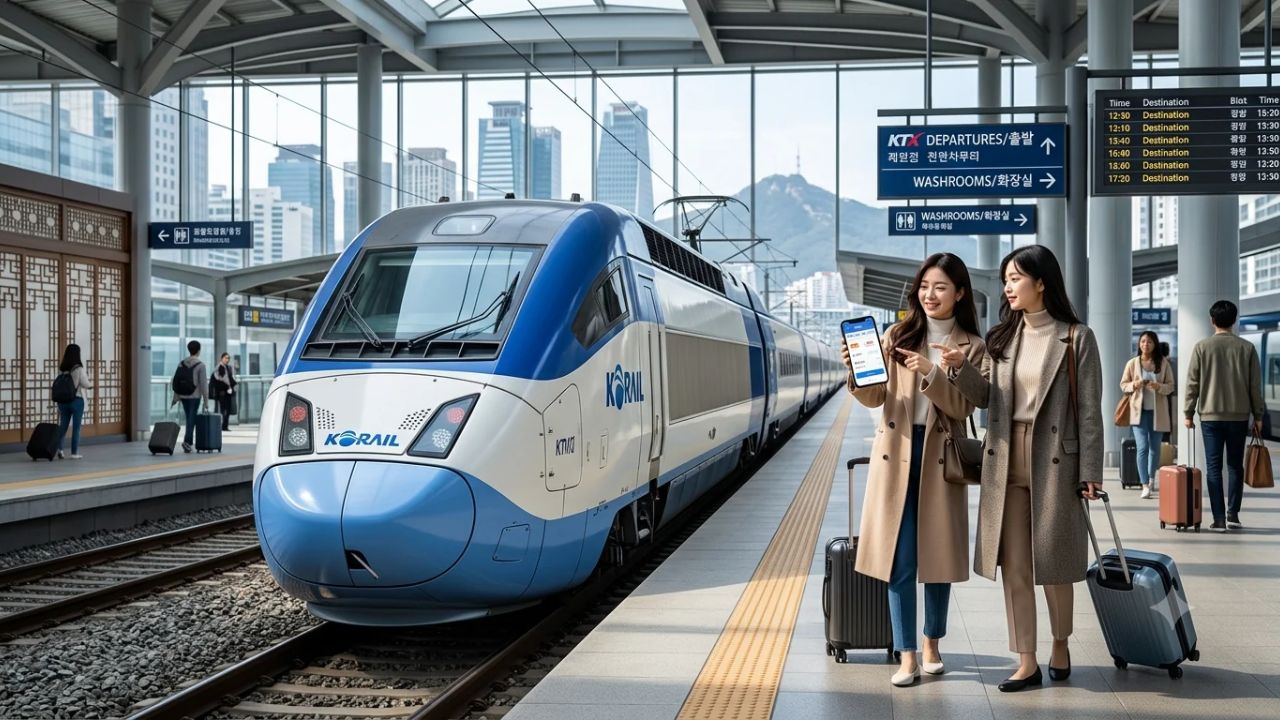
SEOUL — South Korea's railway tourism sector has entered an unprecedented period of structural expansion, with national rail operator Korea Railroad Corporation (Korail) on the verge of crossing a historic milestone of 10 million foreign passenger journeys in a single calendar year. Official operational figures released by Korail reveal that international travelers completed approximately 7.78 million train journeys between January and September 2026, marking a staggering 72 percent year-on-year increase compared to the corresponding nine-month period in 2025. This exceptional surge has already eclipsed the 6.06 million international journeys registered across the entire twelve months of 2025 by more than 1.72 million trips, cementing electrified rail as the preferred transit mode for overseas visitors exploring the Korean peninsula.
The rapid democratization of Korean rail tourism is being accelerated by aggressive digital modernization initiatives. On 3 November 2026, Korail officially expanded its multilingual booking architecture across its international web portal and the Korail+ mobile application, increasing supported languages from seven to ten with the addition of French, German, and Mongolian. Simultaneously, the operator doubled its advance booking window from one month to two full months (60 days), enabling long-haul holidaymakers to secure high-speed Korea Train eXpress (KTX) seats alongside international flights and hotel reservations. With roughly 2.22 million additional journeys required across the fourth quarter to achieve the eight-figure threshold, Korail's customer-centric digital reforms are transforming regional travel dispersion across South Korea.
The Divergence Metric: Rail Usage Outpaces Foreign Arrivals by 3.3 Times
The most illuminating dimension of South Korea’s 2026 rail tourism performance lies in the pronounced divergence between general inbound tourist volumes and domestic rail usage. Independent tourism monitoring and Ministry of Culture, Sports and Tourism records indicate that foreign visitor arrivals to South Korea expanded by approximately 21.5 percent during the first nine months of the year. Over that identical timeframe, foreign passenger journeys on Korail services jumped by 72 percent.
This means that international railway utilization grew at more than 3.3 times the rate of overall inbound tourist arrivals.
Several structural and behavioral shifts explain this dramatic multiplier effect:
- Rise of Independent Travelers (FITs): Group package tours historically relied on chartered motor coaches that ferried visitors directly between designated tourist sights and hotels, bypassing public transit infrastructure. In 2026, the overwhelming majority of inbound visitors travel independently, preferring the autonomy, speed, and environmental efficiency of public high-speed rail.
- Multi-Journey Travel Behaviors: The 7.78 million recorded journeys measure individual train rides rather than unique tourist heads. Independent international visitors routinely undertake multiple rail segments during a single itinerary—such as taking an express train from Seoul to Busan, boarding a regional service to the historic Silla kingdom capital of Gyeongju, continuing west to Jeonju Hanok Village, and returning north to the capital.
- Flight and Highway Substitution: With domestic airfares fluctuating and intercity expressway corridors prone to severe weekend congestion, the KTX network offers unmatched transit reliability, whisking passengers from downtown Seoul to the southern port of Busan in just two hours and 15 minutes.
SOUTH KOREA RAIL TOURISM SURGE: JAN - SEP 2026
| Column 1 | Column 2 | Column 3 | Column 4 | Column 5 |
|---|---|---|---|---|
| PASSENGER JOURNEYS | GROWTH COMPARISON | ANNUAL PROJECTION | ||
| - 7.78 Million Foreign | - Rail Journeys: +72% | - 2025 Total: 6.06M | ||
| Passenger Journeys | - Foreign Arrivals: | - 2026 Target: 10.0M+ | ||
| - Exceeded Full-Year | +21.5% YoY | - Q4 Deficit Needed: | ||
| 2025 by 1.72M Trips | - Rail Outpaced Total | 2.22 Million Trips | ||
| - January to September | Arrivals by 3.3x | - First Time in History |
Digital Modernization: Expanding to Ten Languages and Mobile App Usability
For international tourists, linguistic accessibility historically represented the primary friction point when booking intercity train travel in South Korea. While major station concourses feature bilingual signage, navigating local ticket vending machines or legacy reservation portals presented significant administrative hurdles.
Recognizing these barriers, Korail executed a comprehensive digital overhaul on 3 November 2026, rolling out full reservation capabilities in ten languages across both the official international website and the flagship Korail+ smartphone application.
The Linguistic Expansion Strategy
Prior to the November update, Korail supported seven languages: English, Simplified Chinese, Traditional Chinese, Japanese, Indonesian, Vietnamese, and Thai. The addition of French, German, and Mongolian expands direct native-language coverage across high-yield European and Central Asian visitor markets:
- European Inbound Growth: In consultation with the Korea Tourism Organization (KTO), Korail analyzed inbound market characteristics, identifying that travelers from France and Germany maintain some of the longest average lengths of stay in South Korea, frequently exceeding two to three weeks. These travelers actively seek out regional hiking routes, cultural temples, and coastal excursions beyond Seoul, making them prime consumers of extensive rail itineraries.
- The Mongolian Travel Surge: Inbound arrivals from Mongolia have surged significantly, driven by medical tourism, academic exchanges, and shopping travel. Providing native Mongolian language reservations eliminates third-party travel agent markups, allowing visitors to coordinate medical appointments in Seoul with leisure visits to Busan or Gangwon Province independently.
Seamless Interface on the Korail+ Application
The multilingual framework is fully integrated into the Korail+ mobile application. Travelers can select their preferred language via a prominent drop-down menu situated at the top right of the application's primary home screen.
The application architecture delivers several high-utility features tailored to overseas visitors:
- Digital Seat Mapping: Passengers can inspect real-time train carriage configurations and select specific window, aisle, or forward-facing seating preferences.
- Integrated Mobile Boarding Pass: Once purchased, tickets are stored directly within the application's offline digital wallet, eliminating the need to print paper receipts or wait in queue lines at ticket windows.
- Push Notification Alerts: Travelers receive automated push notifications alerting them to approaching departure platforms, track changes, and impending destination arrival stations.
| Language Option | Implementation Date | Target Tourism Profile & Operational Focus |
|---|---|---|
| English | Core Legacy | Universal global baseline for North American, European, and Oceanian travelers |
| Simplified & Traditional Chinese | Core Legacy | Short-haul mainland Chinese, Taiwanese, and Hong Kong leisure shoppers |
| Japanese | Core Legacy | High-frequency weekend travelers exploring culinary and regional heritage routes |
| Indonesian, Vietnamese, Thai | Phased Rollout | Southeast Asian leisure and incentive travel groups exploring K-culture corridors |
| French & German | 3 November 2026 | Long-stay European holidaymakers undertaking multi-week cross-country rail tours |
| Mongolian | 3 November 2026 | Rapidly expanding medical, commercial, and educational visitor flows |
The 60-Day Advance Booking Revolution: Coordinating Long-Haul Itineraries
Alongside multilingual accessibility, Korail addressed one of the most persistent complaints raised by international travel planners: restrictive advance booking windows.
Under legacy regulations, Korail restricted ticket reservations to a narrow 30-day window prior to train departure. For overseas travelers planning complex, multi-week vacations months in advance, this artificial restriction created severe itinerary uncertainty. Travelers frequently secured international airfare, paid non-refundable hotel deposits in Busan or Gyeongju, yet remained unable to confirm their intercity KTX transportation until four weeks before arrival. During peak travel periods—such as the Chuseok autumn harvest festival, the Seollal Lunar New Year, the April cherry blossom season, and October autumn foliage peaks—high-speed seats along premier corridors sold out within minutes of release, leaving unprepared foreign visitors stranded.
Effective October 2026, Korail formally doubled its advance booking window, permitting eligible foreign passengers to reserve train tickets up to two full months (60 calendar days) prior to departure.
Strategic Benefits for International Travelers
The extension to a 60-day window provides several distinct operational advantages:
- Synchronized Vacation Planning: Overseas holidaymakers can finalize all domestic transit logistics simultaneously with hotel bookings and intercontinental flights, eliminating transit availability anxiety.
- Access to Peak Travel Windows: Foreign travelers visiting during South Korea’s hyper-busy national holidays or festival weekends can secure morning express KTX departures well before domestic last-minute rush bookings open.
- Optimized Group and Family Logistics: Multi-generational families and travel groups can secure adjoining seats in designated quiet cars or family compartments without risking seat separation across separate carriages.
Future Payment Integration: Eliminating Cross-Border Transaction Friction
While language accessibility and advance booking windows have been modernized, Korail’s leadership is directing its focus toward the final major frontier of international service optimization: foreign payment compatibility.
According to Lee Min-sung, director of Korail’s passenger transport division, removing language barriers represents only the initial stage of the corporation's comprehensive internationalization blueprint. The next structural priority involves modernizing and diversifying the payment gateways accepted from overseas financial institutions.
Historically, foreign visitors attempting to purchase tickets through Korean digital portals encountered persistent payment authorization failures:
- 3D Secure and Anti-Fraud Blocks: Strict domestic credit card security protocols (such as mandatory SMS verification or proprietary Korean authentication plug-ins) frequently caused international Visa, Mastercard, and American Express transactions to fail.
- Payment Method Diversification: Korail is actively collaborating with global fintech providers to integrate ubiquitous international digital wallets—including Apple Pay, Google Pay, Alipay, and WeChat Pay—directly into the checkout flows of the website and Korail+ app.
- Multi-Currency Processing: Future system updates aim to support dynamic currency conversion (DCC), allowing international travelers to view fares and settle payments directly in their domestic home currencies (such as USD, EUR, JPY, or GBP) without incurring unexpected foreign transaction fees from their issuing banks.
While specific implementation dates for these expanded payment gateways remain subject to ongoing technical trials and regulatory clearances, Korail’s public commitment to resolving transaction friction signals a proactive institutional stance toward global consumer convenience.
High-Speed Rail Arteries: Catalyzing Regional Tourism Beyond Seoul
The boom in foreign rail passenger numbers has become an indispensable catalyst for regional economic decentralization across South Korea. Historically, inbound tourism remained heavily concentrated within the Seoul Capital Area, with more than 80 percent of foreign visitor expenditure absorbed within the capital's municipal borders.
By providing clean, rapid, and frequent connectivity, Korail’s expanding high-speed network is dispersing international travelers into dynamic provincial hubs across the country:
1. The Gyeongbu High-Speed Corridor (Seoul to Busan)
Serving as the central spine of South Korea's transportation network, the Gyeongbu KTX Line connects Seoul with Busan in approximately 135 minutes. International travelers utilize this route to access:
- Busan: The southern coastal metropolis celebrated for Haeundae Beach, the Jagalchi Fish Market, and international film and maritime festivals.
- Gyeongju (Singyeongju Station): Known as "the museum without walls," Gyeongju attracts hundreds of thousands of international visitors to its UNESCO World Heritage royal burial tumuli, Bulguksa Temple, and Seokguram Grotto.
- Daegu: A major cultural and textile hub renowned for traditional oriental medicine markets and surrounding montane hiking parks.
2. The Honam and Jeolla Corridors (Seoul to Jeonju, Gwangju, and Yeosu)
Branching southwest from the capital, these express lines offer rapid transit into South Korea's culinary and artistic heartlands:
- Jeonju: Home to the preserved Jeonju Hanok Village, where foreign tourists can experience traditional wooden architecture, artisanal paper-making, and world-famous Jeonju bibimbap, reached in just 90 minutes from Seoul.
- Yeosu Expo: The southern maritime peninsula renowned for coastal cable cars, marine island hopping, and scenic coastal dining.
3. The Gangneung and Jungang Lines (East Coast and Alpine Corridors)
Utilizing next-generation KTX-Eum (EMU-260) low-emission distributed traction trains, these modern routes connect Seoul's Cheongnyangni Station with the mountainous eastern seaboard:
- Pyeongchang: Site of the 2018 Winter Olympic Games, offering world-class alpine ski resorts, sheep ranches, and Buddhist temple stay retreats.
- Gangneung: The coastal gateway celebrated for its seaside coffee street along Anmok Beach and dramatic coastal hiking paths overlooking the East Sea.
MAJOR KORAIL HIGH-SPEED TOURISM ARTERIES
| Column 1 | Column 2 | Column 3 | Column 4 | Column 5 |
|---|---|---|---|---|
| GYEONGBU LINE | HONAM & JEOLLA LINES | GANGNEUNG LINE | ||
| (Seoul <-> Busan) | (Seoul <-> Jeonju) | (Seoul <-> East Coast) | ||
| - Transit: 2h 15m | - Transit: 1h 30m | - Transit: 1h 40m | ||
| - Key Hubs: Daejeon, | - Key Hubs: Jeonju | - Key Hubs: Pyeong- | ||
| Daegu, Gyeongju | Hanok Village, | chang Alpine Hub, | ||
| - Primary asset for | Gwangju, Yeosu Port | Gangneung Sea Coast | ||
| first-time visitors | - Cultural & Culinary | - Olympic sports, | ||
| and coastal touring | heritage exploration | K-drama landscapes |
The Korail Pass (KR Pass): Unlimited Travel for International Explorers
For foreign visitors planning comprehensive multi-city itineraries, the Korail Pass (KR Pass) remains one of the most cost-effective travel products in Asia. Exclusively available to non-resident foreign passport holders, the pass grants unlimited rides across almost all Korail-operated trains, including standard KTX, KTX-Sancheon, KTX-Eum, ITX-Cheongchun, ITX-Saemaeul, and Mugunghwa regional services.
The pass is structured in two distinct formats to match diverse travel styles:
- Consecutive Passes (3 or 5 Days): Ideal for intensive touring where travelers change cities daily.
- Select (Flexible) Passes (2 or 4 Days): Allows travelers to select specific travel days within a 10-day validity window, providing flexibility for visitors who spend multiple nights exploring a single destination before moving to their next stop.
Pass holders can reserve specific seat assignments online free of charge up to two times per day per ticket, combining the cost predictability of a rail pass with guaranteed seat comfort on high-demand express services.
Practical Advice for International Rail Travelers in South Korea
To maximize convenience and avoid transit pitfalls while navigating South Korea's railway system, overseas travelers should apply the following practical guidelines:
1. Download Korail+ and Configure Preferences Before Departure
Install the Korail+ application onto your smartphone before arriving in South Korea. Set your preferred language from the top-right menu and register your passport and international credit card details. Having the app configured allows you to book tickets or modify reservations effortlessly on the go without visiting crowded station ticket counters.
2. Take Advantage of the 60-Day Advance Booking Window
For long-distance KTX journeys—especially Friday evening departures, Sunday afternoon returns, and travel dates coinciding with national holidays—book tickets exactly 60 days before your intended travel date. Popular morning departures on the Seoul-to-Busan and Seoul-to-Gangneung routes routinely sell out weeks in advance.
3. Understand Luggage Storage Realities on KTX Trains
KTX carriages feature overhead baggage racks suitable for standard carry-on suitcases and backpacks. However, travelers with oversized luggage (bags exceeding 28 inches) must utilize the dedicated luggage storage racks located in the vestibules between passenger cars. Because storage rack space is limited, board your train 10 to 15 minutes prior to departure to secure an open luggage bay near your carriage entrance.
4. Experience Ticketless Boarding Discipline
South Korea operates an automated "ticketless" railway system. There are no physical ticket turnstiles or barcode entry gates at train station platforms. Passengers simply walk directly onto the platform and board their designated train carriage. Train conductors verify passenger occupancy using handheld digital manifest terminals that show which seats have been legitimately booked. As long as you occupy your assigned seat, you will rarely need to display your ticket. However, always have your mobile pass or digital receipt accessible on your phone in the event of an inspection.
5. Seamless Connections from Incheon International Airport
Travelers landing at Incheon International Airport (ICN) can take the Airport Railroad Express (AREX) directly to Seoul Station in 43 minutes aboard non-stop express trains. Seoul Station serves as the primary northern terminus for KTX Gyeongbu and Honam lines, allowing foreign vacationers to transition effortlessly from their international flight onto a high-speed intercity train within two hours of clearing airport customs.
Summary Assessment: The Modernization of Korean Travel Infrastructure
South Korea’s trajectory toward exceeding 10 million foreign railway passenger journeys in 2026 marks a defining milestone in the modernization of Asian tourism infrastructure. By modernizing digital accessibility into ten languages, extending advance booking windows to 60 days, and pursuing seamless international payment compatibility, Korail has dismantled the traditional language and logistical barriers that previously confined foreign travelers to organized group tours.
As international passenger volumes continue to expand at more than triple the rate of headline tourist arrivals, the high-speed rail network has cemented its position as the primary economic conduit for regional tourism dispersion. By providing fast, comfortable, and environmentally sustainable connectivity from Seoul to the farthest corners of the Korean peninsula, Korail is empowering millions of global explorers to discover the rich cultural heritage, scenic coastal landscapes, and celebrated culinary traditions of provincial South Korea with complete autonomy and confidence.
Related Travel Guides
- South Korea KTX High-Speed Rail Guide: Routes, Fares, and Korail Pass Secrets
- Seoul Station Transit Logistics: Connecting Incheon Airport AREX with KTX Express
- Beyond Seoul: Best 5 Regional Rail Itineraries to Busan, Gyeongju, and Jeonju
- East Asia Rail Tourism Trends: How High-Speed Networks Drive International Inbound Travel
This article is for informational purposes. Flight routes, passenger regulations, visa rules, and transit advisories are subject to change by airlines and aviation authorities. Readers are advised to verify schedules and travel documentation with relevant carriers and border agencies before departure.
Related Stories


Amtrak Expands Loyalty Reach With Bilt Partnership Bringing Housing-Based Rewards to Rail Travellers