
France Invites Travelers to Its Villages as Riquewihr and Others Are Becoming Top Fall Nature Escapes
France Invites Travelers to Its Villages as Riquewihr and Others Are Becoming Top Fall Nature Escapes

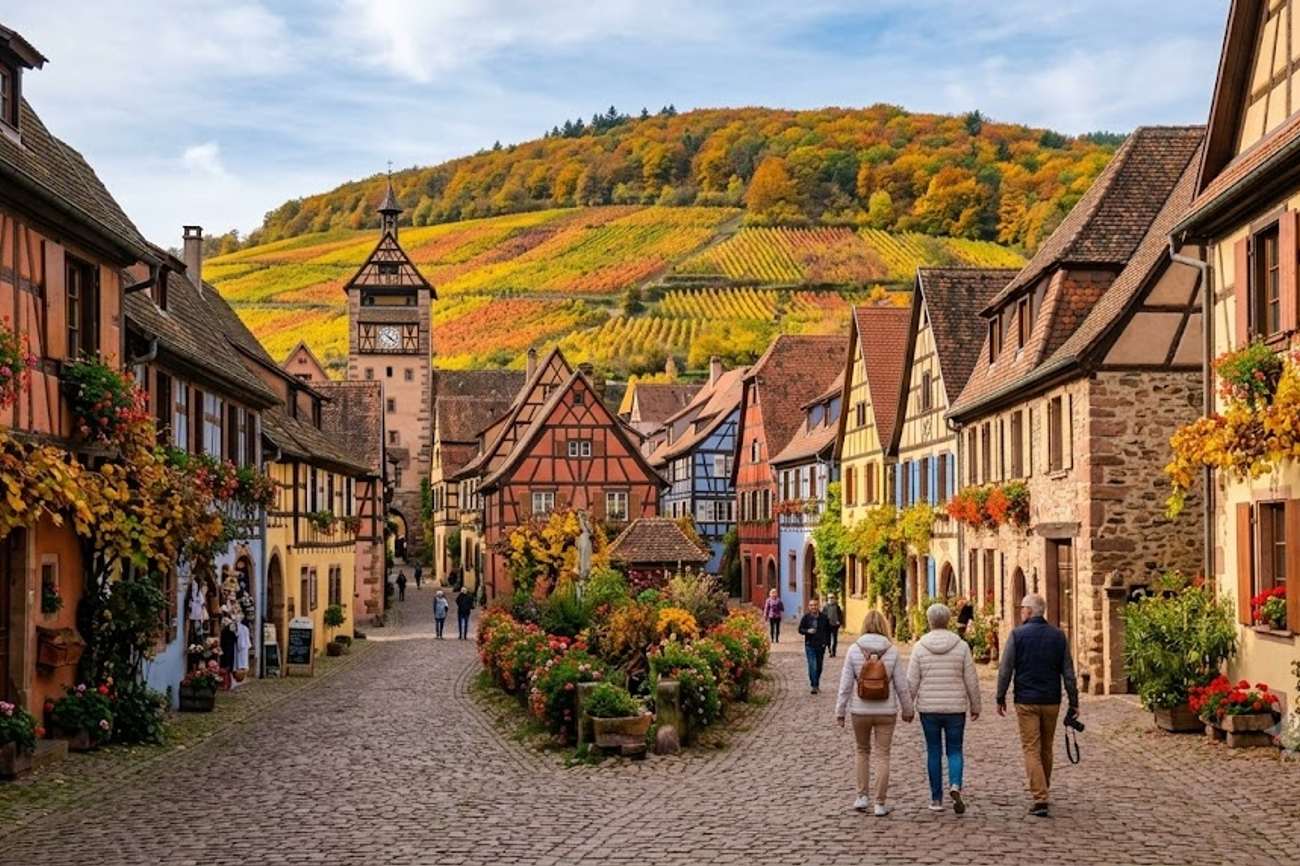
Image generated by AI
[Paris, October 2025] — France is aggressively pivoting its 2026 tourism strategy toward rural, nature-based escapes as international demand for "slow travel" surges. The shift targets a growing demographic of travelers abandoning congested urban centers in favor of protected landscapes, national parks, and agricultural hubs during the autumn season.
The movement, supported by France.fr (the official tourism platform), emphasizes a transition from high-velocity sightseeing to immersive experiences. For the 2026 season, the focus is centered on the integration of heritage sites with outdoor activities, specifically targeting the "golden window" of autumn when vineyards harvest and forests shift color. This strategic push aims to redistribute tourist traffic from primary cities to smaller communities across the Alsace, Provence, Occitanie, and Nouvelle-Aquitaine regions.
The Shift to Nature-Based Tourism
The catalyst for this trend is a documented global shift in traveler psychology, moving away from traditional "bucket list" tourism toward meaningful environmental connections. For 2026, the French tourism sector is capitalizing on the specific atmospheric conditions of the fall—misty valleys, temperate hiking weather, and the visual appeal of changing foliage—to attract high-value, low-impact visitors.
This strategy prioritizes "slow journeys," where the itinerary is dictated by walking routes, cycling trails, and waterway exploration rather than rapid transit between monuments. By promoting rural stays, the French government aims to sustain local economies in the off-peak season while reducing the environmental strain on over-visited urban hubs.
Regional Impact and Targeted Destinations
The 2026 nature tourism push is concentrated across several key geographic clusters, each offering distinct environmental assets:
The Alsace Grand Est Corridor
- Riquewihr: Positioned as a hub for vineyard photography and cycling.
- Eguisheim: Focused on circular walking trails and traditional wine markets.
- Kaysersberg: A gateway for Vosges mountain hiking and river-side exploration.
Provence-Alpes-Côte d’Azur
- Gordes: Targeting luxury travelers seeking the Luberon landscape with reduced seasonal crowds.
- Roussillon: Centered on the Ochre Trail and geological hiking.
- Moustiers-Sainte-Marie: Leveraging the Verdon Gorge for canyon hiking and lake activities.
Occitanie and Nouvelle-Aquitaine
- Saint-Cirq-Lapopie: Promoting Lot Valley river walks and cliffside exploration.
- Rocamadour: Integrating limestone cliff hiking with wildlife observation.
- Ainhoa: Utilizing Pyrenean mountain landscapes for active travelers.
- Collonges-la-Rouge: Focusing on red sandstone landscapes and rural cycling.
- Conques: Leveraging the Camino pilgrimage routes for forest walking.
Northern and Alpine Regions
- Baume-les-Messieurs (Bourgogne-Franche-Comté): Highlighting Jura waterfalls and cave systems.
- Flavigny-sur-Ozerain (Burgundy): Centering on harvest-season golden fields.
- Lyons-la-Forêt (Normandy): Focused on woodland photography and misty forest hiking.
- Locronan (Brittany): Promoting Atlantic coastal walks and granite landscapes.
- Bonneval-sur-Arc (Savoie Alps): Targeting alpine wildlife spotting and snow-capped peak hiking.
What This Means for Travelers
For those planning a trip to France in late 2026, this shift translates to a tangible change in how travel is booked and experienced. The "slow travel" mandate means a move away from centralized hotel chains toward village-based guesthouses and eco-lodges.
Logistical Impacts:
- Transportation: Travelers should prioritize regional rail and rental bicycles over high-speed TGV lines for the final leg of their journey. The emphasis on "cycling routes" and "river walks" suggests a need for flexible, localized transport.
- Timing: The "Autumn 2026" window is specifically designed to avoid the summer peak. Travelers will find fewer crowds in high-demand areas like Gordes and Riquewihr, but may face limited operational hours for some seasonal services.
- Activity Planning: There is a clear move toward "active" leisure. Booking for 2026 should include reservations for guided hiking in the Verdon Gorge or vineyard tours in Alsace, as these nature-based experiences are expected to see higher demand.
- Accommodation: Demand for stays in protected landscapes and national parks is expected to rise. Travelers are encouraged to look for accommodations that offer direct access to the European Environment Agency (EEA) protected zones or local national park boundaries.
The 2026 Rural Roadmap
Looking ahead, the French tourism board is expected to further integrate digital mapping for "slow routes," allowing travelers to plot journeys based on foliage color and harvest schedules. The integration of gastronomy with nature—such as the "autumn food experiences" in Kaysersberg—indicates that the 2026 season will lean heavily into agritourism.
The long-term goal is to transform the autumn season from a "shoulder period" into a primary draw for international visitors. By leveraging the natural assets of the Jura, the Pyrenees, and the Alps, France is positioning its countryside as a competitive alternative to the urban-centric models of other European destinations.
FAQ: France Nature Tourism 2026
What is "slow travel" in the context of rural France? Slow travel prioritizes the journey over the destination. Instead of visiting multiple cities, travelers spend extended periods in a single village, utilizing walking, cycling, and local exploration to connect with the environment and community.
Which regions are best for autumn colors in 2026? The Alsace region (Riquewihr, Eguisheim) is premier for golden vineyards, while Normandy (Lyons-la-Forêt) and the Jura (Baume-les-Messieurs) offer the best red and gold woodland foliage.
Are these rural villages accessible for non-hikers? Yes. While hiking is a major draw, destinations like Collonges-la-Rouge and Riquewihr offer accessible cycling routes, photography trails, and village markets suitable for all mobility levels.
When is the ideal time to visit for the 2026 autumn experience? The peak window occurs during the harvest season, typically from late September through November, when temperatures are mild and foliage is at its maximum vibrancy.
France is trading the Eiffel Tower for the autumn forest.
#Riquewihr2026 #AlsaceTourism #ProvenceNature #SlowTravelFrance #FranceRural2026 #VerdonGorgeHiking
Related Travel Guides
Disclaimer
This article is for informational and educational purposes only. It does not constitute legal, financial, or professional advice. While we strive to provide accurate and up-to-date information, travel policies, regulations, and conditions change rapidly. Always verify information with official sources before making travel decisions. Nomad Lawyer makes no representations about the accuracy, reliability, completeness, or suitability of the information provided. Readers should consult qualified professionals for advice specific to their circumstances. The views expressed in this article are those of the author and do not necessarily reflect the views of Nomad Lawyer.
Kunal K Choudhary
Co-Founder & Contributor
A passionate traveller and tech enthusiast. Kunal contributes to the vision and growth of Nomad Lawyer, bringing fresh perspectives and driving the community forward.
Learn more about our team →