France and Northern Europe Face Fuel Station Shortages: Road Trip Disruption and Survival Guide 2026

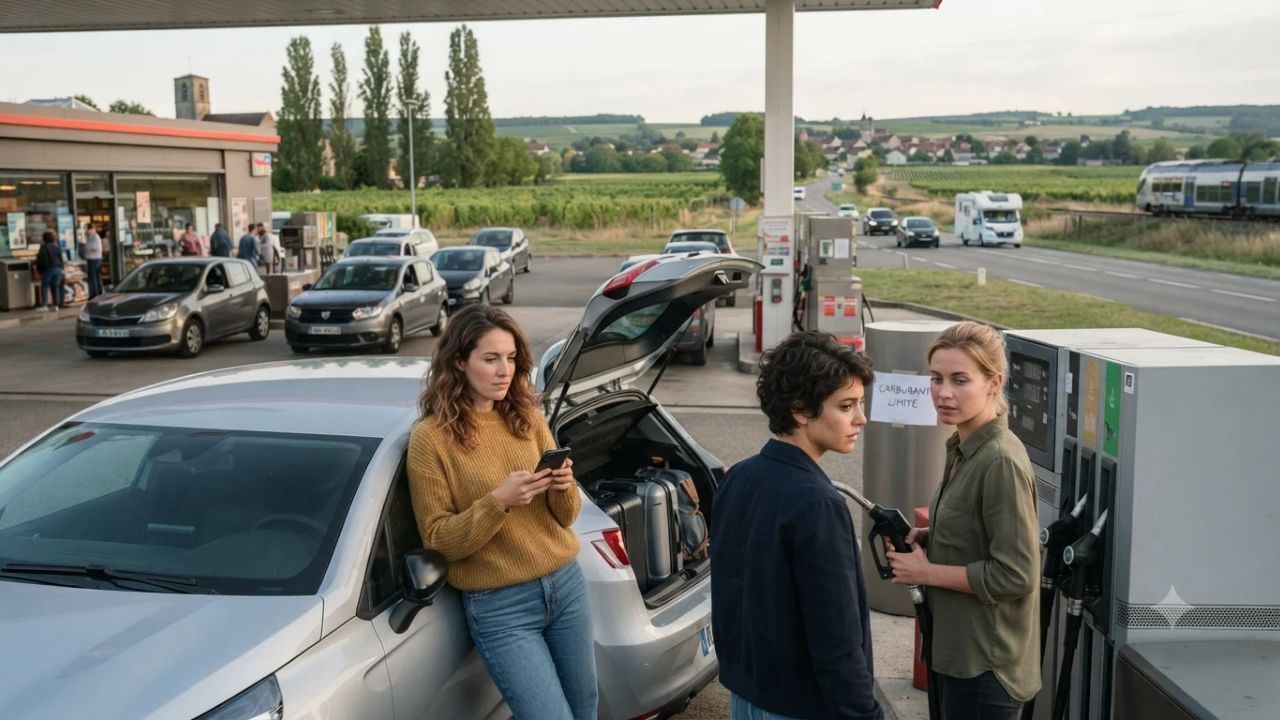
Across France, one in every nine service stations currently sits with dry pumps for at least one major fuel type, turning iconic highway routes and scenic vineyard circuits into logistical hurdles for autumn road trippers. As energy distribution bottlenecks spread from Western Europe to Scandinavia and the Mediterranean, international travelers navigating the continent by rental car, campervan, and regional bus are recalculating driving budgets, fuel stops, and itinerary pacing.
Regional fuel inventories across France show that approximately 11 percent of all petrol stations nationwide are experiencing supply deficits in either diesel or unleaded gasoline. The disruption is unevenly distributed, creating severe pinch points along transit corridors while leaving urban centers relatively functional. Simultaneously, partner European nations including Finland, Germany, the Netherlands, Denmark, Italy, and Greece are absorbing record retail prices that compound transport overheads across self-drive vacations.
Supply Pinch Points Across the French Regions
The current supply strains reveal sharp geographic divides across France. Travelers moving through northeastern, central, and southwestern regions face the highest probability of arriving at shuttered pumps or encountering extended queues during peak daytime driving hours.
Official government monitoring calculates station impact based on the complete absence of at least one fuel grade. Because many service centers run out of diesel while retaining premium petrol—or vice versa—the practical inconvenience for vehicle renters often exceeds headline percentages.
Regional disruption levels currently rank as follows:
| French Region | Share of Fuel Stations Affected | Primary Travel Routes Impacted |
|---|---|---|
| Grand Est | Around 16% of stations affected | A4 Strasbourg corridor, Champagne wine route |
| Occitanie | Around 14% of stations affected | A61/A9 Mediterranean corridor, Pyrenean access |
| Centre-Val de Loire | Around 14% of stations affected | Loire Valley châteaux routes, A10 expressway |
| Pays de la Loire | Around 13% of stations affected | Atlantic coast drives, Nantes-Angers corridor |
| Bourgogne-Franche-Comté | Around 12% of stations affected | Route des Grands Crus, Jura mountain passes |
| Nouvelle-Aquitaine | Around 11% of stations affected | Bordeaux wine circuits, Dordogne valley roads |
In Grand Est, where around 16 percent of retail stations face shortages, cross-border motorists entering from Germany and Luxembourg encounter intense competition at highway service plazas. In the south, Occitanie records around 14 percent of stations affected, creating friction for visitors driving between Toulouse, Carcassonne, and the coastal towns of the Golfe du Lion.
The central Loire Valley—encompassing Centre-Val de Loire with around 14 percent of stations affected—has seen independent tourists forced to divert away from castle circuits to find operational pumps in major commercial suburbs. In western France, Pays de la Loire registers around 13 percent disruption, while the historic culinary corridors of Bourgogne-Franche-Comté see around 12 percent affected. Nouvelle-Aquitaine rounds out the primary impact zones with around 11 percent of stations running short.
Ripple Effects Across Northern and Southern Europe
While French motorists and visitors confront outright supply shortages at the pump, neighboring nations are grappling with acute cost inflation that reshapes travel economics.
In Northern Europe, Finland is contending with elevated fuel pricing that hits remote touring routes. Finland has avoided physical station closures, but high petrol and diesel prices disproportionately affect road trips through Lapland, journeys connecting remote national parks, and self-drive routes to lakeside wilderness lodges. For travelers renting sports utility vehicles or campervans to explore northern Scandinavia, fuel expenditure now forms one of the single largest components of total holiday costs.
Germany occupies a central role in European transit as the continent's largest economy and premier highway hub. Elevated fuel prices across the German network directly impact cross-border self-drive routes connecting France, Switzerland, Austria, and Italy. German coach operators, commercial freight corridors, and vehicle rental fleets have passed higher operating costs onto consumers, prompting many multi-country road trippers to reconsider extensive highway itineraries.
In the Netherlands and Denmark, elevated pump prices are influencing traditional campervan holidays. Both countries rely heavily on vehicle-based family tourism, where motorhome routes and coastal camping itineraries require frequent refueling. Higher mobility costs are causing visitors to shorten their daily driving radius and allocate less discretionary budget to regional attractions and dining.
Further south, Italy and Greece face compounding energy expenses that extend beyond personal vehicles into essential tourism infrastructure. In Greece, government energy support measures have been introduced to cushion the blow, yet island transfer operators, excursion boats, and tourist buses face mounting pressure. In Italy, where high-speed motorways connect major cultural centers, rural agriturismo estates and island destinations like Sicily and Sardinia are seeing higher transport and rental surcharges.
What Makes Regional Driving in Europe Vulnerable Right Now
European leisure travel relies heavily on decentralized road networks to distribute tourism income outside congested capital cities. Countryside boutique hotels, family-run vineyards, alpine chalets, and rural heritage sites depend almost entirely on travelers arriving behind the wheel.
When fuel availability becomes unpredictable or prices surge to historic highs, travelers naturally shorten their itineraries. Instead of completing ambitious 1,500-kilometer circuits through provincial France or the Scandinavian backcountry, international drivers cluster around major transport hubs and high-speed rail corridors. This shift creates unintended overcrowding in prime gateway cities while starving peripheral villages and regional heritage destinations of seasonal visitor revenue.
Visitor Insider Tips for Navigating the European Fuel Squeeze
Travelers planning road trips across France and neighboring European nations this season can avoid delays and pump anxiety by adopting specific operational strategies:
- Track Real-Time Station Inventories: In France, rely on the official government fuel tracking portal (prix-carburants.gouv.fr) or crowd-sourced mobile navigation apps like Waze and Essence&CO before departing your accommodation. These platforms indicate live fuel availability and show whether diesel or SP95/SP98 petrol is out of stock.
- Refuel at Half-Tank Capacity: Never allow your fuel gauge to drop below a quarter of a tank, especially when traversing rural stretches of Grand Est, Occitanie, or the Massif Central. Begin looking for operational stations once your indicator hits 50 percent.
- Bypass Expensive Motorway Service Areas: Fuel prices at highway rest stops (aires d'autoroute) are typically 15 to 25 cents per liter higher than at large suburban supermarket fuel stations (stations de supermarché) operated by Leclerc, Carrefour, or Auchan.
- Leverage High-Speed Rail Connections: For city-to-city segments, swap driving for electric train travel. France's extensive SNCF Connect network, Germany's Deutsche Bahn ICE trains, and Italy's Frecciarossa offer reliable, high-speed alternatives that bypass fuel queues entirely.
- Switch to Hybrid or Electric Rentals: If renting a vehicle at Paris Charles de Gaulle, Frankfurt, or Milan airports, inquire about plug-in hybrid or electric vehicles. Western Europe's EV charging network along major transit corridors remains fully operational and immune to liquid fuel supply pinches. Check destination guidelines on the official France Tourism Portal for regional charging maps.
Cultural and Environmental Context of the Energy Transition
This localized fuel crunch arrives against the backdrop of Europe's broader push toward sustainable transit and carbon reduction. European governments are balancing emergency financial interventions—such as targeted tax rebates and strategic inventory releases—with long-term commitments to phase out fossil-fuel reliance.
For local communities in regions like Centre-Val de Loire and Bourgogne-Franche-Comté, fuel availability directly influences daily commuting and agricultural harvesting. International visitors who arrive prepared, respect local queuing etiquette, and minimize unnecessary engine idling help maintain harmony in small towns where neighborhood filling stations represent vital community lifelines. Many regional tourism boards are actively promoting combined "Train + E-Bike" itineraries to help travelers explore rural cultural heritage without adding pressure to local fuel infrastructure.
FAQ: Visiting Europe During Fuel Disruptions 2026
How severe are fuel shortages for tourists driving in France? Around 11 percent of French fuel stations lack at least one fuel type. Grand Est (16%) and Occitanie (14%) experience the highest disruption, making route planning and tracking apps necessary.
Are rental cars at French airports affected by fuel shortages? Major airport rental desks operate normally, but you should confirm whether the vehicle is diesel or petrol and locate verified open stations near return depots before drop-off.
Is it better to switch from a road trip to train travel? Yes. High-speed rail networks like France's TGV, Germany's ICE, and Italy's Frecciarossa offer fast, price-stable alternatives for city-to-city journeys, avoiding road transport uncertainties.
Are fuel stations in Finland, Germany, and Italy running out of petrol? No. Stations in Finland, Germany, the Netherlands, Denmark, Italy, and Greece have adequate physical supplies, but visitors face elevated retail prices that increase overall road-trip costs.
Smart travelers swap highway stress for scenic rail lines or map their pumps before putting the key in the ignition.
Related Travel Guides
- United States Issues Urgent Travel Disruption Warning as Massive American Airlines Flight Cancellations Hit Gerald R. Ford International Airport and Major Hubs: What Every Traveller Must Know
- Canada Issues Urgent Jamaica Travel Advisory Warns Travelers of Violent Crime and Public Transport Risks in Montego Bay and Kingston, Advising Strict Vigilance: New Travel Alert
- Germany Urges Strait of Hormuz Reopening to Secure Energy Logistics, Driving Tourism and Trade Relief Across Middle East Markets: Latest Update
This article is for informational purposes. Flight routes, passenger regulations, visa rules, and transit advisories are subject to change by airlines and aviation authorities. Readers are advised to verify schedules and travel documentation with relevant carriers and border agencies before departure.
Related Stories

France Riots Travel Alert: Lyon, Nice, Paris, and Marseille Face Tourism Uncertainty as Hotel Bookings Slow in October 2026

US State Department Updates France Travel Advisory Following Civil Unrest and Riots in 2026