France and More Countries Reshape Europe’s Luxury Hotels With Zero-Party Data Vaults and AI Cost Controls

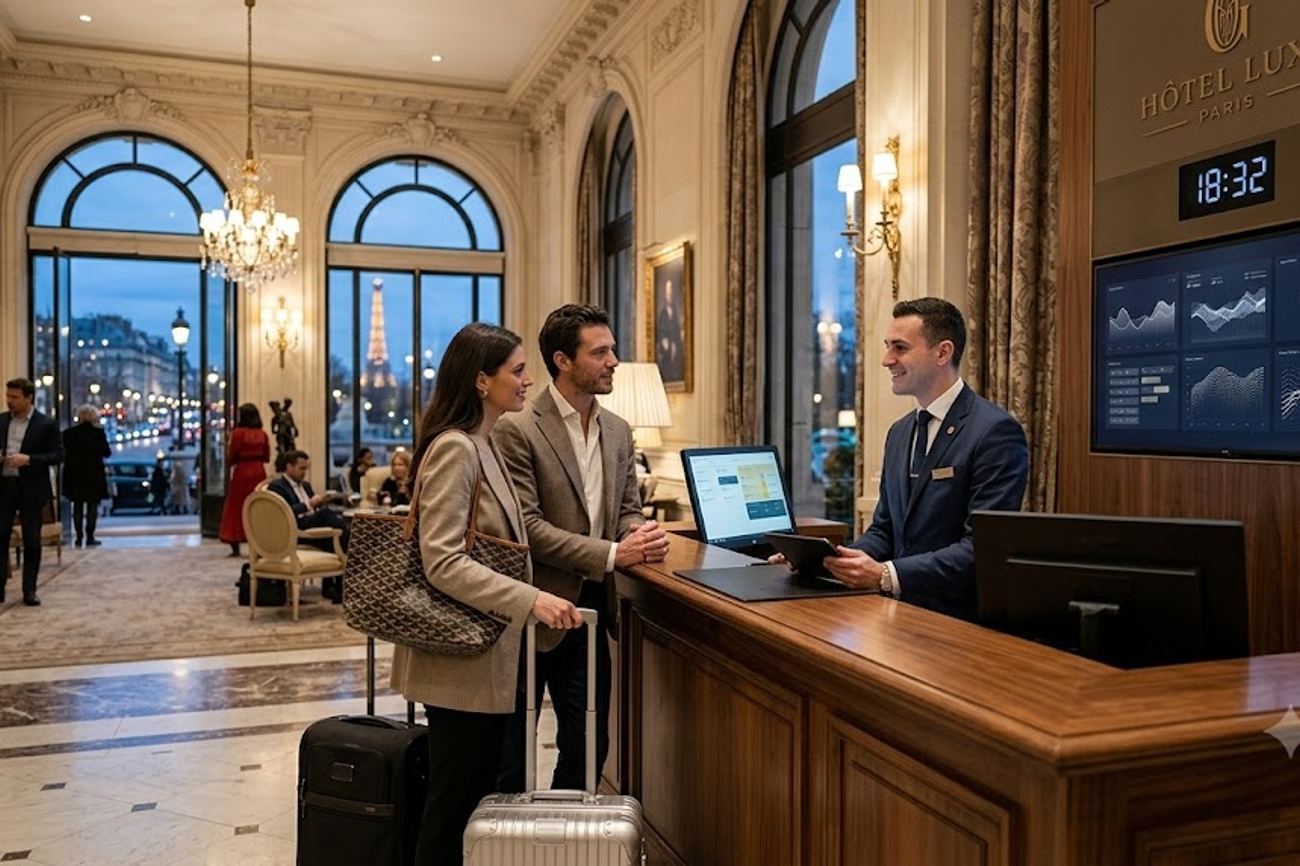
Image generated by AI
A single profiling error at a boutique hotel in London or Paris can now trigger a corporate penalty of €20 million or 4% of a global hospitality group's total annual turnover. This staggering financial risk is the new reality for European luxury hospitality, where the collision of aggressive AI integration and the world's strictest privacy laws has turned guest data from an asset into a massive liability.
The Great Pivot to Zero-Party Data
The European luxury travel sector is currently navigating a volatile transition. While demand remains high—with Eurostat reporting 850 million nights spent in EU tourist accommodations in the second quarter of 2026 alone (a 1.2% increase over 2025)—the backend operations are in chaos. For years, high-end hotels relied on centralized Customer Data Platforms (CDPs), tracking cookies, and "dirty" guest profiles—essentially digital dossiers compiled from unencrypted emails, browsing trails, and inferred preferences.
Now, the industry is abandoning these legacy databases in favor of decentralized zero-party vaults. Unlike first-party data (which a hotel observes) or third-party data (which a hotel buys), zero-party data is information a guest intentionally and proactively shares. By moving toward sovereign data vaults, luxury brands are shifting the ownership of preferences back to the traveler. This allows a guest to carry their "digital preference passport" across different properties without the hotel ever having to store sensitive, unverified data in a vulnerable central server.
This shift is not merely a technical preference; it is a survival mechanism. With the UN Tourism World Tourism Barometer recording 690 million international arrivals in the first half of 2026 and a 4% jump in European inbound arrivals during Q1, the volume of data being processed is astronomical. The risk of a breach or a regulatory infraction has become too great to ignore.
What Makes the European Luxury Experience Different
The distinction of European luxury today lies in the tension between hyper-personalization and absolute privacy. In the past, "luxury" meant the hotel knew you liked a specific brand of sparkling water and a firm pillow before you even checked in. Today, achieving that level of intuition without violating the General Data Protection Regulation (GDPR) is the ultimate operational challenge.
The regulatory landscape is a minefield of overlapping jurisdictions. In the EU, the European Data Protection Board (EDPB) uses a strict five-step methodology to calculate fines. Under GDPR Article 83(5), failures in transparency or purpose limitation can result in the aforementioned €20 million fines. Meanwhile, in Switzerland, the revised FADP (revFADP) introduces a different kind of pressure: direct criminal liability for responsible executives, with fines up to CHF 250,000. In the UK, the Information Commissioner’s Office (ICO) maintains its own audit regimes for automated decision-making, with penalties reaching £17,500,000 or 4% of global turnover.
The arrival of the EU AI Act (Regulation 2024/1689) has further complicated the experience. As of February 2025, any AI system designed for cognitive behavioral manipulation or exploitative profiling is strictly banned. For the traveler, this means the "invisible" AI that used to nudge them toward expensive upgrades through psychological profiling is disappearing. Furthermore, by August 2026, Article 50 mandates that any guest interacting with a virtual concierge or AI chatbot must be explicitly told they are talking to a machine. The era of the "synthetic" concierge pretending to be human is over.
Visitor Insider Tips
Navigating the high-end European circuit in 2026 requires a different approach to digital footprints and local etiquette.
Manage Your Digital Passport Since luxury hotels are moving toward zero-party vaults, take control of your own preferences. Instead of letting hotels "guess" your needs via tracking pixels, use the official guest portals of major groups. Explicitly stating your dietary restrictions or room preferences in a secure vault ensures they are honored across different cities without your data being sold to third-party marketers.
Timing Your Visits To avoid the crowds reflected in the 3 billion annual accommodation nights across the EU, target the "shoulder" windows. For the Mediterranean coast, late September to October offers the same luxury service with a fraction of the Q2 congestion. In Alpine regions, the period between the ski rush and the summer hiking season (typically May and June) provides the best access to exclusive boutiques and spas.
Etiquette and AI When using hotel apps, be aware that the "AI Concierge" is now legally required to identify itself. If you prefer human interaction, specify this in your profile. In cities like Paris and Vienna, there is a growing cultural preference for "analog luxury"—services that explicitly eschew AI to provide a more authentic, human-centric experience.
France is at the forefront of revolutionizing Europe's luxury hotels with the adoption of zero-party data vaults and AI cost controls, as reported by the French Government Tourism Website. This innovative approach aims to enhance the overall guest experience while minimizing operational costs. By leveraging advanced technologies, luxury hotels in France can now offer personalized services to their guests.
Transport Hacks For cross-border luxury travel, prioritize the expanding high-speed rail networks over short-haul flights. Booking through official national rail authorities often provides better integration with luxury hotel transfers than third-party booking sites, which often trigger the very tracking cookies that hotels are now trying to avoid.
Cultural and Environmental Context
The move toward data sovereignty is reflecting a broader European cultural shift toward "digital minimalism." There is an increasing friction between the desire for the convenience of AI and the fundamental right to privacy. This is particularly evident in the hospitality sector, where the intimacy of a guest's stay—their health needs, their travel companions, their spending habits—is highly sensitive.
The environmental impact of this technological shift is also noteworthy. The transition from massive, energy-hungry centralized data centers to decentralized, edge-computing vaults is reducing the carbon footprint of guest data management. Moreover, by removing intermediary travel commissions through direct, secure guest-hotel relationships, luxury properties are reinvesting those margins into heritage preservation and local community support.
The EU AI Act’s classification of "high-risk" systems (Article 6 and Annex III) ensures that automated profiling cannot be used for commercial discrimination. This means that dynamic pricing—the practice of raising rates based on a guest's perceived wealth or urgency—is under intense scrutiny. This shift is slowly returning the luxury experience to a standard of fairness and transparency, moving away from the opaque algorithms that dominated the last decade.
FAQ: Visiting Europe 2026
What is the best time to visit European luxury destinations? To avoid the peak volumes seen in Q2 (which saw 850 million nights spent), visit during the shoulder seasons of May or September. You will find better availability at top-tier properties and a more relaxed atmosphere.
Do I need a visa for luxury travel in the EU? Visa requirements depend on your nationality. Most visitors should check the official European Union travel portal for the latest ETIAS or Schengen visa requirements, as digital entry systems are being updated.
How do I handle my data when booking high-end hotels? Look for hotels using "zero-party" data systems. This allows you to share your preferences directly and securely, ensuring your data isn't stored in legacy databases vulnerable to GDPR breaches.
Is it safe for solo luxury travelers? Yes, Europe remains one of the safest regions for solo travelers. Luxury hotels now offer enhanced security through encrypted guest profiles and human-in-the-loop oversight for all AI-driven concierge services.
True luxury is no longer about what the hotel knows about you, but about how safely they protect the secrets you choose to share.
Tags: EU-AI-Act-2026, European-Luxury-Hospitality, GDPR-Compliance-Travel, Zero-Party-Data, Eurostat-Tourism-Trends
Related Travel Guides
This article is for informational purposes. Flight routes, passenger regulations, visa rules, and transit advisories are subject to change by airlines and aviation authorities. Readers are advised to verify schedules and travel documentation with relevant carriers and border agencies before departure.
Related Stories
EU Probes Booking.com Under Digital Services Act Over Fake Hotel Listings, Hijacked Reservations, and Search Ranking Transparency