
Four Private Islands Near Canada Border Hit Michigan Real Estate Market for $2.3 Million in 2026
A rare 520-acre archipelago comprising Burnt, Wilson, Claw, and Harris Islands is now for sale for $2.3 million, offering a luxury retreat with strict conservation easements.
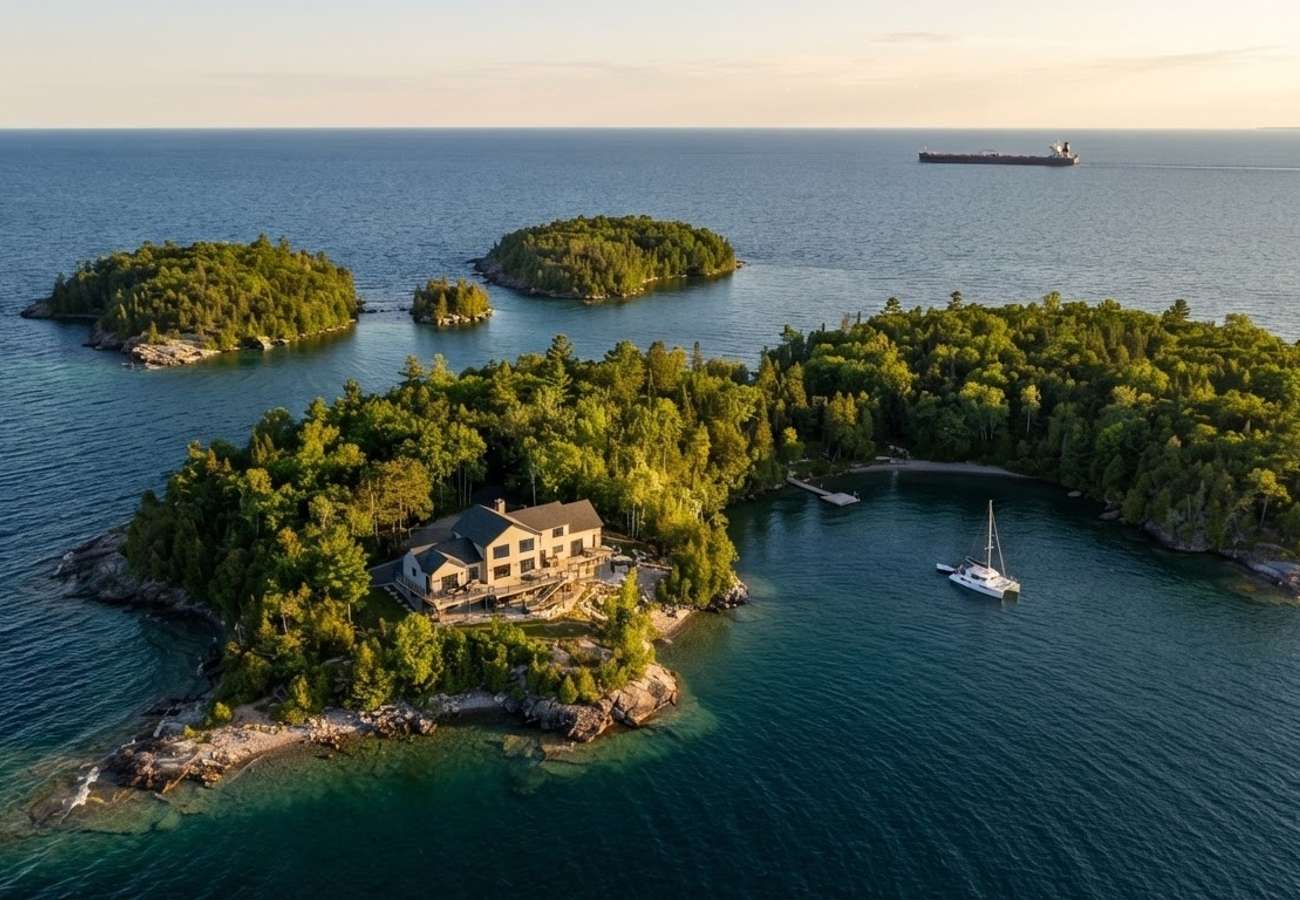
Image generated by AI
A rare 520-acre archipelago on the edge of the U.S.-Canada border is now available for $2.3 million, blending extreme isolation with high-end modern amenities.
Located in the northwest corner of Michigan’s Lower Peninsula, this maritime estate consists of four distinct landmasses: Burnt, Wilson, Claw, and Harris Islands. Positioned within the St. Mary’s River, the property offers a unique intersection of private luxury and environmental preservation.
The sale is not merely for the land; it is a turnkey operation. The package includes a renovated three-bedroom residence, two boats, a Kubota tractor, and all necessary maintenance equipment.
Luxury Infrastructure in a Remote Setting
The heart of the property is a 2,131-square-foot home situated on a peninsula between two bays. Far from being a primitive cabin, the residence was substantially gutted and rebuilt between 2017 and 2018.
Due to the lack of road access, all construction materials had to be transported by boat, ensuring the home is built to withstand the rigors of island life. The interior features:
- Three bedrooms and two bathrooms.
- Full electricity and water systems.
- A gas stove for cooking.
- A traditional wood-paneled sauna.
To manage the vast 520-acre territory, the sale includes a 2006 32-foot World Cat catamaran and a second vessel, alongside a Kubota tractor. This equipment is essential for shoreline management and seasonal upkeep on a scale far larger than a typical vacation home.
Navigating the St. Mary’s River Corridor
Access to the islands is managed via DeTour Village. While the islands feel disconnected from the world, the commute is practical, typically taking between 20 to 30 minutes by boat, depending on weather conditions.
The journey provides a stark contrast in maritime experiences. Travelers must navigate through a working corridor where massive commercial freighters regularly pass, blending the serenity of a private wilderness with the industrial scale of Great Lakes shipping.
Logistics of Island Access
| Travel Consideration | Practical Implication |
|---|---|
| Mainland Departure | DeTour Village |
| Access Method | Private boat |
| Approximate Crossing | 20–30 minutes |
| Weather Sensitivity | High |
| Commercial Traffic | Active freighter operations on St Marys River |
| Major Supplies | Located further inland (St Ignace/Sault Ste Marie) |
| Emergency Planning | Requires higher preparation than mainland stays |
Conservation Constraints and Development Limits
The most critical factor for potential buyers is the land's legal status. A significant portion of the 520 acres is under a conservation easement held by the Little Traverse Conservancy.
While approximately 100 acres remain outside this easement, the majority of the land is protected. According to Michigan’s Department of Agriculture and Rural Development, these easements permanently restrict development and subdivision, even after the property changes hands.
This means that while the owner enjoys immense privacy and a "wild" setting, the ability to expand the footprint of the residence or build additional structures is severely limited.
Land Ownership Breakdown
| Property Feature | Details |
|---|---|
| Asking Price | $2.3 million |
| Total Acreage | Approximately 520 acres |
| Number of Islands | Four (Burnt, Wilson, Claw, Harris) |
| Main Residence | ~2,131 sq ft (3 Bed / 2 Bath) |
| Conservation Status | Most acreage under easement |
| Non-Easement Land | Approximately 100 acres |
| Included Vessels | Two boats (inc. 32-foot World Cat) |
| Maintenance Gear | Kubota tractor and equipment |
Regional Context: The Drummond Island Ecosystem
The property exists within the broader ecological framework of the Drummond Island area. This region, located at the mouth of the St. Mary’s River in northern Lake Huron, is characterized by dense forests of cedar, aspen, and northern hardwoods.
The Little Traverse Conservancy plays a pivotal role in the region's preservation. As of June 2026, the organization protects over 345 private properties through easements and manages nearly 400 nature preserves and 40 working forest reserves.
For the buyer, this ensures that the surrounding environment will remain undeveloped, preserving the "ultra-secluded" nature of the retreat for decades to come.
A rare opportunity to own a piece of the Great Lakes frontier, provided the buyer values preservation over expansion.
Related Travel Guides
Disclaimer
This article is for informational and educational purposes only. It does not constitute legal, financial, or professional advice. While we strive to provide accurate and up-to-date information, travel policies, regulations, and conditions change rapidly. Always verify information with official sources before making travel decisions. Nomad Lawyer makes no representations about the accuracy, reliability, completeness, or suitability of the information provided. Readers should consult qualified professionals for advice specific to their circumstances. The views expressed in this article are those of the author and do not necessarily reflect the views of Nomad Lawyer.