
Fort Myers and Gulf Coast Cities Capture Florida's Slow Travel Wave
Gulf Coast destinations, including Fort Myers and Sarasota, observe strong visitor growth as travelers seek peaceful alternatives to crowded Florida hubs.

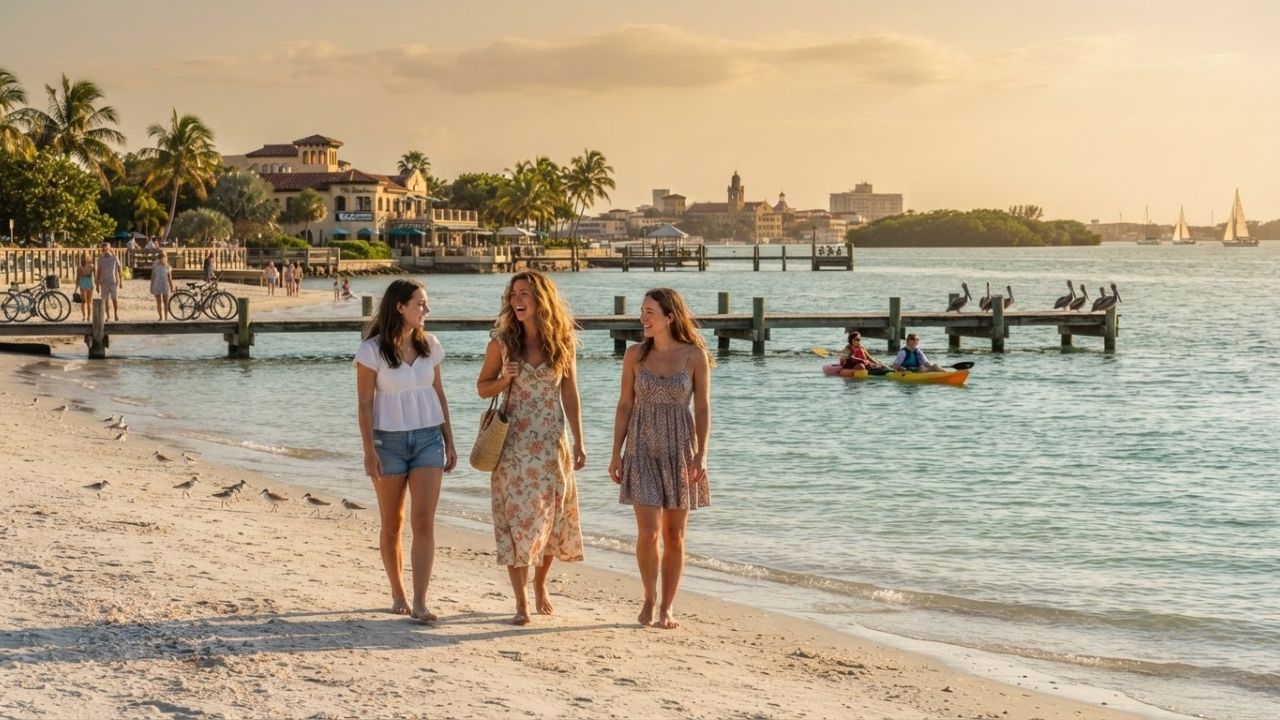
Image generated by AI
Southwest Florida’s coastal hubs are capturing a major shift toward nature-focused escapes, with Fort Myers welcoming 3.32 million visitors in 2025 who generated $3.31 billion in direct spending.
The Local Trend Revealed: Low-Density Coastal Destinations
An emerging trend in Florida travel is the rise of slow coastal tourism as an alternative to high-volume metropolitan hubs and theme parks. Rather than selecting crowded urban centers, leisure travelers, families, and nature enthusiasts are choosing lower-density communities along the Gulf and Atlantic coasts. These destinations combine state park shoreline access, wildlife preservation zones, and walkable historic downtowns to support longer, more relaxed stays.
Southwest and Central Florida's coastal destinations highlight this shift:
- Fort Myers (Lee County): Welcomed 3.32 million visitors in 2025, representing a 3.8 percent increase compared to 2024. Visitors generated 21.09 million visitor days, 4.73 million room nights, and $3.31 billion in direct spending, with a total economic impact of $5.12 billion. The sector supports more than 31,000 jobs in Lee County.
- Market Breakdown: United States domestic travelers represent the largest share at 89.1 percent (led by New York City and Chicago at 5.2 percent each, Minneapolis-St. Paul at 3.9 percent, Detroit at 3.7 percent, and Atlanta at 3.5 percent). Canada represents 5.1 percent, Germany represents 2.7 percent (around 61,200 visitors), and the United Kingdom represents 1.2 percent (around 32,610 visitors).
- Sarasota (Sarasota County): Welcomed 2.71 million visitors in FY2025, generating more than $2.3 billion in direct spending and more than 3 million overnight room nights (with a $3.6 billion total economic impact). Top domestic paid accommodation markets include New York City (95,330) and Chicago (51,750). Primary attractions include Siesta Key Beach, Lido Key, Longboat Key, and The Ringling Museum.
- Dunedin (Pinellas County): Draws visitors seeking small-town character, local craft breweries, and access to Honeymoon Island State Park and Caladesi Island State Park. Pinellas County attracts around 15 million visitors annually.
- New Smyrna Beach (Volusia County): Features 17 miles of beaches, Smyrna Dunes Park, and Canaveral National Seashore. Volusia County welcomes around 10 million visitors annually, generating more than $5 billion in economic impact.
This layout allows travelers to explore regional wildlife, coastal ecosystems, and historic neighborhoods at a slower pace compared to larger cities like Orlando and Tampa.
Florida Gulf & Atlantic Coast Tourism Comparisons (2025)
| Target Coastal Hub | Annual Visitor Volume | Direct Visitor Spending | Regional Room Nights | Key Environmental Attractions |
|---|---|---|---|---|
| Fort Myers, FL | 3.32 million visitors | $3.31 billion | 4.73 million nights | Six Mile Cypress Slough, Lee beaches |
| Sarasota, FL | 2.71 million visitors | More than $2.3 billion | 3 million+ nights | Siesta Key Beach, Lido Key preserves |
| Dunedin, FL | Stated Pinellas totals | Around Pinellas benchmarks | Pinellas room nights | Honeymoon Island, Caladesi Island |
| New Smyrna Beach | Stated Volusia totals | Volusia County economic base | Volusia room nights | Smyrna Dunes Park, Canaveral Seashore |
Cultural & Environmental Value: Supporting Barrier Island Habitats
For the traveler, the real impact of this slow travel wave is the direct contribution it makes to barrier island conservation, estuary restoration, and local independent hospitality. By choosing state parks like Honeymoon Island or Smyrna Dunes, visitors help fund habitat preservation for native sea turtles, gopher tortoises, and nesting shorebirds.
Mapped in cooperation with the Lee County Visitor & Convention Bureau and Florida State Parks rangers, these initiatives direct tourism dollars to regional conservation. This protects the Gulf Coast's fragile environments and ecosystems.
Destination Specialist Local Insider Tips
To help you calculate your travel windows and navigate Gulf Coast state parks comfortably, regional specialists suggest the following tips:
- Savor Stone Crab Claws: Experience regional Gulf Coast gastronomy. Try fresh Stone Crab Claws (served cold on a bed of ice with a tangy mustard dipping sauce, harvested sustainably by removing only one claw before releasing the crab back into the ocean).
- Arrive Early at Caladesi Island Ferry: When planning a trip to Caladesi Island or Honeymoon Island, arrive before 9:00 AM to secure ferry tickets and parking spots before daily visitor limits are reached.
- Observe Beach Light Restrictions: Between May and October, turn off beachside outdoor lights and close window drapes at night to prevent disorienting nesting sea turtles and hatchlings.
- Plan Around Mid-Week Openings: To enjoy cultural landmarks like The Ringling Museum in Sarasota or historic downtown Dunedin without weekend crowds, schedule visits for Tuesday through Thursday.
- Explore Six Mile Cypress Slough: Take an under-the-radar detour. Explore the under-the-radar Six Mile Cypress Slough Preserve in Fort Myers, featuring a boardwalk trail through a 3,500-acre wetland basin, supporting local environmental conservation.
Long-Term Outlook: Sustainable Coastline Tourism
The long-term outlook for Florida's coastal tourism remains strong, driven by the expansion of walkable nature trails and sustainable harbor developments. As regional tourism agencies continue to promote low-density coastal communities and collaborate with local conservancies to monitor visitor impact, overnight stays will expand. By balancing beach access with strict environmental guidelines and municipal zoning laws, local planners are building a resilient, long-term travel ecosystem.
Related Travel Guides
Disclaimer
This article is for informational and educational purposes only. It does not constitute legal, financial, or professional advice. While we strive to provide accurate and up-to-date information, travel policies, regulations, and conditions change rapidly. Always verify information with official sources before making travel decisions. Nomad Lawyer makes no representations about the accuracy, reliability, completeness, or suitability of the information provided. Readers should consult qualified professionals for advice specific to their circumstances. The views expressed in this article are those of the author and do not necessarily reflect the views of Nomad Lawyer.
Preeti Gunjan
Contributor & Community Manager
A passionate traveller and community builder. Preeti helps grow the Nomad Lawyer community, fostering engagement and bringing the reader experience to life.
Learn more about our team →