
Granada Spain Earthquake: Andalusia Travel Alert
A magnitude 5.0 earthquake hits Granada near Armilla, Spain, shaking Andalusia and triggering emergency safety inspections. Read travel alerts.

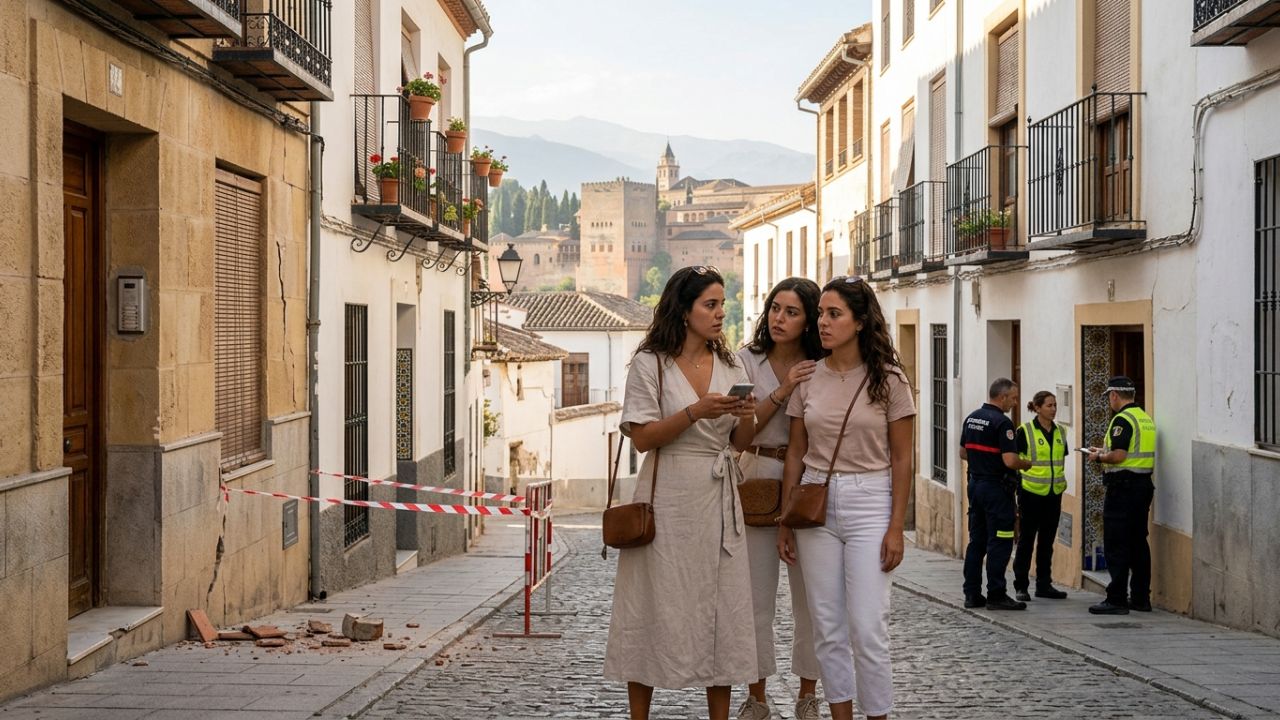
Image generated by AI
According to emergency services in southern Spain, a powerful magnitude 5.0 earthquake struck the Granada province on August 15, 2026, shaking the region of Andalusia and triggering safety protocols.
The tremor occurred at around 1:04 AM local time, with its epicentre located near Alhendín at a shallow depth of approximately 2 kilometres. This shallow position caused intense ground-level shaking, awakening residents across Granada and surrounding metropolitan areas like Armilla, Las Gabias, Ogíjares, and Otura. Regional authorities activated Operational Level 1 of the seismic emergency plan to inspect structures for minor structural issues, such as cracks and fallen plaster, while monitoring a series of aftershocks.
The event occurred during the busy summer travel season, raising immediate questions regarding visitor safety in Granada, which is home to world-renowned cultural landmarks like the Alhambra. Fortunately, emergency officials reported no major injuries, and transport networks and hotels continue to operate without major disruptions. To minimize risks, visitors and residents are advised to follow official safety instructions, avoid buildings with visible damage, and remain prepared for ongoing aftershocks. The rapid response from regional emergency teams has helped secure public spaces, ensuring that historic sites remain open for cautious exploration.
Shallow Tremor Causes Widespread Shaking Across Andalusian Provinces
The magnitude 5.0 earthquake was felt across a large part of Andalusia, demonstrating the widespread impact of shallow seismic events in southern Spain. While the strongest shaking occurred near Alhendín and Armilla, residents in Almería, Málaga, Jaén, and Córdoba also reported feeling the movement. In contrast, provinces like Huelva and Cádiz experienced the event without significant impact. To help travelers understand the details of the earthquake and the safety guidelines issued by local authorities, the following table summarizes the primary seismic data and emergency safety measures:
| Seismic Parameter | Event Data & Strategic Details | Impacted Municipalities | Recommended Safety Actions |
|---|---|---|---|
| Magnitude | 5.0 on the Richter scale | Alhendín, Armilla, Las Gabias, Ogíjares | Seek open ground away from overhead structures |
| Depth | Approximately 2 kilometres | Otura, Gójar, La Zubia, Granada metropolitan area | Avoid balconies, walls, and old brick façades |
| Local Time | Around 1:04 AM local time | Felt in Almería, Málaga, Jaén, Córdoba | Remain calm and follow directives from emergency teams |
| Emergency Status | Activated Operational Level 1 | Precautionary building evacuations in Las Gabias | Avoid unnecessary movement near damaged structures |
| Call Volumes | More than 80 initial, 200+ total reports | Initial calls focused on falling objects and cracks | Stay away from old buildings with visible plaster cracks |
| Aftershocks | Ranging between magnitude 2.2 and 3.7 | Municipalities near Alhendín under close monitor | Expect minor tremors and secure loose interior items |
Emergency seismic plan Activated as Metropolitan Communities Assess Damage
Immediately following the tremor, the Government of Andalusia activated Operational Level 1 of the regional seismic emergency plan to coordinate the response of emergency teams, firefighters, and local police. The regional emergency service initially received more than 80 calls from residents reporting shaking and concerns about falling objects. This call volume quickly grew to more than 200 reports of minor damage, including cracks in walls, fallen tiles, and damaged cornices, prompting inspectors to begin evaluations of public infrastructure.
The shaking was particularly intense in Armilla and Alhendín due to their proximity to the epicentre. Residents reported furniture shifting, windows rattling, and items falling from shelves. Emergency crews moved through the metropolitan area to identify immediate hazards and secure affected buildings. By coordinating with municipal services, regional authorities have focused on preventing accidents from falling plaster or bricks, advising residents to stay away from balconies and exterior walls during the initial post-earthquake period.
Precautionary Evacuations and Ongoing Aftershocks Under Observation
As a preventive safety measure, emergency teams conducted a precautionary evacuation of a residential building in Las Gabias to evaluate its structural integrity. This action represents the most significant safety intervention following the main tremor. Engineers and safety teams are carrying out inspections to ensure the building is safe before allowing residents to return, reflecting the city's commitment to prioritizing public safety.
Following the magnitude 5.0 mainshock, scientists recorded several smaller aftershocks ranging between magnitude 2.2 and 3.7 in Gójar, Ogíjares, Otura, and La Zubia. These aftershocks can continue for days or weeks, creating anxiety for both residents and visitors. Seismologists and emergency officials continue to monitor the area to assess whether additional tremors could occur. They advise the public to remain prepared, secure heavy furniture, and follow official safety channels for real-time updates.
Active Tectonic Plate Boundaries Drive Regional Seismic Activity
Granada province is one of Spain’s most seismically active areas due to its geographic position near the boundary of the African Plate and the Eurasian Plate. The ongoing movement between these two tectonic plates creates geological pressure beneath southern Spain, which is periodically released through earthquakes. While most seismic events in the region are small and go unnoticed by the public, stronger shallow tremors can cause noticeable shaking in populated areas situated close to active fault zones.
The region’s seismic history explains why local authorities maintain comprehensive emergency plans and modern monitoring networks. By analyzing historical earthquake patterns, engineers can design buildings that resist seismic forces, protecting local populations during moderate events. The recent tremor serves as a reminder of the importance of disaster preparedness, highlighting the role of public awareness and emergency drills in minimizing risks during natural events.
Why This Matters (Information Gain & Experience)
For the traveler, this means that visiting Granada during the summer holiday season requires staying informed about local seismic updates and knowing basic earthquake safety protocols. Before visiting major historic sites like the Alhambra or the Cathedral, verify with monument administrators that structural checkups have been completed. From a logistical standpoint, travelers should secure travel insurance that covers natural disasters, keep their emergency contacts saved in their phones, and know the location of emergency exits at their hotel.
Additionally, choosing to practice sustainable travel in Andalusia directly supports local communities as they recover from natural events. Travelers can support the local economy by hiring local guides for historic walking tours, staying in family-run hotels, and purchasing regional crafts directly from independent artisans. Sampling local delicacies like pionono pastries from Santa Fe, broad beans with Trevélez cured ham, and enjoying free tapas with drinks at independent bars helps keep tourism revenue in the community. Following safety instructions, respecting structural barriers near older buildings, and maintaining a calm approach ensures a safe, eco-friendly, and respectful travel experience, allowing you to appreciate the beauty of Granada while supporting its local community.
Related Travel Guides
Disclaimer
This article is for informational and educational purposes only. It does not constitute legal, financial, or professional advice. While we strive to provide accurate and up-to-date information, travel policies, regulations, and conditions change rapidly. Always verify information with official sources before making travel decisions. Nomad Lawyer makes no representations about the accuracy, reliability, completeness, or suitability of the information provided. Readers should consult qualified professionals for advice specific to their circumstances. The views expressed in this article are those of the author and do not necessarily reflect the views of Nomad Lawyer.
Raushan Kumar
Founder & Lead Developer
Full-stack developer with 11+ years of experience and a passionate traveller. Raushan built Nomad Lawyer from the ground up with a vision to create the best travel and law experience on the web.
Learn more about our team →