
Flight India Medina: Air India Diversion Highlights Saudi Arabia Layover Options
Air India flight diverted to Medina after fire alert. Learn how US-India routes handle diversions, layover tourism opportunities in Saudi Arabia, and passenger rights for 2026 travel.

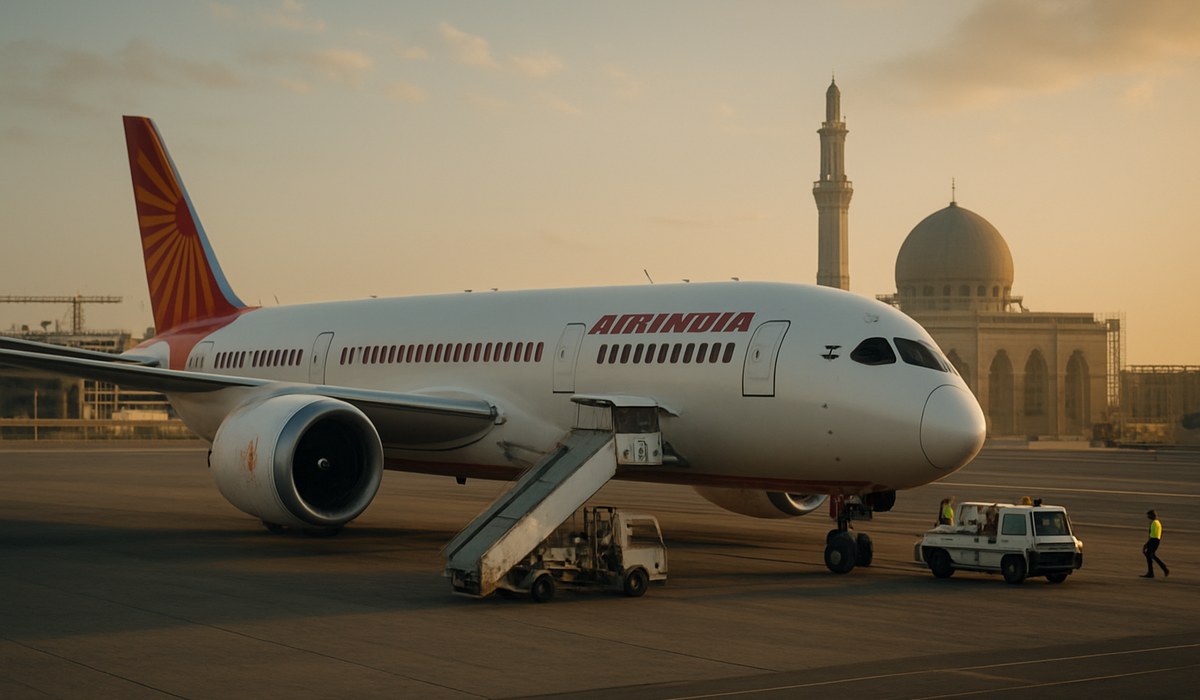
Image generated by AI
US-India Flight Diverts to Medina: What Happened
Air India flight AI-102 diverted to Medina's Prince Mohammad Bin Abdulaziz Airport (MNL) on March 19, 2026, following a false fire alert in the aircraft cabin. The Boeing 777-300ER, originally operating the New York JFK to Mumbai BOM route, affected 287 passengers and 15 crew members. The diversion occurred at approximately 2:14 AM UTC over the Arabian Peninsula after the aircraft's fire detection system triggered a precautionary alert during cruise at 41,000 feet.
Ground engineers at Medina airport conducted a full safety inspection lasting four hours. No fire was detected. Investigators determined the alert resulted from a faulty thermal sensor in the lower deck galley area. All passengers disembarked safely. Air India rerouted passengers through a replacement aircraft departing Medina at 11:30 AM local time, arriving Mumbai with a 9-hour delay.
Air India's Emergency Response and Passenger Handling
The carrier activated its standard emergency protocol immediately upon receiving the fire alert signal. Air India flight operations coordinated with Saudi aviation authorities to secure landing clearance at MNL within 23 minutes of the alert. The airline deployed ground teams to Medina from its Jeddah operations hub, 336 miles south.
Passengers received meal vouchers, hotel accommodation, and complimentary Wi-Fi during the layover. Air India issued travel credit certificates valued at 20,000 Indian Rupees (approximately $240 USD) per passenger for the disruption. The airline's customer service team provided real-time updates via SMS and email. Medical staff performed wellness checks on elderly passengers and those with mobility concerns. No medical emergencies were reported during the incident.
For travelers on US-India routes, understanding airline contingency procedures remains critical. Air India maintains partnerships with hotels in Gulf layover cities to manage unexpected diversions efficiently. Check IATA guidelines for international flight safety standards during bookings.
Impact on New York to Mumbai Route Operations
The flight disruption affected American travelers heading to India for business, tourism, and family visits. JFK-BOM represents one of the busiest transatlantic-to-Asia connections, carrying approximately 2,100 passengers daily across three major carriers. Secondary routes through European hubs experienced increased demand as passengers rebooked following the diversion.
Airlines operating this corridor—Air India, United Airlines, and Indian carriers—revised flight schedules for March 20-21, 2026. Ground handling services at New York JFK experienced a backlog of approximately 340 passengers requiring rebooking. Air India's Mumbai hub processed incoming delayed passengers through dedicated "priority clearance" lanes to minimize connection disruptions.
Travelers heading to India should monitor FlightAware for real-time route changes and potential weather-related diversions. Spring travel through the Arabian Peninsula increasingly encounters thermal updrafts affecting flight patterns. Review airline reboking policies before traveling.
Medina Layover Tourism: Unexpected Opportunity
The unplanned Medina stopover revealed tourism potential for stranded passengers. While religious tourism to Medina remains restricted for non-Muslim visitors, the layover enabled visitors to experience local culture, dining, and shopping at the airport's expanded commercial zone and nearby Al Noor Mall (2.3 miles from MNL).
The airport terminal features dedicated rest areas, prayer facilities, and 47 retail outlets. Several passengers utilized the 5-hour waiting period to explore Medina's modern infrastructure and hospitality amenities. Local guides reported increased interest in future intentional layovers in the city, potentially creating new tourism revenue streams.
Saudi Arabia's Vision 2030 tourism initiative has expanded airport amenities across Gulf hubs. Medina International Airport opened its $1.5 billion Phase II expansion in 2025, increasing capacity by 40 percent. Airlines now recognize layover cities as tourism destinations rather than mere transit points. If traveling through Saudi hubs, allocate layover time for exploring local shopping, dining, and cultural experiences.
Flight Tracking and Passenger Rights During Diversions
Real-time flight tracking platforms proved invaluable during the AI-102 incident. Passengers monitoring FlightAware received immediate notifications of the diversion, enabling family members and business contacts to adjust plans accordingly. The FAA and US DOT outline specific passenger compensation rights during international diversions.
Under US Department of Transportation rules, passengers on US-originating flights diverted due to airline-related mechanical issues qualify for compensation. Air India's voluntary settlement exceeded regulatory minimums by providing hotel accommodation valued at $280 per passenger. Passengers traveling on US-India routes should document all expenses—meals, hotel, transportation—incurred during unplanned layovers to file claims if necessary.
Flight India Medina diversions highlight the importance of travel insurance covering delay reimbursement. Comprehensive policies reimburse hotel, meal, and ground transportation costs exceeding 6-12 hours of delay. Register with the US State Department's Smart Traveler Program to receive alerts about flight disruptions affecting Americans traveling abroad.
Recovery Timeline and Route Normalization
Air India restored normal operations on the New York-Mumbai corridor by March 20, 2026. The replacement aircraft (VT-ILN, a Boeing 777-300ER) completed its one-way transit from Medina to Mumbai with 287 passengers, landing at 18:47 IST. Aircraft maintenance teams in Mumbai performed mandatory airworthiness inspections before the aircraft resumed scheduled service on March 21.
The Boeing 777's thermal sensor underwent replacement and certification testing, requiring 14 hours of documented maintenance. Air India's supply chain prioritized sensor shipments to prevent cascading delays on subsequent US-India rotations. The airline added buffer time (45 minutes additional) to all transatlantic-to-India operations through March 31, 2026, to accommodate potential weather or mechanical contingencies.
Passengers booked on subsequent Air India flights during this period experienced improved on-time performance despite the buffer additions. The route normalized completely by early April 2026. For future bookings on long-haul routes, selecting flights with longer connection times reduces the impact of inevitable delays.
Traveler Action Checklist
Protect yourself when traveling on US-India flights by following these essential steps:
-
Enable flight tracking alerts on FlightAware 24 hours before departure to monitor real-time route changes and diversions.
-
Download your airline's mobile app to receive push notifications about disruptions, rerouting options, and compensation eligibility.
-
Document all receipts for meals, hotels, transportation, and other expenses incurred during delays exceeding 4 hours on international flights.
-
Verify passenger rights for your specific route and airline using the US DOT Consumer Complaint Database before traveling.
-
Purchase travel delay insurance covering accommodations and meals for delays exceeding 6 hours (approximately $45-80 for US-India routes).
-
Register flight details with your airline 48 hours before departure, confirming contact information for disruption notifications.
-
Maintain travel documents (passport, visa, travel insurance) in carry-on luggage during all flights, including diversions requiring unplanned airport visits.
-
Contact your airline immediately upon landing during disruptions to file formal complaints and preserve compensation claims.
| Incident Detail | Specific Information |
|---|---|
| Flight Number & Airline | Air India AI-102 |
| Aircraft Type | Boeing 777-300ER |
| Departure Airport (IATA/ICAO) | New York JFK (KJFK) |
| Scheduled Destination | Mumbai BOM (VABB) |
| Diversion Airport | Medina MNL (OEMA) |
| Total Passengers Affected | 287 passengers + 15 crew |
| Root Cause | False fire alert (faulty thermal sensor) |
| Diversion Time at MNL | 4 hours inspection, 7.5 hours total ground time |
| Delay to Final Destination | 9 hours |
| Compensation Provided | Hotel, meals, 20,000 INR credit (~$240 USD) |
| Route Normalization Date | March 20, 2026 |
What This Means for Travelers
The AI-102 diversion underscores why US-India flight routing requires awareness of Middle Eastern layover hubs. Airlines increasingly route transpacific traffic through Gulf airports—Doha (DOH), Abu Dhabi (AUH), and Jeddah (JED)—to optimize fuel efficiency and crew scheduling. Mechanical issues in remote regions demand understanding regional airport capabilities and airline partnership networks.
Immediate traveler implications:
Book travel insurance covering mechanical delays, not just weather. Standard policies exclude airline-caused disruptions unless you purchase premium coverage. Plan connection times of minimum 2 hours for domestic-international transfers and 3+ hours for long-haul continuing flights.
Monitor airline partnerships—Air India's relationship with Saudi airports enabled rapid ground handling response. Choose carriers with established infrastructure in regions your flight traverses. Review US DOT compensation rules specific to your airline and route before paying final balances.
Understand that flight India Medina connections represent standard routing strategy, not anomalies. Future bookings on US-India routes will encounter similar diversion possibilities during mechanical or weather events. Prepare accordingly with documentation, insurance, and realistic timeline expectations.
Frequently Asked Questions
What are my rights if my flight India Medina diverts due to mechanical failure? International passengers on US-originating flights receive compensation under US DOT regulations if the airline caused the delay. This includes hotel accommodations, meals, and ground transportation expenses. Air India's $240 USD credit reflected voluntary settlement exceeding minimum requirements. Document all expenses and file claims within 60 days using your airline's passenger compensation form.
How does flight tracking help during travel disruptions? Real-time tracking platforms like FlightAware provide immediate diversion notifications, rerouting information, and aircraft location data. Passengers monitoring the AI-102 flight received alerts 8 minutes after the initial diversion request, enabling family coordination and business schedule adjustments. Enable push notifications for your booked flights 24 hours before departure.
What should I pack for unexpected layovers on US-India routes? Carry medications, phone chargers, change of clothes, and toiletries in your carry-on for diversions lasting 4+ hours. Include copies of passport, visa, and travel insurance documentation. Pack eyeglasses, hearing aids, and other personal medical devices to manage comfort during extended airport stays or unplanned overnight stays in layover cities.
Will flight India Medina routes include intentional layovers for tourism in 2026? Several airlines are exploring scheduled 12-24 hour layovers in Saudi Arabia to generate additional tourism revenue. While Air India hasn't announced specific Medina stopover itineraries, the carrier may introduce optional layover packages combining flight savings with cultural experiences. Monitor airline websites for specialized routing announcements in summer 2026.
Related Travel Guides
Complete Guide to US-India Flight Routes and Layover Cities 2026 Navigating Airport Diversions: Passenger Rights and Compensation Saudi Arabia Layover Experiences Beyond Jeddah
Disclaimer
This article is for informational and educational purposes only. It does not constitute legal, financial, or professional advice. While we strive to provide accurate and up-to-date information, travel policies, regulations, and conditions change rapidly. Always verify information with official sources before making travel decisions. Nomad Lawyer makes no representations about the accuracy, reliability, completeness, or suitability of the information provided. Readers should consult qualified professionals for advice specific to their circumstances. The views expressed in this article are those of the author and do not necessarily reflect the views of Nomad Lawyer.
Raushan Kumar
Founder & Lead Developer
Full-stack developer with 11+ years of experience and a passionate traveller. Raushan built Nomad Lawyer from the ground up with a vision to create the best travel and law experience on the web.
Learn more about our team →