Ethiopian Airlines Launches Three Weekly Nacala Flights: Opening Mozambique's Northern Coast to Global Travel

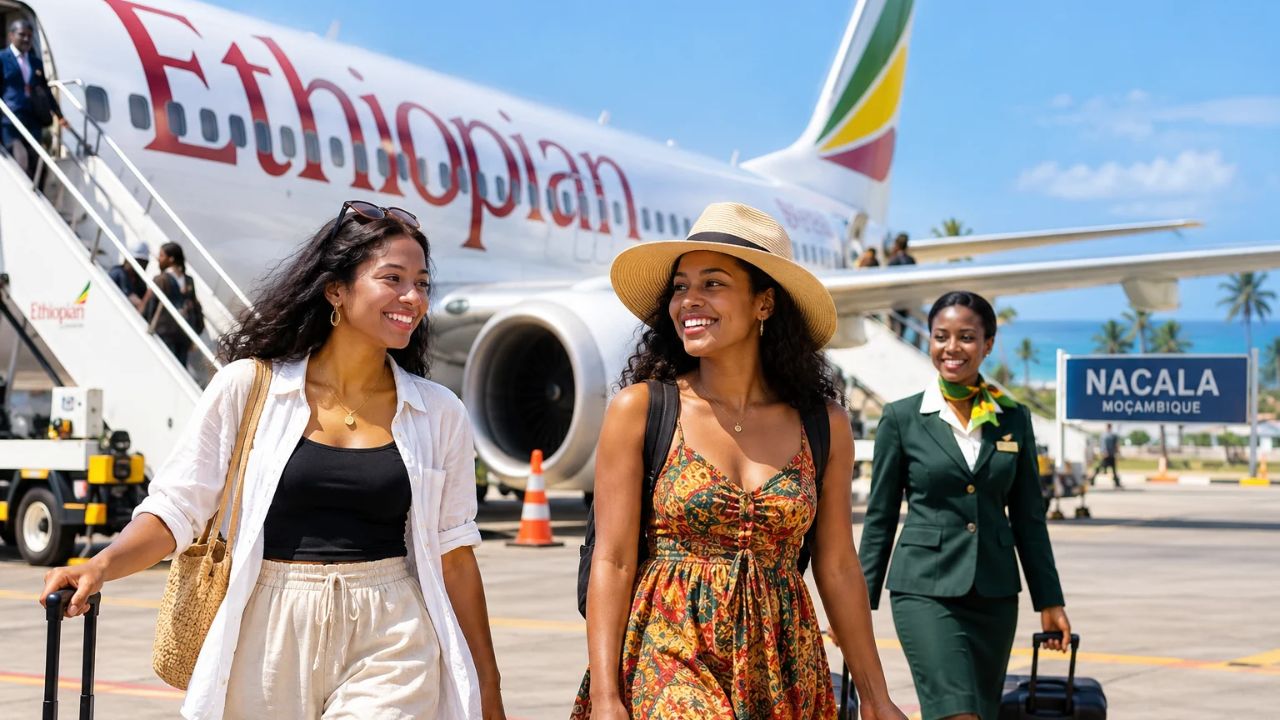
While international travelers heading to Mozambique traditionally funnel into the southern capital of Maputo or the luxury island lodges of the Bazaruto Archipelago, northern Mozambique's deep-water coastal enclave of Nacala has long remained secluded behind multi-day overland journeys. That geographic barrier dissolved on 27 October 2026, when Ethiopian Airlines operated its inaugural scheduled passenger flight from Addis Ababa Bole International Airport to Nacala Airport, routing via Blantyre, Malawi. Operating three times a week on modern Boeing 737-8 aircraft, the route establishes Nacala as the carrier's third Mozambican gateway alongside Maputo and the central port city of Beira, unlocking direct international air access to one of the most culturally rich and marine-diverse shorelines on the Indian Ocean.
Connecting Northern Mozambique to Over 65 African Gateways
The introduction of scheduled air service to Nacala transforms travel logistics across Southeast Africa. Previously, international visitors, mining executives, and development specialists traveling to Nampula Province had to fly into Maputo, transfer to domestic carriers, or make arduous road connections from regional airstrips. By routing the service through Blantyre, Ethiopian Airlines bridges Malawi and northern Mozambique while plugging the entire region into its Addis Ababa super-hub, which connects more than 65 African destinations with long-haul passenger banks from Europe, North America, and Asia.
Departures are scheduled every Tuesday, Thursday, and Saturday, utilizing fuel-efficient Boeing 737-8 aircraft. The route supports the strategic Nacala Development Corridor, which links landlocked agricultural and mineral basins in Malawi and Zambia to Nacala's natural deep-water bay. For leisure travelers, the flights offer unprecedented access to pristine coastal waters, uncrowded coral reefs, and the historic Swahili-Portuguese trading posts that define the northern coastline.
Flight Schedule and Regional Aviation Connections to Nacala
The schedule below details the operational specifications, route routing, and aircraft deployment for the new northern Mozambique link:
| Service Parameter | Scheduled Detail | Strategic Tourism & Trade Context |
|---|---|---|
| Launch Date | 27 October 2026 | First direct international service into Nacala |
| Operating Carrier | Ethiopian Airlines | Star Alliance member connecting global networks |
| Weekly Frequency | 3 weekly flights (Tuesdays, Thursdays, Saturdays) | Regular service for leisure and business itineraries |
| Flight Route | Addis Ababa (ADD) – Blantyre (BLZ) – Nacala (MNC) | Cross-border connection linking Ethiopia, Malawi, and Mozambique |
| Aircraft Type | Boeing 737-8 | Modern twin-engine jet offering dual-cabin service |
| Mozambique Gateways | 3 total (Maputo, Beira, Nacala) | Comprehensive coverage across south, central, and north |
| Hub Connectivity | Over 65 African destinations via Addis Ababa | Provides same-day transit for international visitors |
| Primary Attractions | Fernão Veloso Bay, Ilha de Moçambique, coastal diving | Direct gateway to UNESCO heritage and Indian Ocean reefs |
What Makes Nacala Different: Natural Harbors and Cultural Crossroads
Nacala is geographically exceptional: it sits inside the Baía de Nacala, the deepest natural harbor on the eastern seaboard of Africa and one of the deepest in the southern hemisphere. Sheltered from heavy open-ocean swells, the bay features exceptionally calm, translucent turquoise waters that shelter thriving coral reefs, sea turtle feeding zones, and seasonal dolphin pods.
Just north of the city lies Fernão Veloso beach, an expansive stretch of powdery white sand lined with casuarina trees and traditional fishing villages where Makhuwa fishermen repair handcrafted wooden dhows. Beyond the bay, Nacala serves as the northern jumping-off point for Ilha de Moçambique, a UNESCO World Heritage site situated roughly 100 kilometers south along paved coastal roads. The tiny crescent-shaped island was the former capital of Portuguese East Africa for four centuries, where 16th-century coral-stone fortresses stand shoulder-to-shoulder with Makhuwa palm-thatch settlements, historic mosques, and Hindu trading houses, embodying centuries of Indian Ocean maritime commerce.
Visitor Insider Tips: Exploring Nacala and Nampula Province
Navigating northern Mozambique rewards travelers who understand regional customs, transportation routes, and local culinary traditions:
- Coordinate Ground Transport to Ilha de Moçambique in Advance: While Nacala Airport offers taxi counters, pre-arranging a private vehicle through your lodge ensures a smooth transfer across the three-kilometer one-lane bridge connecting the mainland to Ilha de Moçambique. The drive takes approximately two hours, winding through cashew orchards and baobab groves.
- Sample Makhuwa Coastal Gastronomy: Northern Mozambican cuisine blends fresh Indian Ocean seafood with aromatic spices and grated coconut. Seek out modest beachfront barracas in Nacala-Porto or Fernão Veloso to sample matapa de siri (cassava leaves stewed in coconut milk, garlic, and fresh crab) served alongside warm cassava mash or fragrant white rice.
- Embrace Early Morning Tides for Snorkeling and Dives: Because coastal winds gently pick up by mid-afternoon, plan boat excursions, paddleboarding, and scuba outings around Fernão Veloso Bay between 07:00 and 11:00. Local dive operators can arrange trips to drop-offs where underwater visibility routinely exceeds 25 meters.
- Carry Local Currency (Meticais) for Village Markets: While larger hotels and established dive centers accept credit cards, local seafood markets, dhow captains, and roadside fruit stalls operate exclusively in cash. ATMs are readily available near the commercial port in Nacala, but carry sufficient Meticais before journeying toward remote fishing hamlets.
- Respect Community Customs Around Fishing Beaches: When visiting local landing beaches where fishermen haul in daily catches, ask permission before taking photographs. Community life is tightly woven around traditional artisanal fisheries, and engaging local boatmen for a gentle sunset sailing trip on a traditional dhow directly supports coastal household economies.
Cultural and Environmental Context: Community Heritage and Marine Stewardship
The arrival of regular international air service introduces both immense economic opportunity and environmental responsibilities to northern Mozambique. For decades, economic activity in Nacala centered almost exclusively on cargo shipping, cement production, and rail logistics along the Nacala Corridor. The diversification into sustainable ecotourism, encouraged by initiatives from the Mozambique National Tourism Institute (INATUR), offers an alternative livelihood for coastal communities facing the pressures of warming seas and shifting fish migrations.
Preserving the fragile marine ecosystem of Baía de Nacala requires careful management. Pristine sea-grass beds and fringing coral reefs act as natural nurseries for reef fish, dugongs, and migrating humpback whales. Tourism operators are partnering with local fishing councils to establish designated marine reserves where destructive net-dragging is prohibited. By directing tourist revenue into community-run patrol boats and eco-guides, local communities are empowered to safeguard their ancestral coastline while sharing their maritime heritage with travelers from around the globe.
FAQ: Visiting Nacala and Northern Mozambique in 2026
When did Ethiopian Airlines begin operating flights to Nacala? Ethiopian Airlines launched its scheduled passenger service to Nacala on 27 October 2026, operating three times a week via Blantyre, Malawi.
What is the flight schedule and aircraft type for the Nacala route? Flights operate on Tuesdays, Thursdays, and Saturdays from Addis Ababa Bole International Airport using modern twin-engine Boeing 737-8 aircraft.
How far is Nacala from the historic island of Ilha de Moçambique? Nacala Airport is located approximately 100 kilometers north of Ilha de Moçambique, accessible via a scenic two-hour drive along paved roads.
What are the primary outdoor activities in Nacala? Visitors can enjoy scuba diving in deep coral drop-offs, snorkeling in sheltered bays, sailing on traditional wooden dhows, and relaxing on uncrowded white-sand beaches like Fernão Veloso.
With deep turquoise waters and timeless dhow harbors now linked directly to the African skies, northern Mozambique welcomes travelers to discover the continent's quietest coastal frontier.
Related Travel Guides
The 10 Best Underrated Coastal Towns and Diving Escapes in East Africa, According To Reddit (Coming Soon)
This article is for informational purposes. Flight routes, passenger regulations, visa rules, and transit advisories are subject to change by airlines and aviation authorities. Readers are advised to verify schedules and travel documentation with relevant carriers and border agencies before departure.
Related Stories

Ultra-Comfortable Budget Flights 2026: Scoot, ZIPAIR, AirAsia, and LEVEL Redefine Low-Cost Long-Haul Travel
Asia Travel Disrupted: 4,304 Delays and 373 Cancellations Hit Delhi, Beijing, and Kuala Lumpur Megahubs