
Maintenance Raptor Hours: F-22 Fleet Sustainability Crisis in 2026
The F-22 Raptor demands 30 maintenance hours for every flight hour, creating operational bottlenecks across U.S. Air Force bases in 2026. Aging airframes strain defense budgets and readiness levels.

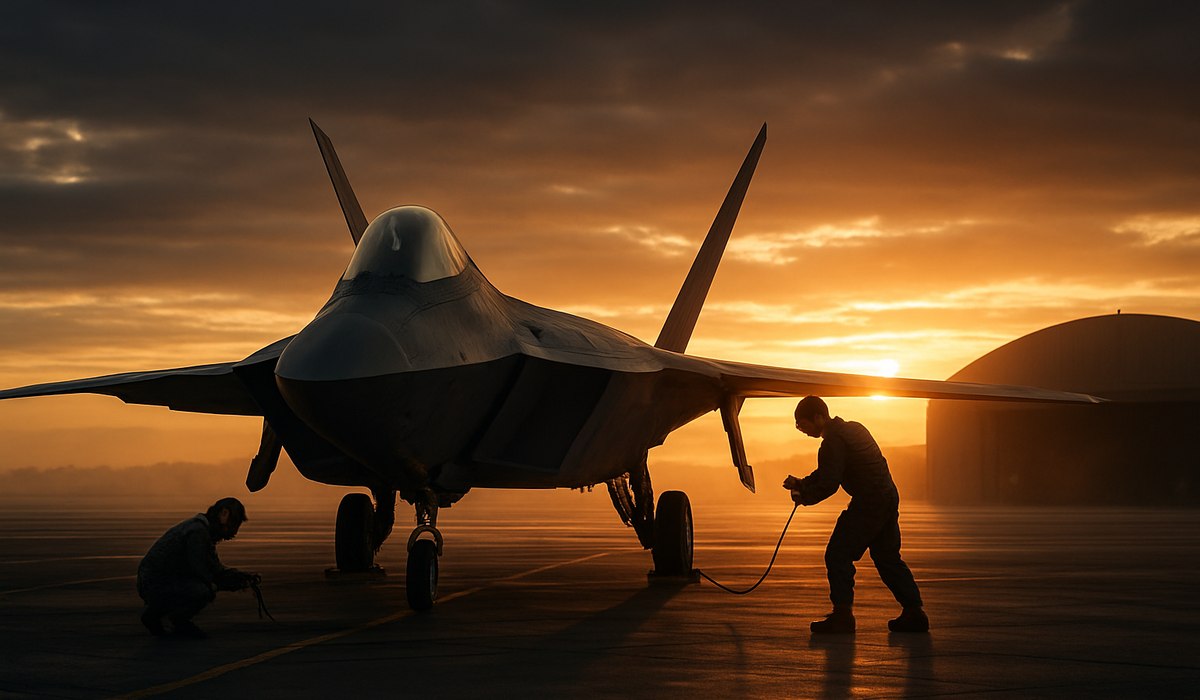
Image generated by AI
The F-22 Raptor's Mounting Maintenance Burden
The Lockheed Martin F-22 Raptor requires 30 hours of maintenance raptor hours for every single hour of flight operations, according to updated Department of Defense assessments released in May 2026. This extraordinary maintenance-to-flight ratio highlights a critical vulnerability within America's aging fifth-generation fighter fleet. As the aircraft ages beyond two decades of operational service, structural fatigue compounds the inherent complexity of stealth technology systems, forcing military planners to confront uncomfortable questions about fleet sustainability and long-term operational viability.
The Maintenance-to-Flight-Time Ratio Problem
The 30:1 maintenance raptor hours ratio represents one of aviation's most challenging operational equations. Every 60 minutes of F-22 combat operations or training missions triggers approximately 1,800 minutes of required maintenance work. This burden encompasses routine inspections, stealth coating repairs, avionics system calibrations, engine servicing, and structural evaluations specific to fifth-generation fighter design.
Military maintenance teams across Langley Air Force Base, Joint Base Pearl Harbor-Hickam, Elmendorf Richardson, and other F-22 operating facilities struggle with this demanding schedule. The complexity stems from the Raptor's advanced materials, radar-absorbent coatings requiring specialized handling, and sensor systems demanding constant recalibration. According to Air Force logistics documentation, no other fighter in active service carries comparable maintenance needs. The ratio directly impacts squadron readiness rates, pilot training frequency, and overall force deployment capabilities. When one aircraft undergoes 30 hours of maintenance raptor hours work, limited maintenance personnel and scarce specialized tooling become bottlenecks. [See current Air Force operational readiness reports via FAA resources](https://www.faa.gov).
Aging Airframes and Structural Strain
The F-22 fleet entered service in 2005, meaning many aircraft have now exceeded 20 years of operational duty. Advanced combat aircraft experience accelerated aging compared to commercial transport planes. High-G maneuvers, supersonic stress cycles, and exposure to extreme temperature variations crack welds, degrade composite materials, and weaken airframe structures.
Defense analysts note that stealth coatings—essential for the Raptor's combat advantage—deteriorate unpredictably. Each flight exposes these radar-absorbent surfaces to thermal stress. Reapplying stealth coatings represents labor-intensive maintenance raptor hours work requiring hangar time and specialized technicians. Additionally, the aircraft's internal weapons bay doors, moving surfaces, and radar-absorbing materials demand continuous attention. Structural inspection protocols grow more stringent as aircraft age, identifying micro-fractures invisible to earlier examination standards. The combination of aging airframes plus advanced technology complexity creates a perfect storm challenging military budgets and operational planning.
Cost Implications for Military Operations
The financial burden of F-22 maintenance extends beyond simple hourly labor calculations. Each maintenance raptor hours session requires specialized components, many manufactured exclusively by Lockheed Martin suppliers. Spare parts availability remains constrained, driving procurement costs upward. Some stealth-specific materials cost thousands of dollars per repair operation.
When the Air Force operates a single F-22 for one hour, the true operational cost—including all associated maintenance raptor hours work—approaches $70,000 to $85,000 depending on whether specific repairs are required. For a fighter that costs $412 million per unit, extending its operational life through intensive maintenance consumes massive defense appropriations. The Air Force manages approximately 186 operational F-22 aircraft. If each flies 300 hours annually (a conservative estimate), the cumulative maintenance burden reaches 1.68 million hours yearly—requiring thousands of skilled technicians nationwide.
Squadron commanders face agonizing choices: increase flight operations to maintain pilot proficiency, or conserve the fleet by reducing flight hours to minimize maintenance requirements. This trade-off between readiness and sustainability defines modern fighter fleet management. [Review Department of Defense budget allocation data via US DOT resources](https://www.transportation.gov/airconsumer).
Future of Fifth-Generation Fighter Maintenance
Military strategists increasingly question whether the current F-22 maintenance model remains sustainable through 2040 and beyond. The Air Force has shifted focus toward the sixth-generation F-X platform, acknowledging that Raptor airframes face finite operational lifespans. However, a transition away from the F-22 fleet cannot happen immediately; these fighters remain critical to American air superiority.
Manufacturers propose several solutions to reduce maintenance raptor hours demands. Advanced predictive maintenance using artificial intelligence and sensor data might identify problems before they require extensive repairs. Newer stealth coatings with longer service lives could reduce reapplication frequency. Modular design upgrades could simplify component replacement. Additionally, some analysts suggest rotating aircraft through extended maintenance overhauls, placing some airframes in reserve status while others maintain higher flight hours.
The Air Force has requested increased budgets specifically for F-22 sustainment through 2030. Congressional oversight committees debate whether resources should support extended Raptor operations or accelerate investment in next-generation platforms. International partnerships with allied air forces may eventually share maintenance raptor hours costs, though stealth technology restrictions limit technology transfer opportunities. The fundamental question remains: how long can an aging fleet of advanced fighters remain operationally viable when maintenance requirements consume such enormous resources?
Key F-22 Raptor Maintenance Data
| Metric | Value | Impact |
|---|---|---|
| Maintenance Hours Per Flight Hour | 30:1 | Operational bottleneck |
| Annual Flight Hours (Typical Squadron) | 300 hours | 9,000 maintenance hours needed |
| Annual Maintenance Cost Per Aircraft | $2.1-2.8 million | Defense budget strain |
| Aircraft Age (Fleet Average) | 18-21 years | Accelerated wear patterns |
| Total Fleet Size | 186 operational airframes | 5.58 million annual maintenance hours |
| Stealth Coating Reapplication Interval | 40-80 flight hours | High-frequency labor requirement |
What This Means for Travelers
While military aircraft maintenance might seem disconnected from commercial aviation, the operational principles affect broader aerospace infrastructure and aviation policy. Here's what informed citizens should understand about this defense sector challenge:
-
Recognize that military aviation constraints influence civilian aviation policy—competition for skilled technicians, specialized materials, and manufacturing capacity affects both sectors.
-
Understand that advanced technology carries hidden operational costs—stealth fighters exemplify how cutting-edge engineering creates maintenance burdens that extend beyond initial purchase prices.
-
Acknowledge that aging fleet management requires strategic planning—whether military or commercial, aircraft fleets demand investment throughout their operational lifespans.
-
Support transparent defense spending discussions—informed public awareness about military maintenance raptor hours costs enables better congressional oversight and resource allocation.
-
Monitor how defense budget priorities influence aviation innovation—investments in next-generation aircraft development trickle down to commercial aviation technologies and manufacturing practices.
For travelers, these military readiness discussions matter because they shape national security policy, aerospace industry capacity, and ultimately, the technological sophistication of commercial aviation systems.
Frequently Asked Questions
Why does the F-22 need so much maintenance compared to commercial aircraft?
Commercial airliners undergo maintenance at roughly 1:1 ratios due to simpler systems and standardized designs. The Raptor's stealth technology, advanced avionics, and combat-ready systems require specialized inspections after each flight, multiplying maintenance requirements exponentially.
Could stealth technology improvements reduce maintenance raptor hours demands?
Yes. Manufacturers are developing longer-lasting radar-absorbent coatings and self-healing composite materials that could extend intervals between major overhauls, potentially reducing the 30:1 ratio toward 15:1 or better within the next decade.
**How does F-22 maintenance
Disclaimer
This article is for informational and educational purposes only. It does not constitute legal, financial, or professional advice. While we strive to provide accurate and up-to-date information, travel policies, regulations, and conditions change rapidly. Always verify information with official sources before making travel decisions. Nomad Lawyer makes no representations about the accuracy, reliability, completeness, or suitability of the information provided. Readers should consult qualified professionals for advice specific to their circumstances. The views expressed in this article are those of the author and do not necessarily reflect the views of Nomad Lawyer.
Kunal K Choudhary
Co-Founder & Contributor
A passionate traveller and tech enthusiast. Kunal contributes to the vision and growth of Nomad Lawyer, bringing fresh perspectives and driving the community forward.
Learn more about our team →