
Moscow Builds Sovereign AI Tourism Infrastructure to Connect Capital to 85 Regions
Moscow integrates over 340 digital walking routes, augmented reality guides, and AI itinerary tools across Russpass, building a sovereign smart tourism ecosystem that connects 85 Russian regions.

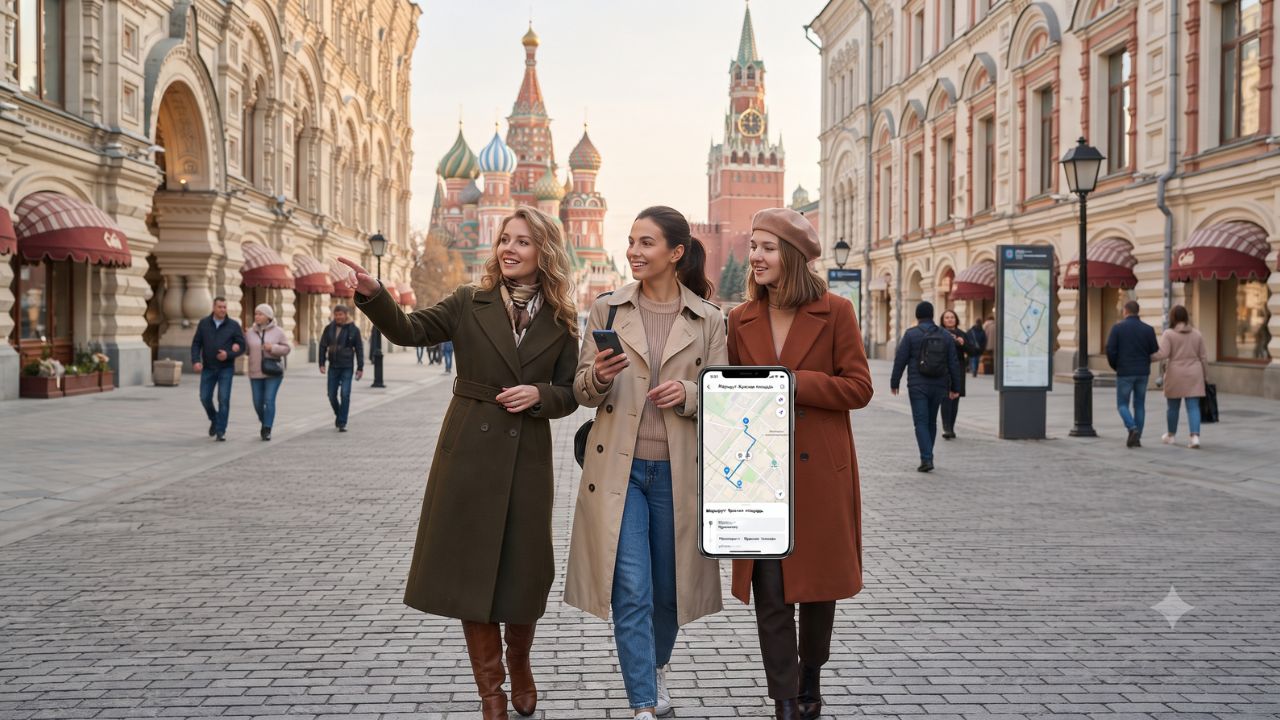
A municipal network of more than 340 digital walking routes, 140 educational interactive quests, and over 4,000 verified architectural information cards deployed across Moscow demonstrates how Russian authorities are constructing a fully sovereign digital travel ecosystem. Announced by the Moscow Department of Information Technologies on World Tourism Day on 27 September, the initiative merges artificial intelligence itinerary generation, augmented reality heritage tours, and unified transit ticketing into municipal platforms. Rather than relying on Western navigation, hotel booking, and ticketing services that suspended domestic operations, the Russian capital is expanding proprietary digital infrastructure to serve both domestic travelers and incoming long-haul visitors from Asia, the Middle East, and Latin America.
The technological overhaul operates across multiple interconnected platforms, headlined by the regional Russpass booking service, the municipal Get to Know Moscow mobile portal, and the Mosbilet cultural ticketing system. Together with contactless transit applications managing the Moscow Metro, Moscow Central Circle, and Moscow Central Diameters, these digital tools aggregate tens of thousands of tourism products across 85 Russian federal regions. For international travelers navigating a sanction-altered travel market, understanding how these sovereign applications function is essential for arranging lodging, ground transit, and museum access.
Sovereign Digital Platforms and Urban Sightseeing Digitization
The core urban exploration engine is the Get to Know Moscow service, an open-access platform designed to guide pedestrians through the capital's architectural and cultural history. Beyond its 340 curated routes, the platform integrates audio guides that direct visitors through distinct neighborhood enclaves, ranging from medieval quarters to constructivist districts. Historical immersion is enhanced through augmented reality modules embedded in the mobile application. By pointing their smartphones at landmark facades, users can interact with three-dimensional digital representations of historical figures connected to each site.
These augmented reality features are currently active across notable architectural monuments, including the historic Métropole Hotel, the Levenson Printing House, the Bolshoy Moskvoretsky Bridge, and preserved nineteenth-century merchant estates. Instead of hiring private tour guides or purchasing foreign print guides, independent travelers can access localized historical context directly on their devices. To increase visitor retention, the service incorporates gamified elements, featuring 140 quizzes that reward users for exploring secondary cultural sites beyond Red Square.
Cultural admissions are managed through Mosbilet, a specialized digital service designed to bypass third-party ticket markups. The portal sells face-value tickets for municipal theatres, museums, gallery exhibitions, concerts, and public lectures, while cataloging free events and educational workshops. Programs such as New Season with Mosbilet provide priority booking for major theatrical productions, while Where to Go with Children in Moscow offers curated listings for traveling families. By centralizing cultural reservations into a unified interface, municipal planners reduce booking confusion while collecting real-time attendance data across municipal venues.
National Integration and Unified Municipal Transit Architecture
While Get to Know Moscow focuses on municipal heritage, the Russpass digital ecosystem extends travel planning across 85 Russian regions. The platform connects tens of thousands of regional travel offers, including nature expeditions, licensed historical guides, hotel rooms, and dining reservations. The central technical development within Russpass is the deployment of machine-learning algorithms that analyze user travel duration, budget preferences, and cultural interests to construct multi-city itineraries. These AI tools recommend combined rail and hotel packages, distributing visitor foot traffic from Moscow toward historic regional destinations.
| Platform / Service | Primary Administrative Function | Key Technological Assets | Regional Scope & Inventory Scale |
|---|---|---|---|
| Get to Know Moscow | Self-guided heritage tours, architecture mapping, and gamified sightseeing | 340+ walking routes; 140+ quizzes/quests; 4,000+ data cards; AR historic guides | Moscow municipal boundaries; landmarks include Métropole Hotel and Levenson Printing House |
| Mosbilet | Face-value cultural ticketing and performing arts reservations | Direct ticketing API; zero-markup face value; family and premiere projects | Capital cultural venues; theatres, classical concert halls, and art museums |
| Russpass (Official Portal) | Nationwide travel planning, regional packages, and hotel/dining reservations | Proprietary AI recommendation algorithms; automated multi-region routing | 85 Russian federal regions; tens of thousands of certified tourism packages |
| Moscow Metro App | Urban rapid-transit planning, contactless payments, and fare media top-up | Virtual Troika cards; NFC and biometric payment integration; line updates | Moscow Metro, Moscow Central Circle (MCC), Moscow Central Diameters (MCD) |
| Moscow Transport | Multi-modal urban routing and mobility management in a single interface | Multi-service fare comparison; real-time telemetry tracking; integrated wallet | Citywide network: buses, electric buses, trams, taxis, carsharing, scooters, and river ferries |
| Mos.ru Municipal Portal (mos.ru) | Central citizen and visitor administrative directory | Multilingual visitor guidance; transit terminal data; municipal assistance | Capital administrative districts; international rail terminals and airport links |
Ground transport integration is managed through the dedicated Moscow Metro application and the broader Moscow Transport system. The metro application digitizes the traditional physical Troika transport card, allowing passengers to generate virtual travel cards for smartphone-based tap-and-go entry across the metro, the Moscow Central Circle (MCC), and the Moscow Central Diameters (MCD) suburban rail network. The wider Moscow Transport application expands this functionality into a unified mobility service. The platform compares route options based on travel time and pricing across conventional subways, municipal buses, electric buses, and trams, while incorporating taxi dispatch, carsharing availability, electric scooter rentals, electric vehicle charging stations, and tickets for regular passenger river transport along the Moskva River.
Expert Analysis: The Financial Realities Behind Russia's Sovereign Travel Tech
For travelers booking journeys to Russia in 2026, the direct consequence of this unified digital ecosystem is the absolute necessity of adopting local digital tools. Major international travel aggregators, foreign bank cards, and Western mapping services ceased operations in Russia following sanctions imposed in 2022. Foreign visitors arriving on the electronic visa (e-visa) system—originating primarily from China, India, the United Arab Emirates, Saudi Arabia, and Southeast Asia—cannot utilize Google Pay, Apple Pay, or credit cards issued by foreign banking networks.
The pricing pressure this creates means that international visitors who fail to set up local digital payment channels face inflated exchange fees and reliance on cash transactions. By using municipal applications like Mosbilet and the Moscow Metro platform, tourists can access domestic face-value rates for museum admissions and transit fares without paying cash surcharges to street brokers. In addition, the World Tourism Organization (UN Tourism) has noted that smart-city digitization increasingly determines destination competitiveness. By creating alternatives to Western booking engines, Moscow ensures that international travelers from non-aligned nations can navigate the city without operational disruption.
However, the closed nature of this digital ecosystem introduces technical hurdles. Many municipal applications require Russian phone numbers for account verification, and payment processing within Russpass and Mosbilet depends on domestic payment networks such as the Mir card system or foreign credit cards issued through participating Chinese and Gulf banks. While the municipal mos.ru portal offers foundational transit guidance, foreign independent travelers must manage software permissions, language translation layers, and domestic SIM cards to unlock full functionality.
Key Takeaways
- Moscow unveiled upgraded smart tourism tools on World Tourism Day, featuring more than 340 digital walking routes and 4,000 architectural profile cards.
- The Get to Know Moscow app integrates augmented reality figures at landmarks including the Métropole Hotel and Levenson Printing House.
- The Russpass platform deploys artificial intelligence algorithms to generate customized multi-day itineraries across 85 Russian federal regions.
- The Mosbilet portal centralizes face-value ticket sales for theatres, exhibitions, and classical concerts, eliminating third-party markups.
- International travelers must navigate a domestic software ecosystem, utilizing virtual Troika transport passes to manage metro, rail, bus, and river-boat journeys.
FAQ: Moscow Smart Tourism and AI Tools 2026
What features does the Get to Know Moscow mobile platform offer?
The platform provides over 340 self-guided walking routes, 140 educational quizzes, and augmented reality animations of historical figures at significant architectural landmarks.
Can international travelers use Russpass to plan travel outside Moscow?
Yes. Russpass covers 85 Russian regions, offering tens of thousands of tourism packages, excursions, and AI-driven itinerary suggestions for domestic and multi-city routes.
How do tourists pay for public transit in Moscow using digital apps?
Travelers can use the Moscow Metro app to manage physical or virtual Troika cards, enabling contactless entry across metro, suburban rail, and bus networks.
Why are Moscow's sovereign travel apps necessary for foreign visitors?
Because Western travel aggregators and foreign credit card networks do not operate in Russia, domestic municipal applications are required to book face-value tickets and plan urban transit.
In an era of divided geopolitical travel networks, Moscow's digital platforms demonstrate how municipal technology can build an independent smart-city ecosystem for international visitors.
Related Travel Guides
Disclaimer
This article is for informational and educational purposes only. It does not constitute legal, financial, or professional advice. While we strive to provide accurate and up-to-date information, travel policies, regulations, and conditions change rapidly. Always verify information with official sources before making travel decisions. Nomad Lawyer makes no representations about the accuracy, reliability, completeness, or suitability of the information provided. Readers should consult qualified professionals for advice specific to their circumstances. The views expressed in this article are those of the author and do not necessarily reflect the views of Nomad Lawyer.
Raushan Kumar
Founder & Lead Developer
Full-stack developer with 11+ years of experience and a passionate traveller. Raushan built Nomad Lawyer from the ground up with a vision to create the best travel and law experience on the web.
Learn more about our team →