
Fiji Sustainable Tourism Shift 2026: Savusavu and Taveuni Lead Eco-Adventure Expansion
Fiji is pivoting toward a low-impact tourism model in 2026, centering growth in Savusavu and Taveuni to balance luxury adventure with strict marine and rainforest conservation.

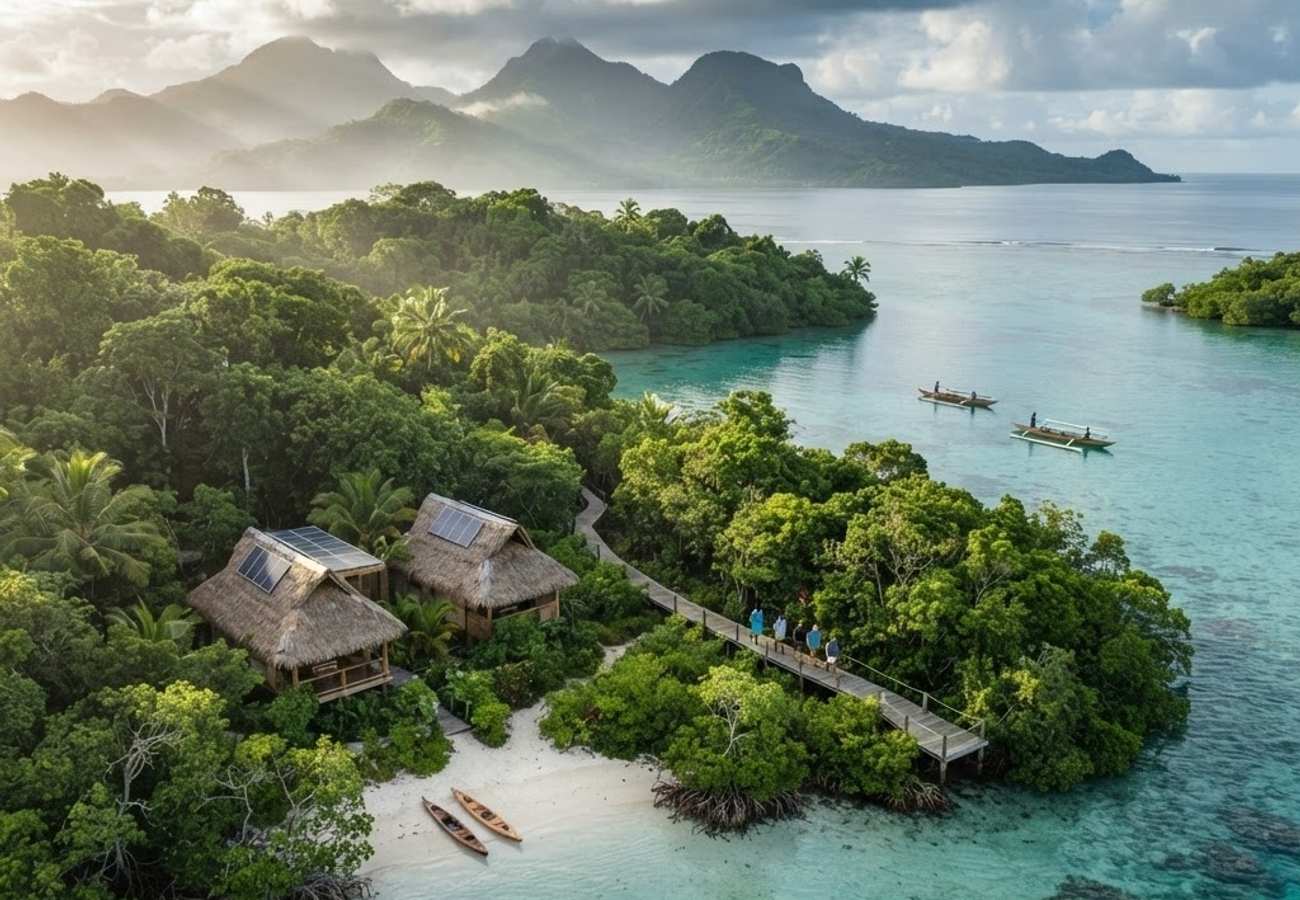
Image generated by AI
Zero-impact journeys are becoming the primary driver for Pacific travel in 2026, as Fiji aggressively pivots its tourism infrastructure toward nature protection and community-led conservation. This strategic shift is designed to move the visitor footprint away from traditional high-density resort hubs and toward decentralized, ecologically sensitive towns like Savusavu and Taveuni. By integrating responsible exploration with practical logistics, Fiji is attempting to decouple tourism growth from environmental degradation.
The Decentralization of Fijian Tourism
The traditional Fijian travel model—centered heavily on the Viti Levu corridor—is undergoing a structural realignment. The current objective is to distribute economic benefits and passenger loads across a wider network of towns and islands. This prevents the "over-tourism" traps seen in other island nations and ensures that fragile ecosystems, particularly in the Vanua Levu region, remain viable.
For the modern traveler, this means a shift in accessibility. While Nadi remains the primary international gateway, there is a concerted effort to streamline domestic transfers to remote hubs. The focus has shifted from "all-inclusive luxury" to "meaningful immersion," where the value proposition is based on the authenticity of the cultural connection and the measurable impact of the visitor's presence on local conservation projects.
2026 Sustainable Destination Matrix
The following data outlines the specific strategic roles played by various Fijian hubs in the 2026 sustainable travel framework.
| Destination | Primary Island | Strategic Eco-Focus | Key Sustainable Activity | Accessibility Level | Target Demographic |
|---|---|---|---|---|---|
| Savusavu | Vanua Levu | Marine & Community | Namena Marine Reserve Diving | Moderate (Flight/Ferry) | Slow Travelers |
| Suva | Viti Levu | Urban Ecology | Colo-i-Suva Forest Reserve | High (Major Hub) | Cultural Tourists |
| Nadi | Viti Levu | Gateway Logistics | Sabeto Hot Springs/Local Farms | High (International) | Adventure Starters |
| Pacific Harbour | Viti Levu | Marine Apex Predators | Shark Conservation Dives | High (Road) | Wildlife Enthusiasts |
| Taveuni | Vanua Levu | Biodiversity | Bouma National Heritage Park | Low (Remote) | Conservationists |
| Lautoka | Viti Levu | Agri-Tourism | Sugar Plantation Visits | High (Road) | Cultural Explorers |
| Sigatoka | Viti Levu | Coastal Heritage | Sigatoka Sand Dunes NP | High (Road) | Family Eco-Tourists |
| Labasa | Vanua Levu | Rural Authenticity | Agricultural Tourism | Moderate (Domestic) | Off-beat Travelers |
| Kadavu | Kadavu | Deep Marine Bio | Great Astrolabe Reef | Low (Remote) | Serious Divers |
| Yasawa Islands | Western Group | Low-Impact Islanding | Community-led Village Stays | Moderate (Boat) | Backpackers/Couples |
Expert Analysis: The Economic Logic of "Slow Travel"
The rise of Savusavu as a premier eco-escape is not accidental; it is a calculated response to the global demand for "slow travel." For travelers booking these routes, the direct consequence is a move away from the standardized resort experience toward a fragmented, high-value itinerary.
When a traveler chooses the Namena Marine Reserve over a generic beach resort, the pricing pressure shifts. The revenue is more likely to flow directly into Fiji Tourism initiatives and local village councils rather than international hotel conglomerates. This creates a circular economy where the preservation of the reef becomes more profitable for the local community than its exploitation.
Furthermore, the emphasis on Taveuni’s biodiversity—specifically within the Bouma National Heritage Park—signals a move toward "educational tourism." By positioning Taveuni as the "Garden Island," Fiji is attracting a higher-spending demographic: the conservation traveler. These visitors typically stay longer and have a lower per-day environmental footprint but a higher per-day economic contribution to the local economy.
The logistical challenge remains the "last mile" of travel. To maintain sustainability, the International Air Transport Association (IATA) guidelines on regional aviation efficiency are becoming more relevant as Fiji manages its domestic flight paths to Vanua Levu and Kadavu. For the traveler, this means that while the experiences are more authentic, the planning requires more precision.
Key Takeaways
- Strategic Pivot: Fiji is moving from a resort-centric model to a town-and-community model to prevent ecological collapse in high-traffic areas.
- Biodiversity Hubs: Taveuni and Savusavu are the primary targets for 2026, focusing on rainforest and marine conservation respectively.
- Economic Shift: Revenue is being redirected toward community-led tourism, reducing the reliance on foreign-owned mega-resorts.
- Logistical Reality: While Nadi remains the entry point, the most sustainable experiences now require domestic flights or ferry transfers to Vanua Levu and Kadavu.
- Traveler Profile: The 2026 market favors "low-impact" journeys that prioritize ecological value over luxury convenience.
FAQ: Fiji Sustainable Travel 2026
Which Fijian town is best for marine conservation in 2026? Savusavu is the leading choice, specifically due to its proximity to the Namena Marine Reserve, which offers structured, low-impact diving and snorkeling experiences that support reef regeneration.
How do I get to Taveuni sustainably? The most efficient route involves flying into Nadi, taking a domestic flight to Vanua Levu, and using local ferry services to reach Taveuni, minimizing the carbon footprint of private charters.
Are eco-friendly trips in Fiji more expensive than traditional resorts? Not necessarily. While some eco-lodges carry a premium, community-based tourism in towns like Labasa or Savusavu often provides more affordable, authentic alternatives to luxury resorts.
What is the "Garden Island" of Fiji? Taveuni is known as the Garden Island due to its extreme biodiversity, lush rainforests, and the Bouma National Heritage Park, making it the center for hiking and birdwatching.
The future of Pacific travel is no longer about how much a destination can provide the tourist, but how much the tourist can preserve for the destination.
Related Travel Guides
Disclaimer
This article is for informational and educational purposes only. It does not constitute legal, financial, or professional advice. While we strive to provide accurate and up-to-date information, travel policies, regulations, and conditions change rapidly. Always verify information with official sources before making travel decisions. Nomad Lawyer makes no representations about the accuracy, reliability, completeness, or suitability of the information provided. Readers should consult qualified professionals for advice specific to their circumstances. The views expressed in this article are those of the author and do not necessarily reflect the views of Nomad Lawyer.
Preeti Gunjan
Contributor & Community Manager
A passionate traveller and community builder. Preeti helps grow the Nomad Lawyer community, fostering engagement and bringing the reader experience to life.
Learn more about our team →