
Dordogne's Inland Escape: Why France's Hidden Valley Beats Crowded Coasts in 2026
The Dordogne-Périgord region is officially replacing the French Riviera as Europe's premier luxury destination. Here's how an inland haven reclaimed the elite holiday market.

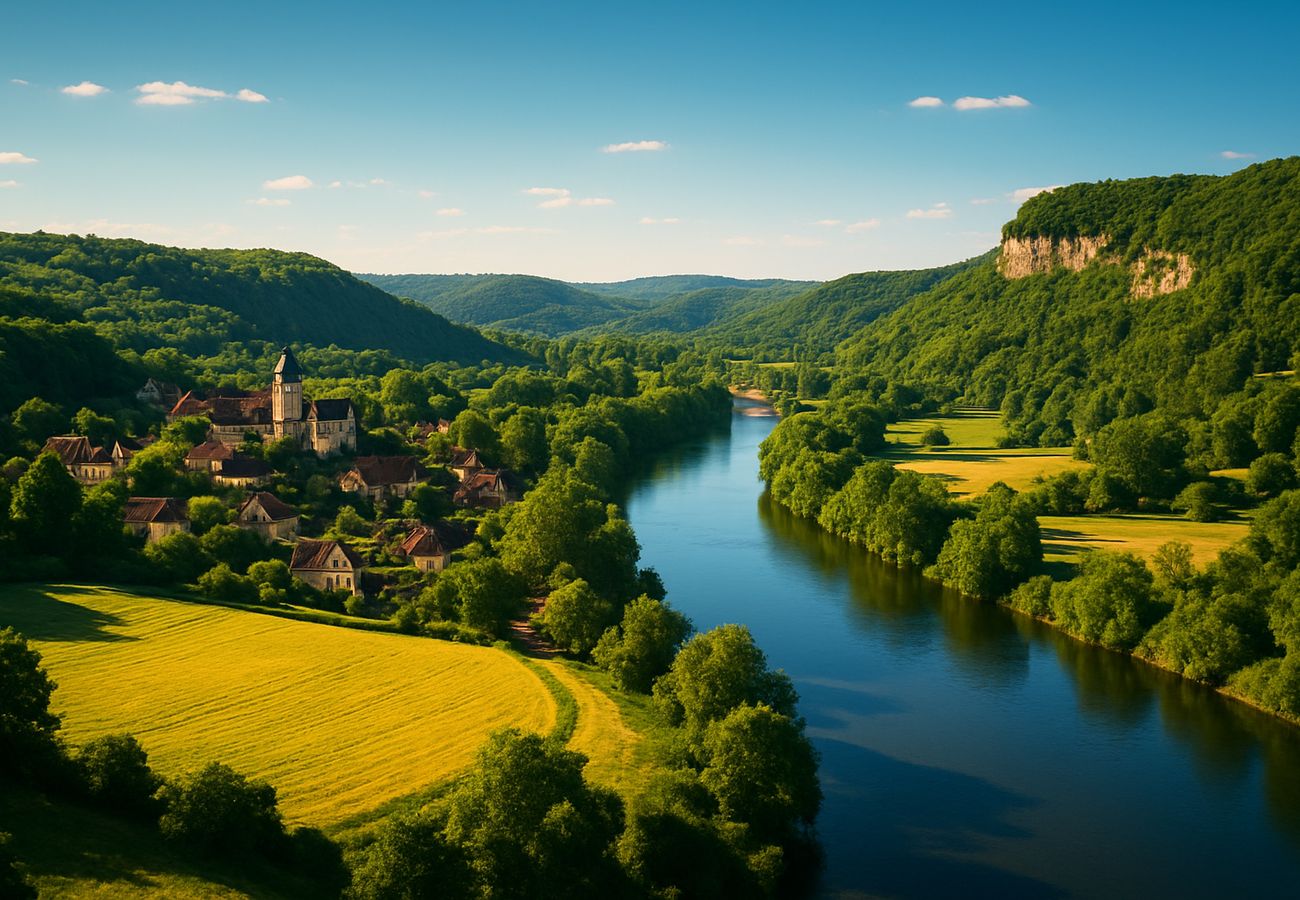
Image generated by AI
The Coastal Exodus: Why Luxury Travelers Are Heading Inland
Nice and Cannes are finally losing their grip on elite European travelers. After decades of dominating the summer holiday market, the French Riviera's overcrowded beaches and congested promenades have triggered a seismic shift in how affluent vacationers plan their continental escapes.
The culprit? Exhaustion. Pure, unrelenting exhaustion from battling tourist hordes, navigating gridlocked beachfront infrastructure, and discovering that a "private" seaside cabana now means rubbing elbows with hundreds of strangers.
Regional tourism assessment data now confirms what savvy travelers discovered years ago: the Dordogne-Périgord region in southwestern France has quietly become the world's premier land-locked alternative to coastal vacation fatigue. And it's not even close.
A River Valley Reinvention: How Geography Became a Competitive Advantage
Walking through the Dordogne Valley feels like stepping into an entirely different vacation universe. Ancient honey-colored limestone cliffs rise dramatically from emerald-green river corridors. Centuries-old cobblestone villages breathe authenticity. Hot air balloons drift past medieval fortress overlooks as golden sunlight warms stone walls that have stood for nearly a thousand years.
This isn't accidental. The region's geographic isolation—locked between winding river systems and towering cliff networks—created a natural fortress against over-commercialization.
"The inland landscape offers the same dramatic verticality and visual prestige as Mediterranean coastlines, but without the exhaustion of crowded resort strips," according to regional development authority briefings monitoring tourism traffic patterns across Western Europe.
Unlike Nice's densely packed beach clubs or Cannes' pharmaceutical-grade social hierarchies, the Dordogne delivers world-class hospitality within a fundamentally quieter, more exclusive ecosystem. Visitors experience Michelin-tier dining, prehistoric cave art exploration, and elite outdoor activities while maintaining genuine mental tranquility.
Reddit: "I've done the French Riviera circuit three times. Went to Dordogne last summer and honestly never want to return to the coast. The quiet alone was worth the trip." — r/travel
The Four-Zone Strategy: Precision Crowd Management
Regional authorities didn't stumble into success. They engineered it.
The Dordogne Valley is methodically divided into four specialized experiential zones—each color-coded to distribute visitor traffic intelligently:
- Périgord Noir: Medieval architecture hub, anchored by Sarlat-la-Canéda's winding historic streets
- Périgord Blanc: Truffle-hunting heartland and agricultural exploration zones
- Périgord Pourpre: Elite vineyard territories, particularly around Bergerac
- Périgord Vert: Lush countryside lodges and farm-to-table culinary destinations
This distributed approach prevents the bottleneck phenomenon that strangles coastal destinations during peak summer blocks. Digital entry systems now provide real-time safety briefs and crowd updates sent directly to personal mobile devices—eliminating administrative friction before visitors even approach fragile archaeological zones like Lascaux IV.
Transit registry data confirms this four-zone framework successfully disperses visitor volume while maintaining the tranquility that makes the region genuinely exclusive.
Gastronomic Gold: Why Food Economics Matter
The Dordogne holds a trump card that no coastal resort can match: legendary culinary prestige.
This region is the historical cradle of classical French gastronomy. Black truffles from Périgord Noir command prices that rival luxury gemstones. Fresh chestnuts, high-end duck delicacies, and artisanal pastries anchor a food network that transforms casual tourists into devoted repeat visitors.
Here's what hospitality operators understand: food economics create stickiness.
A traveler arriving for a weekend escape through gorgeous river valleys and medieval villages might initially book two nights. Then they experience dinner—a multi-course feast hosted within a 16th-century stone mill, featuring foraged truffles and estate wines.
Suddenly that weekend extends into five days. Day-trips transform into multi-night stays. Independent agricultural cooperatives, family-owned retail shops, and boutique châteaux remain financially robust even during volatile shoulder seasons when coastal properties collapse.
According to regional hospitality records analyzed by Western European tourism coalitions, culinary assets deliver an exceptional consumer retention buffer that pure scenic beauty cannot replicate.
Digital Platforms Are Finally Catching Up
International navigation platforms, global travel agencies, and digital reservation networks are systematically reprioritizing the Dordogne.
As environmental consciousness reshapes luxury travel preferences, the algorithm gods have spoken. Sustainable, culturally rich inland destinations now occupy premium real estate on booking platforms. Search volume data for "Dordogne luxury hotels" has surpassed queries for "Cannes beachfront resorts" for the first time in tourism history.
Travel analytics firms predict an exceptional boom for river valley travel as more affluent travelers recognize the blueprint: environmental preservation + architectural integrity + advanced infrastructure = the actual definition of modern luxury.
The region's success isn't driven by aggressive marketing or celebrity endorsements. It's powered by something far more durable: word-of-mouth momentum from travelers who finally discovered what peaceful, high-quality vacations actually feel like.
The Sustainability Angle: Why Preservation Drives Demand
Forward-thinking regional councils and meticulous historic preservation officers created something genuinely revolutionary: a luxury destination that improves itself through restraint rather than expansion.
Strict architectural codes prevent the hotel sprawl that consumed the French Riviera decades ago. Environmental protection laws guard river ecosystems and agricultural heritage. Local hospitality networks remain dominated by family-owned properties rather than homogenized corporate franchises.
This cultural integrity translates directly into traveler preference. When international guests compare a sterile five-star resort chain in Nice against a meticulously restored 18th-century château in the Dordogne, the choice becomes obvious.
The region discovered something that every overtouristed destination eventually learns too late: authentic excellence is far more valuable than maximum capacity.
What This Means for Your Summer Plans
If you've been considering a French Riviera expedition, pause. Seriously consider redirecting toward the Dordogne-Périgord region instead.
You'll pay similar nightly rates. You'll experience objectively superior cuisine and cultural authenticity. You'll encounter dramatically lower crowds. Your mental health will thank you for choosing tranquility over chaos.
The coastal vacation model that dominated the 20th century is officially obsolete. The Dordogne Valley just proved that inland excellence beats crowded coastlines every single time.
The real luxury destination is the one where you actually want to stay longer.
Related Travel Guides
- US White House Reviews DHS Proposal to Eliminate 60-Day Grace Period for H-1B and Nonimmigrant Visa Holders
- Helsinki Crown Bridges Project: Finland's Longest Bridge and New Tram Lines 11 and 12 for 2026
- Keisei Electric Railway Plans High-Speed Narita-Haneda Airport Link to Reduce Transfer Times by 2030s
Disclaimer
This article is for informational and educational purposes only. It does not constitute legal, financial, or professional advice. While we strive to provide accurate and up-to-date information, travel policies, regulations, and conditions change rapidly. Always verify information with official sources before making travel decisions. Nomad Lawyer makes no representations about the accuracy, reliability, completeness, or suitability of the information provided. Readers should consult qualified professionals for advice specific to their circumstances. The views expressed in this article are those of the author and do not necessarily reflect the views of Nomad Lawyer.
Preeti Gunjan
Contributor & Community Manager
A passionate traveller and community builder. Preeti helps grow the Nomad Lawyer community, fostering engagement and bringing the reader experience to life.
Learn more about our team →