FAA Communications Failure Disrupts Flights for Walt Disney World Travelers

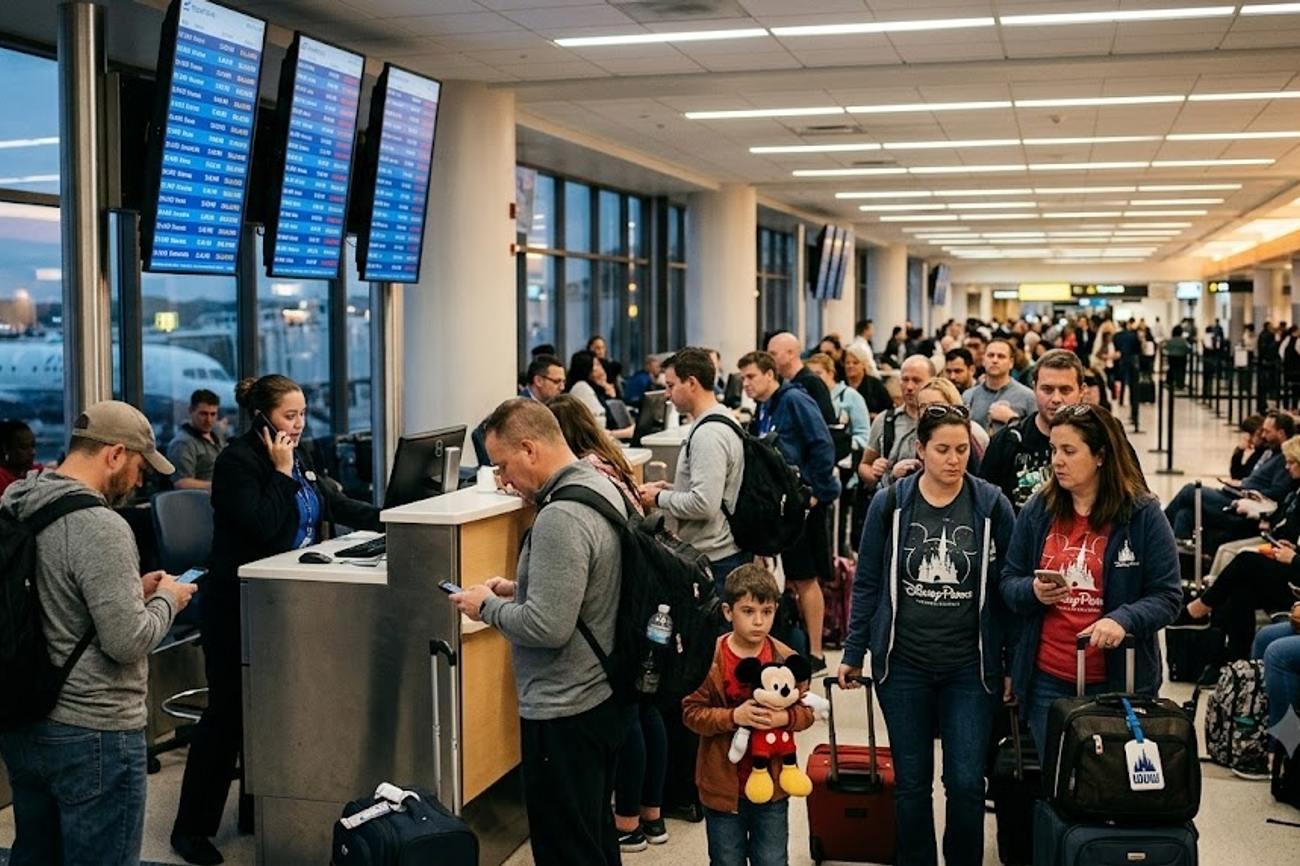
Image generated by AI
10,035 cumulative delay minutes at Newark Liberty International Airport serves as a stark indicator of how a localized technical failure can paralyze a regional aviation corridor. On Monday, September 21, a catastrophic failure of the Federal Aviation Administration (FAA) communications infrastructure in the Philadelphia area triggered a domino effect across the U.S. Northeast. This event did not merely delay flights; it severed the critical transit artery connecting the New York metropolitan area to major leisure destinations, most notably Orlando, Florida.
The Anatomy of a Systemic Infrastructure Collapse
The disruption was not the result of a single point of failure, but rather a compounding series of technical and physical mishaps. The crisis began when a primary communications line at an FAA air-traffic-control facility failed. Under normal circumstances, a redundant system would have absorbed the load. However, the fail-safe mechanism was neutralized when a backup fiber-optic connection was accidentally severed by railroad construction crews operating in New Jersey.
This simultaneous loss of both primary and secondary communication routes stripped air-traffic controllers of their ability to maintain standard radar and communications protocols. Because the Northeast corridor operates as a tightly integrated web, the FAA was forced to implement ground stops and restrictive flow controls at four of the region's most critical hubs: Newark Liberty International Airport, John F. Kennedy International Airport, LaGuardia Airport, and Philadelphia International Airport.
While the technical failure was geographically isolated to the Philadelphia and New Jersey regions, the operational impact was national. The Northeast hubs serve as primary feeders for domestic routes, meaning a ground stop in Newark immediately translates to a vacant gate or a delayed arrival in Florida.
Quantifying the Operational Paralysis
The scale of the disruption was most evident in the data emerging from the New York-area hubs. Newark Liberty International Airport experienced a peak delay of 250 minutes for individual flights, contributing to a massive accumulation of lost time that rippled through the network.
| Metric | Data Point |
|---|---|
| Total Flights Delayed or Canceled | ~7,000 |
| New York Area Disruptions | 1,400+ flights |
| Newark Cumulative Delay Minutes | 10,035 |
| Newark Maximum Individual Delay | 250 minutes |
| Orlando Daily Passenger Volume | ~159,000 |
| Orlando Annual Passenger Volume | 58 million+ |
The vulnerability of the Orlando-bound traveler is highlighted by the sheer volume of traffic handled by the Greater Orlando Aviation Authority (GOAA). With over 58 million passengers annually, Orlando International Airport relies on a steady stream of arrivals from the Northeast. When 1,400 flights are disrupted in New York, the impact on Orlando is not a localized weather event, but a systemic supply-chain failure of passenger delivery.
Expert Analysis: The "Ghost Delay" Phenomenon
For the average traveler, the resolution of a technical fault—such as the repair of a fiber-optic cable—suggests an immediate return to normalcy. However, aviation logistics operate on a "hub-and-spoke" model that creates what I term the "Ghost Delay."
When a communications outage occurs, the physical aircraft and their crews are displaced. An aircraft scheduled for a Tuesday morning departure from Orlando to Newark may have been stuck in Philadelphia on Monday evening. Even after the FAA restores communications, that aircraft is out of position. The crew may have exceeded their legal flying hours mandated by safety regulations, requiring them to be replaced or rested.
For travelers booking high-stakes trips—such as those with pre-paid dining plans or timed park entries at Walt Disney World—the direct consequence is a loss of "usable vacation time." A four-hour delay in Newark does not just mean a late arrival; it can trigger a cascade of failures:
- Logistical Friction: Disney’s Airport Luggage Transfer program requires up to four hours for delivery. A delayed flight pushes this window into the late night or following morning, leaving guests without essentials.
The Federal Aviation Administration (FAA) has reported a communications failure that has disrupted flights for Walt Disney World travelers, causing delays and cancellations at major airports, including Orlando International Airport, which can be monitored through the FAA website for updates on flight status and airport conditions. This disruption has affected several airlines, including major carriers that operate out of Orlando. Travelers are advised to check with their airlines for the latest information on their flights. 2. Financial Sunk Costs: Non-refundable park reservations and dining slots are lost when arrival windows are missed. 3. Network Contagion: Because the Northeast is a primary feeder, the "recovery phase" mentioned by Transportation Secretary Sean Duffy often lasts 24 to 48 hours after the technical fix is applied.
The pricing pressure created by such outages often leads to a spike in last-minute rebooking fares as airlines struggle to shuffle passengers onto the few remaining operational flights.
Key Takeaways
- Redundancy Failure: The outage was caused by the simultaneous failure of a primary FAA line and the accidental severing of a backup fiber-optic cable during New Jersey railroad construction.
- Regional Paralysis: Ground stops were concentrated at JFK, LaGuardia, Newark, and Philadelphia, resulting in approximately 7,000 total flight disruptions.
- Orlando Vulnerability: Despite Orlando International Airport remaining operational, its dependence on Northeast feeders meant thousands of leisure travelers faced significant delays.
- Recovery Lag: Technical repairs do not equal immediate schedule restoration due to displaced aircraft and crew timing constraints.
- Infrastructure Risk: The event underscores a critical fragility in the U.S. air-traffic-control network where physical construction can jeopardize national airspace.
FAQ: Northeast Air Disruptions 2024
Why was my flight to Orlando delayed if the airport in Florida was open? Aviation is an interconnected network. Your flight depends on the aircraft and crew arriving from a previous destination. If those assets were trapped by ground stops at airports like Newark or JFK, your flight cannot depart regardless of Orlando's status.
What should I do if a communications outage cancels my flight? Immediately check your airline's official app or website. The FAA manages the airspace, but the airlines manage the passengers. Request a rebooking immediately, as "recovery flights" fill up rapidly after a systemic outage.
How do FAA ground stops differ from weather delays? Weather delays are typically localized and predictable. A ground stop is a regulatory mandate that prevents aircraft from departing for a specific destination to prevent congestion or ensure safety during a technical failure, often affecting flights regardless of the weather.
Does Disney World offer refunds for missed reservations due to flight delays? Generally, no. Disney's reservations are separate from airline contracts. Travelers should utilize travel insurance that covers "trip interruption" to recoup costs associated with systemic aviation failures.
When the invisible threads of aviation infrastructure snap, the cost is measured not in cables, but in lost memories.
Tags: FAA, Newark Liberty International Airport, Orlando International Airport, Walt Disney World 2024, US Air Traffic Control, GOAA
Related Travel Guides
- Kenya Airways Advances Digital Transformation With Sabre Technology Platform for Next Generation Travel Retailing
- Star Alliance Paris CDG Lounge Claims Third Consecutive World's Best Alliance Lounge Title at 2026 Skytrax Awards
- Japan Airlines Signs 10-Year HAECO Maintenance Contract Extension for 180+ Aircraft Visits
This article is for informational purposes. Flight routes, passenger regulations, visa rules, and transit advisories are subject to change by airlines and aviation authorities. Readers are advised to verify schedules and travel documentation with relevant carriers and border agencies before departure.
Related Stories

Jet Airways vs. Boeing NCLAT Battle: Why Manufacturer Litigation Offers No Quick Ticket Refunds for Indian Travel Agents
easyJet Launches Direct Liverpool to Reykjavik Flights: Inside the North West's New Winter Gateway to Iceland