Northeast Airspace Disruption 2026: FAA Communications Failure Hits Newark, JFK, and Philadelphia

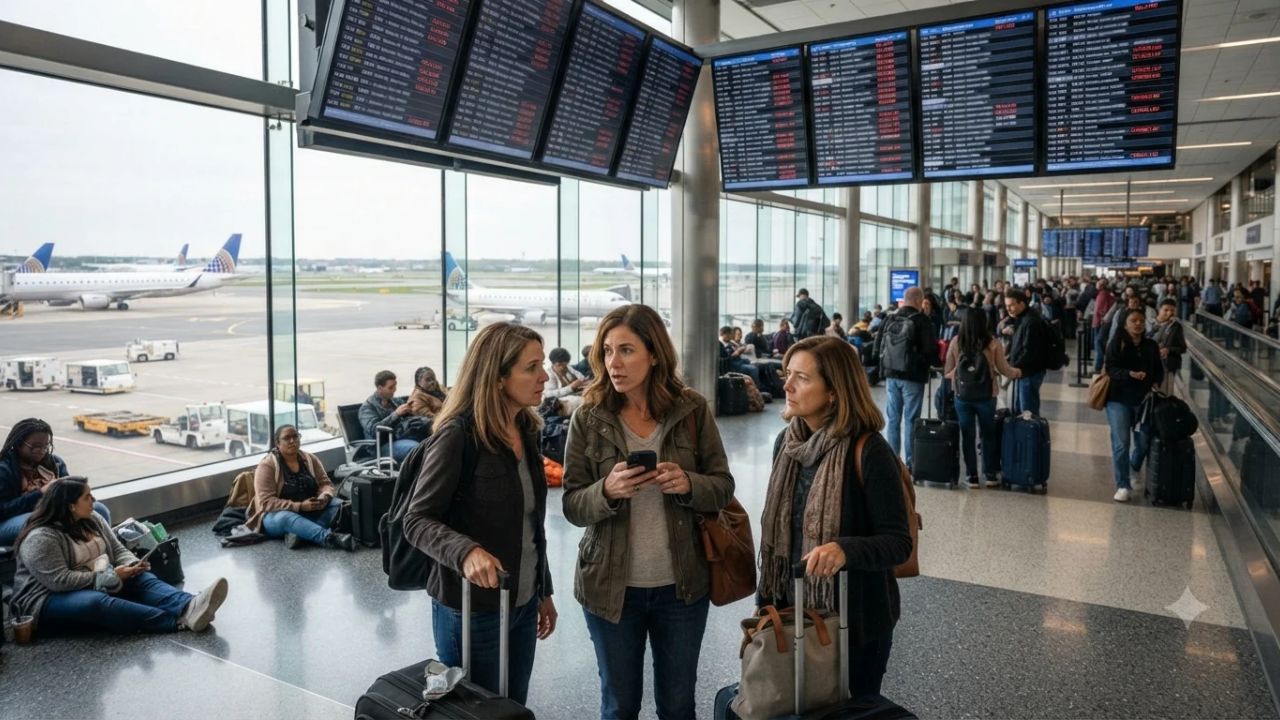
When a single roadside construction backhoe severed a redundant underground fiber-optic cable between New Brunswick and Newark just as the primary communications circuit collapsed at the FAA's Philadelphia control center, the entire Northeast air corridor ground to a sudden crawl. The simultaneous loss of primary and backup data links crippled communications across the Federal Aviation Administration's busiest regional sector, triggering ground stops, widespread reroutings, and average delays exceeding one hour at Newark Liberty International Airport (EWR). The operational meltdown snarled flight boards across John F. Kennedy International (JFK), LaGuardia (LGA), Philadelphia International (PHL), Boston Logan (BOS), and Teterboro (TEB), leaving thousands of travelers scrambling for rail alternatives along America's dense coastal megalopolis.
The Fragility of the Megalopolis Sky: Anatomy of the Philadelphia Outage
The Northeast United States represents the most tightly congested airspace in North America, with four major metropolitan airport networks operating within narrow geographical margins. The FAA air route traffic control facility in Philadelphia serves as the central switching hub for aircraft ascending, descending, and cruising between Washington, New York, and New England.
When the facility's primary communications loop experienced an unpredicted hardware failure, automated safety redundancies were meant to transition flight data seamlessly to the backup fiber line. However, ongoing municipal utility construction along the New Jersey transit corridor between New Brunswick and Newark had physically sliced through the secondary line hours earlier.
The catastrophic double fault forced controllers to implement manual flight separation protocols and ground delay programs, severely restricting departure slots across the entire region. According to official flight advisories from the Federal Aviation Administration, emergency engineering crews had to bypass damaged infrastructure with a rapid temporary link while technical teams spliced the severed subterranean cables.
Impact Breakdown: Hub-by-Hub Airport Disruptions
The disruption disproportionately hammered major airline fortress hubs while sending ripple effects across international and regional carriers.
Newark Liberty International Airport, serving as United Airlines' primary transcontinental and transatlantic gateway, suffered the heaviest operational congestion, with hundreds of departures delayed and long arrival metering queues extending over western Pennsylvania and New York State. Across the Delaware River, Philadelphia International Airport—the primary transatlantic gateway for American Airlines—faced severe tarmac gridlock, while JFK and LaGuardia experienced cascading departure delays and holding patterns.
| Airport Facility | Hub Carrier & Airport Code | Severity of Disruption | Average Delay Window | Key Regional Passenger Impact |
|---|---|---|---|---|
| Newark Liberty International | United Airlines (EWR) | Severe | 60 to 90+ minutes | Extensive domestic bank delays & transatlantic gate holds |
| Philadelphia International | American Airlines (PHL) | High | 45 to 75 minutes | Regional feeder flight cancellations & Midwest connector delays |
| John F. Kennedy International | Delta / JetBlue (JFK) | Moderate to High | 45 to 60 minutes | International long-haul arrival stacks & taxiway congestion |
| LaGuardia Airport | Delta / American (LGA) | Moderate | 30 to 50 minutes | East Coast shuttle disruptions & runway metering |
| Boston Logan International | JetBlue / Delta (BOS) | Moderate | 30 to 45 minutes | Downstream New England commuter & transcon delays |
| Teterboro Airport | Executive Aviation (TEB) | High | 60+ minutes | Private jet ground holds & corporate charter delays |
The incident unfolded while federal aviation authorities were concurrently field-testing a separate artificial intelligence-powered traffic management platform in the Washington D.C. sector, designed to predict convective weather conflicts and route bottlenecks before they materialize.
Visitor Insider Tips for Surviving Northeast Travel Gridlock
- Pivot Immediately to Amtrak Northeast Regional or Acela: When Northeast airspace suffers communications outages, do not wait inside airport terminals for rolling multi-hour delay updates. For trips between Boston, New York Penn Station, Newark Airport station, Philadelphia 30th Street, and Washington Union Station, book high-speed rail via Amtrak. Train departures run every thirty minutes and bypass airport security and ATC holds entirely.
- Utilize the Newark AirTrain Connection to NJ Transit: If stranded on arriving flights at Newark Liberty, skip expensive rideshares trapped on the New Jersey Turnpike. Board the airport AirTrain directly to the Newark Liberty International Airport Train Station, where NJ Transit commuter trains reach Midtown Manhattan in twenty-five minutes.
- Monitor Port Authority Real-Time Security and Taxiway Updates: Check mobile gate updates from the Port Authority of New York and New Jersey before heading to terminal security check-in areas, as gate reassignments and baggage handling slows rapidly during ground stops.
- Request Same-Day Flight Waivers and Co-Terminal Rebookings: During declared FAA system disruptions, major airlines issue fee-waived rebooking vouchers. If departing New York, ask gate agents to cross-rebook your ticket from Newark to JFK or LaGuardia if alternative departures offer earlier departure windows.
- Carry Essential Medications and Electronics in Hand Luggage: Aircraft stuck in protracted tarmac queues cannot easily return to gates to offload checked luggage. Ensure prescription medication, portable power banks, and child essentials remain in your personal carry-on bag at all times.
Infrastructure Modernization and Community Resilience
The Philadelphia communications breakdown has reignited national debates over the urgent need to accelerate capital funding for civil aviation infrastructure. The US Northeast corridor handles tens of thousands of passenger movements daily, connecting global financial, diplomatic, and educational institutions.
Federal multi-billion-dollar modernization programs, including the transition to next-generation digital satellite tracking and decentralized IP-based communications networks, aim to replace vulnerable point-to-point copper and fiber infrastructure.
Simultaneously, environmental and civic planning groups advocate for expanding electrified intercity rail capacity. Reducing regional short-hop commercial flights between Philadelphia, New York, and Boston through improved rail connectivity diminishes total airspace congestion, lowers carbon emissions along the Interstate 95 corridor, and builds regional transit resilience when unforeseen technical outages strike.
FAQ: Navigating Northeast Air Travel Disruptions 2026
What caused the FAA air traffic control outage across the Northeast?
The disruption was triggered by a hardware failure in the primary communications circuit at the FAA Philadelphia facility combined with a severed fiber-optic backup line cut during road construction in New Jersey.
Which airports experienced the worst flight delays?
Newark Liberty International Airport and Philadelphia International Airport experienced the heaviest disruptions, alongside significant delays at JFK, LaGuardia, Boston Logan, and Teterboro.
Can I switch my flight to Amtrak train service during FAA outages?
Yes, for travel between Boston, New York, Philadelphia, and Washington D.C., Amtrak Northeast Regional and Acela trains offer reliable downtown-to-downtown alternatives that avoid ground stops.
Do airlines charge change fees during system-wide FAA communication ground stops?
Airlines routinely issue travel advisories allowing passengers on affected flights to change travel dates or reroute without paying change fees or fare differences.
When modern air routes falter against severed cables, the seasoned traveler looks to the rails and resilient regional networks to keep the journey moving forward.
Related Travel Guides
- European Air Travel Disrupted with 1,982 Delays and 104 Cancellations Across 15 Major Hubs in September 2026
- United States Issues Urgent Tourism Warning as Safety Fears, Severe Visa Delays, and Soaring Costs Cripple 2026 FIFA World Cup Travel Demand: New Travel Alert
- Spain Issues Urgent Travel Warning as Iberia, British Airways, and Delta Ground 7 Flights, Triggering Widespread Chaos in Madrid and Barcelona: New Travel Alert
This article is for informational purposes. Flight routes, passenger regulations, visa rules, and transit advisories are subject to change by airlines and aviation authorities. Readers are advised to verify schedules and travel documentation with relevant carriers and border agencies before departure.
Related Stories
US Airport Construction Alert 2026: Road Access and Pickup Changes at LAX, JFK, DEN, and IAH

FAA Airspace Restrictions Across Caribbean 2026: Haiti Prohibitions and Cuba Fuel Crisis Guide