
United States Issues Urgent Tourism Warning as Safety Fears, Severe Visa Delays, and Soaring Costs Cripple 2026 FIFA World Cup Travel Demand: New Travel Alert
The 2026 FIFA World Cup faces a massive tourism crisis as safety warnings, severe visa delays, and soaring costs cripple international travel demand to the US.

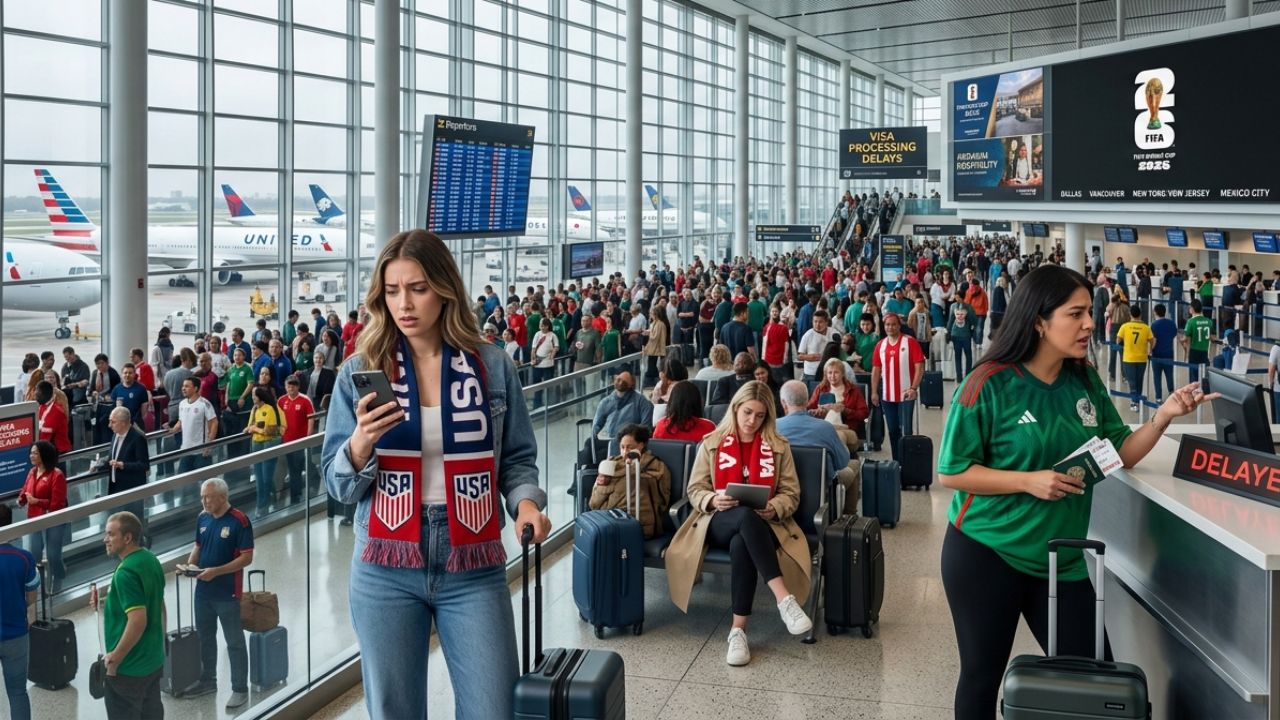
Image generated by AI
As the monumental 2026 FIFA World Cup approaches across the United States, Canada, and Mexico, a massive and unexpected crisis is actively dismantling the heavily promised international tourism boom. Driven by a devastating combination of severe Visa Delays, formal government safety warnings regarding U.S. civil unrest, and highly restrictive pricing models, international travel demand to North America has violently plummeted below last year's levels. With nearly 80 percent of American host city hotels failing to meet basic occupancy forecasts and massive blocks of reserved rooms suddenly being dumped back onto the public market, global fans are urged to completely reevaluate their itineraries before committing to this increasingly volatile travel landscape.
Quick Summary
- Occupancy Collapse: Roughly 80% of hotels in key American host markets are tracking significantly below initial demand forecasts.
- Safety Advisories: France, Germany, Ireland, and Canada have issued formal travel warnings citing U.S. civil unrest and security concerns.
- Visa Gridlock: The FIFA PASS priority system has failed to clear massive embassy backlogs and complex financial bond requirements.
- Cost Barriers: Dynamic pricing models have heavily inflated airfare, match tickets, and accommodation, alienating cost-conscious travelers.
- Domestic Dominance: Domestic travelers are drastically outpacing international arrivals, signaling a massive failure in global tourism conversion.
Context: The Collapse of the Promised World Cup Windfall
The sudden erosion of International travel confidence stems from comprehensive industry reports released by the American Hotel & Lodging Association, which have formally confirmed that the highly anticipated multi-billion-dollar tourism windfall is rapidly deteriorating. While local hosts and global football executives initially projected the largest and most lucrative iteration of the tournament in history, the actual conversion of ticket sales into confirmed hotel bookings has completely stalled. As complex structural travel hurdles collide with soaring costs and deeply entrenched geopolitical tensions, host cities are being forced to drastically recalibrate their economic expectations ahead of the tournament's June opening.
Event Details: The North American Tourism Slowdown
The core of this critical alert centers on the complete mismatch between tournament excitement and measurable economic action across the United States, Canada, and Mexico. Despite high absolute numbers of match tickets being sold, actual international flight demand to North America is currently running below last year’s non-tournament levels.
Event organizers are now actively cancelling massive room blocks and returning them to general inventory because the anticipated tidal wave of foreign visitors has failed to materialize. This deeply concerning trend confirms that while fans desperately want to attend, the physical and financial mechanisms required to enter North America are heavily restricting access, resulting in a scenario where domestic tourists are entirely propping up the local hospitality sectors.
Risk/Impact: Safety Fears and Financial Exclusion
This multi-layered crisis guarantees severe friction for any fan attempting to navigate the tournament. Because the logistical hurdles are so deeply entrenched, travelers face compounding risks that threaten to destroy their itineraries. The specific threats include:
- Severe Security Concerns: The issuance of formal safety warnings regarding U.S. civil unrest explicitly deters risk-averse travelers and heavily suppresses inbound tourism.
- Bureaucratic Paralysis: Complex visa processing queues, invasive embassy screenings, and heavy financial bond requirements are actively preventing ticket holders from securing entry clearance.
- Financial Exclusion: Premium match tickets, highly inflated local airfare, dynamic hotel pricing strategies, and exorbitant match-day transport fees are pushing the event entirely out of reach for casual fans.
- Inventory Volatility: The sudden dumping of cancelled hotel blocks creates massive pricing instability across host cities.
What Authorities Are Saying About the Tourism Crisis
The issuance of formal travel advisories by highly influential governments—specifically France, Germany, Ireland, and Canada—has radically shifted the global narrative. These authorities are formally alerting their citizens to potential civil unrest and broader security contexts that could directly impact visitor well-being within U.S. host cities. Simultaneously, the hospitality industry confirms that specialized fast-track programs like "FIFA PASS" have seen incredibly modest uptake, completely failing to overcome the entrenched bureaucratic friction at U.S. embassies. Energy and travel analysts state explicitly that this combination of safety fear and extreme cost is actively dissuading international mobility.
Practical Traveler Advice: Navigating the World Cup Gridlock
To actively insulate yourself from this severe wave of logistical and financial friction, execute the following strategies immediately:
- Initiate Visas Immediately: Do not rely on the FIFA PASS system to guarantee entry. If your passport requires a U.S., Canadian, or Mexican visa, begin the embassy screening process months in advance to survive the massive backlogs.
- Monitor Travel Advisories: Continuously check your home country's foreign office for updated safety warnings regarding specific host cities to avoid localized civil unrest.
- Exploit Released Hotel Blocks: Because event organizers are dumping unfulfilled room blocks back onto the market, aggressively monitor hotel inventories in host cities for sudden price drops or newly available rooms.
- Lock In Fixed Transport: Avoid dynamic pricing algorithms by pre-booking your flights and ground transport immediately. Do not rely on ride-shares on match days, as surge pricing will be financially catastrophic.
Broader Context: The Exclusivity of Modern Mega-Events
This ongoing situation highlights a deeply troubling structural evolution within global sports tourism. The 2026 FIFA World Cup was explicitly marketed as a unifying, accessible global event spanning an entire continent. However, the reality of attending a mega-event in modern North America is heavily dictated by geopolitical pressures, foreign policy issues, and extreme capitalist pricing models. When basic tourism demand is actively suppressed by a combination of complex entry visas, high-cost barriers, and international safety fears, the tournament rapidly devolves into an exclusive enclave accessible only to highly affluent travelers, directly contradicting the inclusive spirit of global football.
What to Expect Next / Looking Ahead
As the clock ticks toward the opening fixtures, host cities and public stakeholders face an incredibly narrow window to salvage their economic projections. Authorities across the United States, Canada, and Mexico must aggressively streamline visa processing and heavily monitor real-time security data to reassure international visitors. If these structural travel hurdles are not violently dismantled in the coming weeks, the anticipated windfall will permanently evaporate, leaving domestic travelers to fill the massive financial void left by the missing international fan base.
In conclusion, the 2026 FIFA World Cup is currently tracking toward a highly volatile and potentially disappointing global tourism turnout. Fans who are determined to attend must immediately secure their legal entry, aggressively budget for hyper-inflated costs, and remain hyper-vigilant regarding their personal safety in major host cities.
FAQ
Why are hotel bookings for the 2026 FIFA World Cup so low? Nearly 80 percent of hotels in key American host markets are tracking below initial demand forecasts because international travelers are being blocked by severe visa delays, safety fears, and highly inflated travel costs.
Which countries have issued travel warnings for the United States? France, Germany, Ireland, and Canada have formally alerted their citizens to safety concerns, specifically citing civil unrest and broader security contexts within U.S. host cities.
Is the FIFA PASS system working? Uptake for the priority visa scheduling tool (FIFA PASS) has been modest and has completely failed to overcome the entrenched, slow, and uncertain embassy screening processes required for entry.
Why is attending the tournament so expensive? Travelers face heavily inflated airfare, dynamic pricing strategies for accommodations, exorbitant public transport fees on match days, and premium ticket prices that are largely accessible only to affluent travelers.
What should I do if I plan to travel to the World Cup? Begin your visa application process immediately, lock in fixed-rate flights and hotels to avoid dynamic pricing surges, and continuously monitor your home country's travel advisories for safety updates.
Disclaimer
This article is for informational and educational purposes only. It does not constitute legal, financial, or professional advice. While we strive to provide accurate and up-to-date information, travel policies, regulations, and conditions change rapidly. Always verify information with official sources before making travel decisions. Nomad Lawyer makes no representations about the accuracy, reliability, completeness, or suitability of the information provided. Readers should consult qualified professionals for advice specific to their circumstances. The views expressed in this article are those of the author and do not necessarily reflect the views of Nomad Lawyer.
Kunal K Choudhary
Co-Founder & Contributor
A passionate traveller and tech enthusiast. Kunal contributes to the vision and growth of Nomad Lawyer, bringing fresh perspectives and driving the community forward.
Learn more about our team →