
Extreme Heatwave Hits Los Angeles, Arizona and Southern California Disrupting Travel in 2026
Dangerous temperatures exceeding 116°F across Southern California and Arizona are forcing travelers to rethink outdoor plans as a prolonged heatwave disrupts the regional tourism sector.

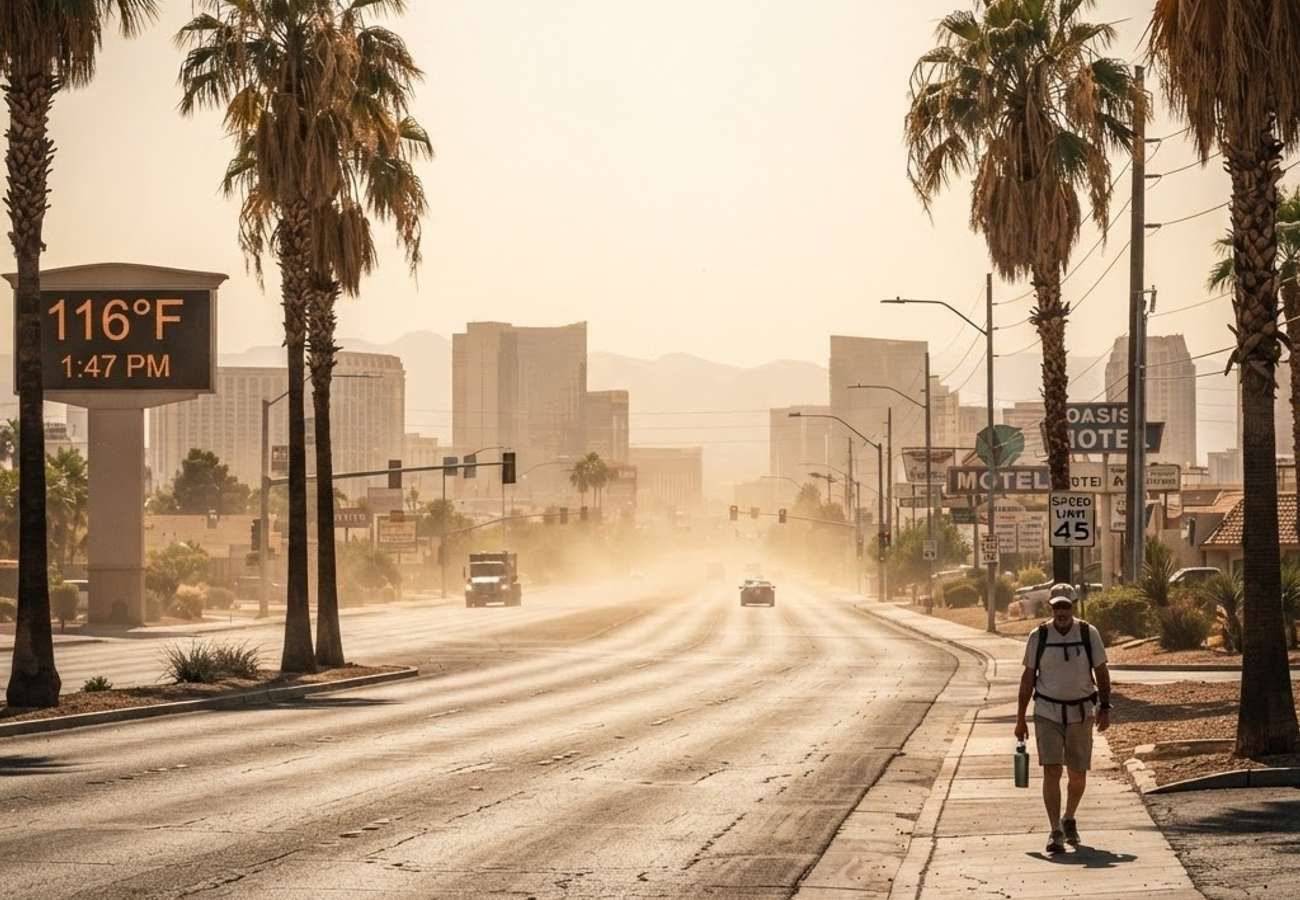
Image generated by AI
Dangerous temperatures reaching as high as 116°F are currently gripping Southern California and the interior Southwest, forcing a massive shift in travel patterns and tourism operations across Los Angeles, Arizona, and Nevada. The National Weather Service has issued urgent extreme heat warnings for the Inland Empire, Orange County, and Los Angeles, as a persistent high-pressure system pushes temperatures 10–15°F above historical averages.
Persistent High Pressure Drives Southwest Temperature Spike
A stubborn atmospheric ridge of high pressure over the interior Southwest is the primary catalyst for the current weather crisis. This system has pushed extreme heat toward the Pacific Coast, trapping hot air across the region and creating one of the most significant heat spells in recent memory.
According to flight and weather tracking data, downtown Los Angeles has endured a streak of temperatures at or above 90°F since 18 August. Forecasts suggest this trend will persist through 30 August, marking 13 consecutive days of oppressive heat. While the coast typically offers a buffer, the sheer scale of this system is pushing inland cities like Irvine and Anaheim into dangerous territory, with temperatures frequently hitting 105°F.
Regional Temperature Breakdown by City
The impact of the heatwave varies significantly between the coastal strips and the desert interior. While some areas are facing "extreme" classifications on the HeatWave Severity Index, others are dealing with high humidity and unexpected surf conditions.
| City / Region | Expected High Temperature | Heat Status / Warning |
|---|---|---|
| Yuma, Arizona | 116°F | Extreme Heat Warning |
| Phoenix, Arizona | 113–114°F | Extreme Heat Warning |
| Riverside, California | 112°F | Inland Empire Warning |
| San Bernardino, California | 112°F | Inland Empire Warning |
| Palm Springs, California | 110–115°F | Coachella Valley Warning |
| Palm Desert, California | 110–115°F | Coachella Valley Warning |
| Indio, California | 110–115°F | Coachella Valley Warning |
| Cathedral City, California | 110–115°F | Coachella Valley Warning |
| Las Vegas, Nevada | 109–111°F | Extreme Heat Warning |
| Tucson, Arizona | 109°F | Extreme Heat Warning |
| Irvine, California | 105°F | Inland Orange County Warning |
| Los Angeles, California | 100°F | Prolonged Heat Wave |
| Anaheim, California | 95–105°F | Inland Orange County Warning |
| Santa Ana, California | 95–105°F | Inland Orange County Warning |
| Long Beach, California | 90°F+ | Unusually Hot |
Tourism Sector Adapts to Extreme Conditions
The prolonged nature of this event is creating a logistical nightmare for tour operators and outdoor attractions. Unlike a short-term spike, a multi-week heatwave forces businesses to fundamentally alter their operating hours.
Walking tours, open-air sightseeing, and strenuous outdoor excursions are being rescheduled to early morning or late evening windows to avoid the peak afternoon heat. There is a noticeable shift in consumer behavior, with a surge in demand for air-conditioned museums, indoor galleries, and shaded venues.
Hospitality providers, including hotels and destination management companies, are now tasked with implementing emergency hydration stations and providing real-time weather alerts to guests who may be unprepared for the interior Southwest's climate.
Coastal Risks and Beach Tourism Volatility
For those fleeing the inland heat for the coast, the relief is not without risk. While San Diego remains relatively cooler with highs in the 80s, higher humidity levels are impacting visitor comfort.
Furthermore, reports indicate that tropical activity off the coast of Mexico is generating larger-than-normal swells along the California shoreline. This has led to an increase in "sneaker waves" and dangerous breakers. Travelers are warned that while the air temperature may be lower at the beach, the ocean conditions are currently volatile, requiring heightened vigilance from swimmers and surfers.
Comparing 2026 Heat to Historical Records
While the current event may not break the all-time record high of 113°F set in Los Angeles on 27 September 2010, its duration is what makes it historically significant. Industry observers point to the 1955 heatwave, where temperatures stayed at or above 100°F from 31 August to 7 September, as a primary point of comparison.
The current 2026 spell is challenging daily records that date back to the early 1930s. For the tourism industry, the duration is more damaging than a single record-breaking day; repeated exposure exhausts outdoor staff, strains transportation infrastructure, and leads to higher cancellation rates for outdoor-centric travel packages.
Why This Matters: The Traveler's Perspective
For the modern traveler, this event highlights a growing necessity for "climate-flexible" itineraries. The gap between coastal and inland temperatures in California and Arizona is so vast that a three-hour drive can result in a 20-degree temperature swing.
From a logistical standpoint, this creates a "hydration and shade" mandate. Travelers can no longer rely on spontaneous exploration; success in these regions now requires strategic timing. For those visiting the Inland Empire or Arizona, the risk of heat exhaustion is a legitimate travel deterrent.
Moreover, the intersection of extreme heat and volatile surf conditions means that "escaping to the beach" is no longer a guaranteed safety valve. Travelers must monitor both the HeatWave Severity Index and maritime warnings to ensure their safety.
As the Southwest continues to bake, the ability of the tourism sector to pivot toward indoor, climate-controlled experiences will determine its survival through the late-August slump.
Related Travel Guides
Disclaimer
This article is for informational and educational purposes only. It does not constitute legal, financial, or professional advice. While we strive to provide accurate and up-to-date information, travel policies, regulations, and conditions change rapidly. Always verify information with official sources before making travel decisions. Nomad Lawyer makes no representations about the accuracy, reliability, completeness, or suitability of the information provided. Readers should consult qualified professionals for advice specific to their circumstances. The views expressed in this article are those of the author and do not necessarily reflect the views of Nomad Lawyer.
Raushan Kumar
Founder & Lead Developer
Full-stack developer with 11+ years of experience and a passionate traveller. Raushan built Nomad Lawyer from the ground up with a vision to create the best travel and law experience on the web.
Learn more about our team →