
4 Expert Travel Hacks to Eliminate Clothing Wrinkles Without an Iron in 2026
Clothing care expert Noor de Swart reveals four essential travel hacks to keep garments wrinkle-free without an iron, focusing on packing techniques and steam utilization.

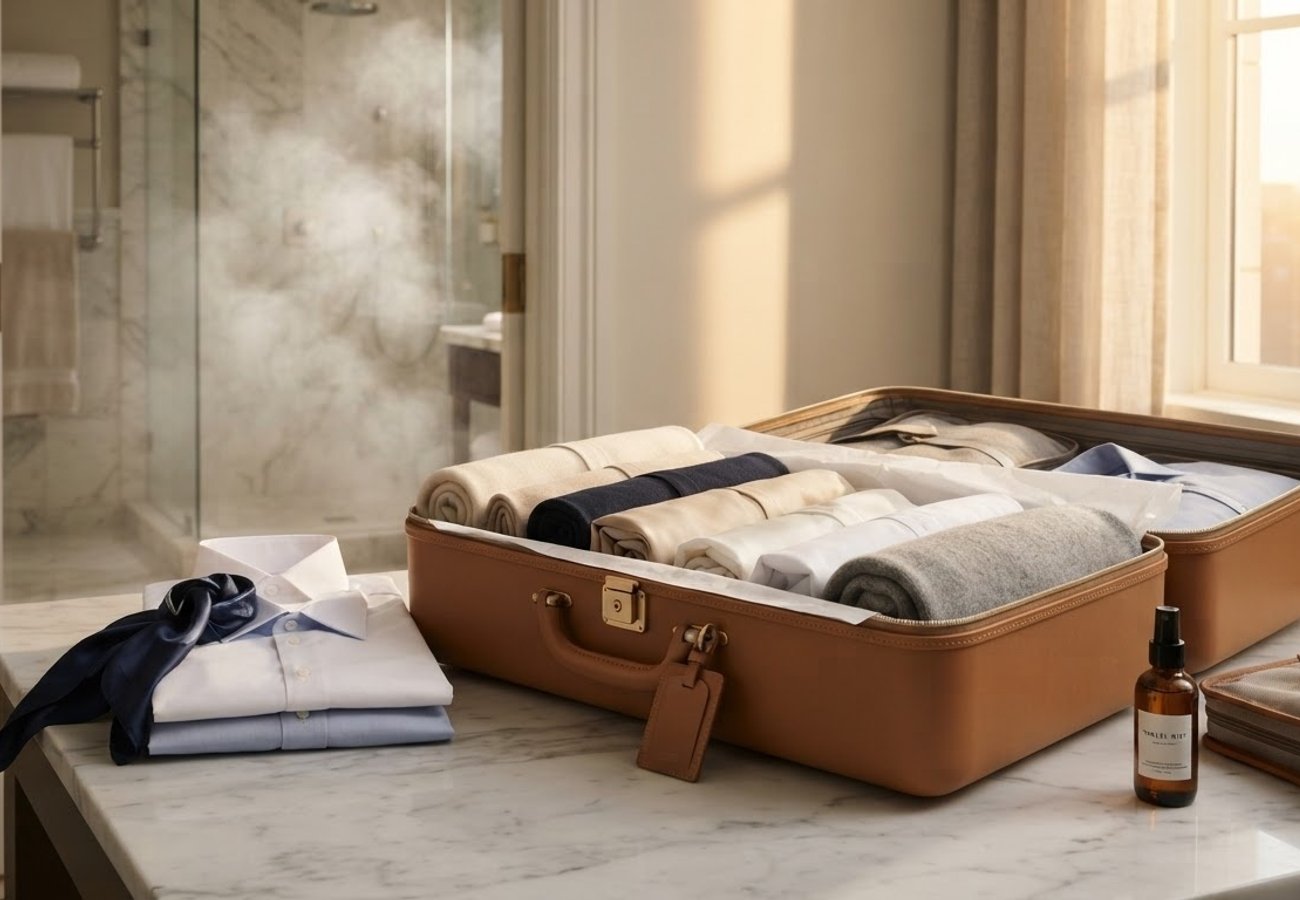
Image generated by AI
Opening a suitcase to find a mass of crumpled fabric can instantly dampen the excitement of a new destination. For those traveling for business, weddings, or luxury cruises, maintaining a polished appearance is essential, yet relying on unreliable hotel irons or bulky portable steamers is often impractical.
Maintaining a professional wardrobe on the road is less about the tools used upon arrival and more about the strategic handling of fabrics during transit. According to Noor de Swart, founder and CEO of Super Label Store, the secret to wrinkle-free travel lies in understanding how pressure, moisture, and movement affect different textile fibers. By implementing a few specific packing adjustments, travelers can ensure their garments remain crisp without ever touching an iron.
The Science of Fabric Compression During Transit
Wrinkles are not random; they are the result of fabric fibers being compressed and fixed into folded positions over extended periods. This is particularly prevalent during long-haul flights, train journeys, and road trips where luggage is subjected to constant pressure and shifting.
The composition of the garment dictates how susceptible it is to these creases. Natural fibers, specifically linen and cotton, possess a molecular structure that creases easily under pressure. In contrast, synthetic blends and structured materials are engineered to recover their shape more effectively. For frequent travelers, investing in high-quality fabrics with stronger fiber construction can significantly reduce the effort required for clothing maintenance.
Strategic Space Management to Prevent Deep Creases
A common mistake among travelers is the attempt to maximize every square inch of a suitcase. While it seems efficient to pack tightly, overfilled luggage creates intense pressure that forces deep, stubborn wrinkles into the fabric.
Industry experts suggest leaving a small amount of "breathing room" inside the suitcase. This allows garments to shift naturally during transit rather than being crushed. When clothing is not tightly compressed, fibers are less likely to lock into a creased position, making it far easier to smooth them out once unpacked.
While packing cubes are highly recommended for organization, they should not be used to vacuum-seal or overly compress clothing. The most effective method is to loosely arrange items by fabric type, ensuring that heavy materials like denim do not exert excessive pressure on delicate, wrinkle-prone items.
Implementing the Roll Method Over Traditional Folding
Traditional folding creates sharp, linear pressure points. When a suitcase is stacked in an aircraft overhead bin or a vehicle trunk, these fold lines become deeply embedded in the fabric. Rolling garments, however, distributes pressure evenly across the surface of the cloth.
This technique is particularly effective for:
- Casual button-down shirts
- Knitwear and sweaters
- T-shirts and lightweight base layers
Beyond wrinkle prevention, rolling is a superior space-saving strategy. It allows for a more modular organization of the suitcase, making it easier to retrieve specific items without disturbing the rest of the packed wardrobe.
Utilizing Tissue Paper as a Friction Barrier
For high-stakes garments such as formal dresses or crisp business shirts, clothing specialists recommend a technique often reserved for luxury retail: the use of tissue paper. By placing sheets of tissue paper between layers of folded clothing, travelers create a soft, sliding barrier.
This cushioning minimizes friction and prevents the fabric from rubbing against itself, which is a primary cause of micro-creasing during international journeys involving multiple transfers. The tissue paper ensures that the garment glides rather than folds, preserving the integrity of the fabric's shape.
Immediate Post-Arrival Recovery Protocols
The window of time immediately following arrival is critical for clothing recovery. Many travelers leave their clothes in the suitcase until the moment they need to wear them, which only serves to "set" the wrinkles into the fabric.
To counteract this, garments should be unpacked immediately. A gentle shake of the fabric before hanging allows gravity to begin the process of relaxing compressed fibers.
Natural Steam Integration
For those staying in hotels or rentals, the bathroom serves as a natural steamer. By hanging clothes in a closed bathroom while taking a hot shower, the accumulating humidity penetrates the fabric fibers, softening them.
To maximize this effect, travelers can gently pull the hems and seams of the garment while the steam is active. This light tension encourages the fibers to return to their original flat state without the risk of scorch marks or the "shiny" patches often caused by overheating a garment with a traditional iron.
The Water Mist Enhancement
When dealing with particularly stubborn creases, a small refillable spray bottle can be a powerful tool. Lightly misting the fabric with clean water before hanging it in a steamy environment increases fiber flexibility. This combination of moisture and gravity is often sufficient to remove creases that would otherwise require professional pressing.
Long-Term Wardrobe Strategy for Travelers
The most sustainable way to avoid ironing is to curate a travel wardrobe based on fabric performance. Selecting polyester blends, knitted fabrics, or items explicitly labeled as "non-iron" or "wrinkle-resistant" eliminates the stress of clothing care.
For formal requirements, choosing structured garments with a slight percentage of stretch (such as elastane) ensures the clothing retains its shape better than 100% lightweight formal fabrics.
Ultimately, the most valuable tool for any traveler is patience. Rushing the laundry process or packing clothes that are still slightly damp creates permanent creases. Allowing fabrics to dry completely and handling them with care before they enter the suitcase saves significant time at the destination.
Smart packing is the difference between spending your first vacation hour fighting with a hotel iron or heading straight to the sights.
Related Travel Guides
Disclaimer
This article is for informational and educational purposes only. It does not constitute legal, financial, or professional advice. While we strive to provide accurate and up-to-date information, travel policies, regulations, and conditions change rapidly. Always verify information with official sources before making travel decisions. Nomad Lawyer makes no representations about the accuracy, reliability, completeness, or suitability of the information provided. Readers should consult qualified professionals for advice specific to their circumstances. The views expressed in this article are those of the author and do not necessarily reflect the views of Nomad Lawyer.
Kunal K Choudhary
Co-Founder & Contributor
A passionate traveller and tech enthusiast. Kunal contributes to the vision and growth of Nomad Lawyer, bringing fresh perspectives and driving the community forward.
Learn more about our team →