
Europe’s Travel Future Takes Shape as Expanding Airports meet the Challenge of Overtourism: All You Need to Know
Europe’s Travel Future Takes Shape as Expanding Airports meet the Challenge of Overtourism: All You Need to Know

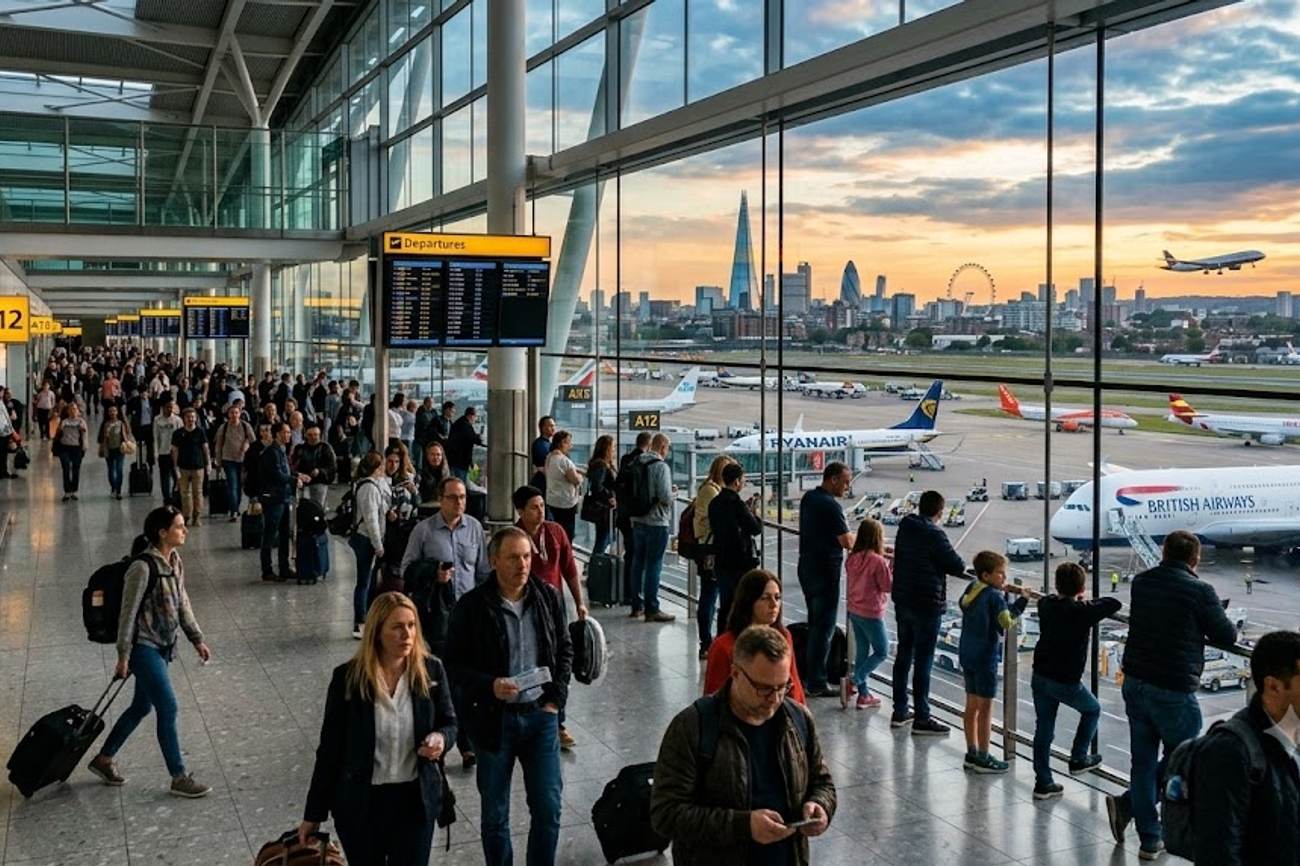
Image generated by AI
[Brussels, October 2023] — European aviation hubs are aggressively expanding terminal capacity and runway utility at the exact moment that major tourist destinations are implementing restrictive visitor management policies to combat "overtourism." This paradox creates a systemic tension across the continent, as governments attempt to maximize the economic windfall of increased air connectivity while simultaneously shielding local infrastructure and residential quality of life from the resulting passenger surges.
The conflict is manifesting across the European Union and the United Kingdom, where the push for growth is no longer measured by raw arrival statistics but by the "carrying capacity" of specific cities and islands. From the Mediterranean coast to the historic centers of Italy and France, the strategy is shifting from attraction to regulation. This transition is being monitored by UN Tourism, which notes that while global travel is expanding, regional growth patterns are now dictated by infrastructure limitations and evolving traveler behaviors.
The Infrastructure Expansion Trigger
The current surge in airport investment is driven by a post-pandemic recovery that has seen international demand return to—and in some cases exceed—previous peaks. Aviation authorities are prioritizing the modernization of "gateway" airports to handle higher volumes of long-haul passengers, particularly from Asian and North American markets.
However, this capacity increase acts as a catalyst for destination strain. When an airport increases its throughput, the immediate impact is felt not in the terminal, but in the city centers, housing markets, and public transport systems of the destination. This has forced a pivot in governance: airports are building for the future, while city mayors are building fences (both literal and regulatory) to manage the present.
Regional Impact and Pressure Points
The tension between aviation growth and destination stability is most acute in the following markets:
| Country | Primary Aviation Hubs Expanding | Critical Pressure Points | Primary Management Challenge |
|---|---|---|---|
| Spain | Madrid-Barajas, Barcelona-El Prat, Palma de Mallorca, Málaga | Mallorca, Canary Islands, Barcelona | Housing shortages and seasonal spikes |
| Italy | Rome Fiumicino | Venice, Florence, Rome | Heritage site degradation and overcrowding |
| France | Paris Charles de Gaulle (CDG) | Paris, French Riviera, Alps | Carbon emissions and urban congestion |
| UK | London Heathrow, London Gatwick | London and regional hotspots | Climate targets vs. connectivity |
In Spain, the focus has shifted toward "high-value tourism." Authorities in the Canary Islands and Mallorca are actively exploring ways to discourage short-term, low-spend visitors in favor of longer stays that provide a more sustainable economic contribution without the same level of infrastructure strain.
In Italy, the expansion of Rome Fiumicino Airport is designed to capture more long-haul traffic, but the interior of the country is struggling to distribute these visitors. The Italian government is now promoting "lesser-known regions" to divert traffic away from the saturated "Golden Triangle" of Rome, Florence, and Venice.
France is facing a distinct regulatory battle. While Paris Charles de Gaulle (CDG) undergoes massive operational upgrades to improve passenger flow and terminal efficiency, the French Ministry for Ecological Transition and other regulatory bodies are under pressure to align aviation growth with strict national carbon reduction targets.
What This Means for Travelers
For the average passenger, this "growth vs. management" tug-of-war translates into several practical changes in how travel is booked and experienced:
1. Increased Entry Costs and Fees Travelers should expect more "tourism taxes" or "entry fees." Cities like Venice have already experimented with access fees; expect this model to spread to other Mediterranean hubs as a way to fund the infrastructure damaged by high visitor volumes.
2. Shift in Availability Booking accommodation in primary hubs (like Barcelona or Palma) is becoming more difficult and expensive due to local regulations targeting short-term rentals (e.g., Airbnb) to protect local housing stocks.
3. New "Off-Peak" Incentives Airlines and hotels will increasingly offer aggressive discounts for "shoulder season" travel. This is a deliberate attempt by governments to flatten the seasonal curve and prevent the total collapse of local services during July and August.
4. Stricter Site Access The days of spontaneous visits to major landmarks are ending. Travelers will find that more heritage sites require pre-booked, timed entry slots, managed via digital apps to prevent overcrowding.
The Future of European Connectivity
The trajectory of European travel is moving toward a "managed growth" model. The goal is to decouple economic gain from environmental and social degradation. This will likely involve three primary shifts over the next five years:
Technological Decarbonization The expansion of airports like Heathrow and CDG will be contingent on the adoption of Sustainable Aviation Fuel (SAF) and electric short-haul flights. Without a clear path to net-zero, airport expansions will face increasing legal challenges from environmental groups and EU regulators.
Diversification of Flow We will see a coordinated effort between the European Union Aviation Safety Agency (EASA) and national tourism boards to redirect traffic. This means promoting secondary airports and secondary cities to ensure that the "tourism load" is spread evenly across the continent.
Regulatory Integration Expect a tighter link between airport slot allocations and destination capacity. In the future, an airport may be denied the ability to add more flights to a specific destination if that destination has reached its "environmental or social ceiling."
FAQ: European Tourism Management 2024
Will it become harder to visit popular European cities? Not necessarily harder, but more structured. You will likely encounter more required reservations, higher local taxes, and a push toward visiting during the off-season. Spontaneity is being replaced by planned, regulated access.
Why are airports expanding if cities are complaining about too many tourists? Airports operate on different economic incentives than city councils. Aviation hubs focus on global connectivity and transit revenue, while local governments focus on livability and infrastructure maintenance.
How can I avoid the "overtourism" crowds? Target "secondary destinations." Instead of the Canary Islands, explore mainland Spain's interior; instead of Venice, look toward the Friuli-Venezia Giulia region. Travel in October or March to find lower prices and fewer crowds.
Are flight prices expected to rise because of these management policies? Indirectly, yes. As airports invest in greener technology and cities implement tourism levies, these costs are often passed down to the consumer through higher ticket prices or airport fees.
The era of unlimited growth in European travel is over; the era of strategic management has begun.
#SpainTourism2024 #EUaviation #RomeFiumicino #CDGexpansion #OvertourismEurope #HeathrowCapacity
Related Travel Guides
- Philippines DOT Launches New Tourism Data Dashboard with Visitor and Economic Insights
- PATA and ATTIA Sign MoU to Advance New Tourism Technology, Innovation and Digital Transformation in Asia Pacific
- Pennsylvania Alongside New Jersey and More as Spirit Airlines Shutdown Disrupts US Airport Networks and Passenger Growth
Disclaimer
This article is for informational and educational purposes only. It does not constitute legal, financial, or professional advice. While we strive to provide accurate and up-to-date information, travel policies, regulations, and conditions change rapidly. Always verify information with official sources before making travel decisions. Nomad Lawyer makes no representations about the accuracy, reliability, completeness, or suitability of the information provided. Readers should consult qualified professionals for advice specific to their circumstances. The views expressed in this article are those of the author and do not necessarily reflect the views of Nomad Lawyer.
Kunal K Choudhary
Co-Founder & Contributor
A passionate traveller and tech enthusiast. Kunal contributes to the vision and growth of Nomad Lawyer, bringing fresh perspectives and driving the community forward.
Learn more about our team →