
Pennsylvania Alongside New Jersey and More as Spirit Airlines Shutdown Disrupts US Airport Networks and Passenger Growth
Pennsylvania Alongside New Jersey and More as Spirit Airlines Shutdown Disrupts US Airport Networks and Passenger Growth

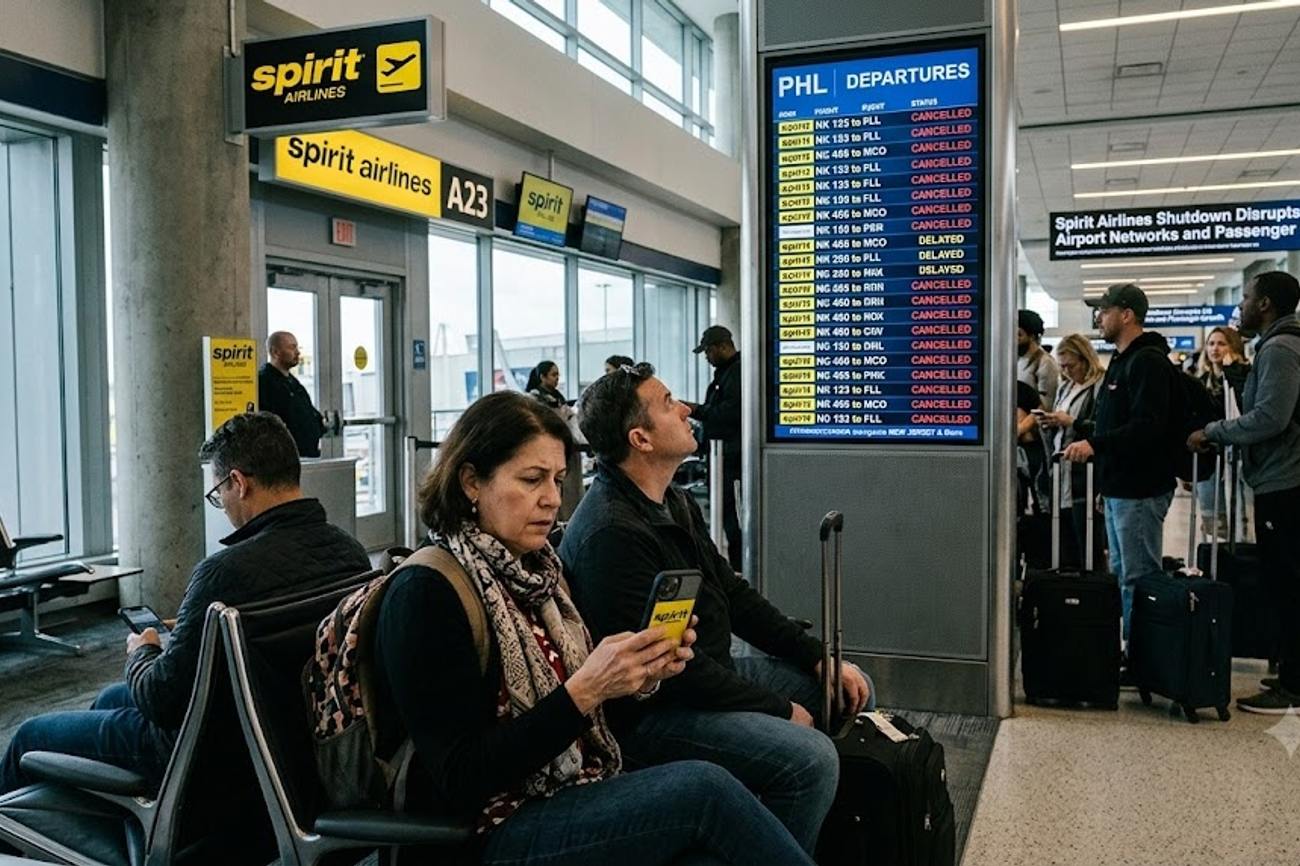
Image generated by AI
[Washington, D.C., October 2024] — The total collapse of Spirit Airlines' operational network has triggered a systemic capacity crisis across the United States, stripping multiple regional and international gateways of low-cost connectivity and leaving smaller airports without any commercial service.
The shutdown has fundamentally altered the competitive landscape of U.S. aviation, removing the ultra-low-cost carrier (ULCC) model that previously drove down fares and expanded access to secondary markets. Airport authorities from Pennsylvania to Florida are now scrambling to fill the void, facing a sharp decline in seat availability and a loss of nonstop leisure routes that previously fueled regional tourism and passenger growth.
The Catalyst of the Network Collapse
The disruption stems from the complete cessation of Spirit Airlines' operations, a carrier that functioned as a primary price-disruptor in the American market. By utilizing an ultra-low-cost model, Spirit provided high-volume, budget-friendly access to leisure destinations and secondary airports that were often ignored by legacy carriers.
The sudden removal of this capacity has created an immediate vacuum. For many airports, Spirit was not merely one of several options but the sole provider of affordable transit for a specific passenger demographic. The loss of these flights removes the competitive pressure that typically forces larger airlines to keep fares low, potentially leading to increased ticket prices across the remaining carriers.
Airports Facing Severe Capacity Pressure
The impact of the shutdown varies by airport size, with smaller regional hubs facing existential threats to their commercial viability while major hubs deal with diminished competition.
| Airport | Location | Impact Metric | Network Effect |
|---|---|---|---|
| Arnold Palmer Regional (LBE) | Pennsylvania | 100% Service Loss | Complete cessation of all scheduled commercial passenger operations. |
| New Orleans Louis Armstrong (MSY) | Louisiana | 12.4% Market Share Loss | Loss of one of the airport's largest carriers; significant capacity drop. |
| Atlantic City International (ACY) | New Jersey | ~50% Flight Reduction | Massive loss of low-cost operations and passenger traffic. |
| Pittsburgh International (PIT) | Pennsylvania | 3.5% Passenger Traffic Loss | Reduced affordable leisure options and diminished route competition. |
| Fort Lauderdale-Hollywood (FLL) | Florida | Major Operator Exit | Disruption to Caribbean gateways and budget holiday connectivity. |
| Orlando International (MCO) | Florida | Leisure Route Loss | Reduced budget travel options for theme park and tourism visitors. |
| Newark Liberty International (EWR) | New Jersey | Millions of Passengers | Reduced low-cost competition at a critical domestic/international hub. |
What This Means for Travelers
For the average passenger, the Spirit shutdown is not merely a corporate failure but a direct hit to the wallet and the itinerary. The "passenger impact" can be broken down into three primary categories:
1. Higher Ticket Prices: With the removal of a major low-cost competitor, the remaining airlines—such as Southwest Airlines, Delta Air Lines, and United Airlines—face less pressure to offer deep discounts on leisure routes. Passengers should expect a rise in average fares for domestic flights.
2. Reduced Route Directness: Many passengers who relied on nonstop flights to leisure destinations from secondary airports will now face mandatory layovers. This is particularly acute for those traveling from regional Pennsylvania or New Jersey gateways to Florida or the Caribbean.
3. Limited Budget Options: The "unbundled" fare model, where travelers paid only for the seat and added bags separately, has vanished in several markets. This removes the lowest possible entry point for budget-conscious travelers, students, and families.
The Path to Recovery and Network Stabilization
Airport administrators are now entering a period of aggressive recruitment to stabilize their passenger numbers. At Pittsburgh International Airport (PIT), the focus has shifted toward encouraging existing partners like Frontier Airlines and American Airlines to expand their footprints to absorb the lost 3.5% of passenger traffic.
The situation at Arnold Palmer Regional Airport (LBE) is more dire, as the facility has effectively lost its commercial utility. Recovery there requires attracting an entirely new carrier to establish a base, a process that often takes months or years of incentive negotiations.
Industry analysts suggest that the Federal Aviation Administration (FAA) and local aviation boards will be monitoring these "capacity deserts" closely. The goal is to prevent a permanent decline in regional connectivity, which could stifle local economic growth and tourism. The long-term strategy for these airports involves diversifying their airline portfolios to ensure that no single carrier's exit can again paralyze an entire airport's operations.
FAQ: Spirit Airlines Shutdown 2024
What happens to my existing Spirit Airlines booking? Since the airline has shut down operations, all scheduled flights are cancelled. Passengers should contact their credit card providers for chargebacks or check for any official bankruptcy filings regarding creditor claims.
Will flight prices increase at airports like PIT and EWR? Likely. The removal of a low-cost competitor typically allows remaining airlines to raise fares due to decreased competition on specific routes.
Are there alternative budget airlines available? Yes. Travelers are encouraged to check Frontier Airlines or Southwest Airlines, although route availability may vary depending on the specific airport.
Which airport was hardest hit by the shutdown? Arnold Palmer Regional Airport (LBE) suffered the most severe blow, as the exit of Spirit removed all commercial airline service from the facility.
The U.S. aviation map is being redrawn in real-time as airports fight to replace the void left by the budget giant.
Tags: SpiritAirlines, PIT-Airport, LBE-Airport, ACY-Airport, US-Aviation-Capacity-2024, FAA-Connectivity
Related Travel Guides
Disclaimer
This article is for informational and educational purposes only. It does not constitute legal, financial, or professional advice. While we strive to provide accurate and up-to-date information, travel policies, regulations, and conditions change rapidly. Always verify information with official sources before making travel decisions. Nomad Lawyer makes no representations about the accuracy, reliability, completeness, or suitability of the information provided. Readers should consult qualified professionals for advice specific to their circumstances. The views expressed in this article are those of the author and do not necessarily reflect the views of Nomad Lawyer.
Kunal K Choudhary
Co-Founder & Contributor
A passionate traveller and tech enthusiast. Kunal contributes to the vision and growth of Nomad Lawyer, bringing fresh perspectives and driving the community forward.
Learn more about our team →