
Europe Tourism Warning 2026: Wildfire Threats Impact 20% of Top Destinations Across Continent
Extreme weather conditions have placed 20% of Europe's primary tourist destinations under wildfire threat, forcing emergency evacuations and travel disruptions across Spain, Greece, and France.

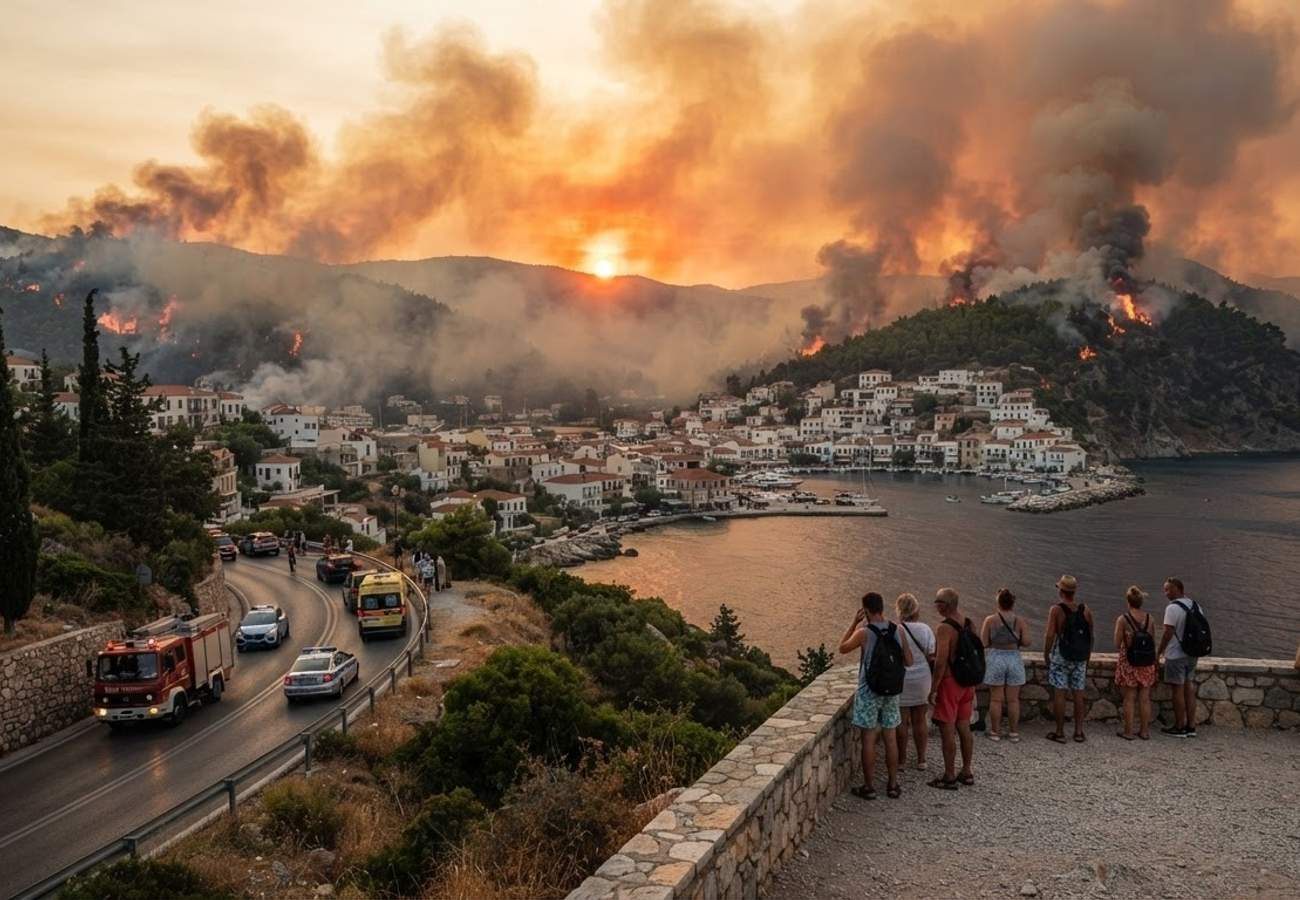
Image generated by AI
Nearly one-fifth of Europe's most visited tourist locations are currently under threat from wildfires as extreme weather patterns grip the continent. This crisis is placing unprecedented pressure on peak-season infrastructure, forcing national authorities to implement emergency safety protocols to protect millions of international visitors.
The current environmental volatility is not closing the continent to travel, but it is fundamentally altering the logistics of summer vacations. A combination of prolonged drought, record-breaking temperatures, desiccated vegetation, and high-velocity winds has created a "perfect storm" for rapid fire expansion. For the modern traveler, the priority has shifted from itinerary planning to active risk monitoring and adherence to local emergency alerts.
Mediterranean Hotspots Under Severe Pressure
The wildfire crisis is most acute in the Mediterranean basin, where the tourism economy is most dependent on the summer window. In these regions, the intersection of dense tourist populations and flammable natural landscapes has created a high-stakes environment for emergency services.
Spain's Rural and Coastal Vulnerabilities
As a global tourism powerhouse, Spain is seeing its southern regions and Mediterranean coast struggle with extreme heat. The risk is particularly high for visitors engaging in "green tourism," such as hiking and camping, as many of the country's premier natural parks are adjacent to high-risk fire zones.
The impact in Spain is most visible in the disruption of rural accommodations and outdoor festivals. While major urban centers and beachfront resorts generally remain operational, the infrastructure supporting hinterland exploration—including secondary roads and hiking trails—is frequently subject to sudden closures.
Greece's Summer Emergency and Evacuations
Greece is currently navigating a critical emergency as flames have encroached upon holiday communities and luxury resorts. The crisis is compounded by the timing, occurring during the absolute peak of the Greek summer season.
Emergency teams have been forced to execute rapid evacuations of tourists from coastal resorts and islands, including areas like Halkidiki. Because the Greek tourism model relies heavily on beach access and outdoor excursions, the fires have led to immediate restrictions on coastal movement and the closure of key local transportation arteries.
Northern and Central European Fire Expansion
In a significant shift in climate patterns, wildfire threats are no longer confined to the south. The 2026 season has seen a northward migration of fire risks, affecting regions previously considered safe from such extremes.
France's Nature Escapes Under Threat
France is battling intense fire activity, particularly in the southwest. The French tourism model, which heavily promotes nature-based holidays, is under stress as campsites and vineyard retreats—often located in heavily forested areas—become vulnerable.
Travelers in France are reporting sudden disruptions to cycling routes and nature park access, necessitating rapid changes to travel itineraries. While the primary cities remain unaffected, the "rural escape" market is facing significant volatility.
The United Kingdom's Emerging Risk
The United Kingdom has joined the list of affected nations, with fires breaking out in areas traditionally unseen as wildfire zones. Reports indicate significant activity in the West Midlands, specifically impacting residential and grassland areas in Birmingham, Stourbridge, Stoke-on-Trent, and Worcestershire.
This expansion into the UK suggests that the "Mediterranean model" of fire risk is now a continental issue. Rural tourism and walking routes in the English countryside are now subject to the same weather-based warnings previously reserved for Southern Europe.
Regional Wildfire Risk and Tourism Impact Matrix
The following data outlines the specific challenges and impacts across the most affected European territories:
| Country | Major Tourist Areas Facing Fire Risk | Main Challenge | Tourism Impact |
|---|---|---|---|
| Spain | Mediterranean coast, southern regions, countryside | Large wildfires and extreme heat | Outdoor activities, rural tourism and transport affected |
| France | Southwest forests, coastal areas, nature destinations | Fast-spreading forest fires | Evacuations, road closures and campsite disruption |
| Greece | Halkidiki, coastal resorts and islands | Fires near holiday communities | Tourist evacuations and beach access restrictions |
| Croatia | Dalmatian Coast and Adriatic towns | Wildfires near tourist centres | Road closures and visitor movement disruption |
| United Kingdom | West Midlands, rural England | Residential and grassland fires | Local travel disruption and attraction concerns |
| Central Europe | Forest and nature regions | Rising fire danger | Increased warnings for outdoor tourism |
Adriatic Coastline Disruptions in Croatia
Croatia’s Adriatic coast, famous for its crystal-clear waters and historic stone towns, is experiencing significant instability. The primary challenge here is the geography; many tourist centers are nestled between the mountains and the sea, leaving limited exit routes when fires ignite in the surrounding vegetation.
The impact has been most severe on coastal highways and island connections. When fires threaten tourist towns, the resulting road closures create bottlenecks that disrupt hotel operations and sightseeing schedules, highlighting the fragile link between climate stability and tourism security.
The New Reality of European Travel Planning
The 2026 wildfire wave is forcing a systemic change in how travelers approach the European continent. The "book and forget" mentality is being replaced by a dynamic approach to travel.
Industry data suggests a surge in demand for:
- Hyper-flexible booking: Travelers are prioritizing refundable deposits and changeable dates.
- Specialized Insurance: There is an increased focus on policies that specifically cover climate-related evacuations.
- Real-time Monitoring: A reliance on official government emergency apps over traditional travel guides.
The shift toward "climate-conscious" itinerary planning is no longer optional; it is a necessity for survival and safety in the modern European summer.
Related Travel Guides
Disclaimer
This article is for informational and educational purposes only. It does not constitute legal, financial, or professional advice. While we strive to provide accurate and up-to-date information, travel policies, regulations, and conditions change rapidly. Always verify information with official sources before making travel decisions. Nomad Lawyer makes no representations about the accuracy, reliability, completeness, or suitability of the information provided. Readers should consult qualified professionals for advice specific to their circumstances. The views expressed in this article are those of the author and do not necessarily reflect the views of Nomad Lawyer.
Kunal K Choudhary
Co-Founder & Contributor
A passionate traveller and tech enthusiast. Kunal contributes to the vision and growth of Nomad Lawyer, bringing fresh perspectives and driving the community forward.
Learn more about our team →