
EU border checks cause easyJet chaos: 120+ stranded in Milan April 2026
Over 120 easyJet passengers stranded in Milan for four days after the EU's new Entry/Exit System overwhelmed airport border checks in April 2026, leaving travelers facing missed connections and mounting costs.

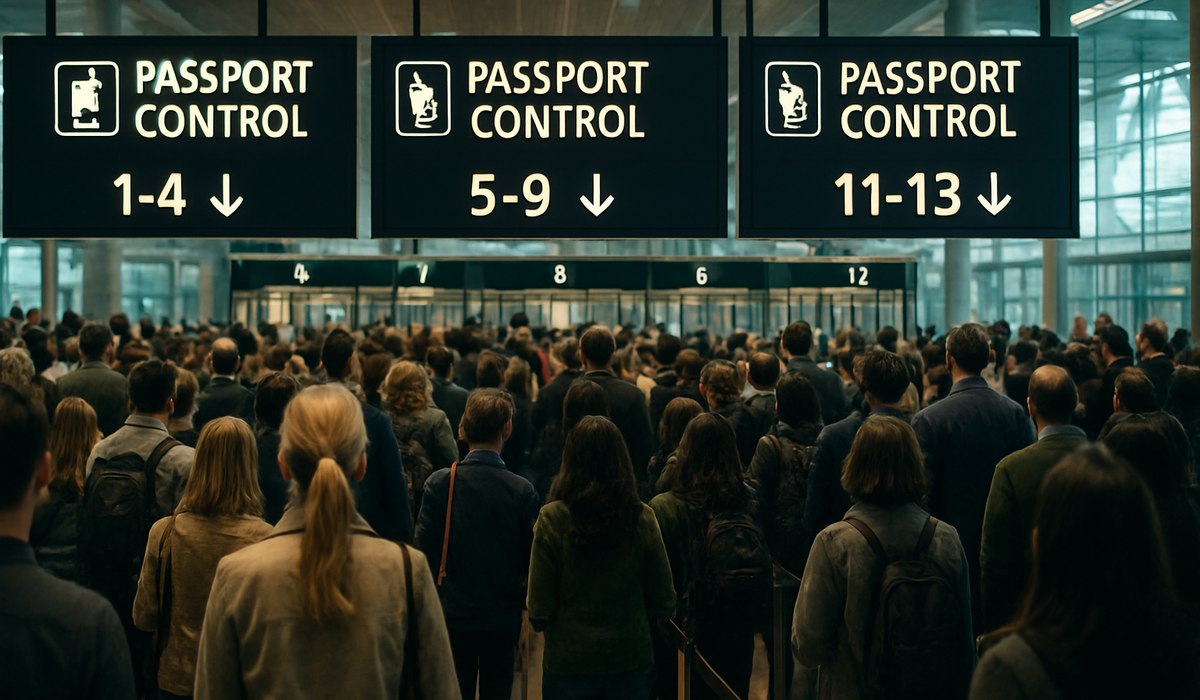
Image generated by AI
Manchester-bound Flight Disrupted by New EU Border System
Over 120 easyJet passengers faced a four-day ordeal at Milan Linate Airport when the European Union's newly implemented Entry/Exit System (EES) created unprecedented congestion at passport control. On April 12, 2026, a Manchester-bound flight departed with only 34 of its 156 booked passengers after border queues prevented the majority from clearing security in time. Stranded travelers reported missing connections, securing expensive last-minute accommodation, and struggling to obtain clear information about rebooking options—transforming a routine European flight into an extended travel nightmare.
Four-Day Ordeal: How Border Chaos Left Passengers Stranded
The disruption unfolded during the initial full operational weekend of the EU's EES rollout at Schengen external borders. Passengers reported waiting up to three hours at Milan Linate's passport control as biometric data—fingerprints and facial images—were captured for each traveler. One UK-bound passenger described being unable to secure an alternative easyJet flight for four consecutive days, ultimately facing exorbitant rebooking costs and unexpected accommodation expenses.
The experience highlighted the infrastructure strain at airport border facilities during peak travel periods. Milan Linate, already operating near capacity with significant UK traffic volume, proved particularly vulnerable to the initial EES implementation bottlenecks. Travelers documented missing connections, family reunions delayed, and business obligations compromised—all stemming from systems designed to enhance security but deployed with insufficient staffing preparation.
Understanding the EU Entry/Exit System (EES)
The EES fundamentally changed how non-EU nationals, including British passport holders post-Brexit, move through Schengen external borders. Prior to April 2026, UK travelers relied on manual passport stamping upon entry and exit. The new system records comprehensive biometric and movement data, requiring first-time users to submit fingerprints and facial recognition scans—a process adding 5-10 minutes per passenger.
Industry bodies had previously warned that inadequate staffing and infrastructure scaling could create severe congestion. The Milan incident validated those concerns during peak weekend travel. Airports across the Schengen area—including major hubs in Paris, Amsterdam, and Frankfurt—reported similar queuing patterns, though Milan's physical constraints amplified the disruption's severity. The system aims to strengthen security protocols and streamline repeat-traveler processing through advance registration, but early implementation exposed critical gaps between policy design and operational readiness.
Impact on Travelers: Costs, Connections, and Frustration
Stranded passengers faced cascading financial and logistical consequences. Rebooking costs escalated dramatically as subsequent flights sold out or required premium pricing. Hotel accommodation consumed limited budgets. Missed connections created secondary complications—some passengers were scheduled for onward regional flights or ferry departures they could not reach.
Critically, passenger rights protections became ambiguous. Under EU Regulation 261/2004 and UK aviation law, airlines must provide care—meals, accommodation, communication—when flights are delayed or cancelled due to operational issues within carrier control. However, when disruption stems from airport or government border processes, compensation obligations become murky. Airlines argue these fall outside their responsibility; passengers contend they should not absorb costs for state-mandated systems. Consumer advocates recommend detailed expense documentation: boarding passes, booking confirmations, hotel receipts, and airline correspondence—essential for pursuing ex gratia compensation even when formal legal claims face rejection.
What Passengers Need to Know Going Forward
Travelers should implement several protective measures when crossing Schengen external borders during EES operations:
Arrive substantially earlier. Industry guidance now recommends 4-5 hours before departure for international flights from busy EU hubs—an increase from previous 3-hour standards. EES processing adds variable time depending on first-time biometric enrollment versus repeat-traveler expedited lanes.
Budget for delays. Maintain flexible onward connections. If connecting internationally within 90 minutes, rebooking complexity increases exponentially. Build 3+ hour buffers for tight international itineraries.
Document everything. Preserve all receipts, communications, and travel documents. Screenshots of flight confirmations, boarding pass images, and accommodation invoices support potential compensation claims.
Pre-register when possible. Some airports offer advanced EES registration prior to travel, reducing on-the-day processing time. Check your departure airport's website for eligibility.
Monitor airline communications. Follow easyJet and your carrier's social media channels and email updates during EES implementation phases at your departure airport.
Key Data: Milan easyJet Incident Timeline
| Metric | Details |
|---|---|
| Incident Date | Sunday, April 12, 2026 |
| Airport | Milan Linate (MXP) |
| Affected Flight | easyJet service to Manchester |
| Booked Passengers | 156 |
| Passengers Who Boarded | 34 |
| Passengers Stranded | 120+ |
| Maximum Border Queue Wait | Up to 3 hours |
| Duration of Stranding | Up to 4 days for affected travelers |
| Primary Cause | EES biometric processing bottleneck |
| Rebooking Difficulty | Subsequent flights sold out or premium-priced |
FAQ: EU Border Checks and EES Implementation
What is the EU Entry/Exit System and why does it affect British travelers?
The EES records biometric data (fingerprints and facial recognition) and entry/exit timestamps for non-EU nationals entering Schengen countries. Since Brexit, UK passport holders must complete EES registration on first entry, a process adding 5-10 minutes per traveler. The system replaced manual passport stamping and aims to enhance border security through automated tracking.
Am I entitled to compensation if I miss my flight due to EES border delays?
Compensation depends on the cause classification. If the airline is deemed responsible for operational failure, EU Regulation 261/2004 typically applies (€250-€600 depending on route distance). If border authorities are responsible, compensation claims become more complex. Passengers should file formal complaints with airlines and document all expenses for potential ex gratia reimbursement.
How long should I expect to wait at EES border control in April 2026 and beyond?
First-time EES users should anticipate 5-10 minutes for biometric enrollment. Subsequent visits to Schengen countries use expedited lanes (1-2 minutes). During peak travel periods at capacity-constrained airports like Milan Linate, queues can extend to 60+ minutes. Arrive 4-5 hours before departure for international flights.
Which airports are experiencing the worst EES-related delays?
Milan Linate, Paris Orly, Amsterdam Schiphol, and Frankfurt have reported significant early-phase disruption. Smaller regional airports with newer infrastructure have processed passengers more efficiently. Check your specific airport's EES implementation status and queue forecasts before traveling.
What This Means for Nomad Lawyers and Business Travelers
Frequent cross-border professionals should prioritize advance EES registration through the official EU ETIAS portal to access expedited processing lanes. The Milan incident demonstrates that schedule reliability cannot be assumed during peak travel periods through Schengen external borders. Build 2-3 hour connection buffers for international itineraries. Maintain comprehensive travel insurance covering missed connections and border-related disruptions. Remote work flexibility becomes critical—schedule important meetings post-arrival, not pre-departure, during this EES transition period.
Related Travel Guides
Disclaimer
This article is for informational and educational purposes only. It does not constitute legal, financial, or professional advice. While we strive to provide accurate and up-to-date information, travel policies, regulations, and conditions change rapidly. Always verify information with official sources before making travel decisions. Nomad Lawyer makes no representations about the accuracy, reliability, completeness, or suitability of the information provided. Readers should consult qualified professionals for advice specific to their circumstances. The views expressed in this article are those of the author and do not necessarily reflect the views of Nomad Lawyer.
Kunal K Choudhary
Co-Founder & Contributor
A passionate traveller and tech enthusiast. Kunal contributes to the vision and growth of Nomad Lawyer, bringing fresh perspectives and driving the community forward.
Learn more about our team →