
EasyJet Blasts Queues After Milan Chaos Strands 120 UK Fliers
EasyJet criticizes Europe's new Entry/Exit System after over 120 UK passengers missed their Manchester flight when Milan Linate border control queues exceeded three hours in 2026, forcing travelers to rebook at enormous cost.

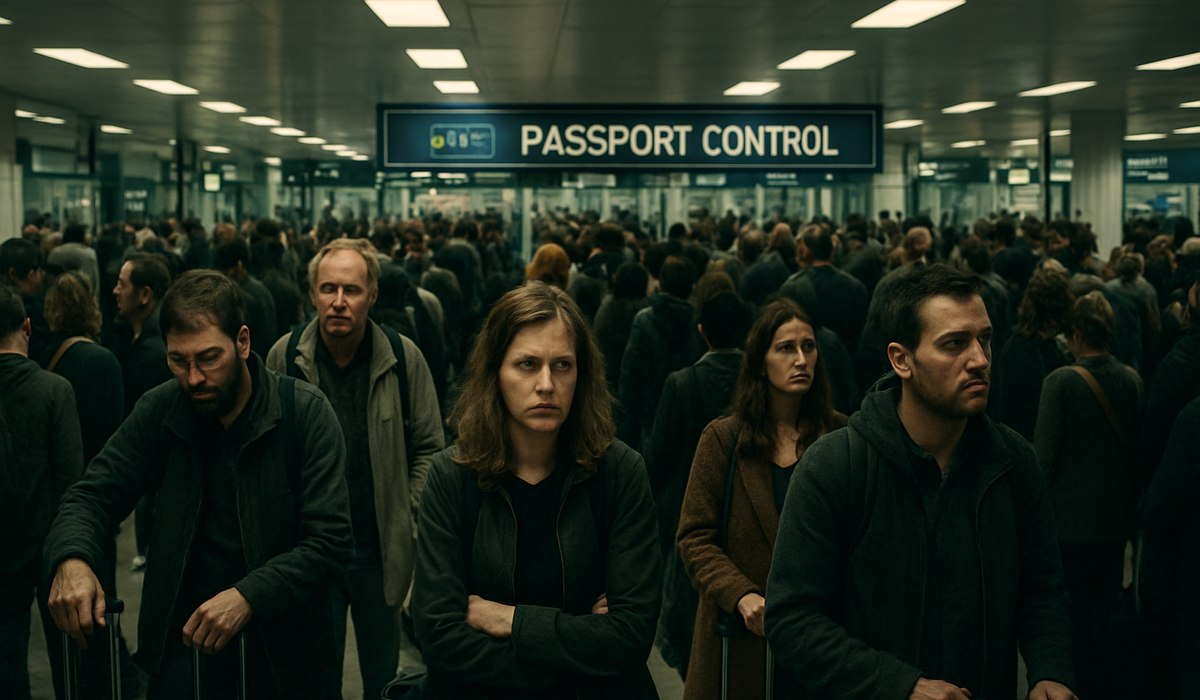
Image generated by AI
EasyJet Blasts Queues as Milan Airport Strands Over 100 Passengers
EasyJet has launched a scathing criticism of Europe's new Entry/Exit System after flight EJU5420 departed Milan Linate on April 12, 2026, with approximately 120 UK-bound passengers still trapped in border control queues. The low-cost carrier says the situation was "unacceptable" and entirely outside its operational control. Passengers reported waiting up to three hours at passport control, with many returning from Easter holidays during peak travel season. The incident has reignited debate about whether the EU's biometric registration system is adequately resourced to handle passenger volumes without causing widespread flight disruptions.
Flight Departs With Majority of Passengers Still in Passport Control
The chaos unfolded when EasyJet flight EJU5420 attempted to depart Milan Linate bound for Manchester. The airline held the aircraft on the ground for nearly 60 minutes beyond its scheduled departure time, hoping passengers would clear border formalities. However, only 30 to 35 passengers successfully boarded before crew duty limits forced the crew to release the aircraft. An estimated 120 travelers found themselves stranded at the checkpoint, unable to reach the gate despite arriving at the airport with sufficient time for a normal check-in process.
The situation highlighted the operational challenges posed by the Entry/Exit System, which requires non-EU nationals—including British citizens post-Brexit—to submit facial images and fingerprints. EasyJet emphasized that the airline cannot control border processing speeds, yet airline schedules demand predictable gate closure times. This structural tension between aviation timekeeping and immigration procedures has become a critical friction point across European airports during EES rollout.
Three-Hour Queues Leave Travelers Scrambling for Last-Minute Alternatives
Stranded passengers faced a scramble to find alternative routes home. Many reported booking emergency hotel rooms near Milan and purchasing replacement flights on competing carriers at premium prices, with some spending over £1,000 to rearrange their itineraries. The timing of the incident—coinciding with Easter holiday returns—meant airport hotels were fully booked and rebooking options were limited.
Passenger accounts describe the airport experience as chaotic and poorly managed. Families with young children waited in queue lines stretching beyond visible endpoints, with no clear communication about processing times or gate closure deadlines. The lack of real-time information compounded passenger anxiety, as travelers couldn't assess whether they'd clear the checkpoint in time. This incident exposed gaps in airport signage and passenger communication during the early EES implementation phase.
For UK travelers specifically, the Milan disruption raised uncomfortable questions about Easter and summer holiday planning. Many passengers had purchased nonrefundable accommodation and had work commitments upon return. The financial and personal impact extended far beyond ticket costs, affecting childcare arrangements and employment obligations on both sides of the journey.
EasyJet Labels Situation 'Unacceptable' as EES Implementation Faces Scrutiny
EasyJet's official statement characterized the Milan situation as unacceptable and called for border authorities to deploy all available tools to manage Entry/Exit System congestion. The airline urged officials to consider temporary suspensions of biometric checks when wait times exceed agreed thresholds, particularly during peak travel periods.
The carrier's criticism has intensified scrutiny of EES readiness across Europe. Travel industry associations warned for months that biometric enrollment would create bottlenecks without adequate staffing and infrastructure upgrades. The European Commission acknowledged EES would be "complex" but projected initial challenges would resolve as systems matured. Milan suggests these early-phase problems pose real risks to passenger welfare and airline operations.
Border management officials responding to coverage have pointed to the inherent complexity of deploying new biometric systems across dozens of airports simultaneously. They've noted that EES represents a significant upgrade in data collection and processing capabilities, requiring coordination between national authorities and EU agencies. However, critics argue that insufficient staffing and kiosk availability were foreseeable constraints that should have been addressed before the April 2026 rollout.
The debate between EasyJet and border authorities reflects broader tensions in European aviation. Airlines depend on predictable, manageable border procedures to maintain schedules. Immigration authorities must implement security protocols regardless of commercial timelines. Passengers caught in the middle lack recourse when systemic delays cause them to miss flights they've legally booked and paid for.
What This Means for UK Travelers During Peak Travel Periods
The Milan incident serves as a critical wake-up call for British travelers planning European trips throughout 2026 and beyond. Entry/Exit System biometric enrollment adds unpredictable delays to the border crossing process, especially for first-time registrants. UK citizens should factor substantially extended border processing times into travel planning, particularly during Easter, summer holidays, and Christmas periods.
Experienced travelers can minimize risk by arriving at airports earlier than pre-pandemic norms recommended. Airports like Milan Linate, Barcelona, Paris, and other major European hubs report EES queues exceeding 90 minutes during peak hours. For connecting flights or tight scheduling, passengers should allow 3-4 hours between arrival and domestic transfers, rather than the standard 2 hours.
The compensation landscape remains murky. EU Regulation 261/2004 typically protects passengers when airlines cancel flights or depart significantly late. However, situations where passengers miss flights due to border control delays fall into a gray area. Airlines argue they're not responsible for government border procedures. However, some legal advocates argue that airlines have obligations to wait reasonable periods or communicate closure times clearly. UK travelers should document all communications and seek clarity from their carrier immediately if stranded, rather than waiting weeks post-trip.
FAQ
Q: Will the Entry/Exit System delays eventually improve? Yes. Border authorities report that processing speeds will accelerate as biometric databases populate. Returning passengers won't need full enrollment, reducing individual processing times from 2-3 minutes to 20-30 seconds. However, peak-period queuing may persist through summer 2026 as capacity constraints remain tight at popular airports.
Q: Can I claim compensation if I miss a flight due to EES border queues? This remains legally undefined. EU261/2004 compensation typically applies to airline cancellations or delays, not border-caused passenger delays. Document all airport interactions, times, and communications. Some travel insurers and legal firms are building case law around this scenario; consider consulting a travel law specialist if you were significantly delayed.
Q: Should I avoid traveling to Schengen countries during peak season? Not necessarily, but plan conservatively. Build in extra airport time (3-4 hours), choose off-peak flights when possible, and avoid tight connections. Monitor airport-specific guidance from your departure and arrival airports, as some are better resourced than others.
Q: Which European airports are reporting the worst EES queues? Milan Linate, Rome Fiumicino, Barcelona El Prat, and Paris Charles de Gaulle have reported extended EES wait times. Smaller regional airports generally process passengers faster. Check your specific airport's official website for real-time queue updates before travel.
Key Data Table
| Metric | Details |
|---|---|
| Incident Date | April 12, 2026 |
| Flight Number | EasyJet EJU5420 |
| Route | Milan Linate (MXP) to Manchester (MAN) |
| Passengers Boarded | 30-35 of approximately 155 total |
| Passengers Stranded | ~120 UK-bound travelers |
| Border Queue Duration | Up to 3 |
Disclaimer
This article is for informational and educational purposes only. It does not constitute legal, financial, or professional advice. While we strive to provide accurate and up-to-date information, travel policies, regulations, and conditions change rapidly. Always verify information with official sources before making travel decisions. Nomad Lawyer makes no representations about the accuracy, reliability, completeness, or suitability of the information provided. Readers should consult qualified professionals for advice specific to their circumstances. The views expressed in this article are those of the author and do not necessarily reflect the views of Nomad Lawyer.
Raushan Kumar
Founder & Lead Developer
Full-stack developer with 11+ years of experience and a passionate traveller. Raushan built Nomad Lawyer from the ground up with a vision to create the best travel and law experience on the web.
Learn more about our team →