
EasyJet Passengers Stranded in Milan Amid Border Control Chaos April 2026
Around 100 EasyJet passengers missed their Manchester flight after three-hour border queues at Milan airport in April 2026. The EU Entry/Exit System caused major delays, leaving travelers stranded overnight.

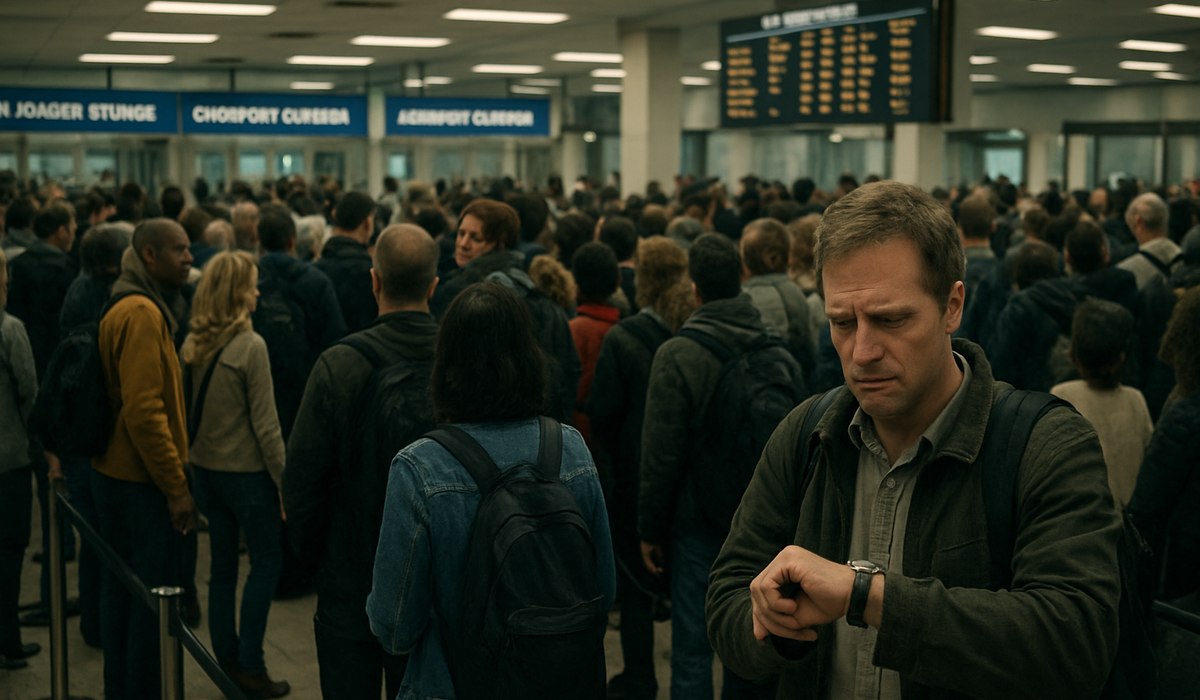
Image generated by AI
EasyJet Passengers Stranded After Milan Airport Border Delays
Around 100 EasyJet passengers were left stranded overnight in Milan on April 12, 2026, after three-hour queues at passport control caused them to miss their Manchester-bound flight. The aircraft departed with dozens of empty seats while ticketed travelers remained stuck in immigration lines. The incident highlights growing operational pressures at European airports as new EU border systems take effect during peak spring travel season.
Dozens Stranded as Milan Flight Departs Half-Empty
EasyJet passengers stranded in Milan described arriving at the airport with what they considered adequate time before departure, only to face unprecedented delays at border control. Social media reports and travel forum posts indicate passengers waited up to three hours at passport checks, watching their gate close while they remained in the immigration queue.
One significant detail emerged across multiple traveler accounts: the Manchester flight departed with approximately 30 to 40 empty seats. Border staff had funneled non-Schengen passengers through a severely limited number of booths, creating bottlenecks that made on-time boarding impossible for affected travelers.
Once passengers finally cleared formalities, airport staff directed them to seek rebooking through digital self-service platforms or customer service desks. Many faced additional challenges finding last-minute hotel accommodation near Milan's airport, with some paying premium rates due to holiday-period demand.
EU Entry/Exit System Blamed for Border Chaos
The European Union's new Entry/Exit System (EES) for third-country nationals has been identified as a primary contributor to the Milan disruption. This electronic system records passport and biometric data for all non-EU travelers on arrival and departure, creating processing bottlenecks during peak travel windows.
UK travelers now classified as third-country nationals post-Brexit face particular challenges, as they must pass through the new system separately from EU citizens using fast-track gates. Industry trade associations have warned that processing times of two to three hours represent normal conditions during busy periods.
Airports across Italy, Spain, and France reported similar surging queues throughout April 2026. Many facilities experienced closures of automated e-gates, forcing even greater passenger volumes into manual processing lanes. Aviation industry commentators noted that the EES rollout coincided with Easter holidays and spring break travel peaks, compounding operational stress.
Flexibility measures remain absent from EU protocols during high-demand periods. Travel industry bodies urged European institutions to implement dynamic staffing solutions and temporary gate expansions. For passengers, this means arriving two or three hours early provides no guarantee of making flights to non-Schengen destinations like the United Kingdom.
What Happened to Affected Passengers
EasyJet passengers stranded in Milan overnight faced a challenging scramble for immediate solutions. Unlike major carriers operating hub-and-spoke networks, EasyJet relies heavily on digital self-service tools, leaving stranded passengers without obvious ground support when urgent rebooking became necessary.
Families and solo travelers took to social media describing late-night hotel searches and frustrating interactions with automated rebooking systems. Some passengers reported waiting until morning for customer service assistance, as midnight calls to EasyJet's reservation lines produced minimal results.
Under standard airline operating procedures, carriers must close boarding gates at published cut-off times regardless of border delays. This means passengers unable to reach their gate are officially recorded as no-shows, even when airport immigration procedures caused the miss.
Compensation entitlements for stranded passengers remain limited in many situations. European airline passenger rights regulations typically exclude compensation when passengers fail to board on time, even if airport border control delays caused the miss. Travelers often face change fees or must purchase entirely new tickets through commercial channels.
Airlines Warn of Widespread European Airport Pressures
Industry bodies including the International Air Transport Association have issued formal advisories about sustained operational challenges across European airports. The combination of the EES system and Easter 2026 travel demand created unprecedented processing times at major hubs.
Airlines operating across Europe report consistent delays in passenger processing, forcing difficult decisions about departure timing. Some carriers began implementing buffer time adjustments, departing slightly behind schedule to allow for inevitable border control overruns.
The Milan incident represents one of the first major public disruptions attributed directly to EES implementation. However, airport authorities expect similar events throughout spring and summer 2026 as the system continues its EU-wide rollout. Staffing levels at passport control remain a critical constraint, with some facilities operating below recommended capacity levels.
Travel industry advocates called for emergency temporary measures, including extended staffing, additional e-gate deployment, and flexibility in departure timing during peak periods. EU policymakers face mounting pressure to address the implementation gap between system deployment and practical operational capacity.
Key Data and Timeline
| Factor | Details |
|---|---|
| Date of Incident | April 12, 2026 |
| Airport | Milan Malpensa |
| Affected Passengers | Approximately 100 travelers |
| Route | Milan to Manchester |
| Airline | EasyJet |
| Border Queue Duration | Up to 3 hours |
| Empty Seats on Departure | 30-40 seats |
| System Causing Delays | EU Entry/Exit System (EES) |
| Typical Processing Time | 2-3 hours during peak periods |
| Passenger Classification | UK travelers as third-country nationals |
| Hotel Accommodation Challenge | Limited availability, premium pricing |
| Compensation Entitlement | Limited under standard airline policy |
What This Means for Travelers in 2026
The Milan incident reveals critical vulnerabilities in current European border procedures. Travelers heading to non-Schengen destinations face substantially elevated risks of missing flights, even when following recommended arrival protocols.
Actionable steps for travelers:
-
Arrive earlier than standard recommendations: Plan for four hours of pre-departure time when traveling from Italian airports to non-Schengen destinations. Standard two-hour arrival guidelines no longer account for EES processing backlogs.
-
Book connecting flights with extended layovers: If your journey includes multiple segments, ensure sufficient connection time to absorb unexpected border delays without cascading missed flights.
-
Monitor real-time airport updates: Check your airline's app and airport websites before departure for posted border control wait times. Many facilities now publish estimated queues on digital displays.
-
Document everything for potential claims: Photograph departure boards, border queue conditions, and timestamp your position in immigration lines. This documentation strengthens any future compensation claims or disputes with your airline.
-
Understand your airline's rebooking policy: Low-cost carriers may offer limited ground support for same-day rebooking. Research your specific airline's procedures and customer service contact options before traveling.
-
Consider travel insurance upgrades: Standard policies often exclude compensation for border-related disruptions. Enhanced coverage specifically addressing immigration delays may provide financial protection.
Frequently Asked Questions
What is the EU Entry/Exit System and why does it cause delays?
The EES is an electronic system recording passport and biometric data for all non-EU travelers entering or leaving the EU. It replaced manual stamping procedures and creates processing backlogs because each traveler requires individual biometric scanning and data verification, substantially slowing throughput compared to traditional methods.
Are EasyJet passengers entitled to compensation for missed flights due to border delays?
Compensation entitlements depend on specific circumstances and airline policies. When passengers miss flights because they failed to reach the gate on time, compensation is typically unavailable even if border control delays caused the miss. EasyJet's policy treats missed boardings as no-shows, limiting refund options.
Which European airports currently experience the longest border delays?
Milan, Madrid, Rome, Paris, and Barcelona airports reported the longest EES-related delays in April 2026. Italian and Spanish airports experienced particularly severe bottlenecks due to staffing constraints and high passenger volumes during Easter holidays.
**How can I avoid missing my flight at Milan airport?
Disclaimer
This article is for informational and educational purposes only. It does not constitute legal, financial, or professional advice. While we strive to provide accurate and up-to-date information, travel policies, regulations, and conditions change rapidly. Always verify information with official sources before making travel decisions. Nomad Lawyer makes no representations about the accuracy, reliability, completeness, or suitability of the information provided. Readers should consult qualified professionals for advice specific to their circumstances. The views expressed in this article are those of the author and do not necessarily reflect the views of Nomad Lawyer.
Raushan Kumar
Founder & Lead Developer
Full-stack developer with 11+ years of experience and a passionate traveller. Raushan built Nomad Lawyer from the ground up with a vision to create the best travel and law experience on the web.
Learn more about our team →