
Etihad Airways and Etihad Rail Partnership Set to Reshape UAE Tourism with Smarter Air-Rail Journeys
Etihad Airways and Etihad Rail Partnership Set to Reshape UAE Tourism with Smarter Air-Rail Journeys

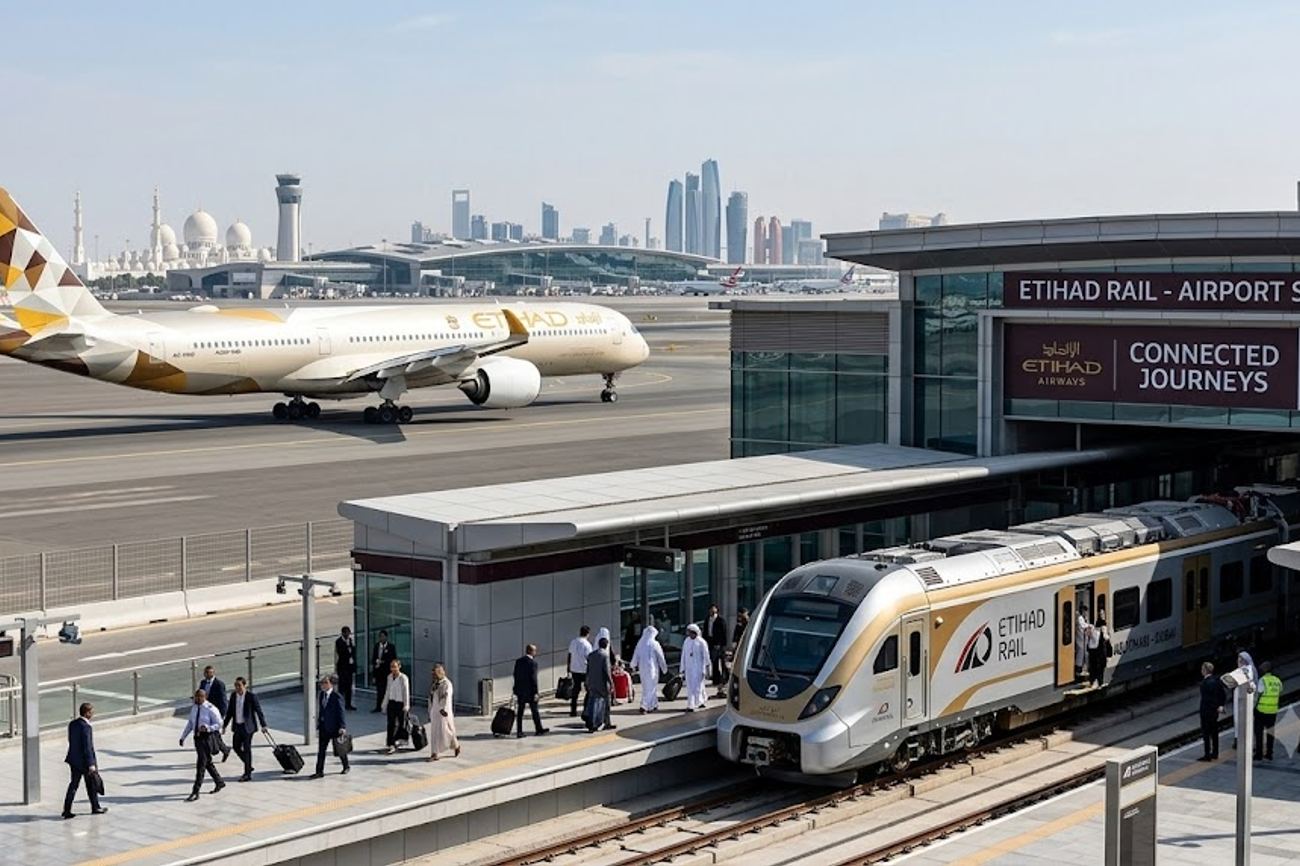
Image generated by AI
title: Beyond the Terminal: The UAE's New Air-Rail Era description: A deep dive into the integration of Etihad Airways and Etihad Rail, transforming how travelers navigate Abu Dhabi and the wider Emirates.
Most travelers arriving in Abu Dhabi treat the city as a stopover or a hub for a few specific landmarks, but a new structural shift is about to turn the entire UAE into a walkable, rail-accessible circuit. For the first time, the friction between landing at a global gateway and reaching the distant corners of the Emirates is being systematically removed through a strategic alliance between Etihad Airways and Etihad Rail.
The End of the Rental Car Monopoly
For decades, the default experience for any visitor landing at Zayed International Airport was a choice between an expensive taxi or the daunting task of navigating a rental car through the UAE's high-speed highway systems. That paradigm is shifting. A new Memorandum of Understanding (MoU) between Etihad Airways and Etihad Rail is designing a multimodal ecosystem where the transition from a long-haul flight to a domestic train is nearly invisible.
The centerpiece of this evolution is the targeted connection between Zayed International Airport and the Mohammed Bin Zayed City Passenger Station. Rather than leaving passengers to figure out the "last mile" of their journey, the two entities are evaluating dedicated shuttle services. This means the logistical gap that previously existed between the tarmac and the tracks is closing. For the seasoned nomad, this represents a move toward a "single-ticket" philosophy, where the journey is viewed as one continuous flow rather than a series of fragmented bookings.
This isn't just about convenience; it is a calculated move to decentralize UAE tourism. By streamlining the path from the airport to the rail network, the government is encouraging visitors to venture beyond the luxury hotels of the capital and explore the diverse regions of the country without the stress of road travel.
What Makes the UAE Transit Shift Different
Unlike many European rail systems that grew organically over centuries, the UAE is building a futuristic, integrated network from the top down. The ambition here is a fully synchronized booking experience. The partnership is exploring integrated travel solutions that would allow a traveler to book their international flight and their onward rail connection in a single transaction.
This level of integration is rare. Usually, aviation and rail operate in silos, leaving the passenger to act as the bridge between the two. By merging these services, the UAE is positioning itself as a leader in "mobility as a service." The goal is to create a seamless digital thread from the moment a ticket is purchased in London or New York to the moment the passenger steps off a train in a different emirate.
Furthermore, the focus is extending into the stations themselves. The plan includes introducing passenger-focused services at railway hubs to ensure that the transition between modes of transport feels like a premium extension of the airport lounge experience, rather than a utilitarian waiting room. This ensures that the high standards of hospitality found at Visit Abu Dhabi are maintained throughout the entire transit chain.
Visitor Insider Tips
To make the most of the evolving transport landscape in the UAE, you need to look beyond the official brochures.
Timing Your Transit If you are planning a multi-city trip, always schedule your rail transfers for mid-morning. The UAE's heat can be oppressive, and while the stations are climate-controlled, the short walks between shuttles and platforms are most bearable before 11:00 AM.
The "Last Mile" Strategy While the Etihad Rail network connects major hubs, the "last mile" to specific cultural sites often requires local knowledge. In Abu Dhabi, utilize the integrated taxi apps rather than hailing cars on the street, as this provides a digital paper trail and fixed pricing.
Etiquette and Norms When using the new rail services, remember that the UAE is a conservative society. While the trains are modern and international, dressing modestly—covering shoulders and knees—is appreciated and often required when exiting the station into local neighborhoods.
Regional Specialties to Seek Once the rail makes it easier to leave the city center, head toward the inland regions to find authentic Emirati hospitality. Look for "Majlis" style cafes where you can try Gahwa (Arabic coffee) and dates, a ritual of welcome that is far more authentic than the luxury hotel versions.
Base Your Stay For those prioritizing the new air-rail connectivity, look for accommodations near Mohammed Bin Zayed City. This puts you at the nexus of the new transport link, reducing your commute to both the airport and the national rail lines.
Cultural and Environmental Context
The push toward rail integration is not merely a luxury for tourists; it is a core component of the UAE's environmental strategy. The country has long been dependent on road transport, leading to high carbon emissions per capita. By shifting the movement of people from cars to electricity-supported rail, the UAE is attempting to decouple its economic growth from its carbon footprint.
There is also a significant cultural dimension to this. Rail travel encourages "slow tourism." Instead of rushing between the Burj Khalifa and the Sheikh Zayed Grand Mosque in a private car, rail encourages visitors to see the transition of the land—from the coastal urbanity of Abu Dhabi to the rolling dunes and mountain foothills of the interior.
This shift also supports the preservation of heritage sites. By controlling the flow of tourists through designated rail hubs rather than allowing unrestricted car access to fragile desert ecosystems or ancient villages, the UAE can better manage the impact of tourism on its natural and cultural assets. This aligns with the broader goals of UNESCO World Heritage regarding the sustainable management of cultural landscapes.
FAQ: Visiting UAE 2025
What is the best time to visit the UAE via the new rail links? The window between November and March is ideal. The weather is mild, making the transition between the airport, rail stations, and outdoor attractions comfortable.
Do I need a visa to travel between emirates via rail? If you have a valid entry visa for the UAE, you can travel freely between emirates. The rail system operates domestically, so no additional permits are required for internal movement.
How do I get from Zayed International Airport to the rail network? Currently, passengers use separate transport. However, the new partnership is introducing dedicated shuttle services to the Mohammed Bin Zayed City Passenger Station to simplify this transfer.
Is the rail system safe for solo travelers? Yes, the UAE is consistently ranked as one of the safest destinations globally. The new rail infrastructure is designed with high security and passenger safety as primary priorities.
Stop treating the UAE as a series of destinations and start seeing it as one connected journey.
#AbuDhabiTravel2025 #EtihadRail #UAEMultimodalTransit #ZayedInternationalAirport #EmiratesTravelGuide
Related Travel Guides
- Northern Railway Strengthens Festival Connectivity With New Special Trains Linking Punjab and Eastern India
- Assam Completes Full Rail Electrification Drive to Deliver Smarter and More Efficient Train Services
- United States Unveils Colorado Mountain Travel Revolution With Proposed High Speed Train Reaching 90 Miles Per Hour
Disclaimer
This article is for informational and educational purposes only. It does not constitute legal, financial, or professional advice. While we strive to provide accurate and up-to-date information, travel policies, regulations, and conditions change rapidly. Always verify information with official sources before making travel decisions. Nomad Lawyer makes no representations about the accuracy, reliability, completeness, or suitability of the information provided. Readers should consult qualified professionals for advice specific to their circumstances. The views expressed in this article are those of the author and do not necessarily reflect the views of Nomad Lawyer.
Kunal K Choudhary
Co-Founder & Contributor
A passionate traveller and tech enthusiast. Kunal contributes to the vision and growth of Nomad Lawyer, bringing fresh perspectives and driving the community forward.
Learn more about our team →