
Ethiopia Expands Community-Led Wildlife Conservation and Sustainable Tourism
Ethiopia Expands Community-Led Wildlife Conservation and Sustainable Tourism

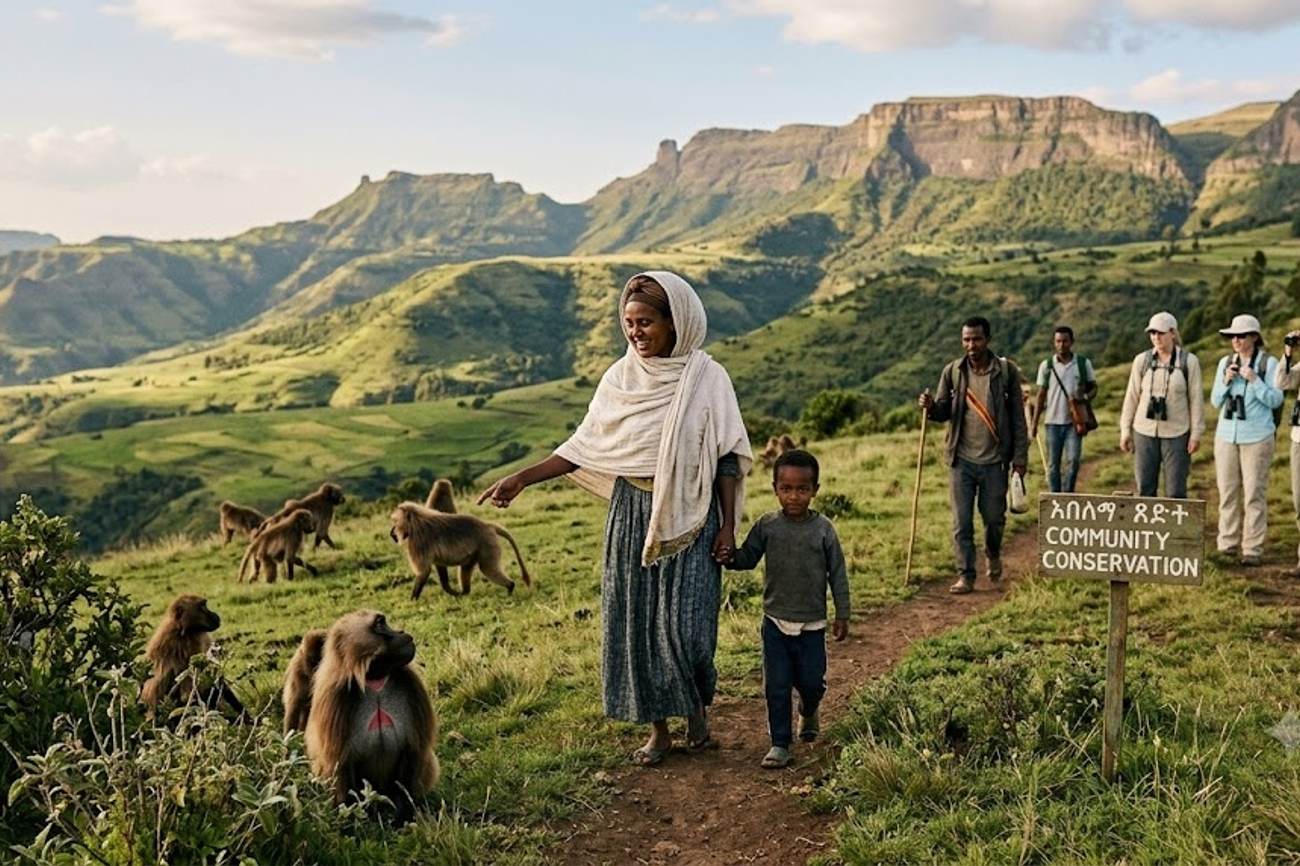
Image generated by AI
Ethiopia’s reforestation efforts have scaled from an initial 2019 launch to the planting of 8 billion seedlings in 2025 alone—a trajectory that signals a massive shift toward state-led ecological restoration. This aggressive expansion of the Green Legacy project now converges with a new, seven-year institutional framework designed to pivot wildlife management from a top-down government mandate to a community-integrated model. By aligning biodiversity protection with local economic incentives, Ethiopia is attempting to stabilize its endemic species populations while diversifying its tourism product beyond traditional safari circuits.
The PICWLSDE Framework in Numbers
On 26 August 2026, the Ethiopian Wildlife Conservation Authority (EWCA), the Ethiopian Biodiversity Institute, and the United Nations Development Programme (UNDP) formally initiated the Promoting Integrated Conservation of Wildlife and Landscapes for Sustainable Development of Ethiopia (PICWLSDE) project. This is not a short-term pilot but a strategic seven-year commitment running from 2026 through 2033.
The financial backing for this initiative is provided through the Global Environment Facility, indicating an international confidence in Ethiopia's ability to manage complex ecological zones. The project focuses on four primary data-driven objectives:
- Strengthening the protection of wildlife populations.
- The systematic restoration of degraded ecosystems.
- The aggressive mitigation of illegal wildlife trafficking.
- The implementation of sustainable landscape management protocols.
The scale of Ethiopia's biodiversity assets provides the baseline for this project. The EWCA currently tracks 36 endemic mammal species, a figure that places Ethiopia as a critical global biodiversity hotspot. This portfolio includes high-value tourism assets such as the Walia ibex, the Ethiopian wolf, the mountain nyala, Swayne’s hartebeest, and the gelada. The geographical range of these assets is extreme, spanning from the Danakil Depression (more than 100 metres below sea level) to highland peaks exceeding 4,500 metres.
Comparative Conservation Benchmarks
The transition toward community-based conservation is a shift from the "fortress conservation" model—where parks are isolated from human activity—to a shared-governance model. This is evidenced by the existing success of the Guassa Community Conservation Area, which operates as a functional peer to the Simien Mountains National Park in protecting the endemic gelada.
When comparing the broad environmental goals of the Green Legacy initiative against the specific wildlife goals of the PICWLSDE, a clear distinction in scale and intent emerges. While Green Legacy focuses on macro-environmental metrics (tree counts), the PICWLSDE focuses on species-specific survival and community resilience.
| Metric | Green Legacy Initiative (2019-Present) | PICWLSDE Project (2026-2033) |
|---|---|---|
| Primary Goal | Ecosystem restoration & deforestation combat | Integrated wildlife & landscape conservation |
| Key 2025 Data | 8 billion seedlings planted | Project launch (August 2026) |
| Future Target | 7.5 billion seedlings (current) / 50 billion (total) | 7-year implementation cycle |
| Management Style | Mass mobilization/State-led | Community-integrated/UNDP supported |
| Funding Source | Government of Ethiopia | Global Environment Facility |
| Primary Asset | Forest coverage & soil stability | 36 endemic mammal species |
This shift reflects a broader trend seen in UNWTO reports regarding sustainable tourism, where the economic viability of a destination is increasingly tied to the "leakage" rate—the amount of tourism revenue that leaves the local community. By integrating local guides and accommodation into the PICWLSDE framework, Ethiopia aims to reduce this leakage.
What This Means for Travelers
The institutionalization of community-led conservation will fundamentally alter the visitor experience in Ethiopia's highland and lowland regions. Travelers should expect a transition from standardized park tours to more nuanced, community-guided interpretations of the landscape.
If you are planning a visit to the Simien or Bale Mountains between 2026 and 2030, the following data-driven shifts will impact your booking strategy:
- Diversification of Accommodation: The move toward community resilience means an increase in locally operated lodges and homestays. Travelers seeking authentic cultural immersion should look for EWCA-certified community stays rather than relying solely on large-scale hotel chains.
- Guidance Requirements: As the PICWLSDE emphasizes local participation, the role of the community guide will become more central. Booking these services directly through local cooperatives in areas like Guassa will likely become the primary way to access restricted biodiversity zones.
- Seasonality and Access: With the focus on "sustainable landscape management," expect more stringent regulations on visitor numbers in fragile zones to prevent degradation. Early booking (3-6 months in advance) for high-season visits to the Walia ibex habitats in the Simien Mountains is highly recommended to avoid capacity caps.
- New Circuit Opportunities: The emphasis on lowland conservation suggests that new, sustainable tourism products will emerge in the regions between the highlands and the Danakil Depression. These will likely be focused on pastoralist cultures and wildlife movement.
Projections for Ethiopia's Ecological Tourism
Based on the current trajectory of the Green Legacy project and the launch of the PICWLSDE, Ethiopia is positioning itself as a leader in "Restorative Tourism." This is a step beyond sustainable tourism; it is the practice of ensuring the traveler's presence actively contributes to the restoration of the environment.
The projection for the 2026-2033 period suggests a move toward a "Conservation Credit" or "Community Fee" model. As IATA and other global bodies push for greener travel, Ethiopia may implement a system where a percentage of the tourism spend is directly tracked and allocated to the restoration of the 50 billion seedling goal or the protection of the 36 endemic mammal species.
Furthermore, the integration of the UNDP ensures that Ethiopia's conservation metrics will be aligned with international standards. This will likely lead to an increase in high-net-worth "eco-philanthropists" visiting the country, which will drive up the quality of luxury sustainable infrastructure in remote areas. The synergy between the Ministry of Agriculture's reforestation targets and the EWCA's wildlife goals creates a holistic "Green Corridor" that could eventually rival the established wildlife circuits of East Africa.
FAQ: Ethiopia Conservation Trends 2026
Will park entry fees increase under the new program? While not explicitly stated, the shift toward community-funded conservation often involves "conservation fees" that go directly to local residents. Travelers should budget for potential increases in local levies to support community-led stewardship.
Is it better to visit national parks or community conservation areas? Both offer value. National parks like Simien provide scale and iconic species (Walia ibex), while community areas like Guassa offer more intimate, culturally integrated experiences and direct support for local livelihoods.
Which airlines are expanding routes to support this nature tourism? Expansion typically follows the growth of regional hubs. While specific flight numbers aren't cited, the increase in international funding via the Global Environment Facility usually correlates with increased diplomatic and commercial air traffic into Addis Ababa.
Are the 87 new biodiversity zones open for tourism? No. The report clarifies that claims regarding 87 newly identified zones for ecotourism on 18 September 2026 could not be validated by the EWCA. Travelers should rely on official EWCA press releases for new destination openings.
The intersection of mass reforestation and community-led wildlife protection is transforming Ethiopia from a traditional destination into a living laboratory for restorative travel.
#EthiopiaBiodiversity2026 #EWCA_PICWLSDE #EndemicSpeciesConservation #GreenLegacyMetrics #CommunityBasedTourismEthiopia #GlobalEnvironmentFacility
Related Travel Guides
- San Francisco Tourism Faces a 2027 Test as Visitor Growth Outpaces Its Convention Calendar
- France and Spain Stand Alongside Major Global Destinations as Tourist Spending by Country Exposes the Biggest Visitor Wallets
- China’s Meizhou Island Creates A New Tourism Future By Turning Mazu Heritage Into A Complete Island Escape
Disclaimer
This article is for informational and educational purposes only. It does not constitute legal, financial, or professional advice. While we strive to provide accurate and up-to-date information, travel policies, regulations, and conditions change rapidly. Always verify information with official sources before making travel decisions. Nomad Lawyer makes no representations about the accuracy, reliability, completeness, or suitability of the information provided. Readers should consult qualified professionals for advice specific to their circumstances. The views expressed in this article are those of the author and do not necessarily reflect the views of Nomad Lawyer.
Preeti Gunjan
Contributor & Community Manager
A passionate traveller and community builder. Preeti helps grow the Nomad Lawyer community, fostering engagement and bringing the reader experience to life.
Learn more about our team →