
Epic Mountain Road Trips Across North America: 5 Iconic Routes Beyond New Mexico

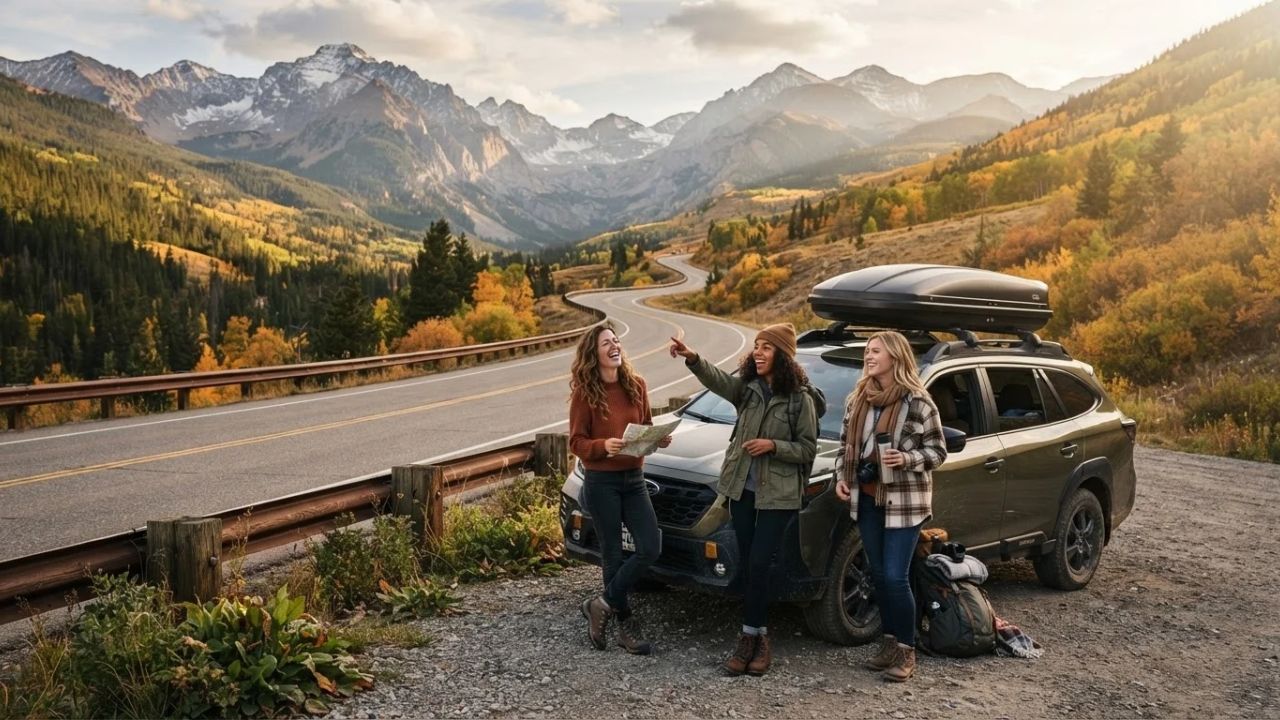
With the Blue Ridge Parkway drawing 16,533,753 recreation visits and Yellowstone logging over 86.89 million visitor hours in 2025, North America's mountain corridors are redefining experiential overland travel. From New Mexico's golden aspen loops to the glaciated peaks of the Canadian Rockies and desert coasts of Baja California Sur, independent road trippers are prioritizing slow, high-elevation journeys over rapid transit.
The Overland Trend Revealed: The Rise of Multi-Day Mountain Corridors
Across North America, travelers are trading high-speed interstate driving for deliberate, multi-day mountain journeys. While New Mexico's Enchanted Circle Scenic Byway has long drawn admirers of high-desert peaks and autumn foliage around Taos and Red River, travelers are increasingly pairing that circuit with five other distinct overland journeys across the United States, Canada, and Mexico. These corridors connect protected wilderness reserves, Indigenous heritage centers, and mountain gateway towns that reward slow exploration.
Driving through high-altitude corridors demands intentional pacing. Rather than rushing between distant vista points, modern road trippers structure itineraries around sunrise wildlife movements, local farmers markets, and historic preservation districts. Whether tracking geothermal thermal basins or skirting granite escarpments, these five classic routes offer an immersive cross-section of the continent's topography.
FIVE ICONIC NORTH AMERICAN MOUNTAIN ROAD TRIPS AT A GLANCE
| Entity / Facility | Delays | Cancellations | Details |
|---|---|---|---|
| Destination Route | Region / Country | Suggested Window | Key Terrain |
| Blue Ridge Parkway | VA & NC, United States | 4 to 6 Days | Appalachian Crest |
| Yellowstone Grand Loop | WY, MT & ID, USA | 4 to 7 Days | Geothermal Basin |
| Grand Canyon Route | Arizona, United States | 3 to 5 Days | Colorado Plateau |
| Icefields Parkway | Alberta, Canada | 3 to 5 Days | Canadian Rockies |
| Baja California Sur Loop | BCS, Mexico | 5 to 7 Days | Desert & Sea |
Route 1: Blue Ridge Parkway, Virginia and North Carolina
Stretching approximately 469 miles along the spine of the southern Appalachian Mountains, the Blue Ridge Parkway represents one of the most celebrated scenic byways maintained by the National Park Service (NPS). Engineered specifically for leisurely motoring, the parkway links Shenandoah National Park in Virginia with Great Smoky Mountains National Park in North Carolina, bypassing commercial billboards and stoplights in favor of unbroken mountain ridges.
A comfortable drive requires four to six days. Basing yourself in Asheville provides an ideal launchpad to explore western North Carolina, including Mount Mitchell (the highest peak east of the Mississippi River), Craggy Gardens, Linville Falls, and the Blue Ridge Music Center near Galax, Virginia. Autumn turns the hardwood canopy into fiery amber and scarlet, making late September and October peak foliage windows.
Culinary traditions along the ridge are deeply rooted in Appalachian heritage. Drivers can stop at roadside smokehouses and country stores for slow-cooked Southern barbecue, stone-ground cornmeal biscuits, mountain brook trout, and heirloom apple ciders. Accommodations range from NPS-maintained campgrounds like Julian Price Park to heritage cabins and boutique inns in surrounding mountain hamlets.
Official NPS data demonstrates sustained public affection for the parkway. In 2021, the route recorded 15,948,148 recreation visits (15.95 million), followed by 15,711,004 (15.71 million) in 2022, and 16,667,164 (16.67 million) in 2023. Visitor volume reached approximately 16.7 million in 2024. In 2025, the parkway tallied 17.55 million total visits, encompassing 16,533,753 recreation visits. The NPS reported that visitor spending generated an estimated $1.5 billion in local gateway economies in 2024, sustaining 15,700 regional jobs.
BLUE RIDGE PARKWAY FIVE-YEAR RECREATION VISITATION
| Category / Entity | Details / Impact |
|---|---|
| Year | Official NPS Recreation Visits |
| 2021 | 15,948,148 |
| 2022 | 15,711,004 |
| 2023 | 16,667,164 |
| 2024 | Approximately 16,700,000 (~16.7m) |
| 2025 | 16,533,753 (out of 17.55 million total visits) |
Route 2: Yellowstone Grand Loop, Wyoming and Montana
Contrasting sharply with the tree-lined ridges of the East Coast, the Yellowstone Grand Loop navigates a vast volcanic plateau packed with active geothermal wonders, deep canyons, alpine lakes, and teeming wildlife sanctuaries. The figure-eight roadway spans upper and lower loops, demanding four to seven days to experience responsibly without road fatigue.
Key waypoints include the eruptive rhythm of Old Faithful, the chromatic rings of Grand Prismatic Spring, the expansive waters of Yellowstone Lake, the dramatic terraces of Mammoth Hot Springs, and the wildlife-dense river plains of Hayden Valley and Lamar Valley. Early morning and dusk provide prime viewing for free-roaming bison herds, grizzly bears, wolves, and elk.
NPS wildlife regulations strictly mandate maintaining safe viewing distances: at least 100 yards (91 meters) from bears and wolves, and 25 yards (23 meters) from bison, elk, and other animals. Approaching wildlife is illegal and hazardous; roadside animal jams require drivers to pull completely off travel lanes onto designated paved turnouts.
Dining inside the park ranges from historic dining rooms at Lake Yellowstone Hotel to casual grills at Canyon Village. Gateway communities—West Yellowstone and Gardiner in Montana, alongside Cody and Jackson in Wyoming—offer Western barbecue, bison chili, elk steaks, and locally sourced huckleberry treats. Lodging requires reservations months ahead, whether booking historic park lodges or mountain cabins in gateway towns.
Yellowstone recorded 4,860,242 visits in 2021, its benchmark year in recent records. Catastrophic river flooding in June 2022 severed northern access roads, causing visitation to drop to 3,290,242. The park staged an impressive recovery: visitation rebounded to 4,501,382 in 2023, reached 4,744,353 in 2024, and hit 4,762,988 in 2025. In 2025 alone, the park documented more than 86.89 million visitor hours and approximately 1.24 million overnight stays.
YELLOWSTONE NATIONAL PARK FIVE-YEAR VISITATION
| Category / Entity | Details / Impact |
|---|---|
| Year | Recreation Visits |
| 2021 | 4,860,242 |
| 2022 | 3,290,242 (Impacted by historic June floods) |
| 2023 | 4,501,382 |
| 2024 | 4,744,353 |
| 2025 | 4,762,988 (>86.89 million visitor hours; ~1.24m overnight stays) |
Route 3: Grand Canyon South Rim and the Arizona Plateau
Carved by the Colorado River through billions of years of geological strata, the Grand Canyon provides an unmatched desert mountain plateau road trip. While the North Rim offers remote, seasonal solitude, the South Rim remains open year-round and supports an engaging three-to-five-day driving journey starting from Flagstaff, Williams, or Tusayan.
Key stops along Desert View Drive and Hermit Road include Desert View Watchtower, Mather Point, Yavapai Geology Museum, and Grand Canyon Village. Sunrise and sunset unveil dramatic light shifts across limestone and sandstone buttresses. Beyond rim viewpoints, adventurous travelers explore below-the-rim paths like the Bright Angel Trail, embark on mule descents, or arrange white-water expeditions through the canyon gorge.
For extended southwest itineraries, drivers frequently connect the Grand Canyon with Flagstaff's historic Route 66 architecture, Sedona's red rock canyons, Page's sandstone formations, and the sandstone monoliths of Monument Valley on the Navajo Nation, with onward road access toward Las Vegas.
Park visitation stood at 4,550,921 in 2021, climbing to 4,732,101 in 2022 and 4,733,705 in 2023. Visitor volume crested at 4,919,163 in 2024—the highest total across the five-year window—before moderating to 4,430,653 in 2025. Far from signaling waning interest, the 2025 figures reflected controlled wilderness recreation: the park logged 55,309 backpacking user nights, thousands of mule-trip riders, and more than 104,000 non-commercial Colorado River user days on the challenging Lees Ferry-to-Diamond Creek river section.
GRAND CANYON NATIONAL PARK FIVE-YEAR VISITATION
| Category / Entity | Details / Impact |
|---|---|
| Year | Recreation Visits |
| 2021 | 4,550,921 |
| 2022 | 4,732,101 |
| 2023 | 4,733,705 |
| 2024 | 4,919,163 (Peak of the five-year evaluation period) |
| 2025 | 4,430,653 (55,309 backcountry nights; >104,000 river user days) |
Route 4: Icefields Parkway and Jasper, Canadian Rockies
Cutting through the heart of Alberta's Canadian Rocky Mountain Parks UNESCO World Heritage site, Highway 93 North—known globally as the Icefields Parkway—links Lake Louise in Banff National Park with the alpine township of Jasper. Spanning 232 kilometers (144 miles), this route passes hanging glaciers, turquoise glacial lakes, and sheer limestone peaks.
Although travelers can technically drive the highway in three hours, rushing misses the entire point of the Rockies. Allocating three to five days allows deep exploration of natural wonders: Bow Lake, the electric turquoise waters of Peyto Lake, the ancient ice mass of the Columbia Icefield (Athabasca Glacier), and the thundering roar of Athabasca Falls. North of the parkway, Jasper National Park offers tranquil excursions to Maligne Canyon, Medicine Lake, and boat tours across Maligne Lake toward Spirit Island.
Parks Canada maintains vigilant oversight of mountain safety along the corridor, managing seasonal avalanche paths, high-altitude snowstorms, and wildlife corridors where bighorn sheep, mountain goats, elk, and black bears frequent highway shoulders. Local dining in Banff, Lake Louise, and Jasper highlights Canadian culinary traditions: Alberta AAA beef, wild Pacific salmon, bison burgers, Saskatoon berry pies, and craft beers brewed with glacier-fed runoff.
Tourism statistics illustrate both popularity and environmental vulnerability. Jasper recorded approximately 2.11 million (2,110,000) visitors in 2021, rising to 2.41 million (2,410,000) in 2022 and 2.48 million (2,480,000) in 2023. In 2024, a devastating wildfire triggered park closures from late July through mid-October, reducing annual visitation to approximately 1.13 million (1,130,000). Demonstrating mountain resilience, visitor numbers rebounded in 2025 to approximately 2.13 million (2,130,000) as trail networks and local businesses reopened under sustainable rebuilding frameworks.
JASPER NATIONAL PARK ESTIMATED ANNUAL VISITATION
| Category / Entity | Details / Impact |
|---|---|
| Year | Estimated Visitors |
| 2021 | Approximately 2,110,000 (~2.11 million) |
| 2022 | Approximately 2,410,000 (~2.41 million) |
| 2023 | Approximately 2,480,000 (~2.48 million) |
| 2024 | Approximately 1,130,000 (~1.13 million; wildfire closure July-Oct) |
| 2025 | Approximately 2,130,000 (~2.13 million; strong post-fire recovery) |
Route 5: Baja California Sur Coastal Highway, Mexico
For travelers seeking sun-drenched coastal passes and desert mountains, Mexico's Baja California Sur offers an extraordinary driving loop between the cactus-studded Sierra de la Laguna mountain range, the Sea of Cortez, and the Pacific Ocean. A five-to-seven-day overland itinerary links La Paz, Todos Santos, Cabo San Lucas, and San José del Cabo.
La Paz acts as an authentic starting hub, renowned for its seaside Malecón, fresh seafood palapas, and marine excursions to Isla Espíritu Santo. Heading south along Highway 19, the route enters Todos Santos, a designated Pueblo Mágico celebrated for its adobe art galleries, farm-to-table dining, and historic sugar cane heritage. At the peninsula's southern tip, Cabo San Lucas provides dramatic granite rock arches at Land's End, while neighboring San José del Cabo features weekly art walks, colonial architecture, and quiet courtyard dining.
Gastronomy celebrates regional Mexican coastal cooking: beer-battered Baja fish tacos, chocolate clams from Loreto, fresh ceviche, grilled red snapper, and damiana-infused spirits. Accommodations range from seaside boutique guesthouses in Todos Santos to five-star eco-resorts across Los Cabos.
State tourism ministry figures underscore the scale of the region's inbound travel. Air passenger arrivals stood at approximately 3.28 million in 2021 (derived from 2022 arrivals and a 25.4% annual jump). Arrivals expanded to 4.116 million in 2022, surpassed 4.5 million in 2023, reached approximately 4.44 million in 2024, and set a new benchmark at 4.523 million air arrivals in 2025. The government reported that 2025 arrivals split 47% domestic and 53% international. Los Cabos International Airport handled 3.765 million passengers, La Paz processed 668,800, and Loreto welcomed approximately 89,600. Across the full 2021–2025 cycle, Baja California Sur processed 20.9 million air passengers, serving as the gateway for regional road trips.
+-----------------------------------------------------------------------------------------+
|                  BAJA CALIFORNIA SUR AIR PASSENGER ARRIVALS (2021–2025)                 |
+--------------------+--------------------------------------------------------------------+
| Year               | Official / Derived Passenger Arrivals                              |
+--------------------+--------------------------------------------------------------------+
| 2021               | Approximately 3,280,000 (~3.28m; derived from 2022 growth metric)  |
| 2022               | 4,116,000 (4.116 million)                                          |
| 2023               | More than 4,500,000 (>4.5 million)                                 |
| 2024               | Approximately 4,440,000 (~4.44 million)                            |
| 2025               | 4,523,000 (4.523m: Los Cabos 3.765m; La Paz 668,800; Loreto ~89,600)|
+--------------------+--------------------------------------------------------------------+
| Total (2021–2025)  | 20.9 million air arrivals across all regional gateways             |
+--------------------+--------------------------------------------------------------------+
*Note: Baja California Sur data measures airport arrival volumes rather than highway checkpoint counts.
Cultural and Environmental Value: Preserving Wilderness and Heritage
For the visitor, the real impact of choosing slow mountain road trips lies in the direct economic support funneled into rural gateway communities. When travelers pause to buy apples in Virginia's apple country, hire local fly-fishing guides in Gardiner, or purchase hand-thrown pottery in Todos Santos, travel spending bypasses multinational chains to sustain regional heritage.
Conservation ethics remain paramount. The National Park Service, Parks Canada, and regional Mexican environmental agencies face immense pressure from high vehicle volumes. Operating under Leave No Trace principles—staying on established trails, packing out refuse, obeying strict wildlife separation rules, and respecting fire bans—protects delicate alpine meadows and desert ecosystems for future generations.
+-----------------------------------------------------------------------------------------+
|                        FIVE-YEAR VISITOR COMPARISON BY DESTINATION                      |
+----------------------+----------+----------+----------+------------+--------------------+
| Destination          | 2021     | 2022     | 2023     | 2024       | 2025               |
+----------------------+----------+----------+----------+------------+--------------------+
| Blue Ridge Parkway   | 15.95m   | 15.71m   | 16.67m   | ~16.7m     | 16.53m (rec visits)|
| Yellowstone NP       | 4.86m    | 3.29m    | 4.50m    | 4.74m      | 4.76m rec visits   |
| Grand Canyon NP      | 4.55m    | 4.73m    | 4.73m    | 4.92m      | 4.43m rec visits   |
| Jasper NP (Canada)   | 2.11m    | 2.41m    | 2.48m    | 1.13m      | 2.13m est visitors |
| Baja California Sur* | ~3.28m   | 4.12m    | >4.5m    | ~4.44m     | 4.52m air arrivals |
+----------------------+----------+----------+----------+------------+--------------------+
*Baja California Sur numbers represent airport passenger arrivals, whereas national parks record on-site recreation visits.
Visitor Insider Tips: Practical Planning for Overland Travel
-
Seasonal Timing:
- September and October: Premier foliage months for the Blue Ridge Parkway and New Mexico's Enchanted Circle. High elevations cool quickly, bringing vivid aspen and maple turns.
- Late Spring to Early Autumn: The reliable driving window for Yellowstone and the Icefields Parkway, avoiding deep winter snow closures on mountain passes.
- November through April: The ideal season for Baja California Sur, when desert temperatures hover in the pleasant mid-70s to low-80s Fahrenheit and gray whales migrate into coastal lagoons.
-
Off-Peak Wildlife Hours: In Yellowstone and Jasper, wildlife viewing peaks during dawn's first light (05:30 to 07:30) and twilight (18:30 to 20:00). Midday heat sends bears and elk into thick timber cover. Always carry binoculars or a spotting scope rather than approaching animals.
-
Fuel and Connectivity Realities: Cellular reception vanishes for dozens of miles across the Icefields Parkway, high Blue Ridge gaps, and rural Baja desert highways. Download offline navigation maps (such as Gaia GPS or Google Offline Maps) and fill vehicle fuel tanks whenever gauges drop below half.
-
Cultural Etiquette & Local Sourcing: In northern New Mexico and Arizona, honor tribal sovereignty by adhering to photography regulations on reservation lands and purchasing authentic turquoise jewelry directly from certified Native silversmiths. In Baja California Sur, tip service staff at small roadside taquerías in Mexican Pesos rather than foreign currency.
Tourism Outlook: Sustainable Road Trips for the Next Generation
As travelers increasingly prioritize deliberate, connection-rich journeys over rushed bucket-list checkoffs, North America's iconic mountain routes offer a time-tested model for sustainable tourism. Moving forward, park agencies are expanding electric vehicle charging stations in gateway towns, introducing timed-entry permits during peak hours, and promoting regional byway dispersal to minimize environmental strain on marquee overlooks. By pairing classic circuits like New Mexico's Enchanted Circle with the Appalachian ridges, geothermal wonders, and coastal desert passes of North America, overland travelers unlock a richer appreciation for the continent's geography.
Related Travel Guides
Disclaimer
This article is for informational and educational purposes only. It does not constitute legal, financial, or professional advice. While we strive to provide accurate and up-to-date information, travel policies, regulations, and conditions change rapidly. Always verify information with official sources before making travel decisions. Nomad Lawyer makes no representations about the accuracy, reliability, completeness, or suitability of the information provided. Readers should consult qualified professionals for advice specific to their circumstances. The views expressed in this article are those of the author and do not necessarily reflect the views of Nomad Lawyer.
Raushan Kumar
Founder & Lead Developer
Full-stack developer with 11+ years of experience and a passionate traveller. Raushan built Nomad Lawyer from the ground up with a vision to create the best travel and law experience on the web.
Learn more about our team →