
Storm Boelo 2026: Flight Cancellations and Airport Chaos Across Ireland and the UK
Storm Boelo triggers red alerts across Ireland and the UK, causing massive flight diversions, runway go-arounds at Dublin Airport, and widespread maritime shutdowns.

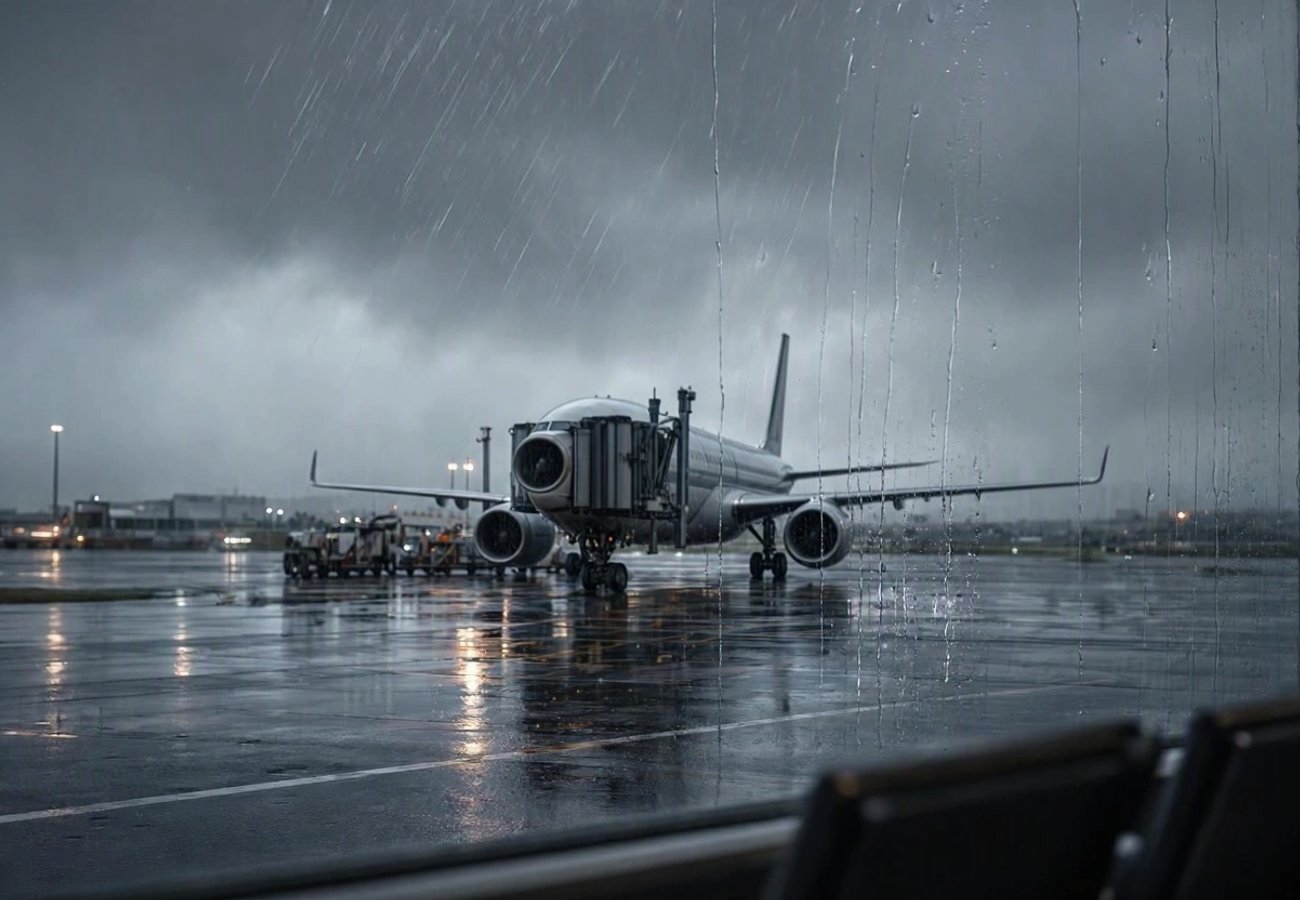
Image generated by AI
Commercial pilots at Dublin Airport were forced into six separate mid-air go-arounds on Saturday as Storm Boelo slammed into Western Europe. These high-stakes maneuvers, where aircraft abort landing and climb back to safety, highlight the extreme volatility of the current North Atlantic weather system.
The Anatomy of Storm Boelo's Aviation Chaos
Storm Boelo is not a typical localized squall; it is an aggressive frontal depression fueled by a sharp jet stream gradient. As it migrated toward the British Isles, it created a dangerous geometric mismatch: gale-force winds blowing perpendicularly to major airport runways. This creates severe low-altitude wind shear, a condition that can destabilize a plane's airspeed and glide slope in seconds during the final approach.
At Dublin Airport, the situation reached a tipping point by 4:00 PM on Saturday. Airport authorities confirmed 19 total flight cancellations, split between 10 inbound arrivals and 9 outbound departures. While most aircraft that performed go-arounds eventually landed after entering holding stacks to recalculate fuel and wind parameters, one flight was forced to divert to an alternate airfield entirely.
Regional Impact and Infrastructure Breakdown
The storm's footprint has paralyzed transit networks from the Atlantic seaboard to the English Channel. The disruption is not limited to the skies; maritime and rail links have faced similar attrition.
Ireland and Northern Ireland
In the Republic of Ireland, Met Éireann issued Status Yellow and Orange alerts for Dublin and midland counties including Meath, Louth, Westmeath, Longford, Cavan, and Monaghan. Early cancellations hit Aer Lingus flights to Donegal and KLM services to Amsterdam. Meanwhile, in Northern Ireland, the UK Met Office enacted Amber Wind Warnings for County Antrim and Derry/Londonderry. Translink NI was forced to impose speed restrictions on rail lines between Belfast and Derry due to debris on the tracks.
Scotland, England, and Wales
Scotland bore the heaviest blow, with gusts hitting 130 km/h (80 mph) in the Highlands and Western Isles. CalMac suspended nearly all ferry sailings across the Minch and Firth of Clyde, while Network Rail Scotland capped speeds at 50 mph (80 km/h) on highland routes. In England, Manchester and Liverpool John Lennon airports became hubs for diverted traffic, while the M6 and A66 corridors saw bottlenecks caused by overturned freight trailers. In Wales, the Port of Holyhead shuttered, halting all ferry connections to Dublin and creating massive cargo queues on the A55.
Storm Boelo Operational Data
| Region | Peak Wind Speed | Primary Alert Level | Key Transit Impact |
|---|---|---|---|
| Scotland | 130 km/h (80 mph) | Deep Amber | CalMac Ferries suspended; Rail speed limits |
| Ireland | 115 km/h (70 mph) | Yellow/Orange | 19 Dublin Airport cancellations; Ferry halts |
| Northern Ireland | 115 km/h (70 mph) | Amber | Belfast airport adjustments; Power outages |
| England | Variable | Yellow | M6/A66 bottlenecks; Diversion congestion |
| Wales | Variable | Coastal Alert | Holyhead Port shutdown; Rail safety halts |
Visitor Insider Tips
If you are currently caught in the Storm Boelo disruption or planning a trip to the region, follow these local protocols:
- Airport Strategy: If your flight is diverted or cancelled at Dublin or Manchester, do not wait in the main customer service line. Use the airline's mobile app immediately to rebook; digital queues move faster than physical ones during weather crises.
- Transport Alternatives: Avoid high-sided vehicles on coastal motorways in Ireland and Wales. If rail is suspended, be wary of regional bus services, as they are often the first to be cancelled due to fallen trees.
- Accommodation: If stranded in Dublin or Belfast, look for hotels in the city centers rather than airport hotels, which fill up within minutes of a mass cancellation.
- Local Etiquette: During "Red Alert" conditions, locals are advised to stay indoors. Avoid venturing out for "storm chasing" photos, as emergency services are stretched thin and local resentment grows when tourists block emergency access roads.
Cultural and Environmental Context
The frequency of these "Atlantic Tempests" is placing an increasing strain on the infrastructure of the British Isles. The reliance on a few key hubs—like Dublin Airport and the Port of Holyhead—creates a systemic fragility where a single weather event can decouple the Republic of Ireland from the UK.
Furthermore, the environmental impact is immediate. In Northern Ireland and Scotland, the storm has caused significant damage to rural power grids and ancient woodland, with fallen trees blocking arterial roads in the Glens of Antrim. This highlights the ongoing challenge of maintaining aging rural infrastructure against the backdrop of increasingly volatile North Atlantic weather patterns.
FAQ: Visiting Ireland and the UK during Storm Season
What is the best time to avoid these storms? While weather is unpredictable, the peak window for severe Atlantic depressions is typically between October and March. For stable travel, the summer months (June to August) offer the lowest risk of major aviation shutdowns.
How do I track flight status in real-time during a storm? Avoid relying solely on airport screens. Follow the official X (Twitter) accounts of the Dublin Airport Authority (DAA) and your specific airline for the fastest updates on diversions and cancellations.
Is it safe to travel by ferry during a Yellow or Amber alert? Generally, ferry operators like Stena Line or Irish Ferries will preemptively cancel sailings if wind speeds exceed safety thresholds. Always check the operator's live sailing status before heading to the port.
Do I have rights to compensation for Storm Boelo cancellations? Weather is typically classified as an "extraordinary circumstance," meaning airlines are generally not required to pay cash compensation. However, they are still obligated to provide care (food, hotels) and re-routing.
Keep your passport handy and your patience higher—the Atlantic always has the final say.
Related Travel Guides
Disclaimer
This article is for informational and educational purposes only. It does not constitute legal, financial, or professional advice. While we strive to provide accurate and up-to-date information, travel policies, regulations, and conditions change rapidly. Always verify information with official sources before making travel decisions. Nomad Lawyer makes no representations about the accuracy, reliability, completeness, or suitability of the information provided. Readers should consult qualified professionals for advice specific to their circumstances. The views expressed in this article are those of the author and do not necessarily reflect the views of Nomad Lawyer.
Naina Thakur
Contributor & Travel Specialist
Travel enthusiast and legal writer covering visa regulations, responsible tourism, and cultural journeys across global destinations.
Learn more about our team →