Dubai to Adelaide as Emirates Airbus A350 Elevates Passenger Comfort and Unlocks South Australia's Visitor Economy

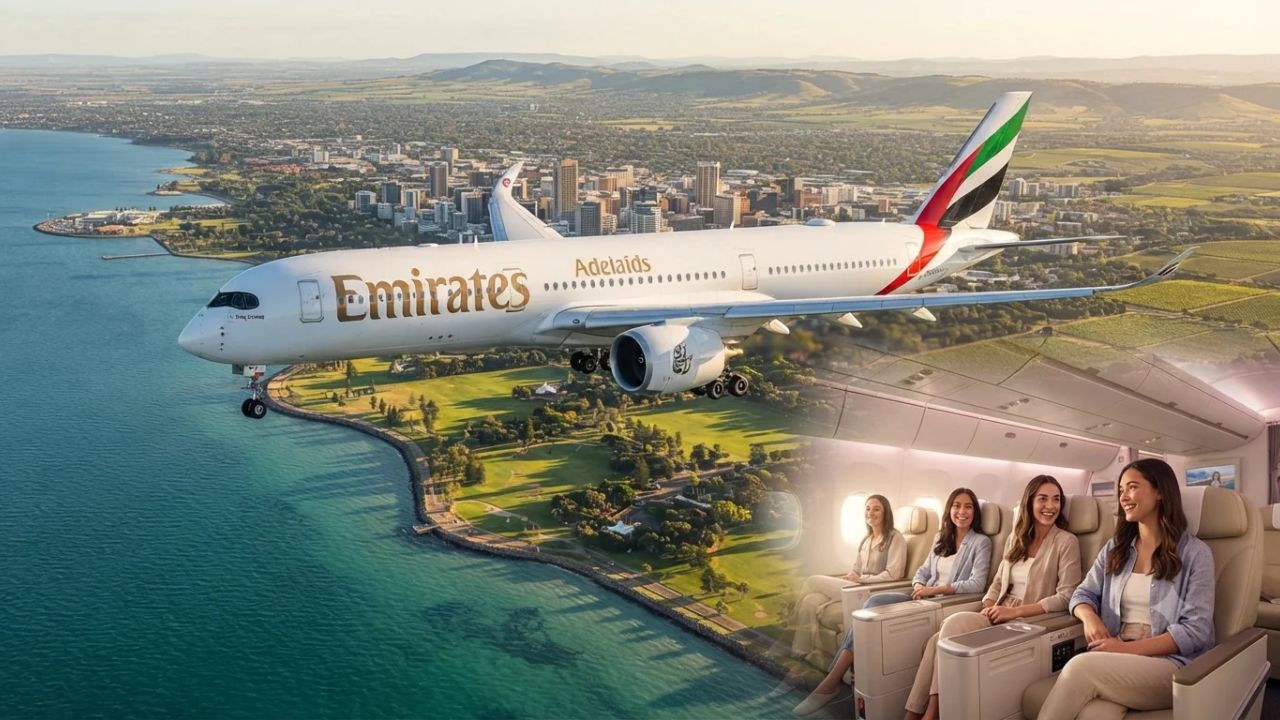
Long-haul aviation between the Middle East and Australia entered a transformative chapter as Emirates introduced its state-of-the-art Airbus A350-900 on the non-stop route connecting Dubai International Airport (DXB) and Adelaide Airport (ADL). Operating flight services EK440 and EK441, the deployment marks the worldwide route debut for Emirates' ultra-long-range A350 fleet, replacing the Boeing 777-200LR previously assigned to the sector. Featuring a purpose-built three-class configuration that debuts the airline's celebrated Premium Economy cabin in the South Australian market, the aircraft provides 298 seats alongside next-generation passenger well-being technologies, including lower cabin altitude, enhanced humidity, and whisper-quiet Rolls-Royce Trent XWB-84 powerplants. The daily international link represents far more than an engineering upgrade; it unlocks an estimated A$160 million combined economic windfall for South Australia, driving A$62 million in annual visitor spending and supporting A$98 million in high-value regional cargo exports.
The arrival of the Airbus A350 in South Australia represents a strategic milestone in the post-pandemic reconstruction of long-haul international networks. Originally restored as a daily link in October 2024, the Dubai–Adelaide corridor serves as a critical bridge between Australia's southern regional capital and over 140 global destinations across Europe, the Middle East, Africa, and North America. By deploying its most technologically sophisticated twin-engine widebody on this specific route, Emirates has confirmed Adelaide's status as a top-tier destination for high-yield leisure, business, and visiting friends and relatives (VFR) travelers. For international visitors, the 13-hour long-haul journey is no longer an endurance challenge but an elevated hospitality experience that smoothly connects into South Australia's iconic wine regions, pristine coastal sanctuaries, and acclaimed culinary ecosystem.
========================================================================================
EMIRATES DUBAI–ADELAIDE AIRBUS A350-900 OPERATIONAL SCORECARD
========================================================================================
Operational Parameter        Service Specification / Metric
----------------------------------------------------------------------------------------
Route Alignment              Dubai International (DXB) <=> Adelaide Airport (ADL)
Outbound Service Number      EK440 (DXB -> ADL) | Departs 02:00 DXB, Arrives 20:50 ADL
Inbound Service Number       EK441 (ADL -> DXB) | Departs 22:50 ADL, Arrives 05:20+1 DXB
Flight Frequency             Daily Non-Stop Service (7 weekly return frequencies)
Aircraft Model               Airbus A350-900
Previous Aircraft Type       Boeing 777-200LR (two-class configuration)
Total Passenger Capacity     298 Passengers across three distinct travel classes
Cabin Class Breakdown        32 Business | 28 Premium Economy | 238 Economy
Engine Powerplants           2x Rolls-Royce Trent XWB-84 Turbofans
Fuel & Emissions Reduction   25% reduction in fuel burn and CO2 emissions vs older types
Belly-Hold Cargo Capacity    Up to 15 tonnes per flight of high-value freight
Total Economic Impact (SA)   ~A$160 Million annually (A$62M Tourism + A$98M Cargo Exports)
South Australia Jobs Created Over 315 Full-Time Equivalent (FTE) tourism-related positions
========================================================================================
Sources: Emirates Airline Fleet Operations & South Australian Tourism Commission (SATC).
========================================================================================
The Strategic Shift: Why Emirates Picked Adelaide for its A350 Global Debut
The decision by Emirates to inaugurate commercial operations of its brand-new Airbus A350-900 fleet on the Adelaide route surprised industry observers who anticipated initial deployments on dense European trunk routes like London Heathrow, Frankfurt, or Paris. However, fleet planners recognized that the Dubai–Adelaide market presented an ideal alignment of stage length, market yield, payload demands, and passenger profile.
Adelaide Airport occupies a unique geographic position in Australia’s international aviation landscape. Situated along the southern coast, it represents a substantial 13-hour non-stop flight from Dubai, covering roughly 11,000 kilometers (5,940 nautical miles). Operating the sector efficiently requires an aircraft with exceptional payload-range performance, capable of carrying a full complement of passengers alongside heavy belly-hold freight against seasonal headwinds. The older Boeing 777-200LR, while physically capable of flying the distance, incurred higher seat-mile operating costs and lacked the cabin product differentiation that modern high-yield travelers demand.
By deploying the A350-900 to Adelaide, Emirates achieved three simultaneous objectives:
- Optimized Seat-to-Demand Ratio: With 298 seats, the A350-900 offers the perfect capacity profile for Adelaide, avoiding the excess capacity risks of an Airbus A380 while providing greater premium seating yield than the outgoing Boeing 777.
- First-to-Market Product Advantage: Introducing Premium Economy directly to South Australia established Emirates as the premier long-haul carrier in the market, capturing discerning travelers willing to pay a premium for enhanced personal space without committing to full Business Class fares.
- Operational Fuel Efficiency: The aerodynamic refinements and lightweight carbon-composite construction of the A350 deliver a 25% reduction in fuel consumption compared to the aircraft it replaced, substantially lowering operating expenditures on one of the network's longest stage lengths.
========================================================================================
FLEET COMPARISON: BOEING 777-200LR VS. AIRBUS A350-900 ON THE ADELAIDE ROUTE
========================================================================================
Design Parameter             Boeing 777-200LR (Pre-Upgrade)    Airbus A350-900 (Current Fleet)
----------------------------------------------------------------------------------------
Cabin Configuration          2-Class (Business & Economy)     3-Class (Business, PE, Economy)
Total Passenger Capacity     302 Seats                        298 Seats
Business Class Capacity      38 Lie-Flat Seats (2-2-2)        32 Lie-Flat Suites (1-2-1)
Direct Aisle Access          No (window seats blocked)        Yes (100% direct aisle access)
Premium Economy Cabin        Not Offered                      28 Dedicated Seats (2-3-2)
Premium Economy Seat Pitch   N/A                              39 Inches (19.5-inch width)
Economy Class Seating        264 Seats (3-4-3 layout)         238 Seats (3-3-3 ergonomic layout)
Inflight Entertainment       ice Digital Widescreen           Next-Gen ice with 4K & Bluetooth
Personal Device Charging     Standard USB-A & AC Outlets      High-Speed 60W USB-C & AC Outlets
Effective Cabin Altitude     ~8,000 Feet                      ~6,000 Feet
Air Filtration Standard      Standard HEPA Filtration         Hospital-Grade HEPA (2-3 min renewal)
Acoustic Cabin Noise         Standard Widebody Sound Levels   Quiet Twin-Aisle (Lowest dB in class)
Fuselage Composition         Aluminium Alloys                 Over 50% Carbon-Fibre Composites
Engine Type                  GE90-110B1 Turbofans             Rolls-Royce Trent XWB-84
Fuel Efficiency Differential Baseline 100%                    ~25% Lower Fuel Burn & Carbon
========================================================================================
Inside the Cabin: A Three-Class Sanctuary for Extended Long-Haul Travel
Emirates configured its Airbus A350-900 to deliver a unified, contemporary passenger environment designed to mitigate the physical strains of ultra-long-haul flying. Spanning three separate cabins, the interior features spacious architectural lines, customized mood lighting schemes, expanded overhead bin capacity, and state-of-the-art inflight connectivity.
Business Class: Direct Aisle Access and Ergonomic Privacy
Occupying the forward section of the aircraft, the Business Class cabin features 32 lie-flat seats arranged in a contemporary 1-2-1 layout. This arrangement marks a substantial advancement over the older 2-2-2 configuration on the Boeing 777-200LR, ensuring that every traveler enjoys direct, unobstructed access to the aisle without disturbing adjacent seatmates.
- Seat Architecture: Each seat extends into a fully flat 78-inch sleeping surface, upholstered in soft champagne-toned leather with rich bronze accents inspired by Emirates' flagship Boeing 777 Game Changer suites.
- Personal Space: Individual motorized privacy dividers, deep storage bins, personal cocktail tables, and integrated shoe stowage areas ensure travelers maintain clutter-free personal environments.
- Dining and Connectivity: Business Class passengers enjoy gourmet multi-course meals served on Royal Doulton fine bone china, paired with rare vintages from the airline's temperature-controlled cellars. Every seat integrates universal AC power, dual high-output USB-C ports, and wireless charging pads.
Premium Economy: The Long-Awaited Middle Ground
The debut of Emirates' dedicated Premium Economy cabin on the Adelaide route fills an essential market void for travelers seeking upgraded comfort without the price tag of Business Class. Situated in a dedicated, intimate cabin forward of the main wings, the 28-seat section is arranged in a generous 2-3-2 configuration.
- Seat Geometry: Offering an expansive 39-inch seat pitch, a 19.5-inch seat width, and an 8-inch recline, the seats cradle passengers in cream leather with intricate diamond-quilted stitching.
- Calf and Leg Rests: Six-way adjustable headrests, calf rests that elevate smoothly, and extendable footrests allow passengers to achieve a restful zero-gravity resting posture.
- Enhanced Hospitality: Premium Economy guests receive a dedicated welcome beverage service, upgraded dining menus served on porcelain tableware with linen napkins, generous amenity kits, and plush woven blankets manufactured from recycled materials.
Economy Class: Redefining Main-Cabin Space and Ergonomics
Accommodating 238 passengers in a spacious 3-3-3 arrangement, the Economy Class cabin introduces a noticeably refreshed travel environment. Airbus’s extra-wide fuselage cross-section allows for full 18-inch seat cushions without encroaching on aisle width.
- Seat Ergonomics: The lightweight seats feature adjustable leather headrests that flex vertically and laterally to support restful sleep. Generous legroom and articulated seat-bottom cushions provide contoured lumbar support.
- Visual Warmth: Soft pastel upholstery paired with stylized Ghaf tree motif accents on cabin bulkheads reflects the natural desert vegetation of the United Arab Emirates.
- Personal Convenience: Dual-point USB-C charging ports located directly beneath individual seatback monitors allow passengers to fast-charge personal smartphones, tablets, and laptops throughout the flight.
========================================================================================
CABIN CLASS SPECIFICATIONS SUMMARY: EMIRATES A350-900
========================================================================================
Cabin Tier         Seat Layout  Pitch / Bed Length   Width     Key Distinguishing Feature
----------------------------------------------------------------------------------------
Business Class     1-2-1        78 in (Flat Bed)     21.0 in   100% Direct Aisle Access, Privacy
Premium Economy    2-3-2        39 inches            19.5 in   Deep 8-in Recline, Calf Rest, Wood Trim
Economy Class      3-3-3        32-33 inches         18.0 in   4K HD Screens, USB-C Fast-Charging
========================================================================================
Inflight Entertainment: Next-Generation ice with Bluetooth Audio
Emirates’ award-winning ice (information, communication, entertainment) system receives an extensive hardware and interface upgrade on the A350 fleet. Featuring ultra-responsive capacitive 4K touchscreens across all three classes (ranging from 13.3 inches in Economy to 20 inches in Business Class), the system hosts over 6,500 channels of on-demand movies, international television box sets, live sports channels, podcasts, and audio albums.
Critically, the aircraft incorporates Bluetooth headphone pairing across every seat in all cabins. Passengers can connect their personal wireless noise-canceling headphones directly to the onboard entertainment system, eliminating tangled wires and awkward headphone adaptors. High-speed satellite Wi-Fi powered by Inmarsat's Global Xpress network ensures travelers can maintain reliable high-bandwidth internet connectivity throughout the transcontinental flight path.
Physiological Flight Science: How Carbon Composites Counter Fatigue
The true comfort differential on a 13-hour long-haul journey is governed by biological factors: atmospheric pressure, relative humidity, acoustic resonance, and lighting cues. The Airbus A350-900 incorporates revolutionary aeronautical engineering that minimizes the physiological degradation commonly known as jet lag.
Lower Cabin Altitude
Conventional commercial aircraft constructed with aluminum fuselages are pressurized to an equivalent altitude of 7,500 to 8,000 feet above sea level. This thin atmosphere reduces oxygen saturation in human blood, contributing to headaches, dry eyes, and acute fatigue.
Because the A350’s airframe is manufactured primarily from advanced carbon-fiber reinforced plastics (CFRP) that do not suffer from metal fatigue or structural corrosion, Airbus engineers pressurized the cabin to an altitude equivalent of 6,000 feet—even when cruising at 41,000 feet. This 25% increase in atmospheric air density enables passengers' lungs to absorb significantly more oxygen, reducing bodily stress and arriving in Adelaide feeling substantially more refreshed.
Dynamic Humidity and Continuous Air Exchange
Aluminum airframes require dehumidifiers to prevent internal condensation from rusting electrical conduits and structural rivets. This often reduces cabin humidity to arid levels under 10%, causing respiratory irritation and rapid dehydration.
The composite fuselage of the A350 allows relative humidity to remain at comfortable levels between 15% and 20%. In addition, hospital-grade High-Efficiency Particulate Air (HEPA) filters combined with advanced air circulation scrub the cabin atmosphere continuously, renewing 100% of the air every two to three minutes while capturing 99.97% of airborne viruses, bacteria, and allergens.
Acoustic Sound Dampening and Circadian Lighting
Powered by ultra-quiet Rolls-Royce Trent XWB engines and wrapped in advanced acoustic acoustic blankets, the A350 cabin registers sound levels below 57 decibels—making it one of the quietest twin-aisle cabins in commercial aviation.
To help travelers manage the shifting time zones between the Middle East (GMT+4) and South Australia (GMT+10:30), the cabin incorporates intelligent full-spectrum LED mood lighting. Controlled by automated circadian software, the system orchestrates gentle color gradients—from warm amber sunrise tones to deep indigo night skies—stimulating the body's natural melatonin production to promote natural sleep rhythms.
========================================================================================
PHYSIOLOGICAL WELLNESS METRICS: AIRBUS A350-900 VS. CONVENTIONAL JETS
========================================================================================
Wellness Parameter           Conventional Jet (Aluminium)    Airbus A350-900 (Composite)
----------------------------------------------------------------------------------------
Effective Cabin Altitude     7,500 – 8,000 Feet              ~6,000 Feet (Higher Blood Oxygen)
Relative Cabin Humidity      Under 10% (Arid)                15% – 20% (Maintains Hydration)
Air Renewal Rate             Every 3 to 4 Minutes            Every 2 to 3 Minutes (Full HEPA)
Internal Sound Level         62 – 68 Decibels                55 – 57 Decibels (Whisper-Quiet)
Circadian Lighting Shifts    Basic On/Off or Fluorescent     16.7M Color Multi-Zone LED Gradients
Airframe Composition         Aluminium Alloys                53% Carbon Composites, 14% Titanium
========================================================================================
Economic Catalyst: Unlocking A$160 Million for South Australia
The resumption and subsequent fleet modernization of Emirates’ daily service between Dubai and Adelaide is not simply an aviation milestone; it is an economic powerhouse for South Australia's commercial ecosystem. The state government and Adelaide Airport Corporation audited the cumulative financial impact, revealing an annual economic contribution of approximately A$160 million.
========================================================================================
SOUTH AUSTRALIA MACROECONOMIC IMPACT BREAKDOWN: EMIRATES A350 SERVICE
========================================================================================
Economic Vector                   Annual Value (AUD)    Primary Beneficiaries
----------------------------------------------------------------------------------------
Visitor Tourism Expenditure       A$62 Million          Hotels, restaurants, regional operators
High-Value Cargo Freight Exports  A$98 Million          Wineries, fisheries, agriculture, tech
Total Combined Economic Windfall  A$160 Million         South Australian macro-economy
Direct & Indirect Employment      315+ FTE Jobs         Aviation ground ops, tour guides, dining
Inbound Passenger Volume          ~108,000 Seats/Year   Statewide visitor economy
Inbound International Visits (SA) 443,000 Visitors      Year ending June 2026 (+2% YoY growth)
Total International Spend in SA   A$1.7 Billion         Year ending June 2026 (+6% YoY growth)
========================================================================================
Data Sources: South Australian Department of Premier and Cabinet & Tourism South Australia, 2026.
========================================================================================
Direct Visitor Economy Stimulus: A$62 Million
Prior to the reinstatement of non-stop international flights, overseas visitors bound for Adelaide were forced to transit via Melbourne, Sydney, or international hubs, adding hours of transit time and leading to high itinerary drop-off rates.
Daily direct services provide more than 108,000 inbound seats annually. The South Australian Government estimated that foreign visitors arriving via the Dubai flight inject A$62 million per year into the local economy, generating significant room revenues for luxury hotels in Adelaide's CBD, stimulating dining revenues across the city's celebrated restaurant quarters, and funneling high-yield international travelers into regional South Australia.
According to Tourism South Australia’s official performance audit for the year ending June 2026:
- International visits to South Australia climbed to 443,000, representing a 2% year-on-year increase.
- Cumulative international visitor spending surged to A$1.7 billion, an impressive 6% expansion.
- High-spending source markets from the United Kingdom, Germany, France, Italy, and the United States exhibited strong preferences for direct one-stop connections through Dubai, bypassing crowded eastern seaboard gateways.
High-Value Freight Corridors: A$98 Million in Regional Exports
While passenger cabins capture public attention, the belly-hold cargo capacity of the Airbus A350-900 plays an equally vital economic role. Operating with up to 15 tonnes of cargo capacity per flight, the aircraft provides South Australian producers with rapid, reliable access to global export markets.
The South Australian Government and Adelaide Airport estimated the annual freight export value supported by the Emirates service at A$98 million.
Key export commodities taking advantage of the daily Dubai air bridge include:
- Premium Chilled Seafood: Southern Bluefin tuna from Port Lincoln, Southern Rock lobster, Coffin Bay oysters, and King George whiting delivered to luxury restaurants in Dubai, London, and Tokyo within 24 to 36 hours of harvest.
- Iconic South Australian Wines: High-end vintages from the Barossa Valley, Eden Valley, and Coonawarra transported under temperature-controlled conditions to distributors in Europe and the Middle East.
- Prime Meats and Dairy: Premium wagyu beef, prime lamb, and artisan cheeses destined for high-end supermarkets and hospitality venues throughout the Gulf Cooperation Council (GCC).
- High-Tech and Biomedical Logistics: Advanced medical devices, precision components, and pharmaceutical shipments originating from Adelaide’s Tonsley Innovation District and BioMed City.
Beyond the Runway: Exploring Adelaide and South Australia's Premier Regions
For international holidaymakers touching down at Adelaide Airport on flight EK440 at 8:50 pm, the city offers one of the most accessible and traveler-friendly arrival experiences in the Southern Hemisphere. Located just 15 minutes by road from the city center, Adelaide eliminates the grueling airport transfers typical of larger global metropolises.
South Australia's distinctive travel appeal combines urban sophistication, world-class gastronomy, and untouched natural wilderness:
========================================================================================
SOUTH AUSTRALIA REGIONAL TRAVEL DESTINATIONS ACCESSIBLE VIA ADELAIDE
========================================================================================
Region / Hub         Transit Time from ADL   Signature Traveler Experiences
----------------------------------------------------------------------------------------
Adelaide CBD         15 Minutes by Road      Adelaide Central Market, Botanic Gardens, AGSA
Penfolds Magill      20 Minutes East         Historic Grange cellars, fine-dining gastronomy
Adelaide Hills       30-45 Minutes Drive     Cool-climate wineries, historic Hahndorf village
Barossa Valley       60 Minutes Northeast    Old-vine Shiraz, Seppeltsfield heritage estates
McLaren Vale         45 Minutes South        d'Arenberg Cube, coastal Grenache, biodynamic wines
Fleurieu Peninsula   60-80 Minutes South     Pristine surf beaches, marine wildlife tours
Kangaroo Island      30 Min Flight / 2hr FerrySeal Bay sea lions, Remarkable Rocks, luxury eco-lodges
Eyre Peninsula       50 Min Flight to PLO    Fresh seafood safaris, cage-diving with white sharks
========================================================================================
Adelaide: The Cultural and Culinary Capital
Adelaide has earned global acclaim for its vibrant dining culture and walkability. Designed on a neat grid surrounded by 760 hectares of lush parklands, the city blends 19th-century sandstone architecture with contemporary creativity:
- Adelaide Central Market: Founded in 1869, this culinary landmark houses over 70 independent traders showcasing fresh artisan cheeses, charcuterie, native Australian botanicals, and farm-fresh produce under one historic roof.
- North Terrace Cultural Boulevard: Home to the Art Gallery of South Australia (AGSA), the South Australian Museum (featuring the world's largest collection of Australian Aboriginal cultural artifacts), and the Adelaide Botanic Garden, home to the architectural Bicentennial Conservatory.
- Adelaide Oval: Renowned as one of the most picturesque sporting stadiums in the world, the ground hosts international cricket tests and Australian Rules football, offering thrilling rooftop climbs with panoramic views extending across the city skyline to the coast.
Penfolds Magill Estate: Heritage Wine at the City's Doorstep
Situated merely 15 minutes east of Adelaide’s city center along the foothills of the Mount Lofty Ranges, Penfolds Magill Estate is one of the world's few urban single-vineyard estates. Established in 1844 by Dr. Christopher and Mary Penfold, this historic site is the birthplace of Penfolds Grange—Australia’s most celebrated wine. Visitors can explore the underground stone cellars, taste rare vintage collections, and dine at the award-winning Magill Estate Restaurant overlooking historic Shiraz vines.
The Barossa Valley: Old Vines and Living Heritage
Located an easy one-hour drive northeast of Adelaide, the Barossa Valley stands as Australia's preeminent wine region. Blessed with continuous European settlement since the 1840s, the Barossa is home to some of the oldest continuously producing Shiraz and Grenache vines on the planet, having survived the phylloxera blight that devastated European vineyards in the late 19th century.
Travelers can visit iconic estates such as Seppeltsfield—where visitors can taste a 100-year-old Single Vintage Tawny from their birth year—alongside boutique cellar doors producing vibrant, modern expressions of Mediterranean grape varieties.
McLaren Vale and the Adelaide Hills
- McLaren Vale: Where rolling vineyard hills meet the white sands of the Gulf St Vincent. Famed for its luscious Grenache and maritime Shiraz, the region also features the avant-garde d'Arenberg Cube, a multi-story architectural marvel featuring sensory tasting rooms, an alternate realities museum, and fine dining.
- Adelaide Hills: Offering cool-climate sanctuaries just 30 minutes from downtown, the Hills specialize in crisp Sauvignon Blanc, sparkling wines, and elegant Pinot Noirs. Visitors frequently explore the German heritage village of Hahndorf, wander through artisan apple orchards, and take in the sweeping vistas from the summit of Mount Lofty.
Kangaroo Island: Nature in its Purest Form
Accessible via a 30-minute regional flight from Adelaide Airport or a scenic drive and vehicle ferry from Cape Jervis, Kangaroo Island is often described as a "zoo without fences." Visitors can encounter wild Australian sea lions basking at Seal Bay Conservation Park, walk beneath the granite formations of Remarkable Rocks in Flinders Chase National Park, and observe kangaroos, koalas, and echidnas thriving in native bushland environments.
Flight Operations and Global Connectivity Guide
Flight timing is critical to the commercial success of the Dubai–Adelaide route. Emirates scheduled flights EK440 and EK441 to integrate smoothly with arrival and departure waves at Dubai International Airport (DXB), maximizing convenient one-stop connections for European and transatlantic travelers.
========================================================================================
CONNECTING THE WORLD: SAMPLE ONE-STOP ITINERARIES TO ADELAIDE VIA DUBAI (DXB)
========================================================================================
Origin City / Hub     Inbound Flight   Layover at DXB   Connecting Leg   Total Travel Time
----------------------------------------------------------------------------------------
London Heathrow (LHR) EK002 (A380)     2 hr 15 min      EK440 (A350)     20 hr 45 min
Frankfurt (FRA)       EK046 (B777)     2 hr 40 min      EK440 (A350)     21 hr 10 min
Paris (CDG)           EK074 (A380)     2 hr 30 min      EK440 (A350)     21 hr 00 min
New York (JFK)        EK202 (A380)     3 hr 10 min      EK440 (A350)     26 hr 50 min
Rome Fiumicino (FCO)  EK098 (B777)     2 hr 05 min      EK440 (A350)     20 hr 30 min
Mumbai (BOM)          EK501 (B777)     3 hr 20 min      EK440 (A350)     17 hr 40 min
Johannesburg (JNB)    EK762 (A380)     2 hr 50 min      EK440 (A350)     22 hr 15 min
========================================================================================
Note: Flight schedules and connection windows subject to seasonal operational variations.
========================================================================================
Outbound Journey: Dubai to Adelaide (EK440)
- Departure from Dubai (DXB): 02:00 local time. This early-morning bank departure allows travelers departing European capitals (London, Paris, Milan, Frankfurt, Amsterdam) on early-evening flights to make efficient two-hour transit connections in Dubai without requiring hotel overnights.
- Arrival in Adelaide (ADL): 20:50 local time on the same calendar day. Passengers clear Australian customs, collect their baggage, and arrive at their downtown Adelaide hotels by 9:45 pm, allowing for a restful full night's sleep to quickly adjust to Australian Central Standard Time (ACST).
Inbound Journey: Adelaide to Dubai (EK441)
- Departure from Adelaide (ADL): 22:50 local time. The late-evening departure allows visitors and business professionals to enjoy a full final day of sightseeing, cellar-door touring, or corporate meetings in Adelaide before proceeding to the airport.
- Arrival in Dubai (DXB): 05:20 local time the following morning. Arriving into Dubai at dawn positions passengers perfectly for Emirates' massive morning departure wave, unlocking effortless connections to over 50 European, African, and Middle Eastern cities with arrivals before midday.
Practical Traveler Planning: Navigating the Dubai–Adelaide Corridor
For travelers preparing to fly the Emirates Airbus A350 between Dubai and Adelaide, proactive planning ensures an optimal journey across international airspace:
========================================================================================
PRACTICAL TRAVELER CHECKLIST: DUBAI–ADELAIDE LONG-HAUL ROUTE
========================================================================================
Travel Vector          Guidance & Recommendations
----------------------------------------------------------------------------------------
Visa & Electronic Entry All non-Australian citizens require an Electronic Travel Authority
                       (ETA Subclass 601) or Visitor Visa (Subclass 600) before departure.
Biosecurity Compliance Australia enforces strict biosecurity laws. Declare all food, plant
                       materials, wine, and animal products on the incoming passenger card.
Baggage Allowances     Generous allowances: Economy (25-35kg), Premium Economy (35kg),
                       Business Class (40kg). Generous limits support wine purchases.
Transit Logistics DXB  Ensure at least 75 to 90 minutes transit time at Dubai International
                       to navigate between terminal concourses comfortably.
Ground Transport ADL   Adelaide Airport offers rideshare pickup zones, official taxi ranks,
                       and direct JetExpress (J1/J2) buses into the Adelaide CBD.
Currency & Banking     Australian Dollar (AUD). Australia is largely cashless; contactless
                       credit and debit cards are universally accepted everywhere.
Climate Consideration  Adelaide features a Mediterranean climate. Summer (Dec–Feb) is warm
                       and dry (25–35°C); Winter (Jun–Aug) is mild and crisp (10–16°C).
========================================================================================
Essential Tips for South Australian Inbound Travelers
- Declare Wine and Gourmet Goods: Australia's Department of Agriculture, Fisheries and Forestry enforces stringent border biosecurity. If you are bringing artisan food or duty-free goods from Europe or the Middle East, always declare them. However, when departing Adelaide, take full advantage of Emirates' generous baggage allowances to safely transport sealed bottles of Barossa Shiraz and Adelaide Hills Chardonnay home.
- Book Premium Economy Early: With only 28 Premium Economy seats available per flight on the A350-900, demand on the Adelaide sector is exceptionally strong. Travelers seeking the additional legroom and upgraded dining should reserve seats several months in advance, especially during the peak European summer and Australian holiday periods.
- Download the Emirates App Before Boarding: Passengers can browse the complete entertainment catalog, curate customized ice playlists on their personal mobile devices, and sync them directly to their seatback monitor upon boarding the aircraft.
Frequently Asked Questions
When did Emirates introduce the Airbus A350 on the Dubai to Adelaide route?
Emirates commenced scheduled commercial operations with its Airbus A350-900 on the Dubai–Adelaide route on 1 December 2025, marking the worldwide route debut for the aircraft type across the airline’s global network.
What are the flight numbers and schedules for the Dubai–Adelaide service?
The daily service operates as flight EK440 from Dubai to Adelaide, departing Dubai International at 02:00 and landing at Adelaide Airport at approximately 20:50 local time. The return flight, EK441, departs Adelaide at 22:50 and arrives in Dubai at 05:20 the following morning.
What aircraft did the Airbus A350 replace on this route?
The Airbus A350-900 replaced the Boeing 777-200LR, which previously operated the non-stop service following the restoration of flights in October 2024.
How many seats and cabin classes are available on the Emirates A350-900?
The aircraft features 298 seats arranged in a three-class configuration: 32 lie-flat seats in Business Class (1-2-1 layout), 28 seats in Premium Economy (2-3-2 layout), and 238 seats in Economy Class (3-3-3 layout).
Is Premium Economy available on the Emirates Adelaide flight?
Yes. The introduction of the Airbus A350 marked the official debut of Emirates’ Premium Economy product in the South Australian market, featuring a 39-inch pitch, 19.5-inch seat width, calf rests, and elevated culinary service.
How does the Airbus A350 reduce traveler fatigue and jet lag?
The A350 incorporates carbon-composite construction, allowing the cabin to be pressurized to a lower altitude of approximately 6,000 feet, which increases oxygen absorption. In addition, higher humidity levels (15–20%), hospital-grade HEPA air renewal every 2–3 minutes, whisper-quiet Rolls-Royce engines, and full-spectrum LED circadian mood lighting minimize bodily fatigue.
What is the economic impact of the Emirates service on South Australia?
The daily service delivers an estimated combined economic benefit of A$160 million annually to South Australia. This includes approximately A$62 million in tourism expenditure, over 315 full-time tourism-related jobs, and A$98 million in annual freight export value.
What high-value freight does Emirates transport from Adelaide to Dubai?
The aircraft carries up to 15 tonnes of cargo per flight, transporting South Australian regional exports such as Port Lincoln Southern Bluefin tuna, rock lobsters, premium beef, artisan cheeses, Barossa Valley wines, and advanced medical equipment to global markets.
Can passengers connect their wireless headphones on the Emirates A350?
Yes. Every seat across Business Class, Premium Economy, and Economy Class features Bluetooth audio pairing, allowing passengers to connect their personal wireless headphones directly to the ice inflight entertainment system.
What wine regions can travelers visit near Adelaide after arriving?
Visitors can easily reach world-renowned wine regions including the Barossa Valley (one hour northeast), McLaren Vale (45 minutes south), the Adelaide Hills (30 minutes east), and historic Penfolds Magill Estate (just 15 minutes from the city center).
Strategic Aviation Outlook: Long-Term Fleet Transformation
The deployment of the Airbus A350-900 to Adelaide is the initial cornerstone of Emirates’ multi-billion-dollar fleet renewal program. With 65 Airbus A350s on order, the Dubai-based carrier is methodically deploying the twin-engine widebody to optimize performance across secondary long-haul markets, mid-sized international hubs, and ultra-long-distance destinations requiring exceptional operational efficiency.
For South Australia, securing the world premiere of Emirates’ A350 network represents an enormous vote of confidence from global aviation leadership. By eliminating the historical friction of domestic transits, lowering carbon emissions by 25%, and providing a modern three-class product that caters to every traveler budget, Emirates has positioned Adelaide as Australia’s most accessible, sustainable, and refined southern gateway. As international travel demand continues to mature, this direct air bridge will ensure that South Australia’s world-class wineries, coastal wilderness, and culinary heritage remain firmly on the itinerary of discerning global travelers for decades to come.
Related Travel Guides
- Hong Kong WinterFest 2026: Central Winter Wonderland, 22-Metre Christmas Tree, and Skyline Light Shows Transform Victoria Harbour
- Panama Luxury Travel Guide: Exclusive Resorts, Historic Casco Antiguo, and Pacific Coastline Sanctuaries
- Seed Bank Tourism: How Tasting Rare, Climate-Resilient Crops Is Reshaping Sustainable Agro-Travel
- Chronobiology Travel: How Light-Spectrum Itineraries and Circadian Science Beat 8-Hour Jet Lag
This article is for informational purposes. Flight routes, passenger regulations, visa rules, and transit advisories are subject to change by airlines and aviation authorities. Readers are advised to verify schedules and travel documentation with relevant carriers and border agencies before departure.
Related Stories
flydubai Resumes Direct Dubai to Skopje Flights: Reconnecting the UAE and North Macedonia with Nonstop Balkan Links
Emirates A380 Flight EK31 Diverts to Frankfurt Due to In-Flight Passenger Medical Emergency