Lufthansa Group Unveils Massive Summer 2027 Network Expansion: 10 New Long-Haul Routes and Transatlantic Rebound

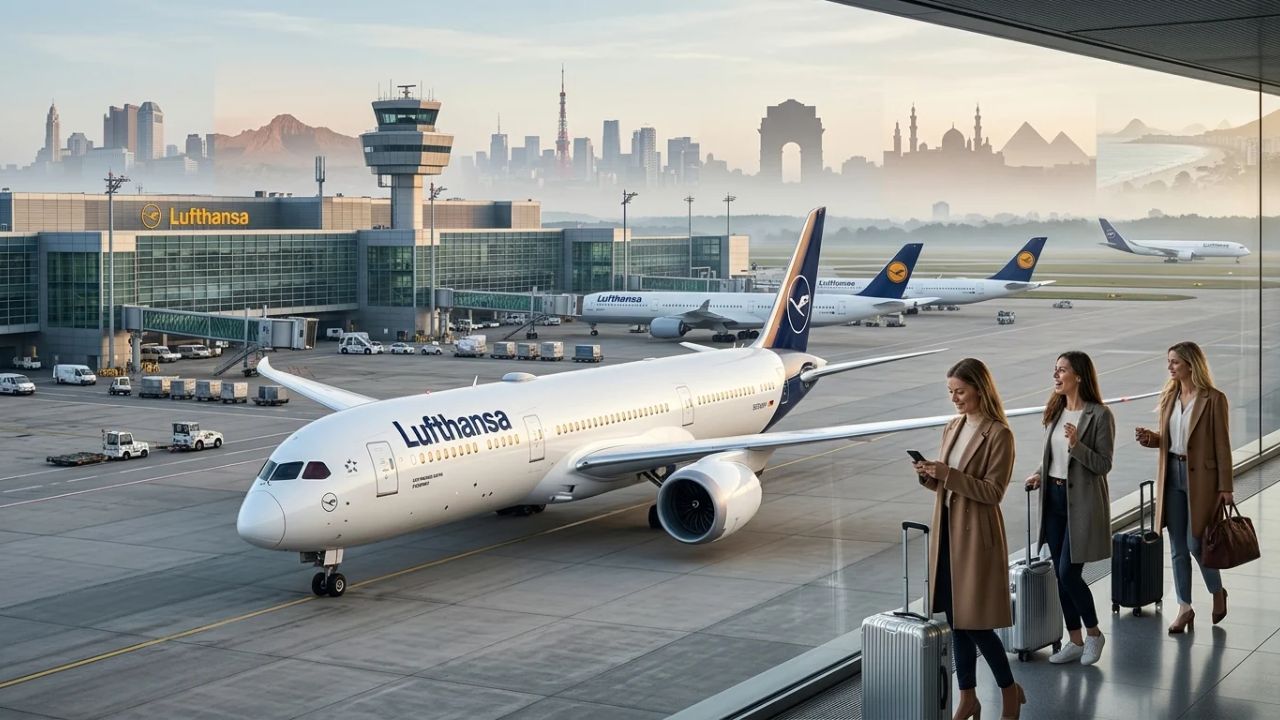
FRANKFURT, Germany — Deutsche Lufthansa AG has formally confirmed its most comprehensive intercontinental flight schedule expansion since 2020, locking in ten brand-new long-haul routes, dozens of international frequency increases, and coordinated multi-carrier deployments across North America, Asia, Africa, and South America for the Summer 2027 operational season. Officially released for booking across global distribution systems, the strategic route program demonstrates an assertive network offensive distributed across the airline group's multi-brand portfolio—including Lufthansa mainline, Discover Airlines, Austrian Airlines, Swiss International Air Lines (SWISS), Brussels Airlines, Edelweiss, and newly integrated Italian flag carrier ITA Airways. Featuring milestone non-stop transatlantic connections to emerging American industrial centers, restored links to Japanese commercial hubs, and reinforced double-daily operations into India, the expansion marks a decisive structural pivot toward high-yield corporate and premium leisure corridors.
The scale of the 2027 deployment arrives at an intriguing inflection point for commercial aviation across Western Europe. Over the past twenty-four months, European network carriers have contended with unprecedented structural headwinds, ranging from extensive airspace diversions circumventing geopolitical conflict zones in the Middle East and Eastern Europe to severe jet fuel price fluctuations and persistent aerospace supply chain bottlenecks. However, Lufthansa Group’s confirmed schedules clarify an important operational reality: rather than retrenching or paring back long-haul ambitions, Europe’s largest airline conglomerate is accelerating the deployment of modern wide-body aircraft—specifically Boeing 787-9 Dreamliners fitted with the new Allegris cabin interior and fuel-efficient Airbus A350-900 twin-jets—to capture underserved point-to-point markets and bypass saturated coastal mega-hubs.
LUFTHANSA GROUP SUMMER 2027 EXPANSION: KEY OPERATIONAL ANCHORS
| OPERATING AIRLINE | DEPARTURE HUB | ARRIVAL DESTINATION | SCHEDULE HIGHLIGHTS |
|---|---|---|---|
| Lufthansa Mainline | Frankfurt (FRA) | Columbus, Ohio (CMH) | 3x Weekly, Boeing 787-9 |
| Lufthansa Mainline | Munich (MUC) | Phoenix, Arizona (PHX) | 3x Weekly, Airbus A350-900 |
| Discover Airlines | Frankfurt (FRA) | Edmonton, Canada (YEG) | 3x Weekly, Airbus A330-300 |
| Lufthansa Mainline | Frankfurt (FRA) | Tokyo Narita, Japan (NRT) | Daily, Boeing 787-9 |
| Lufthansa Mainline | Frankfurt (FRA) | Nagoya, Japan (NGO) | 3x Weekly Seasonal Resumption |
| Lufthansa Mainline | Munich (MUC) | Delhi, India (DEL) | 2nd Daily Flight (A350) |
| Lufthansa Mainline | Frankfurt (FRA) | Kuala Lumpur (KUL) | Expanded to Daily Service |
| Brussels Airlines | Brussels (BRU) | Cairo, Egypt (CAI) | 5x Weekly Scheduled Flight |
| ITA Airways | Rome Fiumicino (FCO) | Caracas, Venezuela (CCS) | 3x Weekly, Airbus A330neo |
The Transatlantic Secondary City Strategy: Direct Access to Columbus, Phoenix, and Edmonton
The centerpiece of Lufthansa’s Summer 2027 network architecture lies in North America, where the airline is executing a deliberate strategy to establish direct, non-stop access into dynamic secondary and tertiary metropolitan economies. For decades, transatlantic air travel between Europe and the United States has been funnelled through established coastal gateways such as New York John F. Kennedy (JFK), Newark (EWR), Chicago O'Hare (ORD), and Los Angeles (LAX). While these hub airports generate substantial transfer volume, they frequently suffer from severe air traffic control delays, terminal gate congestion, and intense competition from rival airline alliances.
By deploying long-range, mid-sized wide-body airliners with lower trip costs, Lufthansa is systematically opening non-stop European gateways into interior North American economic powerhouses:
Frankfurt to Columbus, Ohio: The Silicon Heartland Gateway
Beginning 5 May 2027, Lufthansa will inaugurate non-stop service between Frankfurt Airport (FRA) and John Glenn Columbus International Airport (CMH), operating three weekly rotations on Wednesdays, Fridays, and Sundays.
This route represents a historic aviation milestone: it stands as the first-ever scheduled non-stop passenger service connecting Columbus directly to continental Europe operated by a European carrier. The commercial justification for the route is powerful:
- Semiconductor and Tech Manufacturing: Central Ohio is undergoing an unprecedented economic transformation, anchored by Intel’s multi-billion-dollar semiconductor mega-fab manufacturing campus in New Albany, alongside massive data center expansions by Amazon Web Services, Google, and Microsoft.
- Corporate Headquarters Demand: Columbus serves as the state capital of Ohio and hosts major corporate headquarters, including Nationwide Insurance, American Electric Power, Cardinal Health, and Bath & Body Works, creating a continuous stream of premium corporate travelers requiring direct European connectivity.
- Aircraft and Product Deployment: Lufthansa will deploy its state-of-the-art Boeing 787-9 Dreamliner on the route, outfitted with the carrier’s newly standardized Allegris cabin configuration, offering direct-aisle-access Business Class suites, dedicated Premium Economy cabins, and advanced in-flight connectivity tailored to corporate executives.
Munich to Phoenix Sky Harbor: Arizona’s Advanced Technology Link
Starting 3 August 2027, Lufthansa will introduce non-stop flights connecting Munich Airport (MUC) to Phoenix Sky Harbor International Airport (PHX). The service will operate three times weekly on Tuesdays, Fridays, and Sundays utilizing the twin-engine Airbus A350-900.
Phoenix represents one of the fastest-growing metropolitan regions in the United States, positioning the new service at the nexus of high-technology commerce and high-end inbound tourism:
- The Desert Semiconductor Corridor: Greater Phoenix has emerged as a premier global hub for advanced microchip fabrication, driven by Taiwan Semiconductor Manufacturing Company’s (TSMC) massive multi-facility complex in north Phoenix and expanded Intel fabrication facilities in Chandler. German automotive and industrial technology firms require direct links between Bavaria’s industrial clusters and Arizona’s high-tech manufacturing base.
- Year-Round Inbound Leisure Traffic: Arizona remains a prime destination for European adventure travelers, golfers, and outdoor enthusiasts visiting Scottsdale, Sedona, the Sonoran Desert, and the Grand Canyon.
- Hub Synergies: Departing from Munich allows travelers to utilize Lufthansa’s five-star Bavarian hub, providing seamless 45-minute connections to central and eastern European destinations, northern Italy, and the Balkans.
Discover Airlines Connects Frankfurt to Edmonton
Expanding the group’s footprint in Western Canada, leisure-focused subsidiary Discover Airlines will launch non-stop service between Frankfurt and Edmonton International Airport (YEG) on 1 June 2027. Operating three weekly flights on Tuesdays, Thursdays, and Saturdays using Airbus A330-300 aircraft, Edmonton becomes Discover’s third Canadian destination, complementing established operations to Calgary (YYC) and Halifax (YHZ).
The Edmonton connection unlocks direct access to Alberta’s capital city, the northern energy corridor, and world-renowned Canadian Rockies destinations such as Jasper National Park. Concurrently, Discover Airlines is expanding its fleet based at Munich Airport with an additional Airbus A330-300, facilitating capacity growth to southern African leisure destinations like Windhoek, Namibia, alongside previously confirmed Caribbean expansion into Belize City.
Asian Network Offensive: Tokyo Resurgence, Nagoya Resumption, and Indian Trunk Capacity
Across the Asia-Pacific theater, Lufthansa Group is reasserting its competitive presence with substantial capacity injections into Japan, Southeast Asia, and the Indian subcontinent, capitalizing on robust demand for both premium business travel and high-value cultural tourism.
Deepening Japanese Connectivity: Tokyo Narita and Nagoya
Japan continues to generate intense international passenger demand, spurred by favorable foreign exchange dynamics, corporate commerce, and Japan’s unmatched cultural appeal:
- Daily Frankfurt to Tokyo Narita (NRT): Commencing 28 March 2027, Lufthansa will launch a new daily non-stop service between Frankfurt and Tokyo Narita, deployed with the Boeing 787-9 Allegris. This service complements Lufthansa’s existing double-daily flights to Tokyo Haneda (HND) operated from both Frankfurt and Munich, giving the German flag carrier an unprecedented three daily non-stop flights between Germany and Tokyo.
- Seasonal Resumption to Nagoya (NGO): Beginning 29 March 2027, Lufthansa will reinstate scheduled non-stop service between Frankfurt and Nagoya’s Chubu Centrair International Airport, operating three times weekly on Mondays, Wednesdays, and Saturdays. Nagoya serves as the beating industrial heart of Japan’s Chubu region, home to global automotive giant Toyota and major aerospace manufacturing facilities. Restoring direct non-stop flights provides German industrial suppliers and executives with direct access, eliminating lengthy domestic bullet-train transfers from Tokyo or Osaka.
Daily Service to Kuala Lumpur
In Southeast Asia, Lufthansa has confirmed that its non-stop service between Frankfurt and Kuala Lumpur International Airport (KUL)—reintroduced to the network in late 2026—will be elevated to daily scheduled departures throughout Summer 2027. The daily frequency solidifies Germany’s commercial trade link with Malaysia and provides travelers with convenient onward connections across Southeast Asia and Australasia via regional Star Alliance and codeshare partners.
Expanding the Indian Footprint: Munich–Delhi Double-Daily
India represents one of the world's most rapidly expanding aviation markets, and Lufthansa Group is deploying significant wide-body capacity to protect its historical market share against aggressive competition from Arabian Gulf hub carriers:
- Second Daily Munich–Delhi Flight: From 28 March 2027, Lufthansa will introduce a second seasonal daily flight between Munich and Indira Gandhi International Airport in Delhi (DEL), operated with an Airbus A350-900. When combined with Frankfurt–Delhi operations, the group will provide extensive multi-hub schedule options for corporate executives and Indian diaspora travelers.
- Expanded Secondary Indian Metropolises: The group has scheduled frequency enhancements on trunk routes connecting Frankfurt to Bengaluru (BLR), Chennai (MAA), and Hyderabad (HYD).
- SWISS Bengaluru Continuity: Sister carrier Swiss International Air Lines has confirmed that its direct five-times-weekly service connecting Zurich Airport (ZRH) to Bengaluru will continue as an integral fixture of its Summer 2027 long-haul schedule, linking Switzerland’s pharmaceutical and financial centers directly to India’s premier technology capital.
Through its extensive transatlantic joint business venture with United Airlines and Air Canada, Lufthansa Group utilizes its Frankfurt, Munich, and Zurich hubs to provide Indian travelers with one-stop connections into dozens of secondary North American cities that lack non-stop Middle Eastern or Asian air links.
LUFTHANSA GROUP SUMMER 2027 LONG-HAUL SCHEDULE MATRIX
| ROUTE | AIRLINE CARRIER | START DATE | WEEKLY FREQ | AIRCRAFT TYPE |
|---|---|---|---|---|
| Frankfurt–Tokyo NRT | Lufthansa Mainline | 28 March 2027 | 7x (Daily) | Boeing 787-9 Allegris |
| Munich–Delhi (2nd) | Lufthansa Mainline | 28 March 2027 | 7x (Daily) | Airbus A350-900 |
| Frankfurt–Nagoya | Lufthansa Mainline | 29 March 2027 | 3x Weekly | Boeing 787-9 Allegris |
| Rome FCO–Caracas | ITA Airways | 30 March 2027 | 3x Weekly | Airbus A330-900neo |
| Frankfurt–Columbus | Lufthansa Mainline | 5 May 2027 | 3x Weekly | Boeing 787-9 Allegris |
| Frankfurt–Edmonton | Discover Airlines | 1 June 2027 | 3x Weekly | Airbus A330-300 |
| Munich–Phoenix | Lufthansa Mainline | 3 August 2027 | 3x Weekly | Airbus A350-900 |
| Brussels–Cairo | Brussels Airlines | Summer 2027 | 5x Weekly | Airbus A330-300 |
| Frankfurt–Kuala L. | Lufthansa Mainline | Summer 2027 | 7x (Daily) | Boeing 787-9 / A340 |
| Zurich–Bengaluru | SWISS | Continuing S27 | 5x Weekly | Airbus A330-300 |
African and South American Connectivity: Brussels Airlines and ITA Airways Integration
Lufthansa Group’s multi-hub expansion extends beyond its traditional German and Swiss foundations, leveraging its pan-European airline subsidiaries to capture strategic traffic flows into the Middle East, Africa, and Latin America.
Brussels Airlines: Deepening African Presence via Cairo and Kilimanjaro
Belgian flag carrier Brussels Airlines, recognized within the group as the premier specialist for African operations, is broadening its African footprint:
- Brussels to Cairo (CAI): Commencing in Summer 2027, Brussels Airlines will establish a new five-times-weekly scheduled connection between Brussels Airport (BRU) and Cairo International Airport. The route serves European diplomatic, non-governmental organization (NGO), and corporate travel between the capital of the European Union and Egypt, while tapping into booming European leisure demand for Nile cruises and the Grand Egyptian Museum.
- Expanded Safari Access: In East Africa, Brussels Airlines will expand its frequencies to Kilimanjaro (JRO) in Tanzania to three weekly flights, offering seamless safari itineraries connecting through northern Tanzania.
ITA Airways: Rome–Caracas Non-Stop and South American Integration
Following Lufthansa Group’s acquisition and regulatory approval of a controlling equity stake in ITA Airways, the Italian carrier is integrating its long-haul route network into the group's global revenue and connection matrix:
- Rome Fiumicino to Caracas, Venezuela (CCS): Beginning 30 March 2027, ITA Airways will launch non-stop service between Rome Fiumicino Airport (FCO) and Simón Bolívar International Airport in Maiquetía (Caracas). Operating three times weekly on Tuesdays, Thursdays, and Sundays, the route will be operated by the cutting-edge Airbus A330-900neo, featuring private Business Class suites, dedicated Premium Economy seating, and whisper-quiet Airspace cabins.
- Bridging Historic Diaspora Ties: Italy and Venezuela share profound historical, cultural, and family ties, with one of the largest Italian diaspora populations in Latin America residing in Venezuela. Direct air links have been historically limited, forcing travelers to route through Madrid or Istanbul. Restoring non-stop Rome–Caracas service re-establishes a vital transatlantic bridge.
- Domestic Feeder Synergies: To ensure balanced passenger loads on its intercontinental departures, ITA Airways is simultaneously inaugurating a new domestic feeder link between Rome Fiumicino and Verona Villafranca Airport (VRN) starting 28 March 2027, enabling business travelers across Veneto and northern Italy to check baggage directly through to South American and North American destinations.
Fact-Checking the Aviation Landscape: Airspace Challenges, Fuel Costs, and KLM Realities
Aviation industry wire reports have extensively debated the operational pressures confronting European aviation throughout 2026, with some commentators speculating that Lufthansa Group’s expansive Summer 2027 schedule represents an emergency operational comeback following a supposed "Strait of Hormuz crisis." An objective assessment of aviation records, financial statements, and regulatory filings requires separating verified operational developments from unsubstantiated rumors.
Deconstructing the Strait of Hormuz Rumors
Unverified claims have circulated across travel trade blogs alleging that European airlines suffered catastrophic disruptions—including sensationalized rumors of "20,000 Lufthansa flight groundings," "crude oil and jet fuel exceeding $200 per barrel," and the "permanent shutdown of regional subsidiary Lufthansa CityLine."
Official disclosures paint a distinctly different, verified picture:
- Fleet Continuity: Lufthansa CityLine has not been shut down. While Lufthansa Group has established a separate regional operating platform known as City Airlines (operating Airbus A220 and A320neo aircraft under distinct collective bargaining structures), CityLine continues active operations within the group's wet-lease regional feeder architecture.
- Verified Airspace Realities: While tensions in the Middle East have led to recurring airspace closures over Iran, Iraq, the Red Sea, and the Persian Gulf, European air navigation safety agency Eurocontrol and national civil aviation authorities have managed these risks through standardized security directives and contingency routings. Rather than grounding 1,150 daily flights, long-haul carriers have rerouted flights through alternative corridors—such as the Cairo-Saudi corridor or northern pathways through Central Asia—adding between 35 to 80 minutes of flight time and nominal fuel consumption, but sustaining commercial schedule integrity.
- Fuel Realities: Global jet kerosene prices (indexed against Platts Jet CIF NWE) experienced standard geopolitical volatility during 2026 but remained well below apocalyptic $200-per-barrel thresholds, heavily mitigated by Lufthansa Group’s disciplined forward fuel hedging programs covering over 75 percent of projected consumption.
Contrasting Lufthansa Group with Air France-KLM and Schiphol Constraints
Wire reports frequently lump Lufthansa Group and KLM together when discussing European aviation trends. However, their underlying strategic postures heading into 2027 are dictated by fundamentally different structural realities:
- Lufthansa Group’s Multi-Hub Flexibility: With major hub operations distributed across Frankfurt, Munich, Zurich, Vienna, Brussels, and now Rome, Lufthansa possesses unmatched network flexibility. If capacity or environmental caps tighten at one hub, traffic and wide-body assets can be dynamically shifted to other airports within the portfolio.
- KLM’s Schiphol Bottleneck: In contrast, Royal Dutch Airlines (KLM) remains heavily centralized at Amsterdam Airport Schiphol (AMS). Throughout 2025 and 2026, the Dutch government and Schiphol management have pursued aggressive flight cap initiatives, environmental noise tax increases, and night flight restrictions, capping annual aircraft movements. Consequently, KLM’s network adjustments have been driven by domestic Dutch capacity restrictions and fleet renewal transitions rather than an equivalent transatlantic route expansion. Grouping KLM alongside Lufthansa Group’s 2027 expansion conflates two completely divergent operational realities.
Modern Fleet Architecture and the Allegris Cabin Revolution
The structural enabler of Lufthansa Group’s 2027 expansion is its ongoing multi-billion-euro fleet modernization program. The new routes are not being launched with aging, fuel-thirsty four-engine aircraft; instead, they rely on next-generation twin-engine wide-bodies designed for superior unit economics and environmental performance.
FLEET COMPARISON: NEXT-GEN VS. LEGACY WIDE-BODIES
| PERFORMANCE METRIC | LEGACY JETS (A340-300 / B747) | NEXT-GEN JETS (B787-9 / A350-900) |
|---|---|---|
| Fuel Consumption Per Seat | Baseline Index (100%) | 20% to 25% Reduction |
| Carbon (CO2) Emissions | High Unit Output | Up to 30% Lower Per Passenger-Km |
| Acoustic Noise Footprint | 85-92 EPNdB Noise Contour | Up to 50% Quieter Acoustic Signature |
| Cabin Altitude Comfort | ~8,000 Feet Pressurization | ~6,000 Feet Pressurization (Composite) |
| Passenger Cabin Interior | Legacy Forward-Facing Lie-Flat | Allegris Modular Suite Architecture |
Boeing 787-9 Dreamliner and Airbus A350-900 Deployment
The Boeing 787-9 and Airbus A350-900 represent the backbone of the Summer 2027 deployment:
- Carbon and Fuel Efficiency: Both aircraft types feature advanced carbon-composite airframes, aerodynamic wing designs, and high-bypass turbofan engines (Rolls-Royce Trent 1000/Trent XWB and General Electric GEnx). They burn 20 to 25 percent less fuel per passenger-kilometer than the legacy Airbus A340-300 and Boeing 747-400 aircraft they are replacing, providing permanent insulation against future jet fuel spikes.
- Cabin Pressurization and Well-Being: Composite fuselages allow cabin altitude to be maintained at a comfortable 6,000 feet rather than the traditional 8,000 feet, coupled with higher interior humidity levels and dynamic LED circadian lighting, substantially reducing jet lag on long-haul sectors such as Frankfurt–Tokyo Narita or Munich–Phoenix.
The Allegris Cabin Experience
Lufthansa’s confirmed Boeing 787-9 deployments to Columbus and Tokyo Narita will showcase the airline’s flagship Allegris interior:
- First Class Suites Plus: Completely enclosed private rooms featuring floor-to-ceiling walls, individually controlled suite heating and cooling, personal wardrobes, and a double-bed conversion option.
- Seven Distinct Business Class Seating Choices: Business travelers can select personalized seat configurations tailored to their preferences, including private suites with closing doors in the front row, extra-long beds (2.2 metres), extra-space work surfaces, or double seats in central rows.
- Hard-Shell Premium Economy: Fixed-shell seats designed with integrated leg rests and generous recline angles that do not intrude into the personal space of passengers seated behind.
European Feeder Realignment: Connecting Regional Europe to Global Hubs
An intercontinental route expansion cannot succeed in isolation; it requires synchronized regional feeder networks to channel passengers from across Europe into departure banks at Frankfurt, Munich, Zurich, Vienna, and Brussels. Alongside its long-haul announcements, Lufthansa Group has confirmed strategic additions across its short- and medium-haul European network:
- Frankfurt to Dubrovnik, Croatia: Lufthansa mainline will restore daily scheduled service to the Adriatic coastal city, serving summer leisure vacationers while providing coastal Croatian travelers with immediate onward transatlantic connections.
- Zurich to Toulouse, France: SWISS will inaugurate seasonal summer flights between Zurich and Toulouse-Blagnac Airport (TLS), operating twice weekly between 25 June and 23 August 2027. The service directly links Switzerland's financial sector with Europe's aerospace capital (home to Airbus assembly lines) and southwestern France.
- Vienna to Beirut, Lebanon: Austrian Airlines has scheduled the resumption of seasonal flights connecting Vienna International Airport (VIE) to Beirut Rafic Hariri International Airport (BEY) between June and September 2027, subject to prevailing regional security assessments.
- Munich to Domestic and Regional Gateways: Additional frequency banks have been scheduled across northern Italy, Scandinavia, and Poland, maximizing two-way connection windows for passengers departing on transatlantic and Asian evening flights.
Traveler Advisory: Strategic Planning for Summer 2027 Departures
For corporate travel managers, independent business travelers, and international vacationers planning journeys for the 2027 season, Lufthansa Group’s route rollouts introduce several actionable strategic considerations:
1. Booking Timelines and Reservation Inventory
All confirmed long-haul services—including Columbus, Phoenix, Edmonton, Tokyo Narita, Nagoya, and Caracas—are open for booking across official airline websites and global distribution channels. Travelers seeking award redemptions through Star Alliance loyalty programs (such as United MileagePlus, Air Canada Aeroplan, or Lufthansa Miles & More) should search availability early, particularly for premium cabin Allegris inventory during inaugural launch months.
2. Transatlantic Joint Business Venture Advantages
Passengers traveling to or from secondary North American cities benefit directly from the A++ Transatlantic Joint Business Venture uniting Lufthansa, United Airlines, Air Canada, and Austrian/SWISS/Brussels Airlines:
- Seamless Itinerary Combining: Travelers can combine outbound flights on Lufthansa with return flights on United or Air Canada on a single ticket without penalty.
- Interchangeable Frequent Flyer Privileges: Elite status benefits—including priority check-in, additional baggage allowances, security fast-track, and lounge access—are fully reciprocal across the alliance network.
- Baggage and Disruption Safeguards: Single through-ticketing ensures baggage is automatically transferred at Frankfurt or Munich, while providing comprehensive rebooking protections under EU Regulation 261/2004 in the event of unforeseen operational delays.
3. Understanding Secondary Airport Logistical Advantages
For corporate travelers bound for Ohio or Arizona, choosing non-stop flights to Columbus (CMH) or Phoenix (PHX) offers decisive time savings:
- Bypassing chaotic immigration lines and terminal transfers at traditional coastal hubs (JFK, ORD, ATL) saves an estimated 2 to 4 hours of total transit time.
- Both Columbus and Phoenix airports feature modern, compact terminal layouts with rapid baggage delivery and on-site rental car centers situated minutes from arrival gates.
Lufthansa Group’s Summer 2027 schedule expansion represents an ambitious, calculated deployment of modern aviation assets. By pairing fuel-efficient wide-body aircraft with bold entry into underserved economic regions and consolidating its multi-brand airline portfolio, the European aviation giant is defining the post-pandemic, geopolitically resilient future of international long-haul air travel.
Related Travel Guides
This article is for informational purposes. Flight routes, passenger regulations, visa rules, and transit advisories are subject to change by airlines and aviation authorities. Readers are advised to verify schedules and travel documentation with relevant carriers and border agencies before departure.
Related Stories
Emirates Explores First Class Suites for Airbus A350-1000 Amid Widebody Fleet Modernization and A380 Succession Planning