Dubai Stopover Tourism Faces Critical Test: Emirates Transit Conversion, 21.8M H1 Passengers, and Hotel Rebound Reshape Hub Economics

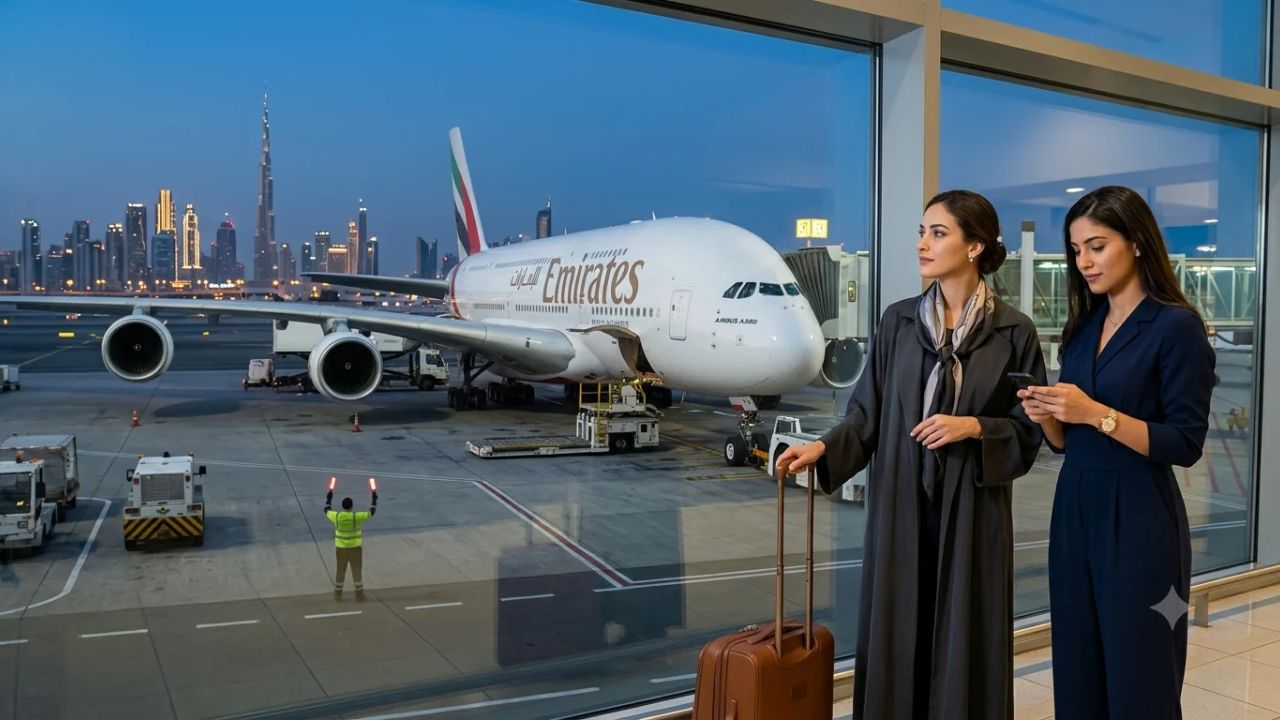
DUBAI, United Arab Emirates — As Emirates systematically rebuilds its global network across Europe, Asia, and the Americas, Dubai's tourism and hospitality sectors are confronting a fundamental structural question: how effectively can the emirate convert millions of connecting transit passengers into paying overnight city visitors?
Official half-year financial results published by the Emirates Group for the six-month period from 1 April to 30 September 2026 demonstrate the scale of the aviation powerhouse, which transported 21.8 million passengers despite navigating complex regional airspace restrictions and elevated global jet fuel expenses.
While passenger volumes contracted by 22 percent year on year and after-tax profits settled at $903 million (down 66 percent compared to the prior year's record performance), the airline successfully restored 91 percent of its pre-disruption network by the end of September.
Concurrently, municipal tourism data published by the Dubai Department of Economy and Tourism (DET) and the Government of Dubai Media Office reveals an independent resurgence in urban leisure demand.
In August 2026, Dubai welcomed 869,000 international overnight visitors—marking its strongest monthly inbound tourism performance since February.
Citywide hotel occupancy surged to 66 percent, staging a remarkable recovery from a low of 36 percent recorded in March 2026 when regional geopolitical tensions peaked.
This statistical divergence between airline passenger throughput and urban hotel occupancy highlights the central challenge facing Dubai's economic planners.
As the emirate advances its AED 128 billion phase two expansion of Al Maktoum International Airport (DWC) while maintaining Dubai International (DXB) as its operating engine, the priority is shifting from pure transit volume to maximizing stopover yield—incentivizing intercontinental passengers to step outside the terminal, explore the city, and stimulate the broader domestic service economy.
DUBAI AVIATION AND TOURISM BENCHMARK METRICS (2026)
| Performance Metric Indicator | Official Statistical Benchmark | Strategic Economic Meaning |
|---|---|---|
| Emirates H1 Passenger Volume | 21.8 Million Passengers | -22% YoY during airspace adj |
| Emirates H1 Net Profit | $903 Million USD | Solid profit amid fuel costs |
| Emirates Network Restoration | 91% of Pre-Disruption Network | Rapid operational recovery |
| August 2026 Overnight Visitors | 869,000 International Guests | Highest monthly since Feb |
| August 2026 Hotel Occupancy | 66% Average Citywide Occupancy | Rebounds from 36% in March |
| 2025 Full-Year Overnight Visitors | 19.59 Million Travelers | Record performance (+5% YoY) |
| 2025 Full-Year Hotel RevPAR | AED 467 per Available Room | +11% Yield Expansion |
| 2025 Dubai International Traffic | 95.2 Million Passengers | World's busiest global hub |
| UAE Travel Sector Economic Impact | Over AED 251 Billion (2025) | +3% National GDP Contribution |
| International Visitor Spending (UAE) | AED 209 Billion (2025) | Massive foreign capital flow |
| Leading Source Market: W. Europe | 20% of Overnight Inflow (2026) | Premier long-haul leisure |
| Second Source Market: South Asia | 17% of Overnight Inflow (2026) | High-density VFR and trade |
The Disconnect Between Transit and Tourism: Reading Emirates' H1 Performance
The global aviation hub model pioneered by Dubai represents an extraordinary feat of geopolitical geography and commercial scheduling.
Situated within an eight-hour flight radius of two-thirds of the world's population, Dubai International Airport functions as a vast global interchange, connecting secondary European cities with Southeast Asia, Australasia, and the Indian subcontinent.
However, the commercial relationship between airport passenger transit and municipal hotel occupancy is not a simple linear equation.
Emirates' half-year earnings statement for the 2026–2027 fiscal year illustrates the operational complexities that modern super-connector airlines must navigate.
During the six-month period ending 30 September 2026, intermittent closures of regional airspace corridors across the Middle East forced the carrier to reroute dozens of daily long-haul services around conflict zones.
These navigational deviations increased flight stage lengths, consumed thousands of additional tons of expensive aviation fuel, and disrupted tightly synchronized flight banks at DXB.
Consequently, passenger throughput contracted by 22 percent to 21.8 million passengers, while net profit dropped 66 percent to $903 million compared to the historical high achieved during the same period in 2025.
                               THE HUB TRANSIT CONVERSION FUNNEL

   +---------------------------------------------------------------------------------+
   | EMIRATES H1 PASSENGER THROUGHPUT: 21.8 Million Global Connecting Travelers      |
   +---------------------------------------------------------------------------------+
                                           |
                                           v
   +---------------------------------------------------------------------------------+
   | AIRSIDE TRANSIT MAJORITY: Passengers transfer between concourses without entry  |
   +---------------------------------------------------------------------------------+
                                           |
                                           v [The Strategic Conversion Gap]
   +---------------------------------------------------------------------------------+
   | CITY STOPOVER CAPTURE: Passengers clearing immigration, booking hotels & dining |
   +---------------------------------------------------------------------------------+
          |                                                                   |
          v                                                                   v
   [Dubai Connect Airline Layover]                             [Deliberate Multi-Day Holiday]
   (Complimentary 8-26 hr forced stay)                         (Paid self-booked city break)
Despite these operating hurdles, the airline's ability to restore 91 percent of its global network by late September confirms the structural resilience of its hub infrastructure.
Yet for Dubai's domestic tourism economy, total airline passenger numbers tell only part of the story.
The vast majority of passengers passing through Dubai International Airport remain airside, spending between two and four hours inside the airport concourses before boarding onward flights to their final destinations.
The primary economic opportunity for the emirate lies in converting these connecting passengers into landside visitors who pass through immigration, book hotel rooms, patronize local restaurants, and purchase retail goods.
The Hotel Market Resurgence: Analyzing the August Rebound
While Emirates was managing network reroutings and fuel headwinds, Dubai's urban hospitality market demonstrated surprising domestic vitality.
According to official tourism performance data released by the Dubai Department of Economy and Tourism, the city welcomed 869,000 international overnight visitors in August 2026.
This represented the highest single-month visitor total recorded since February, signaling that foreign holiday demand was accelerating well ahead of the traditional winter peak season.
DUBAI HOTEL SECTOR RECOVERY TRAJECTORY (2026)
| Entity / Route | Metrics | Operational Status |
|---|---|---|
| Calendar Window | Average Hotel Occupancy Rate | Market Recovery Context |
| March 2026 Trough | 36% Citywide Occupancy | Regional geopolitical shock |
| April - June 2026 Transition | 48% - 54% Gradual Recovery | Flight restorations take hol |
| August 2026 Peak Rebound | 66% Average Occupancy | Highest monthly since Feb |
| Full-Year 2025 Historical Benchmark | 77% Annual Occupancy Average | Record 19.59M visitor year |
The recovery in hotel occupancy is striking.
In March 2026, when regional tensions escalated, citywide hotel occupancy dropped to a concerning 36 percent as nervous leisure travelers postponed regional travel plans.
By August, occupancy climbed back to 66 percent, driven by aggressive summer promotional campaigns, competitive family staycation packages, and an influx of international travelers taking advantage of discounted five-star summer rates.
This performance follows three consecutive record-breaking years for Dubai tourism.
In 2025, the city hosted an all-time record of 19.59 million international overnight visitors—an expansion of 5 percent over 2024.
Average hotel revenue per available room (RevPAR) expanded by 11 percent to reach AED 467, while Dubai International Airport processed an extraordinary 95.2 million passengers (+3.1 percent).
Across the United Arab Emirates as a whole, the Ministry of Economy reported that travel and tourism contributed more than AED 251 billion to the national economy in 2025, with international visitor spending accounting for AED 209 billion.
                               DUBAI HOTEL YIELD EXPANSION CYCLE

   +---------------------------------------------------------------------------------+
   | RECORD 2025 FOUNDATION: 19.59M Overnight Visitors / AED 467 Citywide RevPAR     |
   +---------------------------------------------------------------------------------+
                                           |
                                           v [Q1 2026 Geopolitical Disruption]
   +---------------------------------------------------------------------------------+
   | MARCH TROUGH: Occupancy contracts to 36% amid regional flight reroutings        |
   +---------------------------------------------------------------------------------+
                                           |
                                           v [Government Support & Summer Promos]
   +---------------------------------------------------------------------------------+
   | AUGUST REBOUND: 869,000 Visitors / 66% Occupancy / Strongest since February     |
   +---------------------------------------------------------------------------------+
These macro indicators confirm that the underlying appeal of Dubai as a global leisure and luxury capital remains uncompromised.
However, maintaining this trajectory during periods of global economic and geopolitical uncertainty requires closing the gap between transit passenger numbers and landside hotel bookings.
Dubai Connect Versus Deliberate Stopovers: The Economic Yield Differential
To understand how stopover tourism influences local businesses, analysts distinguish between two operational models of transit accommodation: airline-provided layover programs and deliberate, self-booked city breaks.
The first model is represented by Dubai Connect, an established passenger service operated by Emirates.
Under published program rules, Emirates provides complimentary hotel accommodation, airport transfers, and meal vouchers to transit passengers whose connecting itineraries involve an unavoidable layover of between 8 and 26 hours, provided no earlier connection was available at the time of booking.
While Dubai Connect fulfills a vital customer service function and fills hotel beds that might otherwise sit empty during off-peak periods, its economic spillover into the wider urban economy is relatively modest.
Passengers utilizing Dubai Connect are typically provided accommodation at contracted airport hotels or dedicated transit properties.
Because their schedules are dictated by tightly timed departures, these travelers rarely venture into the city, spending minimal discretionary capital at independent restaurants, cultural attractions, or retail centers.
DUBAI CONNECT VS DELIBERATE STOPOVER COMPARISON
| Entity / Route | Metrics | Operational Status |
|---|---|---|
| Economic Dimension | Dubai Connect Program | Deliberate Stopover Holiday |
| Lodging Funding Source | Airline Funded / Contracted | Self-Paid by Traveler |
| Average Length of Stay | 8 to 26 Hours (Single Night) | 2 to 4 Nights Extended Stay |
| City Mobility & Dispersal | Confined to Airport Hotel | Expands across Boroughs |
| Secondary Economic Expenditure | Minimal (Complimentary Meals) | High (Dining, Spas, Retail) |
| Local Business Impact | Corporate Hotel Chains Only | Guides, Cafes, Safari Parks |
In sharp contrast, the deliberate stopover traveler represents a high-value consumer.
These travelers intentionally construct multi-day layovers into their flight bookings, taking advantage of Emirates' booking tools that allow passengers to insert a multi-night stay in Dubai on either the outbound or return leg of an intercontinental journey without incurring airfare penalties.
A traveler who books two or three nights in Dubai creates substantial economic yield across the municipal value chain.
They select boutique resorts along Jumeirah Beach or luxury towers in Downtown Dubai, hire licensed desert safari guides for conservation excursions in the Dubai Desert Conservation Reserve, dine at independent culinary establishments in Alserkal Avenue or DIFC, and visit cultural institutions like the Museum of the Future and the Al Fahidi Historical Neighborhood.
For local merchants, hoteliers, and tour operators, expanding the share of deliberate stopovers is far more lucrative than providing contracted airline transit beds.
                               ECONOMIC RETENTION DISPERSAL

   [Deliberate Multi-Day Stopover] ====> Luxury & Boutique Hotel Bookings (2-4 Nights)
                                                   |
                                                   +---> DIFC & Marina Independent Dining
                                                   +---> Desert Safari & Heritage Guides
                                                   +---> Museum Admissions & Retail Spend
Source Market Realignment: Western Europe and South Asia Lead the Recovery
Evaluating the geographic composition of inbound visitors provides vital intelligence for tourism marketers designing stopover packages.
Official DET demographic tracking for the period from January to August 2026 reveals that two regions generate the dominant share of international overnight stays: Western Europe and South Asia.
Western Europe accounted for 20 percent of all international overnight visitors entering Dubai during the first eight months of 2026.
Travelers from the United Kingdom, Germany, France, and the Netherlands view Dubai as an attractive winter-sun sanctuary and a natural halfway resting point when flying long-haul corridors to the Maldives, Seychelles, Southeast Asia, or Australia.
These travelers possess high average daily spending power, booking luxury beach resorts and prioritizing culinary experiences.
DUBAI INBOUND VISITOR SOURCE MARKETS (JAN - AUG 2026)
| Entity / Route | Metrics | Operational Status |
|---|---|---|
| Source Market Region | Inbound Share of Visitors | Primary Travel Character |
| Western Europe | 20% of Total Overnight Guests | High-yield leisure & sun |
| South Asia (India, Pakistan, etc.) | 17% of Total Overnight Guests | VFR, business & shopping |
| GCC & Middle East | 15% of Total Overnight Guests | Regional weekend staycation |
| Eastern Europe & CIS | 14% of Total Overnight Guests | Extended family holidays |
| North America & Asia-Pacific | Remaining Segment Combined | Intercontinental transit |
South Asia represented the second-largest origin market, contributing 17 percent of total overnight visitors.
India remains Dubai's single largest national feeder market, generating millions of business travelers, family holidaymakers, and visiting-friends-and-relatives (VFR) passengers.
For South Asian travelers, Dubai functions not only as a global transit hub to Europe and North America, but as a premier short-break destination for retail shopping, gold jewelry purchases, and family entertainment.
However, designing effective stopover incentives requires tailoring packages to these contrasting demographics.
While European travelers respond to beach club passes, spa packages, and desert glamping experiences, South Asian travelers often prioritize family-friendly theme park admissions, city-center shopping discounts, and culinary diversity.
By segmenting digital stopover promotions according to passenger origin, airlines and tourism authorities can maximize conversion rates across diverse traveler cohorts.
                               SOURCE MARKET TARGETING MODEL

   [Western European Long-Haul Traveler] ===> Beach Resorts, Desert Glamping, Fine Dining

   [South Asian Family / Business Traveler] => Downtown Hotels, Shopping Passes, Theme Parks
Policy Mitigations: Hotel Fee Deferrals and Tourism Dirham Flexibility
Recognizing the operational pressures facing the hospitality sector during the early 2026 regional downturn, the Dubai Government enacted swift economic mitigation policies designed to protect hotel liquidity and preserve competitive room rates.
In April 2026, municipal authorities introduced temporary deferrals on specified municipal hotel fees and granted flexibility regarding the collection and remittance of the Tourism Dirham—a flat per-room nightly fee levied on hotel guests based on property classification (ranging from AED 7 to AED 20 per night).
MUNICIPAL ECONOMIC RELIEF INTERVENTIONS (2026)
| Entity / Route | Metrics | Operational Status |
|---|---|---|
| Policy Relief Mechanism | Implementation Scope | Economic Industry Benefit |
| Municipal Hotel Fee Deferral | Citywide Licensed Lodging | Enhances cash-flow liquidity |
| Tourism Dirham Remittance Grace | Tiered Property Classifications | Shields operating margins |
| Summer Surprise Campaign Subsidies | Retail & Hospitality Vouchers | Stimulates domestic spend |
| Transit Visa Fee Streamlining | 48-Hour & 96-Hour Stopovers | Lowers entry friction |
These proactive fiscal measures provided immediate breathing room for independent hotel operators and international hospitality management companies, preventing aggressive price discounting that could have damaged long-term property yields.
By supporting hotel operating margins, the government ensured that properties maintained high service standards, kept staffing levels intact, and continued aggressive marketing campaigns that drove the dramatic occupancy rebound witnessed in August.
Future Aviation Infrastructure: The AED 128 Billion Al Maktoum Expansion
While Dubai International Airport manages near-term recovery, the long-term future of the emirate's aviation and stopover tourism strategy is centered on an unprecedented infrastructure megaproject: the phase two expansion of Al Maktoum International Airport (DWC) at Dubai South.
Approved in early 2026 with a capital investment of AED 128 billion, the master plan envisions DWC as the world's largest commercial aviation hub.
Upon ultimate completion, the facility will span 70 square kilometers, feature five parallel runways, encompass over 400 aircraft gates, and possess an ultimate passenger design capacity of 260 million passengers annually—roughly triple the current throughput of DXB.
AL MAKTOUM INTERNATIONAL (DWC) PHASE TWO MASTER PLAN
| Entity / Route | Metrics | Operational Status |
|---|---|---|
| Infrastructure Dimension | Engineering Specification | Strategic Aviation Horizon |
| Total Capital Investment Outlay | AED 128 Billion | World's largest airport build |
| Ultimate Annual Passenger Capacity | 260 Million Passengers | Triple current DXB capacity |
| Operational Aircraft Gates | Over 400 Direct Contact Gates | Eliminates busing transfers |
| Parallel Runways | Five Independent Runways | Simultaneous flight banks |
| Future Hub Integration Plan | Complete Emirates Operations | Unified long-term home base |
| Near-Term Operational Engine | DXB Remains Primary Hub | Current operational focus |
Dubai Airports leadership has explicitly confirmed that Dubai International (DXB) will remain the primary commercial hub for Emirates and its international airline partners while construction across Dubai South advances over the coming decade.
However, the long-term transition carries profound implications for stopover travel.
Currently, passengers connecting through DXB benefit from its central geographic location: the airport is situated only ten minutes from Deira and Old Dubai, and fifteen minutes from Downtown Dubai and the Burj Khalifa via direct Dubai Metro Red Line links.
Conversely, Al Maktoum International is located approximately 40 kilometers southwest of the traditional city center, adjacent to the Dubai South logistics corridor and Expo City Dubai.
To ensure that future stopover travel remains convenient, municipal transportation authorities are designing high-speed passenger rail links and dedicated express transit corridors connecting DWC with central tourist districts.
Additionally, during the multi-year transition period, travelers booking itineraries that involve split-airport transfers—arriving at DXB and departing from DWC, or vice versa—must clear UAE immigration, collect their baggage, and complete an overland transfer across the city.
Airlines and travel agencies must provide transparent guidance regarding these cross-city transfers to prevent missed connections and ensure that dual-airport operations enhance rather than complicate the stopover experience.
                               DUAL-AIRPORT TRANSIT LOGISTICS

   DUBAI INTERNATIONAL (DXB) ===================> AL MAKTOUM INTERNATIONAL (DWC)
   (Prime Central Hub - 15 min to Downtown)       (Future Mega-Hub - Dubai South Corridor)
              |                                                      |
              +---> Requires UAE Immigration Clearance & Baggage Claim+
              +---> 40 to 50 Minute Cross-City Overland Transfer      +
              +---> High-Speed Rail Corridors Under Engineering Design+
The Stopover Traveler's Tactical Playbook: Visas, Transit, and Timing
For international travelers flying on Emirates or other international carriers through Dubai, strategic planning can turn a routine layover into an unforgettable Arabian adventure.
STOPOVER TRAVELER STRATEGIC FIELD GUIDE
| Entity / Route | Metrics | Operational Status |
|---|---|---|
| Layover Window | Recommended Itinerary Focus | Transportation Protocol |
| Short Layover (8 to 12 Hours) | Downtown Sprint & Heritage | Dubai Metro Red Line |
| Medium Layover (24 Hours) | Old Dubai, Creek & Evening | Careem / Metro + Abra boat |
| Extended Layover (48 to 72 Hours) | Desert Glamping & Beach Club | Private Car / Tour Operator |
| Visa Requirement Check | Verify Visa-on-Arrival Status | Digital Transit Visa Online |
Step 1: Verify UAE Entry Requirements and Transit Visas
Before booking a hotel room or planning a city excursion, verify the specific entry regulations applicable to your passport.
Citizens of more than 70 nations—including the European Union, United Kingdom, United States, Canada, Australia, Japan, and GCC member states—receive a complimentary 30-day or 90-day visa-on-arrival upon clearing immigration at DXB.
Travelers holding passports that require pre-arranged visas can easily apply for a 48-hour transit visa (often free or nominal fee) or a 96-hour transit visa (approx. AED 180) directly through Emirates' online portal when booking their flight tickets.
Step 2: Leverage the Dubai Metro for Rapid City Access
Avoid expensive taxi queues and peak-hour highway congestion by taking advantage of the Dubai Metro Red Line, which connects directly to Terminal 1 and Terminal 3 at Dubai International Airport.
Trains depart every four minutes during peak hours.
A 15-minute ride on the air-conditioned, driverless metro delivers passengers directly to the Burj Khalifa/Dubai Mall Station, placing travelers at the foot of the world's tallest building, the famous Dubai Fountain, and expansive shopping galleries.
Purchase a Silver Nol Card at the airport metro station for seamless tap-and-go access across trains, buses, and water taxis.
Step 3: Match Your Layover Duration to Realistic Itineraries
If your flight connection leaves between 8 and 12 daytime hours outside the airport, undertake a focused downtown sprint: marvel at the Burj Khalifa, view the Dubai Fountain show, and explore the indoor exhibits of the Museum of the Future.
If your layover extends across 24 to 48 hours, balance modern luxury with historical immersion: spend your morning exploring the historic Al Fahidi wind-tower neighborhood, ride a traditional wooden abra boat across Dubai Creek for 1 dirham to browse the Gold and Spice Souks, and spend your afternoon on a guided desert safari featuring dune driving and traditional Bedouin dining beneath the stars.
Always plan to return to the airport at least two and a half hours prior to your scheduled onward departure.
Strategic Horizons: Redefining Hub Economics in an Era of Volatility
The resilience demonstrated by Dubai's tourism sector amidst regional aviation turbulence highlights the maturity of its economic model.
By refusing to operate merely as a passive transit corridor, Dubai has established an integrated destination ecosystem where world-class aviation, flexible municipal governance, and exceptional hospitality infrastructure reinforce one another.
As Emirates completes the restoration of its global network and passenger confidence strengthens, the true measure of Dubai's future aviation success will not be judged solely by whether DXB handles 95 or 100 million transit passengers, but by how many of those travelers choose to pause their journeys, step out into the desert sun, and experience the dynamic spirit of the city.
In an era of global travel volatility, the ability to transform a fleeting airport connection into a lifelong travel memory represents the ultimate competitive advantage.
Related Travel Guides
- AirBorneo Launches Jakarta–Kuching Flights: Sarawak Expands International Connectivity
- Polaris Airlines Launches Commercial Operations from Chișinău as Winter Capacity Surges 11.8%
- Western Ireland Becomes Europe's Cool Climate Refuge: Kerry, Mayo, Sligo, and Roscommon
- California Pacific Coast Highway Reopens: Big Sur Restoration and Santa Ynez Surge
- Shanghai Inbound Tourism Surges to 5.31M Visitors: Jinshan Expansion and Luxury Rates
This article is for informational purposes. Flight routes, passenger regulations, visa rules, and transit advisories are subject to change by airlines and aviation authorities. Readers are advised to verify schedules and travel documentation with relevant carriers and border agencies before departure.