
Dubai MICE Tourism & Global Travel: ATM 2026 Future Stage Insights
Dubai MICE Tourism & Global Travel: ATM 2026 Future Stage Insights

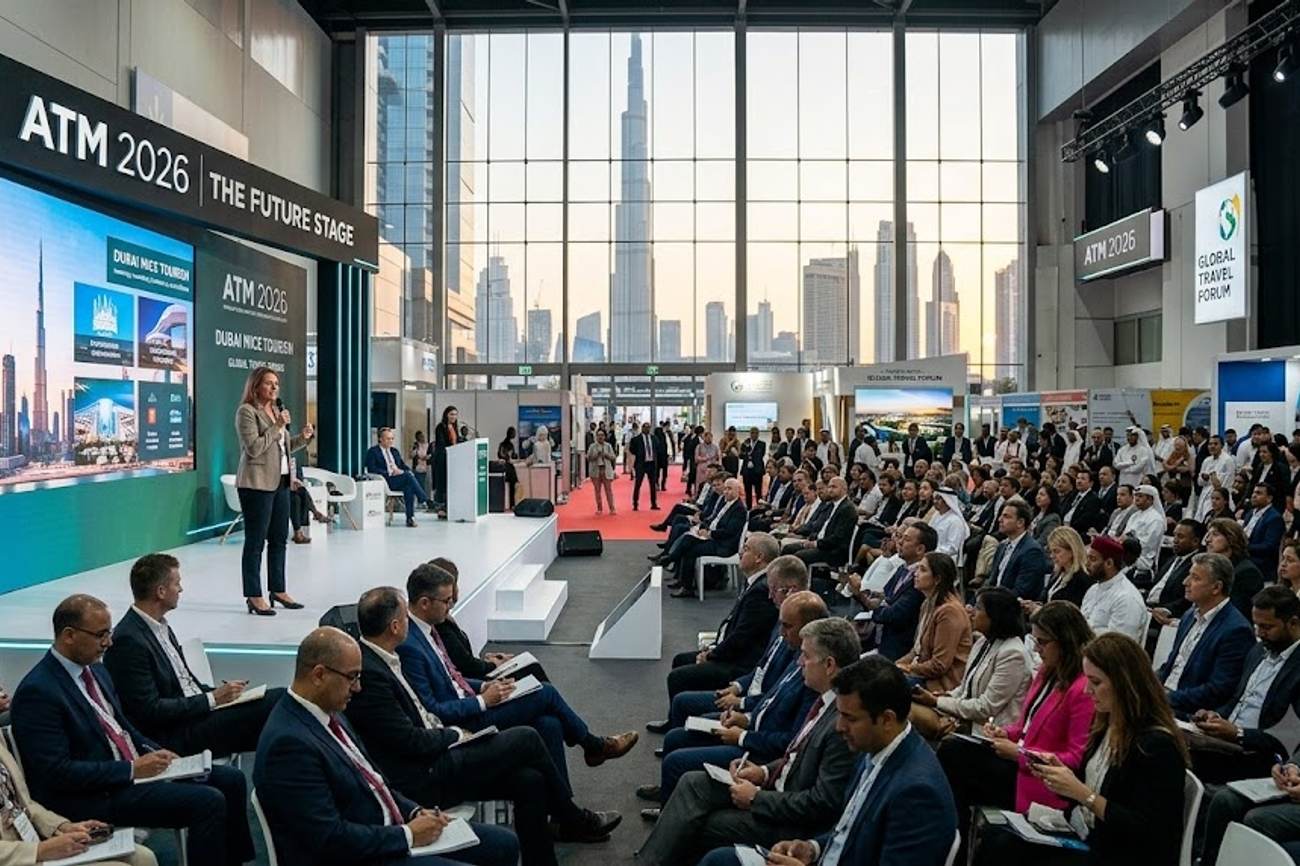
Image generated by AI
[Dubai, 2026] — Industry leaders at the Arabian Travel Market (ATM) 2026 have announced a fundamental restructuring of global travel infrastructure, moving beyond basic AI chatbots toward a synchronized, predictive architecture that integrates aviation, hospitality, and corporate events into a single operational matrix.
The four-day summit, hosted within the Tech & Innovation Hub of ATM Travel Tech, was opened by Rachel Travers, President of the UK Hub at RX Global. The event centered on the "Travel 2040" mandate, a strategic shift toward ecosystem interoperability. Keynote speaker Dr. Marwan Alzarouni, CEO of AI at the Dubai Department of Economy and Tourism (DET), detailed how artificial intelligence is now being deployed as a public-private utility rather than a mere software tool, aimed at eliminating "discoverability failures" across global travel corridors.
The Shift to Predictive Architectures
The catalyst for this transition is the failure of legacy digital strategies. Historically, the tourism sector treated technology as a supplementary marketing layer, relying on static search engine optimization (SEO) and siloed property management systems. This reactive approach created fragmented data gaps that hindered the traveler's journey.
The current framework replaces these silos with shared data pipelines. By integrating information across regional regulatory bodies, aviation networks, and hospitality groups, the industry is moving toward a model where discovery is handled by autonomous agents. These agents do not rely on linear keyword searches but instead parse complex, multi-variable preferences—including carbon thresholds, dietary compliance, and accessibility requirements—to generate unified itineraries in real-time.
This systemic overhaul is particularly evident in the MICE (meetings, incentives, conferences, and exhibitions) sector. The integration of ambient telemetry and machine learning now allows for the automation of high-friction logistics, such as arrival flow management and dynamic breakout-room allocation.
Markets and Sectors Impacted
The transition to an interoperable AI ecosystem affects a broad spectrum of stakeholders, from individual leisure travelers to massive corporate entities.
- Corporate Delegates & MICE Tourism: Attendees at large-scale venues, such as the Dubai World Trade Centre (DWTC), will experience automated badge generation, real-time seminar matchmaking, and hyper-personalized spatial navigation.
- Hospitality Asset Managers: Hotel operators are shifting toward AI-driven yield management to optimize convention hotel occupancy and exhibition floor space.
- Aviation & Transport Networks: Carriers are integrating into shared data pipelines to ensure seamless connectivity schedules that align with MICE logistics.
- Destination Management Organizations (DMOs): Agencies are now required to implement standardized metadata schemas to ensure their destinations are "discoverable" by semantic AI layers.
- Tech Providers: Companies including Sabre, Trip.com, Tripadvisor, Wego, MakeMyTrip, RateGain, and Visa are collaborating to move away from proprietary, single-vendor software toward interoperable APIs.
What This Means for Travelers
For the passenger or delegate, the "Travel 2040" vision translates into a significant reduction in planning friction, though it introduces new concerns regarding digital autonomy.
The End of Manual Itinerary Building Travelers will no longer spend hours toggling between flight aggregators, hotel sites, and event agendas. Autonomous trip-planning assistants will handle the end-to-end lifecycle of a trip, adjusting schedules instantly based on real-time data. If a flight is delayed, the AI will automatically reschedule airport transfers, notify the hotel, and adjust the conference registration time without human intervention.
Hyper-Personalized Venue Experiences Inside massive exhibition complexes, "ambient telemetry" means the environment responds to the traveler. Instead of static maps, travelers receive dynamic navigation based on their specific interests and scheduled meetings, effectively eliminating the confusion of navigating multi-hall venues.
The Trade-off: Privacy vs. Convenience This level of efficiency requires constant data sharing. Travelers will be subject to increased tracking of physical movements and session engagement. There is also a growing risk of "algorithmic bias," where AI recommends only mainstream commercial pathways, potentially marginalizing authentic local discoveries and serendipitous experiences.
Governance and the Road to 2040
The scale of this integration has necessitated high-level diplomatic intervention to ensure cross-border synchronization. Ministerial debates featured H.E. Abdulla bin Touq Al Marri (UAE Minister of Economy and Tourism), H.E. Shaikha Al Nuwais (UN Tourism Secretary-General), H.E. Fatima bint Jafar Al Sairafi (Bahrain Minister of Tourism), and Apostolos Tzitzikostas (European Commissioner for Sustainable Transport and Tourism).
These leaders are focusing on three primary pillars of governance:
- Unified Crisis Communication: Establishing shared protocols for cross-border emergencies to ensure passenger safety and rapid rerouting.
- Harmonized Messaging: Ensuring that destination data is consistent across all AI discovery layers to prevent misinformation.
- Co-Investment Models: Treating AI infrastructure as a utility—similar to electricity or water—where governments and private firms co-fund the underlying data pipes.
The workforce is also evolving. The "AI vs Human" discourse at the summit emphasized that as automation handles logistics, human professionals will be reallocated to "high-touch" roles. This includes crisis negotiation, bespoke curation, and strategic partnership building—areas where empathy and complex human judgment remain irreplaceable.
Operational Requirements for Stakeholders
To remain viable in this new ecosystem, operators must move beyond traditional digital marketing. The following mandates have been established for those operating within the Dubai and broader regional corridors:
Audit Semantic Discoverability Operators must stop optimizing for keywords and start optimizing for semantic AI. This means ensuring that hotel inventories and transport schedules are formatted in a way that autonomous agents can parse them accurately.
Formalize Data-Consent Protocols Especially within the MICE sector, organizers are now required to establish transparent consent frameworks. Because AI modules track physical movement within venues to optimize flow, travelers must be explicitly informed of how their telemetry data is used and stored.
Prioritize Interoperable APIs The era of the "closed loop" software is ending. Investment is being steered away from proprietary vendor tools and toward open Application Programming Interfaces (APIs). This ensures that a hotel's system can "talk" to an airline's system and a government's customs portal without friction.
The scale of this innovation was on full display at the ATM 2026 innovation footprint, where over 180 exhibitors from 30 countries showcased the convergence of robotics, fintech, and green technology across an 850-square-metre space. Research partners including Tourism Economics, Euromonitor International, and Dragon Trail International continue to monitor these developments to ensure regional resilience.
FAQ: AI Travel Integration 2026
Do I need to download a specific app to use these AI assistants? No. The goal of the "Travel 2040" mandate is ecosystem interoperability. These services are designed to function as ambient layers across multiple platforms, meaning your preferences follow you across different providers without needing individual app installations.
How is my data protected in a "shared pipeline" model? The new framework moves data protection from a "compliance checkbox" to a shared infrastructural protocol. This means security is baked into the API level, though travelers are encouraged to review the specific data-consent protocols of event organizers.
Will AI replace travel agents and event planners? No. The industry is shifting human capital toward "high-touch" services. While AI handles the logistics and scheduling, human professionals will focus on bespoke curation, empathy-driven service, and complex crisis management.
Will this technology affect how I navigate airports and convention centers? Yes. Through ambient telemetry and machine learning, you will receive hyper-personalized spatial navigation, reducing the time spent searching for gates, seminars, or breakout rooms in large complexes like the DWTC.
The era of the search bar is ending; the era of the autonomous itinerary has arrived.
#ATM2026 #DubaiDET #MICETourism #Travel2040 #DWTC #AviationAI
Related Travel Guides
Disclaimer
This article is for informational and educational purposes only. It does not constitute legal, financial, or professional advice. While we strive to provide accurate and up-to-date information, travel policies, regulations, and conditions change rapidly. Always verify information with official sources before making travel decisions. Nomad Lawyer makes no representations about the accuracy, reliability, completeness, or suitability of the information provided. Readers should consult qualified professionals for advice specific to their circumstances. The views expressed in this article are those of the author and do not necessarily reflect the views of Nomad Lawyer.
Kunal K Choudhary
Co-Founder & Contributor
A passionate traveller and tech enthusiast. Kunal contributes to the vision and growth of Nomad Lawyer, bringing fresh perspectives and driving the community forward.
Learn more about our team →