
Dover Adapts As Biometric Border Checks Expand
Dover Adapts As Biometric Border Checks Expand

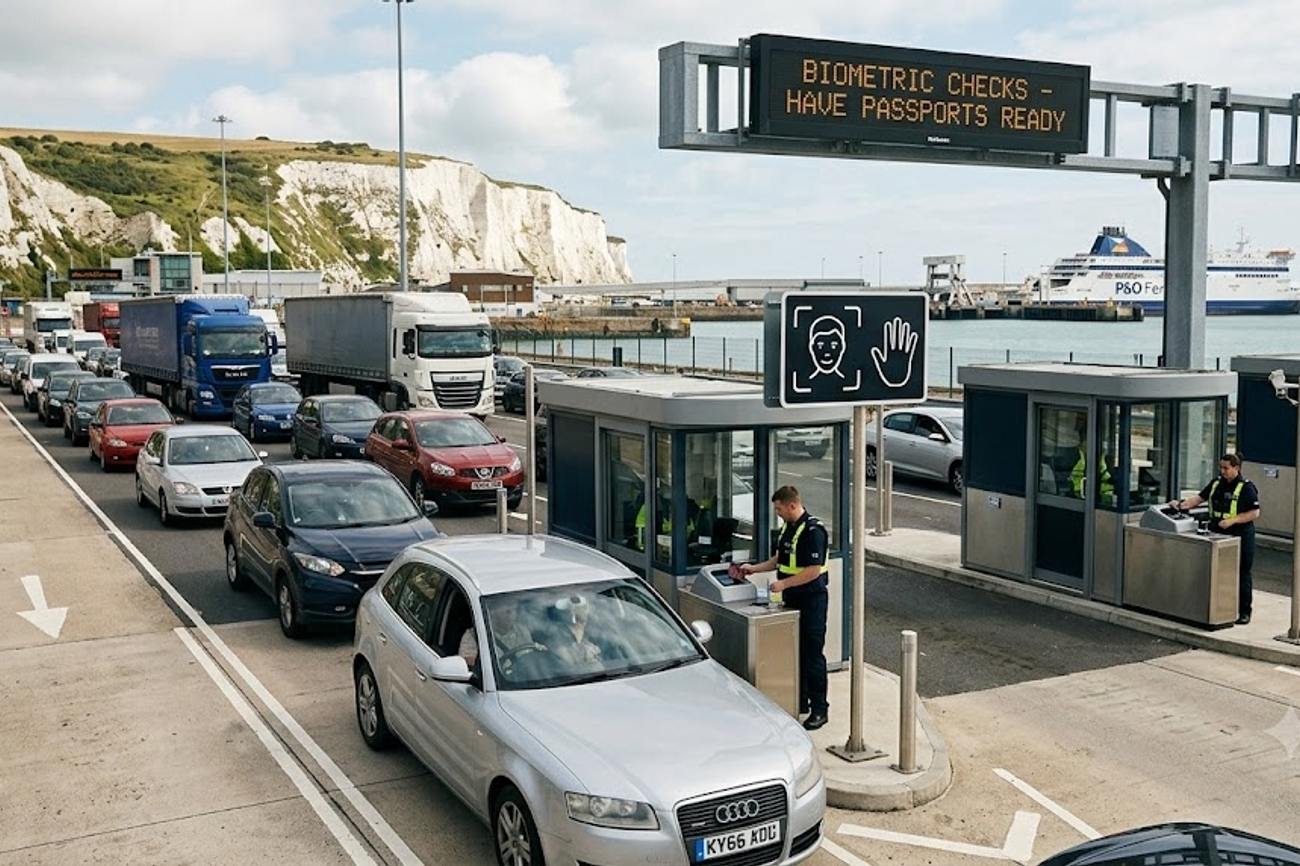
Image generated by AI
The introduction of the EU Entry/Exit System (EES) mandates that every non-EU traveler entering the Schengen area on a short stay must now establish a digital profile comprising passport data, facial recognition, and fingerprints. This regulatory shift transforms the English Channel crossings from traditional passport-stamping exercises into high-stakes biometric data collection operations. For the millions who transit through Dover and St Pancras International, the border is no longer just a legal checkpoint but a digital bottleneck where physical transport logistics must synchronize perfectly with cloud-based identity verification.
The Digital Architecture of the Channel Crossing
The transition to EES represents a fundamental move away from manual border control. Historically, the "stamping" of passports served as the primary evidence of entry and exit dates. The new system replaces this with a centralized digital record. For the first-time registrant, the process is invasive and time-consuming, requiring the capture of biometric markers. Once this profile is established, subsequent journeys are intended to be streamlined, though the initial rollout phase is expected to create significant friction.
The logistical burden falls heavily on the UK-side infrastructure because French border control operates within British territory to expedite the flow of traffic. This means the Port of Dover, the Eurotunnel at Folkestone, and St Pancras International are essentially acting as extraterritorial processing centers for the European Union. The UK Government has allocated funding for additional kiosks and infrastructure across these three hubs to mitigate the risk of total gridlock.
Operational Divergence: Coaches, Cars, and Rail
The implementation of EES is not uniform across transport modes. The Port of Dover has developed a tiered approach to handle different vehicle types, recognizing that a coach carrying 50 passengers presents a different logistical challenge than a single family in a sedan.
| Transport Mode | Current EES Status | Processing Method | Primary Risk Factor |
|---|---|---|---|
| Coach | Active/Implemented | Dedicated biometric kiosks at Western Docks | Vehicle idling and lane congestion |
| Private Car | Pending/Partial | Awaiting operational French technology | Severe port-side traffic jams |
| Eurostar | Active/Integrating | Integrated terminal kiosks at St Pancras | Fixed departure windows (missed trains) |
For coach passengers, the Port of Dover has implemented a "de-boarding" strategy. Passengers exit the vehicle to complete registration at biometric kiosks before the coach proceeds toward the ferry terminal. This prevents the vehicle from remaining stationary in a processing lane indefinitely, which would otherwise paralyze the port's internal traffic flow.
Private vehicles remain the most volatile variable. While there are mentions of an emergency deployment of mobile kiosks for vehicle occupants slated for September 2026, the Port of Dover confirms that full biometric registration for car passengers is not yet routine. The gap between the planned "emergency" measures and current operational reality suggests a fragile transition period where car travelers may face unpredictable delays.
The UK government is expanding the use of eGates and biometric facial recognition technology to streamline passenger flow at the Port of Dover. These upgrades aim to reduce congestion and wait times for eligible travelers entering the country, as detailed by the UK Home Office.
At St Pancras International, the pressure is temporal rather than spatial. Unlike a ferry, where a delay might simply mean a later departure or a longer queue, Eurostar operates on a rigid schedule. The addition of EES registration adds another layer to an already complex pre-departure sequence. If the biometric kiosks fail or the queue exceeds the available time window, passengers risk missing their fixed departure slots entirely.
Expert Analysis: The Logistics of Digital Friction
For travelers booking these routes, the direct consequence of EES is the "first-trip penalty." The initial registration process is significantly more labor-intensive than any previous border check. This creates a paradoxical situation: while the long-term goal of the European Commission is to increase efficiency, the short-term reality is a deliberate slowing of passenger flow.
The pricing pressure this creates is indirect but potent. As border processing times increase, ferry and rail operators may be forced to adjust their boarding windows. If the "turnaround time" for a vessel or train increases due to biometric delays, the overall capacity of the route decreases. In the aviation and maritime industries, decreased capacity usually leads to higher ticket prices.
Furthermore, the reliance on "operational readiness" means that the system is only as strong as its weakest link. If the French biometric database experiences latency or a kiosk at the Western Docks malfunctions, the backlog does not stay at the kiosk—it spills back into the motorway. We are seeing a shift where immigration policy is now a primary driver of transport planning. The "digital border" is no longer a software update; it is a physical barrier made of queues and kiosks.
For the frequent nomad or business traveler, the strategy must shift from "just-in-time" arrival to "buffer-zone" arrival. The risk of a technical glitch during the initial registration phase is too high to ignore. Travelers should ensure they are using biometric passports, as these are the foundational requirement for the EES digital profile.
Travelers are encouraged to ensure their passports are biometric-compliant to utilize these automated systems and avoid manual processing delays. For the most current guidance on entry requirements and border protocols, passengers should consult the official VisitBritain portal.
Key Takeaways
- Initial Registration Delay: First-time EES users will face significantly longer processing times than repeat travelers due to the requirement for fingerprints and facial scans.
- Mode-Specific Risks: Coach passengers must expect to leave their vehicles for kiosk registration; rail passengers face the highest risk of missing fixed departures.
- Car Passenger Uncertainty: Full biometric implementation for private vehicles is still a work in progress, with emergency mobile kiosks not expected until September 2026.
- Pre-Departure Processing: All EES procedures for those traveling to France via Dover, Folkestone, or St Pancras will be completed on UK soil before departure.
- Infrastructure Funding: The UK Government has funded expanded kiosk networks to prevent the total collapse of Channel transit during the transition.
FAQ: Channel Border Controls 2026
Do I need a special passport for the new EES system? Yes, you must possess a biometric passport. The system relies on the electronic chip within these passports to link your physical identity to the digital profile created via facial and fingerprint scans.
Will I have to do the biometric scan every time I cross? No. The full registration process—including fingerprints and facial recognition—is primarily for the first time you enter the Schengen area. Subsequent trips should be faster, as the system verifies your existing digital record.
How much extra time should I allow for my journey? The UK Government warns that checks will take longer than previous passport controls. Travelers are advised to allow significant additional buffer time, particularly for first-time registrations and those traveling by car.
Where exactly will the biometric checks take place? For those crossing the Channel, checks are performed by French authorities within UK territory at the Port of Dover, the Eurotunnel in Folkestone, and St Pancras International.
The era of the ink-stamp is over; the era of the digital footprint has arrived.
Tags: EU Entry Exit System 2026, Port of Dover, St Pancras International, Eurostar, Schengen Area Border Policy, Channel Crossing Logistics
Related Travel Guides
- Texas Teams Up With California and More in Skyrocketing US Tourism as Leading Source of Mexican Tourist Arrivals for Eight Straight Months in 2026
- Poland Business Travel Magic Is Astonishing Global Executives And Completely Transforming International Corporate Journeys
- Portugal and Other European Countries Are Now Offering Better Cultural Tourism at Vibrant Markets
Disclaimer
This article is for informational and educational purposes only. It does not constitute legal, financial, or professional advice. While we strive to provide accurate and up-to-date information, travel policies, regulations, and conditions change rapidly. Always verify information with official sources before making travel decisions. Nomad Lawyer makes no representations about the accuracy, reliability, completeness, or suitability of the information provided. Readers should consult qualified professionals for advice specific to their circumstances. The views expressed in this article are those of the author and do not necessarily reflect the views of Nomad Lawyer.
Kunal K Choudhary
Co-Founder & Contributor
A passionate traveller and tech enthusiast. Kunal contributes to the vision and growth of Nomad Lawyer, bringing fresh perspectives and driving the community forward.
Learn more about our team →