
Poland Business Travel Magic Is Astonishing Global Executives And Completely Transforming International Corporate Journeys
Poland Business Travel Magic Is Astonishing Global Executives And Completely Transforming International Corporate Journeys

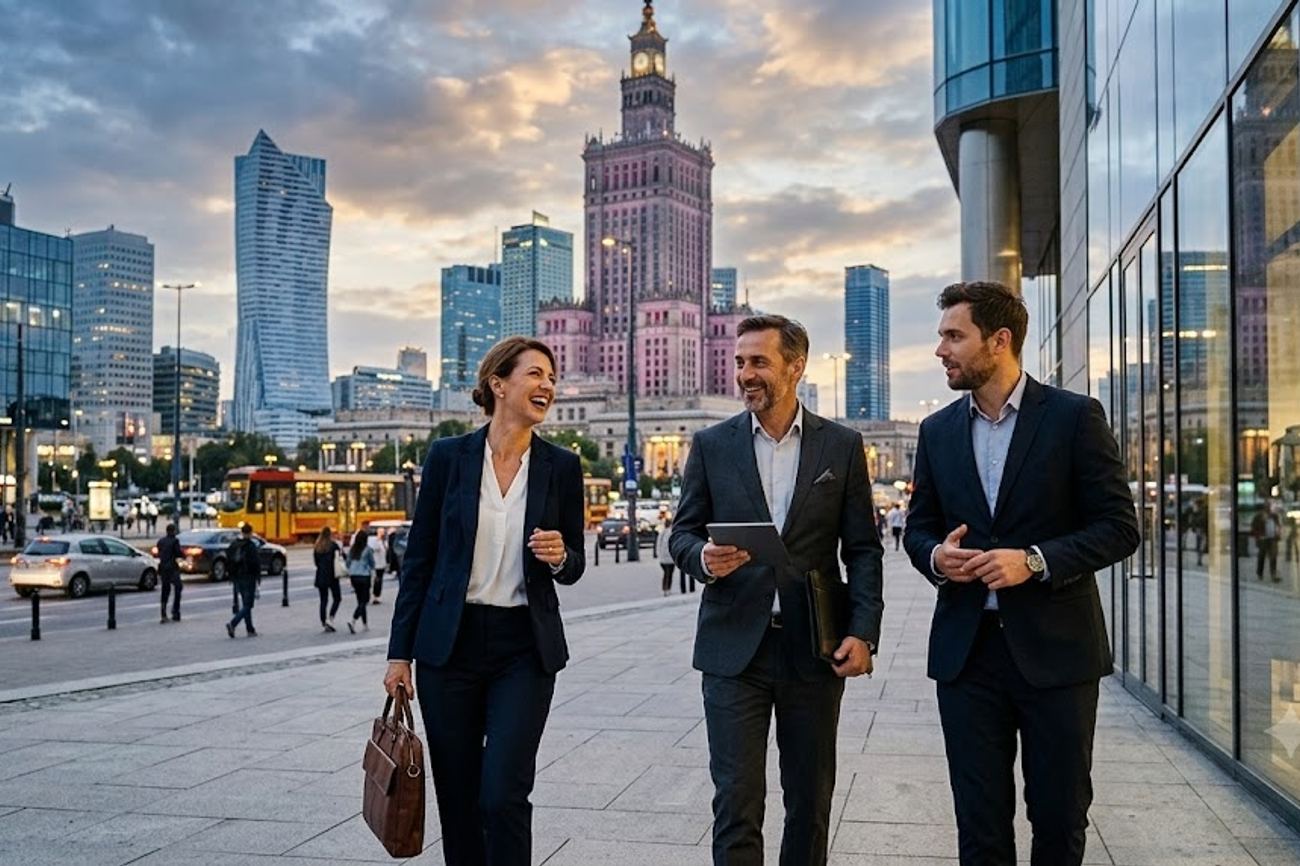
Image generated by AI
Poland's corporate travel sector has transitioned from a secondary European destination to a primary hub for Foreign Direct Investment (FDI), with the country consistently ranking as one of the top destinations for business process outsourcing in Central and Eastern Europe. This shift is evidenced by the aggressive modernization of urban infrastructure and the strategic positioning of regional hubs like Wrocław and Katowice, which now compete directly with established Western European centers for technical talent and corporate headquarters.
The Polish Corporate Corridor in Numbers
The current trajectory of Poland's economic integration into the EU is visible through its specialized regional clusters. While Warsaw remains the administrative heart, the distribution of business travel is now fragmented across four distinct industrial pillars: the heavy engineering core of Upper Silesia, the maritime gateway of Gdańsk, the trade-fair ecosystem of Poznań, and the tech-centric hub of Wrocław.
Data from the World Travel & Tourism Council (WTTC) indicates that the recovery of business travel in the EU has been non-linear, but Poland has leveraged its "young and skilled workforce" to attract long-term technical contracts. This is particularly evident in Katowice, where the demand for utility vehicle rentals and multi-night hotel stays is driven by environmental compliance officers and structural engineers. Unlike leisure travel, which is seasonal, the corporate flow into the Upper Silesia region remains steady year-round due to the nature of heavy manufacturing and energy grid management.
In the north, Gdańsk has evolved into a focal point for offshore energy and maritime trade. The arrival of naval architects and clean energy investors has shifted the local hospitality demand toward waterfront conference venues and high-end executive suites. This represents a transition from traditional port operations to a high-value service economy, attracting a demographic of travelers with significantly higher average daily spend (ADS) than the regional average.
Regional Specialization and Market Shifts
The Polish market is no longer a monolith; it is a collection of specialized economic zones. To understand the movement of corporate travelers, one must analyze the specific industry drivers of each city. For instance, Poznań operates on a "spike" model, where hotel occupancy and flight frequencies fluctuate violently based on the international trade fair calendar. In contrast, Wrocław operates on a "steady-state" model, driven by the consistent needs of software architects and systems engineers who require extended-stay executive suites.
The following table illustrates the divergence in travel patterns across these primary Polish business hubs:
| Hub City | Primary Traveler Profile | Booking Pattern | Primary Infrastructure Demand |
|---|---|---|---|
| Katowice | Technical Auditors / Engineers | Long-term / Multi-night | Utility Vehicles & Industrial Lodging |
| Gdańsk | Maritime Execs / Energy Investors | Project-based / Event-driven | Waterfront Venues & Executive Suites |
| Poznań | Trade Fair Delegates / Wholesalers | High-volume Spikes | Short-term Hotel Capacity & Event Space |
| Wrocław | Tech Consultants / Software Architects | Extended Stay / Recurring | Co-working Hubs & Corporate Apartments |
This regional fragmentation forces travel managers to move away from "one-size-fits-all" Poland itineraries. The logistics of visiting a manufacturing complex outside a city center require a fundamentally different transport strategy than navigating the trade fair districts of Poznań.
Practical Traveler Advisory and Strategic Insights
For the corporate traveler or the nomad lawyer coordinating multi-site operations, the data suggests three critical shifts in booking strategy.
First, if your itinerary includes Poznań during a major trade exposition, the "spike" model of the city means that hotel pricing is dynamic and highly volatile. Booking 12-16 weeks in advance is no longer optional; it is a requirement to avoid extreme price surges and capacity shortages.
Second, for those visiting the industrial zones of Upper Silesia or the technical facilities surrounding Wrocław, the "city-center hotel" trap must be avoided. Because major production facilities are located in outlying districts, travelers should prioritize hotels with dedicated chauffeur services or secure long-term utility vehicle rentals. Relying on standard ride-share apps in these industrial corridors often leads to significant transit delays that can compromise a tight professional schedule.
Poland's strategic infrastructure is enhancing corporate mobility, with Warsaw Chopin Airport serving as a primary gateway for global executives. Travelers can optimize their logistics by utilizing the official Lotniska Stołeczne portal for real-time flight tracking and terminal navigation.
Third, the professional etiquette in Poland—specifically in Warsaw—requires a transition from formal to informal. Data on business culture suggests that while the initial contract phase is rigid and punctual, the actual "closing" of deals often occurs in relaxed settings. Travelers should allocate budget and time for sit-down dinners and coffee meetings, as these are the primary venues for building the professional trust necessary for long-term partnerships.
Projecting the Modernization Trajectory
Based on the current focus on futuristic architecture and EU integration, Poland is positioning itself as the primary bridge between Western and Eastern European markets. We can project a continued increase in "blended travel" (bleisure), where technical experts visiting Wrocław or Katowice extend their stays to experience the modernization of Polish urban centers.
As Poland continues to sign international treaties and attract regional headquarters, we expect to see a surge in the development of "executive corridors"—seamless transit links between the four hubs mentioned above. The growth of high-tech manufacturing in Wrocław, combined with the maritime expansion in Gdańsk, suggests that Poland will see a year-over-year increase in high-net-worth corporate arrivals.
Industry data from IATA suggests that regional connectivity is the primary driver for corporate growth. As Polish airports expand their capacities to handle more direct international flights to these secondary cities (bypassing Warsaw), the reliance on domestic transfers will decrease, further accelerating the economic autonomy of the regional hubs.
FAQ: Poland Corporate Travel 2025
Will hotel prices in Poznań increase during trade fairs? Yes. Poznań operates on a high-volume spike model. During major exhibitions, hotel occupancy reaches near-capacity, leading to significant price increases. Early booking (3+ months) is the only way to secure competitive rates.
Which city is best for tech-related business travel? Wrocław is the premier destination for software development, systems engineering, and business service centers. It offers the best infrastructure for extended stays, including corporate apartments and modern co-working spaces.
Is it necessary to rent a car for industrial visits in Katowice? Yes. Because heavy manufacturing and energy facilities in Upper Silesia are located outside the urban core, utility vehicle rentals or private chauffeur services are essential for operational efficiency.
How should I handle initial meetings in Warsaw? Maintain strict punctuality and a formal demeanor. Polish executives value meticulous preparation and structured dialogue. Once trust is established, meetings typically move to more informal, social settings.
The data is clear: Poland is no longer just a transit point, but a destination for high-value industrial and technological investment.
Tags: Poland-FDI-Growth-2025, Wroclaw-Tech-Hub-Metrics, Upper-Silesia-Industrial-Travel, Gdansk-Maritime-Economy, Poznan-Trade-Fair-Volatility
Related Travel Guides
Disclaimer
This article is for informational and educational purposes only. It does not constitute legal, financial, or professional advice. While we strive to provide accurate and up-to-date information, travel policies, regulations, and conditions change rapidly. Always verify information with official sources before making travel decisions. Nomad Lawyer makes no representations about the accuracy, reliability, completeness, or suitability of the information provided. Readers should consult qualified professionals for advice specific to their circumstances. The views expressed in this article are those of the author and do not necessarily reflect the views of Nomad Lawyer.
Kunal K Choudhary
Co-Founder & Contributor
A passionate traveller and tech enthusiast. Kunal contributes to the vision and growth of Nomad Lawyer, bringing fresh perspectives and driving the community forward.
Learn more about our team →