
Uzbekistan Unlocks New Travel Era With High Speed Tashkent Nukus Train Cutting Journeys and Connecting Regions
Uzbekistan Unlocks New Travel Era With High Speed Tashkent Nukus Train Cutting Journeys and Connecting Regions

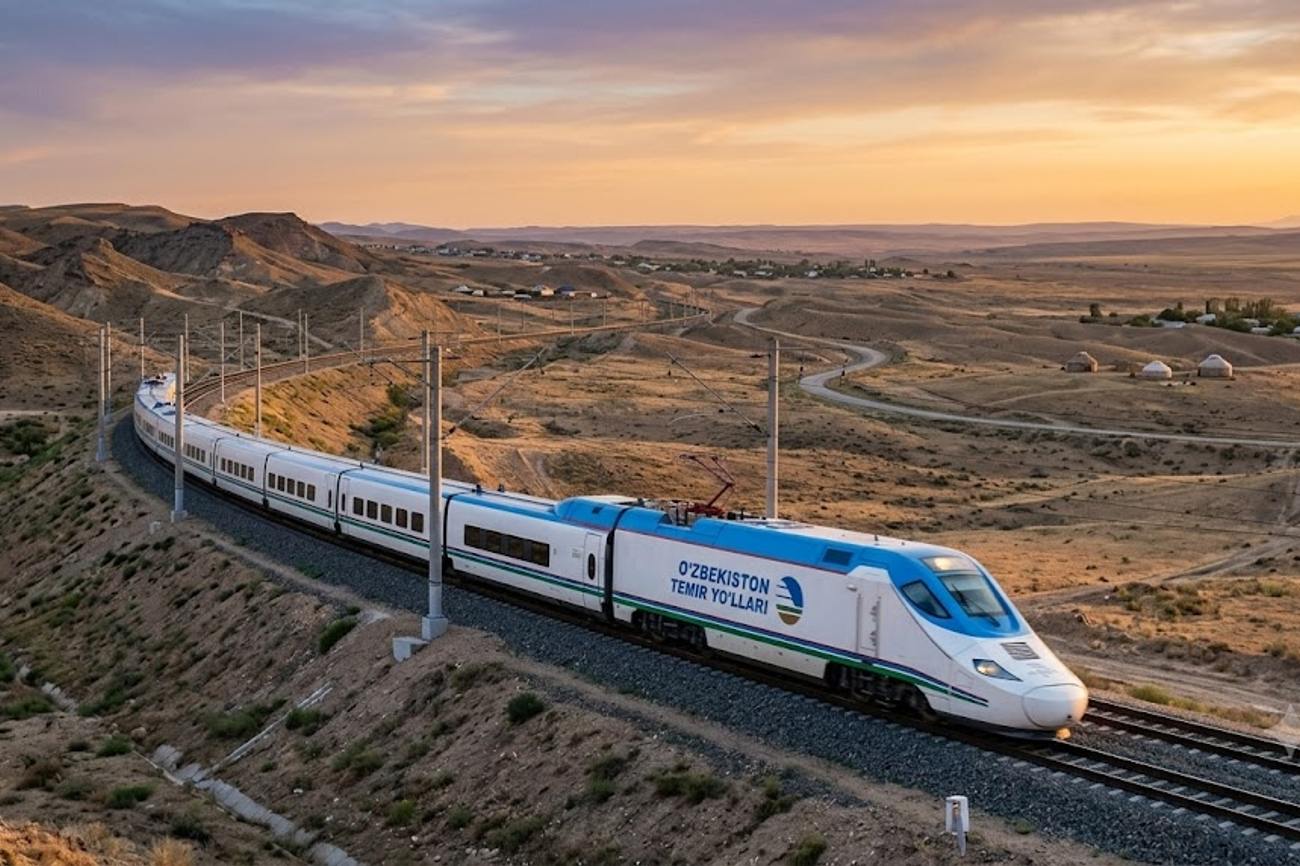
Image generated by AI
[Tashkent, October 2023] — Uzbekistan is slashing travel times between its capital and the western region of Karakalpakstan by more than half with the launch of a high-speed rail link scheduled for March 2027. The new service will reduce the current 16-hour transit between Tashkent and Nukus to approximately seven hours, removing nine hours of travel time from the itinerary.
The project involves the deployment of modern electric passenger trains operating on an upgraded rail corridor. By integrating the capital with the Aral Sea region, the Uzbek government aims to catalyze economic cooperation, accelerate business movement, and open the western frontier to a higher volume of international and domestic tourists.
The Infrastructure Catalyst
The transition to high-speed operations is made possible by extensive modernization and electrification efforts along the Bukhara–Miskin–Nukus route. These technical upgrades are essential for supporting advanced electric rolling stock, which requires specific power infrastructure and track stability not present in the legacy system.
By prioritizing electrification, the Ministry of Transport of the Republic of Uzbekistan is shifting the national transit strategy toward sustainable growth. This move reduces the heavy reliance on carbon-intensive road transport and provides a cleaner alternative for reaching the ecologically sensitive Aral Sea basin. The upgraded network is designed to improve overall reliability across long-distance routes, ensuring that the seven-hour transit time remains consistent regardless of seasonal weather shifts.
Affected Travelers, Airlines and Logistics
The implementation of this service will fundamentally alter the movement of people and capital across the Uzbek interior. The primary beneficiaries include:
- International Tourists: Travelers visiting the Savitsky Museum in Nukus, one of Central Asia's premier repositories of Russian avant-garde art, will no longer face a grueling overnight rail journey.
- Environmental Researchers: Experts and tourists visiting Muynak and the Aral Sea region will have a viable, fast-track land connection from the capital.
- Business Professionals: Entrepreneurs and corporate agents moving between Tashkent's financial hub and Karakalpakstan's regional markets will see a drastic increase in operational efficiency.
- Regional Residents: Citizens of Karakalpakstan gain a comfortable, modern alternative to long-distance road travel and expensive airfare.
- Domestic Aviation: Local airlines operating the Tashkent–Nukus corridor may face increased competition, as the total "door-to-door" time for rail (including boarding) begins to rival the time required for airport security and check-in.
Practical Traveler Advisory and Strategic Insights
For the average traveler, this is not merely a speed upgrade but a complete shift in how the country is navigated. Currently, a trip to Nukus is a commitment that often requires overnight accommodation or an exhausting 16-hour endurance test on a train. Starting in March 2027, the journey becomes a standard day trip.
Practical impacts include:
- Itinerary Expansion: Travelers can now realistically include Nukus and the Aral Sea in a standard 10-to-14-day Uzbekistan tour without sacrificing several days to transit.
- Cost-Benefit Shift: While high-speed rail typically carries a premium over slow rail, the nine-hour time saving makes it a competitive alternative to flying when considering the cost of airport transfers and the time spent in security queues.
- Hospitality Growth: Travelers should expect a surge in the development of hotels, restaurants, and tour operators in the Nukus region to accommodate the projected increase in visitor volume.
The Path to 2027
The timeline for the project is fixed for a March 2027 debut, with the intervening period focused on finalizing the electrification of the Bukhara–Miskin–Nukus segment. This project is a cornerstone of a broader national strategy to modernize transport infrastructure and integrate remote regional centers into the primary economic network.
The introduction of high-speed rail services between Tashkent and Nukus significantly reduces travel time to the Karakalpakstan region, facilitating easier access to the ancient ruins of Khorezm. Travelers can now coordinate their itineraries more efficiently by booking tickets through the Uzbekistan Railways official portal.
As the Uzbekistan Railways (O'zbekiston Temir Yo'llari) continues to expand its high-speed capabilities, the focus will likely shift toward optimizing ticketing systems and integrating these new routes with existing tourist circuits. The government anticipates that the increased accessibility will lead to higher investment in the western regions, turning Karakalpakstan from a remote outpost into a primary destination for cultural and environmental tourism.
Strategic Logistics Analysis and 2026 Traveler Insights
The compression of the Tashkent-Nukus corridor from 16 hours to seven represents a paradigm shift in Central Asian logistics. For the sophisticated traveler, this transition transforms Nukus from a "destination of endurance" into a viable extension of a standard Uzbek itinerary. As the system approaches its 2027 launch, travelers planning for 2026 and beyond should adopt a strategic approach to regional movement.
Optimizing the Itinerary Historically, the distance to Karakalpakstan necessitated a "hub-and-spoke" model, often relying on expensive domestic flights or grueling overnight sleepers. With the high-speed link, the "Linear Western Traverse" becomes the gold standard. Travelers can now realistically execute a multi-city circuit—Tashkent to Samarkand, Bukhara, and finally Nukus—without the logistical fatigue that previously deterred visitors from the Aral Sea region.
Peak Timing and Seasonal Windows The Karakalpakstan region is subject to extreme continental climates. The optimal windows for travel are April to early June and September to October. During these periods, the high-speed rail provides a climate-controlled sanctuary against the desert heat and dust storms. Travelers should note that winter travel, while offering a stark, haunting beauty to the Aral landscape, can be hampered by extreme cold; the reliability of the new electrified line will be a critical advantage over road transport during these months.
Booking and Transit Alternatives Until the high-speed service is fully operational, the primary alternatives remain the Afrosiyob (for the Tashkent-Bukhara leg) combined with regional trains or domestic flights via Uzbekistan Airways. However, once the new link opens, booking windows are expected to tighten. High-speed tickets in Uzbekistan typically sell out rapidly; travelers should utilize the official Uzbekistan Railways (UTY) portal exactly 45 days prior to departure.
Regional Context for the Modern Nomad Nukus is no longer merely a transit point for the Aral Sea. The Savitsky Museum remains the primary cultural draw, but the increased accessibility will likely spur the growth of boutique hospitality and guided eco-tours in Muynak. Travelers should prepare for a "frontier" experience upon arrival in Nukus; while the transit is high-tech, the local infrastructure remains rustic, requiring a flexible approach to logistics and a preference for local guides to navigate the Karakalpakstan interior.
FAQ: Tashkent–Nukus Rail 2027
When does the high-speed service start? The service is officially scheduled to begin operations in March 2027.
How much time is saved on the journey? Travelers will save approximately nine hours. The current 16-hour trip will be reduced to roughly seven hours.
Which major attractions become more accessible? The Savitsky Museum in Nukus and the environmental sites of the Aral Sea region, including Muynak, will be significantly easier to reach.
Will this replace flying to Nukus? While flights will still exist, the seven-hour rail journey is expected to be a practical alternative when considering total travel time, including airport logistics.
The distance between the capital and the coast just got shorter.
#Tashkent-Nukus2027 #UzbekistanRailways #KarakalpakstanTourism #AralSeaTransit #UzbekistanInfrastructure #NukusTravel
Related Travel Guides
Disclaimer
This article is for informational and educational purposes only. It does not constitute legal, financial, or professional advice. While we strive to provide accurate and up-to-date information, travel policies, regulations, and conditions change rapidly. Always verify information with official sources before making travel decisions. Nomad Lawyer makes no representations about the accuracy, reliability, completeness, or suitability of the information provided. Readers should consult qualified professionals for advice specific to their circumstances. The views expressed in this article are those of the author and do not necessarily reflect the views of Nomad Lawyer.
Naina Thakur
Contributor & Travel Specialist
Travel enthusiast and legal writer covering visa regulations, responsible tourism, and cultural journeys across global destinations.
Learn more about our team →