
Delta Air Lines Triggers US Domestic Flight Cancellations to Shield LAX-Hong Kong Transpacific Route From Massive Travel Chaos and Airport Disruptions: Latest Airline News
As soaring fuel costs and severe travel chaos paralyze US domestic routes, Delta aggressively reallocates capacity to launch a heavily fortified, disruption-proof Los Angeles-Hong Kong corridor.

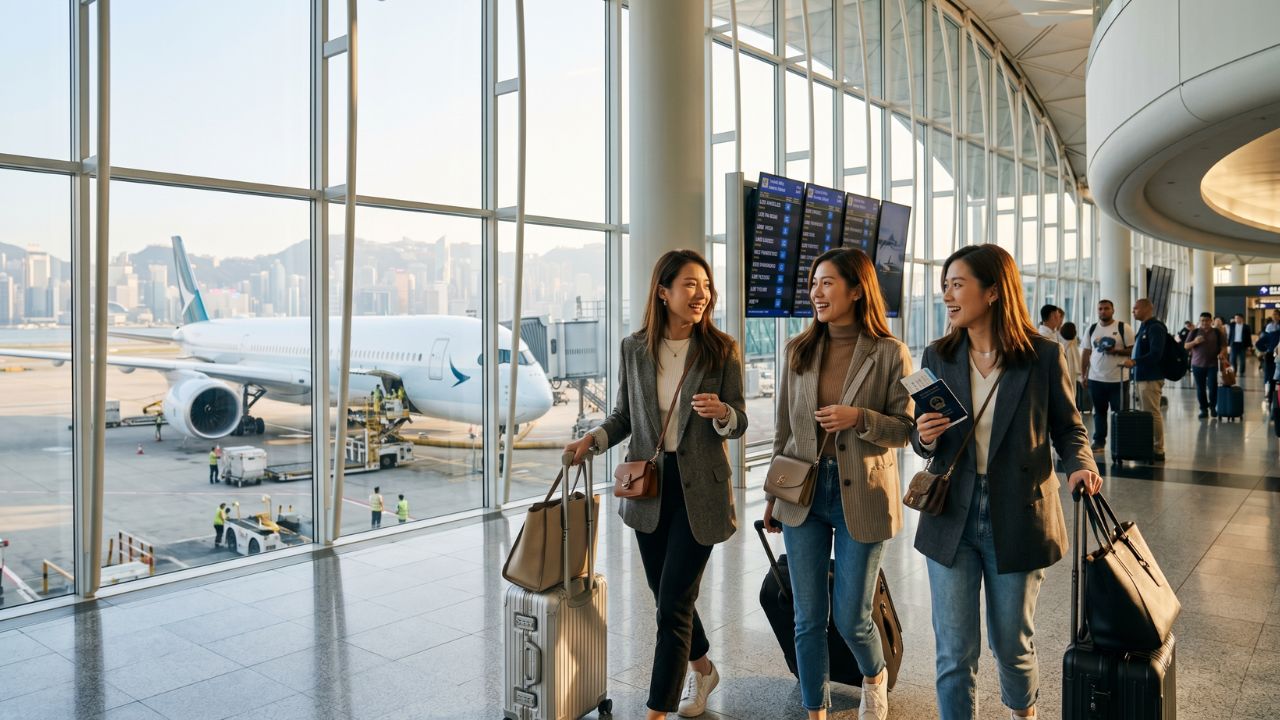
Image generated by AI
In a highly aggressive network restructuring designed explicitly to protect premium international passengers from the devastating travel chaos and rolling flight cancellations currently infecting vulnerable regional markets, Delta Air Lines has executed a massive capacity pivot. Announced on June 18, 2026, the US carrier is officially restoring its daily Los Angeles to Hong Kong service, deploying the highly efficient Airbus A350-900 to build an impenetrable transpacific fortress. However, to fund this disruption-proof Asian corridor amid soaring global fuel volatility, Delta is simultaneously triggering widespread flight cancellations across the United States, Mexico, and The Bahamas. Recognizing that corporate and leisure travelers are entirely exhausted by the severe airport disruptions that routinely trap them on highly seasonal, low-margin routes, Delta is actively abandoning vulnerable markets to concentrate resources where schedule reliability can be guaranteed. As panicked domestic travelers face sudden network suspensions, this massive transpacific restoration and concurrent domestic cull stands as the premier headline in today's breaking airline news and absolutely vital global aviation updates.
By introducing direct passenger coordination and dynamic scheduling backups, the regional aviation hubs target growing passenger demand across vital commerce sectors. The choice to coordinate flight departures in phases helps to manage gate capacity, supporting the country's broader regional transportation network.
Context: Sacrificing the Domestic Network to Shield the Pacific
For millions of tourists and corporate commuters navigating North American aviation this year, the sheer scale of operational bottlenecks at secondary hubs has transformed routine transit into a high-stakes gamble.
Historically, when airlines attempt to expand capacity uniformly across every market during periods of extreme fuel volatility, the entire network becomes brittle, leading to cascading flight cancellations when localized weather or ATC constraints trigger travel chaos. Delta Air Lines is refusing to engage in this failing strategy. Instead of maintaining year-round frequencies on highly seasonal domestic and leisure routes that are highly susceptible to airport disruptions, Delta is ruthlessly optimizing. The airline is actively suspending vulnerable connections out of Detroit, New York JFK, and Seattle to Mexico and the Bahamas. By stripping capacity from these disruption-prone sectors, Delta can guarantee absolute operational supremacy on its newly restored Los Angeles (LAX) to Hong Kong (HKG) route. Utilizing the flagship Airbus A350-900—designed for ultra-long-range reliability and significantly lower fuel burn—Delta ensures that its premium transpacific passengers are completely insulated from the operational failures paralyzing the domestic US market.
To view live flight schedules, verify the active delay status of your specific itinerary, or to track active regional airspace restrictions, travelers must consult official aviation directories. For direct booking access into this highly resilient, disruption-proof transpacific gateway, travelers should aggressively utilize the official portals for Delta Air Lines. To explore live flight tracking and monitor the exact severity of the domestic bottlenecks causing the flight cancellations you must now actively bypass, passengers can consult the official FlightAware tracking service.
Section-Wise Breakdown of the Capacity Shift
The Transpacific Fortress: LAX to Hong Kong
Absent from the network since 2018, the LAX-HKG corridor has been explicitly restored to serve as a heavily armored bypass against global travel chaos. Operating daily with the A350-900 (featuring premium suites and lower cabin altitude to reduce physical exhaustion), this approximately 15-hour flight reconnects Southern California with Asia’s premier financial hub. It strengthens LAX's position as a mega-hub—now operating over 160 peak-day departures—and provides travelers with a seamless, direct connection to Mainland China and Southeast Asia without relying on vulnerable third-party airports.
The Domestic Cull: JFK and Detroit Reductions
To guarantee the reliability of its premium international routes, Delta is ruthlessly trimming its domestic schedule. Services connecting New York JFK to St. Louis, Memphis, and Houston, alongside Raleigh-Durham to Las Vegas, are being entirely suspended by September 2026. Additionally, Detroit to Sacramento is suspended until March 2027. These highly calculated flight cancellations ensure that Delta’s aircraft and crew reserves are not squandered on low-margin routes that frequently collapse during domestic travel chaos.
Leisure Route Suspensions: Mexico and The Bahamas
The capacity cull extends heavily into the international leisure market. Responding to seasonal demand softening, high operating costs, and localized security concerns, Delta is executing severe flight cancellations out of Seattle and Boston. Routes to Cancun, Puerto Vallarta, San José del Cabo, Mexico City, and Nassau are facing outright suspensions or significant frequency reductions through November 2026. Passengers attempting to reach these holiday destinations must now navigate through connecting hubs like Salt Lake City or Atlanta, exposing them to potential airport disruptions.
Technical Roster: Delta Network Restructuring Data
To ensure absolute factual accuracy regarding the exact flights cancelled and the massive transpacific capacity restored to defeat global travel chaos, the following matrices detail the verified scheduling data:
Delta’s Los Angeles–Hong Kong Service at a Glance
| Feature | Details |
|---|---|
| Airline | Delta Air Lines |
| Route | Los Angeles (LAX) – Hong Kong (HKG) |
| Service Frequency | Daily |
| Aircraft | Airbus A350-900 |
| Flight Time | Approximately 15 hours |
| Previous Suspension | Route absent since 2018 |
| Primary Markets | Business travel, tourism, cargo, VFR (Visiting Friends and Relatives) travel |
Delta Air Lines Domestic Route Changes
| Route | Status | Expected Return |
|---|---|---|
| Detroit – Panama City, Florida | Weekend-only seasonal operation | Summer 2027 |
| Detroit – Sacramento | Suspended | March 2027 |
| New York JFK – St. Louis | Suspended | 8 September 2026 |
| New York JFK – Memphis | Suspended | 8 September 2026 |
| New York JFK – Houston | Suspended | 8 September 2026 |
| Raleigh-Durham – Las Vegas | Suspended | 8 September 2026 |
Delta Air Lines International Leisure Route Adjustments
| Route | Operational Change |
|---|---|
| Boston – Nassau, Bahamas | Suspended from 18 July to 5 September 2026 |
| Los Angeles – Mexico City | Suspended during June–November 2026 |
| Seattle – Cancun | Suspended from 2 June to 8 November 2026 |
| Seattle – Puerto Vallarta | Suspended from 6 October to 8 November 2026 |
| Seattle – San José del Cabo | Reduced frequency during June–November 2026 |
Comparing Delta’s Current Network Strategy
| Long-Haul Expansion | Capacity Reduction |
|---|---|
| Higher international demand | Seasonal domestic demand |
| Premium cabin revenue | Lower route profitability |
| Strong cargo opportunities | Higher operating costs |
| Global business connectivity | Network optimisation |
| Tourism recovery in Asia | Seasonal schedule adjustments |
Passenger Impact: Navigating the Domestic Cancellations
For the thousands of domestic commuters and holidaymakers reliant on direct flights to Las Vegas, St. Louis, or Cancun, these strategic flight cancellations represent a massive increase in connection anxiety.
The immediate passenger impact is the absolute loss of direct point-to-point convenience on secondary routes. Previously, a traveler heading from Seattle to Puerto Vallarta enjoyed a direct, disruption-free flight. Under the new schedule, that same passenger is forced to connect through a major hub like Salt Lake City or LAX, drastically increasing their exposure to severe airport disruptions and multi-day strandings if rolling weather delays strike the mainland US. Conversely, premium travelers heading to Asia are completely shielded. The restoration of the daily LAX-HKG route ensures that transpacific corporate executives never have to worry about their ultra-long-haul flight being sacrificed to support a failing domestic network.
Industry Analysis: The Ruthless Era of Network Optimization
Aviation industry analysts view Delta's aggressive domestic culling and simultaneous transpacific expansion as definitive proof that legacy carriers are adopting a ruthless "premium-first" survival strategy against rising travel chaos.
Analysts note that airlines can no longer afford to operate highly seasonal, low-yield routes when fuel prices surge. Instead of risking rolling network collapses, Delta is heavily protecting routes capable of generating strong premium cabin revenue and high cargo volumes (like Hong Kong). Industry experts warn that passengers traveling on secondary domestic corridors or highly seasonal routes to Mexico will increasingly face sudden flight cancellations, as carriers actively pull aircraft away from vulnerable regional markets to fortify highly profitable, disruption-resistant international mega-hubs.
Actionable Advice for Surviving US Network Gridlock
If you are navigating the highly volatile North American aviation network during the late 2026 travel season, execute this strategic planning checklist to fully bypass regional travel chaos:
- Verify Direct Flight Stability: If you are booked on a direct leisure flight to Mexico or the Bahamas out of Seattle or Boston, instantly verify your itinerary. Airlines are actively executing flight cancellations on these routes, and you may be forced into a highly congested connecting hub.
- Leverage the Transpacific Fortress: When transiting to East Asia, prioritize the newly restored Delta LAX-HKG route. Airlines highly protect these ultra-long-haul premium routes; if severe travel chaos hits the US, your A350-900 flight to Hong Kong will operate even as hundreds of domestic flights are grounded.
- Prepare for Hub Congestion: With direct flights out of JFK to St. Louis, Memphis, and Houston suspended, travelers are forced into major connecting hubs (Atlanta, Detroit, Salt Lake City). Prepare for significantly increased terminal congestion and aggressively monitor your connection times.
- Demand Premium Recovery Options: Do not accept basic, low-frequency service on vulnerable domestic routes. When traveling during peak seasons, book on routes that utilize high-capacity, fuel-efficient aircraft to ensure the airline possesses the physical capability to survive operational shocks.
FAQ: Delta Air Lines & Network Travel Chaos
How is Delta Air Lines managing domestic travel chaos?
To ensure operational stability amid rising fuel costs, Delta is ruthlessly executing flight cancellations on vulnerable domestic and leisure routes to guarantee absolute reliability on premium international corridors like Los Angeles to Hong Kong.
Which domestic and leisure routes are facing flight cancellations?
Delta has suspended multiple direct routes out of JFK (St. Louis, Memphis, Houston), Detroit (Sacramento), and Seattle (Cancun, Puerto Vallarta), forcing passengers to navigate congested connecting hubs.
Why was the Los Angeles to Hong Kong route restored?
The LAX-HKG route was restored using the highly efficient Airbus A350-900 to capitalize on strong premium transpacific demand, providing a heavily fortified, direct connection that bypasses the travel chaos of connecting Asian hubs.
The Reality of Ruthless Capacity Management
The historic network restructuring executed by Delta Air Lines proves definitively that aggressive capacity reallocation is the ultimate defense against systemic physical travel chaos. By sacrificing highly seasonal domestic routes and deploying the A350-900 to build an impenetrable transpacific corridor, the carrier has provided international commuters with a heavily armored, exceptionally reliable bypass. As archaic legacy networks desperately struggle to manually process domestic volume during peak seasons—triggering rolling flight cancellations and severe airport disruptions that ruin vital holidays—travelers must accept a critical new reality: avoiding brutal travel anxiety requires actively abandoning secondary, direct regional routes and exclusively booking on the highly fortified, premium international corridors that airlines prioritize above all else.
Key Takeaways
- The Transpacific Fortress: Delta has restored the highly profitable LAX-HKG daily route using the A350-900 to completely shield premium passengers from domestic travel chaos.
- Aggressive Flight Cancellations: To fund this expansion and mitigate fuel costs, Delta suspended multiple direct domestic routes out of JFK, Detroit, and Raleigh-Durham.
- Leisure Route Vulnerability: Direct flights to Cancun, Puerto Vallarta, and Nassau out of Seattle and Boston face severe reductions, increasing connection anxiety for holidaymakers.
- The Premium-First Strategy: Airlines are ruthlessly cutting low-margin routes to ensure operational stability and cargo capacity on ultra-long-haul global corridors.
- Passenger Survival: US domestic travelers must aggressively verify their itineraries on secondary routes and prepare for massive terminal congestion as direct flights are sacrificed for network efficiency.
Related Travel Guides
Massive Travel Chaos Paralyzes Chicago O'Hare with 1,425 Disruptions
Disclaimer
This article is for informational and educational purposes only. It does not constitute legal, financial, or professional advice. While we strive to provide accurate and up-to-date information, travel policies, regulations, and conditions change rapidly. Always verify information with official sources before making travel decisions. Nomad Lawyer makes no representations about the accuracy, reliability, completeness, or suitability of the information provided. Readers should consult qualified professionals for advice specific to their circumstances. The views expressed in this article are those of the author and do not necessarily reflect the views of Nomad Lawyer.
Kunal K Choudhary
Co-Founder & Contributor
A passionate traveller and tech enthusiast. Kunal contributes to the vision and growth of Nomad Lawyer, bringing fresh perspectives and driving the community forward.
Learn more about our team →