
Lufthansa Marks Centenary with Fleet Modernization: From 1926 Fokker to Next-Generation A350 and Boeing 777X
Breaking airline news and aviation industry updates for 2026.

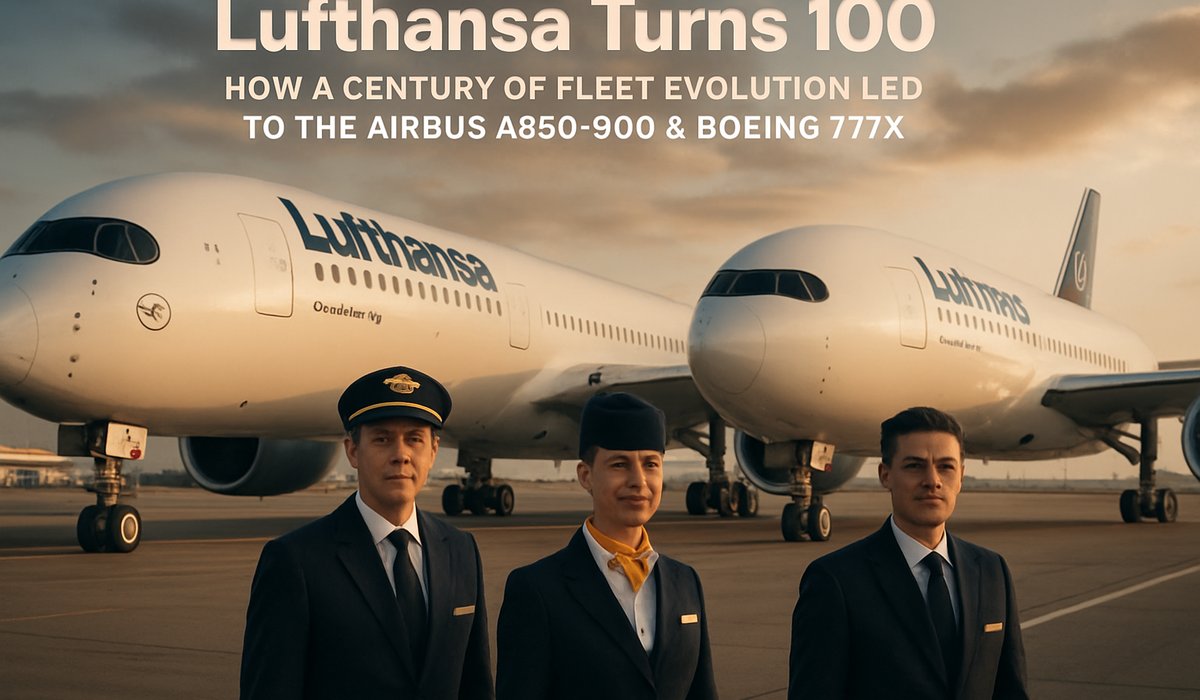
Image generated by AI
Lufthansa Marks Centenary with Fleet Modernization: From 1926 Fokker to Next-Generation A350 and Boeing 777X
The German carrier celebrates 100 years of aviation history while charting its future with advanced wide-body aircraft
A Century Takes Flight
Lufthansa entered its second century on April 6, 2026, with a symbolic gesture that crystallized the airline's remarkable evolution: an Airbus A350-900 adorned with a striking blue crane motif and silver anniversary markings departed Berlin Brandenburg Airport bound for Zurich. The aircraft's journey served as both commemoration and proclamation—exactly one hundred years earlier, on the same April day in 1926, a rudimentary Fokker-Grulich F II had lifted off from Berlin-Tempelhof, inaugurating what would become Europe's most influential aviation enterprise.
The contrast between these two moments encapsulates the technological gulf that separates modern commercial aviation from its pioneer origins. Where the 1926 aircraft featured open cockpits and fabric-covered fuselages, today's A350-900 represents the cutting edge of aeronautical engineering, with carbon-fiber composite construction, advanced avionics systems, and fuel efficiency standards that would have seemed miraculous to the airline's founders.
Evolution of an Aviation Powerhouse
Deutsche Luft Hansa AG's centennial milestone arrives during a period of significant fleet transformation across the global aviation industry. Lufthansa's decision to integrate next-generation aircraft—including the anticipated Boeing 777X with its revolutionary folding wingtips—reflects broader industry trends toward fuel efficiency, emissions reduction, and enhanced passenger comfort.
The A350-900 currently serving the carrier's international network represents a 25% improvement in fuel consumption compared to earlier wide-body platforms, directly addressing the sustained pressure on airline operating costs driven by volatile jet fuel prices and environmental regulations. These efficiencies translate into measurable competitive advantages, particularly as carriers compete on route profitability and sustainability credentials.
Forward Momentum
Lufthansa's centennial celebration transcends ceremonial recognition, signaling the airline group's commitment to fleet modernization across its network. The strategic addition of Boeing 777X aircraft will further enhance long-haul capacity and operational flexibility, while simultaneously reducing the carrier's carbon footprint—a critical metric as European aviation faces increasingly stringent environmental compliance requirements.
The anniversary flight underscores how Lufthansa has navigated a century of geopolitical upheaval, economic fluctuation, and technological revolution to maintain its position as a global aviation leader. From open-cockpit biplanes to composite-winged jets, the airline's trajectory mirrors the entire history of commercial aviation itself.
FAQ: Lufthansa's Fleet Evolution and Modern Aviation Strategy
What aircraft does Lufthansa currently operate in its fleet? Lufthansa operates a diverse fleet including the Airbus A350-900, Boeing 777, Airbus A380, and various narrow-body aircraft. The airline is currently integrating next-generation Boeing 777X wide-body jets with advanced fuel-saving technology.
How has jet fuel price volatility affected Lufthansa's aircraft decisions? Rising and unpredictable jet fuel costs have accelerated Lufthansa's investment in fuel-efficient aircraft like the A350-900, which consumes approximately 25% less fuel than previous-generation wide-body planes, directly improving profitability margins.
Why is the Boeing 777X's folding wingtip design significant for Lufthansa? The folding wingtips enable the 777X to operate from airports with standard gate infrastructure despite its larger dimensions, providing operational flexibility without requiring expensive airport infrastructure upgrades.
What role does fleet modernization play in Lufthansa's sustainability commitments? Modern aircraft like the A350 and upcoming 777X significantly reduce CO2 emissions and fuel consumption, helping Lufthansa meet European Union environmental regulations and corporate sustainability targets while maintaining competitive operating costs.
How does Lufthansa's centennial strategy reflect broader aviation industry trends? Global carriers are prioritizing next-generation wide-body aircraft to balance environmental compliance, fuel economy, passenger capacity, and long-haul route profitability—exactly mirroring Lufthansa's fleet modernization approach.
Related Travel Guides
Disclaimer
This article is for informational and educational purposes only. It does not constitute legal, financial, or professional advice. While we strive to provide accurate and up-to-date information, travel policies, regulations, and conditions change rapidly. Always verify information with official sources before making travel decisions. Nomad Lawyer makes no representations about the accuracy, reliability, completeness, or suitability of the information provided. Readers should consult qualified professionals for advice specific to their circumstances. The views expressed in this article are those of the author and do not necessarily reflect the views of Nomad Lawyer.
Kunal K Choudhary
Co-Founder & Contributor
A passionate traveller and tech enthusiast. Kunal contributes to the vision and growth of Nomad Lawyer, bringing fresh perspectives and driving the community forward.
Learn more about our team →