
Delta Flight DL716 Boeing 737-832 Diverts to Colorado Springs on New York-Denver Route
Delta Air Lines Flight DL716 operating a Boeing 737-832 diverted to Colorado Springs Airport on August 3, 2026, due to operational conditions.

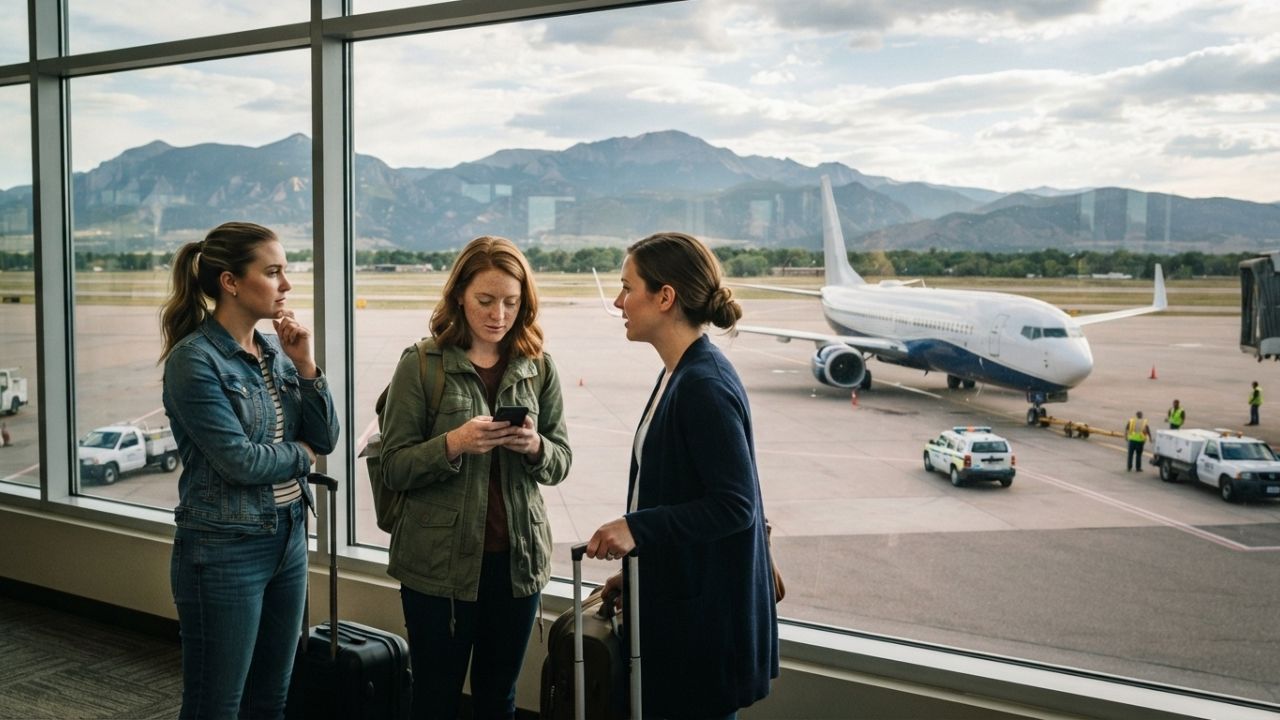
Image generated by AI
Delta Air Lines flight DL716 from New York to Denver was forced to divert, landing at Colorado Springs Airport on August 3, 2026. The Boeing 737-832 aircraft changed course during its final approach sequence, leaving passengers to adjust their itineraries 70 miles south of their scheduled destination.
The Disruption Details
Flight tracking logs have recorded an unscheduled diversion affecting transcontinental flight traffic into the Rocky Mountain region. Delta Air Lines flight DL716 (operating as DAL716), serviced by a Boeing 737-832 aircraft with registration N3736C, diverted to Colorado Springs Airport (COS) on August 3, 2026.
The source documents contain conflicting departure details: one record shows the flight departed New York John F. Kennedy International Airport (JFK) at approximately 8:35 p.m. EDT, while another indicates a departure from New York LaGuardia Airport (LGA) at 13:55 (with a scheduled Denver arrival at 16:14). Despite these discrepancies, flight telemetry confirms that the aircraft aborted its final approach into Denver International Airport (DEN) and diverted south, executing a safe touchdown at Colorado Springs. Delta Air Lines has not officially confirmed the cause of the diversion, though summer operational bottlenecks and localized weather patterns frequently disrupt air traffic around Denver during August.
Flight & Airport Impact Breakdown
The diversion has shifted arrival points and schedule sequencing across the network:
- Denver Airspace Diversion: The aircraft bypassed its final landing queue at DEN, rerouting approximately 70 miles south to Colorado Springs.
- Alternate Hub Processing: Colorado Springs Airport (COS) served as the alternate landing site, utilizing its Boeing 737-compatible runway facilities.
- Denver Arrival Delays: Severe delays for passengers scheduled to land in Denver, affecting onward connections and local transit arrangements.
- Fleet Operational Audits: The aircraft, powered by CFM56-series engines, was held at COS for operational evaluations before being cleared for subsequent flights.
Passenger Rights & Advisory (Information Gain & Experience)
For travelers experiencing flight diversions to alternate airports like Colorado Springs, understanding carrier obligations is key to securing refunds and hotel accommodation.
Our analysis of the policy suggests the following rules:
- DOT Refund Guidelines: Under the U.S. Department of Transportation (DOT) customer service dashboard rules, if an airline diverts your flight to an alternate airport and the delay exceeds three hours, you are entitled to a full cash refund (including checked baggage and seat-selection fees) if you choose to terminate your journey at the alternate station.
- Delta Rerouting and Ground Transportation: Delta is required to arrange alternative transportation (such as shuttle buses or taxi vouchers) to transport passengers from Colorado Springs to Denver. Alternatively, if Delta elects to fly the aircraft to Denver after operational conditions improve, passengers have the right to remain on board.
- Controllable Delay Benefits: If the diversion was caused by a technical or operational issue within the airline's control, Delta must provide meal vouchers for delays of three hours or more, along with complimentary overnight hotel lodging if the delay stretches into the following day.
- Route and Radar Audits: Passengers can review flight altitudes, speed logs, and historical tracking metrics for flight DL716 via the FlightAware flight database.
Industry Analyst View
Denver International Airport (DEN) is vulnerable to convective summer weather, which frequently triggers ground delay programs and holding patterns. When arrivals capacity at DEN is restricted, dispatchers utilize Colorado Springs Airport (COS) as a primary alternate due to its proximity and ability to handle narrowbody fleets like the Boeing 737-800 series.
From a fleet management perspective, choosing to land at a nearby alternate like COS preserves crew duty hours and prevents the aircraft from running low on fuel while holding over Denver. Although this creates immediate scheduling friction for passengers, it remains a standard safety contingency. By routing flights to a fully equipped regional airport, airlines can safely manage operations and prepare the aircraft to return to service with minimal delay.
Related Travel Guides
Disclaimer
This article is for informational and educational purposes only. It does not constitute legal, financial, or professional advice. While we strive to provide accurate and up-to-date information, travel policies, regulations, and conditions change rapidly. Always verify information with official sources before making travel decisions. Nomad Lawyer makes no representations about the accuracy, reliability, completeness, or suitability of the information provided. Readers should consult qualified professionals for advice specific to their circumstances. The views expressed in this article are those of the author and do not necessarily reflect the views of Nomad Lawyer.
Kunal K Choudhary
Co-Founder & Contributor
A passionate traveller and tech enthusiast. Kunal contributes to the vision and growth of Nomad Lawyer, bringing fresh perspectives and driving the community forward.
Learn more about our team →